How Buyers Use Generic Drug Competition to Lower Prices
 Jan, 8 2026
When you walk into a pharmacy and see a generic version of your prescription drug costing a fraction of the brand-name version, you’re seeing the power of competition in action. But what most people don’t realize is that this price difference isn’t just luck-it’s the result of deliberate, strategic price negotiations by buyers like Medicare, insurance companies, and government health systems. These buyers don’t just accept whatever price drugmakers set. They use the threat-or reality-of generic competition to force prices down, sometimes by more than 90%.
How Generic Drugs Drive Prices Down
Generic drugs aren’t just cheaper copies. They’re legally identical versions of brand-name drugs that hit the market after patents expire. And when multiple generic manufacturers enter the market, prices don’t just drop-they collapse. Data from the FDA shows that when six generic makers are selling the same drug, prices fall by an average of 90.1%. With nine or more competitors, that number jumps to 97.3%. That’s not a small discount. That’s a total rewrite of the cost structure.
Why does this happen? Because generics are produced without the massive R&D costs of the original drug. Once the patent expires, manufacturers can copy the formula and compete on price. The more companies that jump in, the fiercer the race to the bottom becomes. It’s basic economics: supply goes up, price goes down. But here’s the twist-buyers don’t wait for this to happen naturally. They actively use it as leverage.
The Role of Medicare and Other Buyers
In the U.S., Medicare is one of the biggest buyers of prescription drugs. Before 2022, Medicare wasn’t allowed to negotiate drug prices directly. But the Inflation Reduction Act changed that. Now, CMS-the agency that runs Medicare-can pick up to 10 high-cost brand-name drugs each year and negotiate a price. And here’s the key: they don’t start from scratch. They look at what generic versions of the same drug are already selling for.
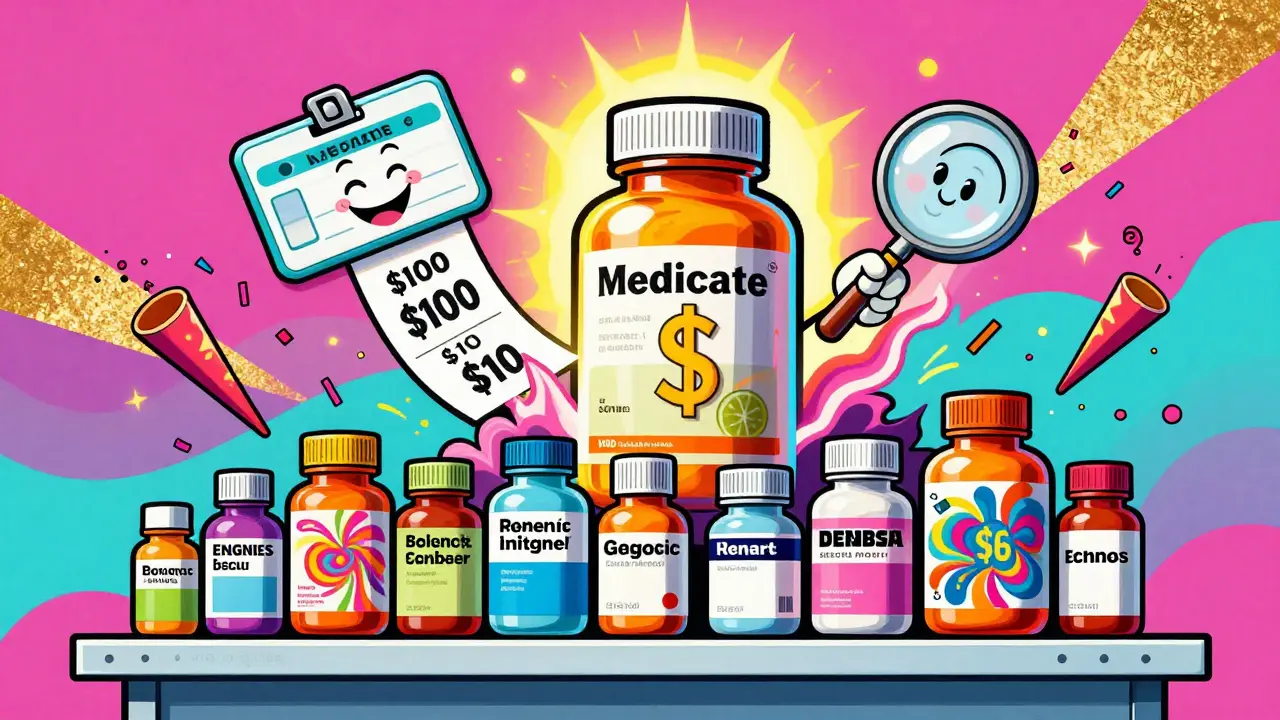
CMS uses real data from Prescription Drug Event (PDE) records and Average Manufacturer Prices (AMP) to find the average cost of therapeutic alternatives. If a brand-name drug has five generic competitors selling for $10 a pill, CMS won’t offer the brand $100 a pill. They’ll start near the generic price and adjust slightly based on clinical evidence. This means even drugs without generics yet can be pressured by the existence of similar drugs that do have generics.
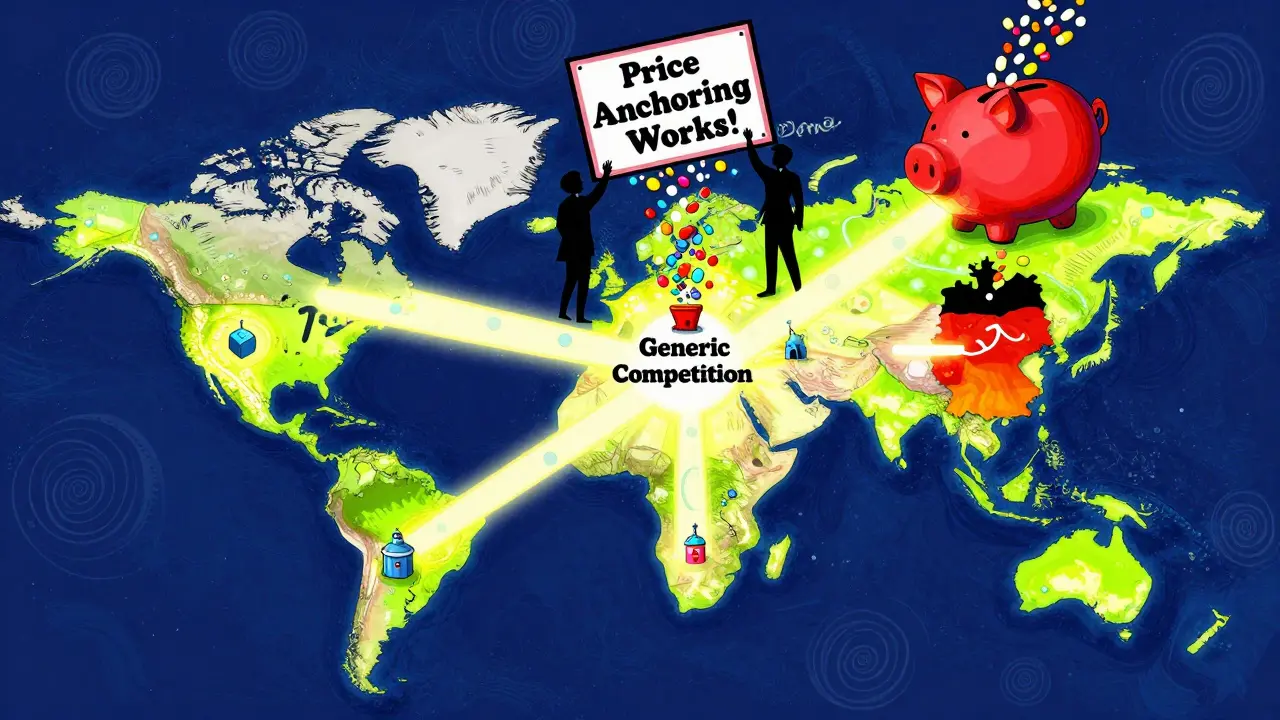
This isn’t just a U.S. trick. Canada uses a tiered pricing model that lowers the maximum allowable price as more generics enter the market. Germany and the UK use reference pricing, comparing their drug prices to those in other countries with strong generic competition. The goal is always the same: use the availability of cheaper alternatives to anchor prices lower.
How Brand Companies Fight Back
Brand-name drugmakers aren’t sitting still. They’ve developed a whole playbook to delay generic entry and protect profits. One common tactic? “Product hopping.” That’s when a company slightly changes the formulation-like switching from a pill to a capsule-and gets a new patent. This resets the clock on generic competition. Between 2015 and 2020, there were over 1,200 such maneuvers, according to the FTC.
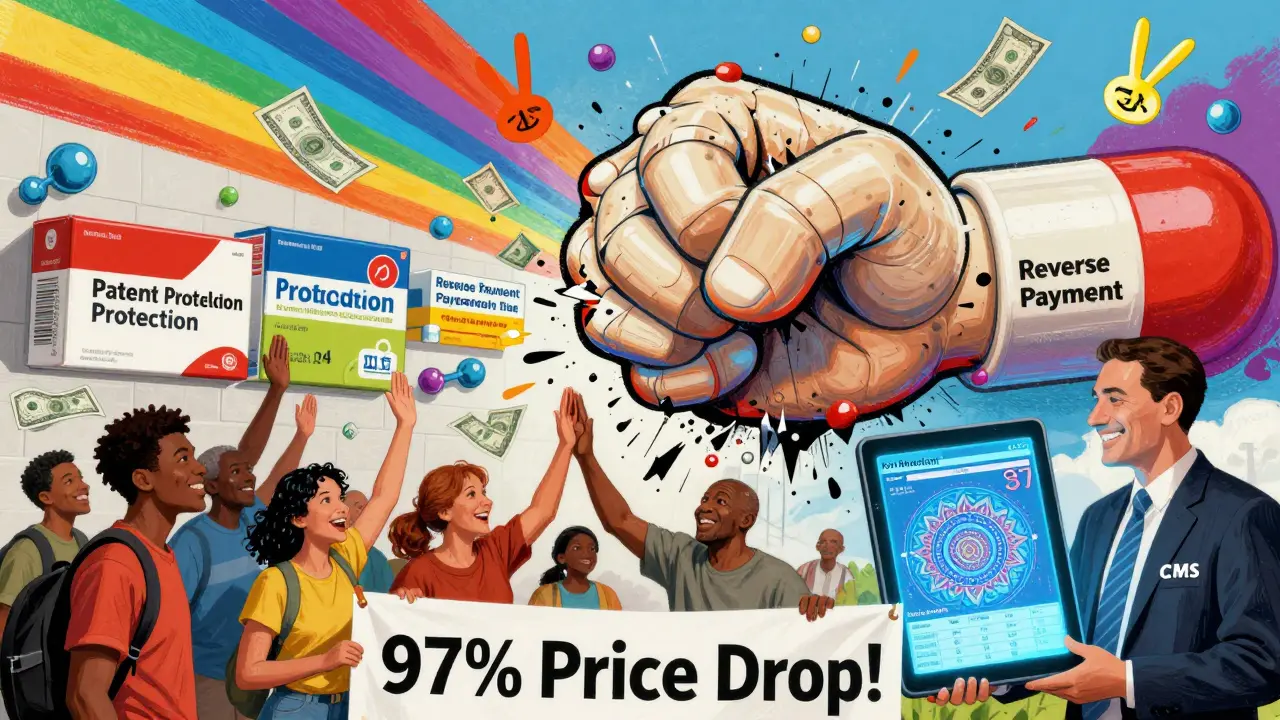
Another tactic? Reverse payments. This is when a brand company pays a generic manufacturer to delay launching its cheaper version. The FTC found that between 2010 and 2020, this happened with 106 drugs. These deals keep prices high and prevent the market from doing what it’s supposed to do: drive prices down through competition.
Even when generics do enter, some brand companies launch their own “authorized generics”-versions made by the brand company but sold under a generic label. This floods the market with a low-priced option that still goes straight to the brand’s bottom line, squeezing out independent generic makers.
Why Generic Competition Isn’t Perfect
Not all generics are created equal. Simple pills-like metformin or lisinopril-are easy to copy. But complex drugs, like inhalers or injectables, require advanced manufacturing. These “complex generics” cost more to produce, so their prices don’t drop as much. And then there are biosimilars-generic versions of biologic drugs like insulin or rheumatoid arthritis treatments. Even after years on the market, biosimilars only capture about 45% of the market share, compared to 90% for traditional generics.
Some manufacturers say government price-setting can backfire. If CMS sets a low price for a brand drug before generics even enter the market, it can discourage new generic companies from investing. Why spend millions to challenge a patent if the government has already capped the price at a level that won’t cover your costs? Avalere Health’s 2023 analysis found this could lead to “unrealized annual savings” because fewer generics end up entering the market.
And it’s not just about price. Generic manufacturers say they need predictable pricing to plan production, invest in facilities, and hire staff. A 2022 survey by the European Generic and Biosimilar Medicines Association found that 78% of manufacturers say pricing stability is essential for market entry. When rules change too fast or prices are set without clear signals, investment stalls.
What’s Working-And What’s Not
Canada’s tiered pricing system is one of the most effective models. It rewards competition: the more generic makers that enter, the lower the price ceiling becomes. It’s transparent, predictable, and it works. The U.S. is trying to mimic this with CMS’s negotiation framework, but with a twist: it’s focused on brand drugs, not generics. That’s where the tension lies.
On the other hand, the U.S. still has one of the highest generic market shares in the world-90% of prescriptions are filled with generics. But those generics only make up 22% of total drug spending. Why? Because the most expensive drugs-often the ones without generic competition-are still priced like luxury items. That’s where negotiation needs to focus.
Meanwhile, countries like Japan have lower generic adoption rates (58%) because their reimbursement system doesn’t push patients or providers toward cheaper options. It’s not about availability-it’s about incentives.
The Future of Price Negotiation
The next big shift is in data. CMS and other buyers are starting to use real-world evidence-like how well a drug actually works in everyday clinics-not just clinical trial data. By 2025, 73% of health technology assessment agencies plan to use this kind of data in pricing decisions.
There’s also growing support for the EPIC Act, which would delay Medicare’s price negotiations until after generic competition has had a chance to develop. That way, the market gets to do its job first. If prices don’t fall enough on their own, then the government steps in.
And while the big players like Teva, Sandoz, and Viatris control a third of the global generic market, there are over 1,200 manufacturers out there. That fragmentation is a strength-it keeps competition alive. But it’s also a weakness. Smaller makers often lack the resources to fight patent battles or navigate complex pricing rules.
The bottom line? Generic competition is the most powerful tool we have to bring down drug prices. But it only works if the rules don’t get in the way. Buyers who understand how to use it-by tracking competitor counts, analyzing real pricing data, and avoiding policies that chill entry-can save billions. Those who don’t? They end up paying more, and patients pay the price.
What This Means for Patients
If you’re on Medicare, the first 10 drugs selected for negotiation under the Inflation Reduction Act will have new, lower prices starting January 1, 2026. That could mean hundreds of dollars in savings per year. But it’s not just about those 10 drugs. The pressure from generic competition is already lowering prices across the board. Even if your drug isn’t being negotiated, the fact that similar drugs have generics means your insurer or Medicare has more leverage to push for a better deal.
For people without insurance, the rise of generic competition means cheaper options are more widely available. Retail pharmacies like Walmart and Costco now offer dozens of generics for $4 or less per month. That’s not a promotion-it’s the market responding to competition.
The challenge ahead isn’t just about setting prices. It’s about designing systems that let competition work. When buyers use generic competition as a tool-not just a footnote-they don’t just lower costs. They make the whole system more fair, more efficient, and more sustainable.
How do generic drugs actually lower drug prices?
Generic drugs are chemically identical to brand-name drugs but cost far less to produce because they don’t require expensive research or clinical trials. When multiple generic manufacturers enter the market, they compete on price, forcing each other to lower costs. Studies show that with six generic competitors, prices drop by about 90%, and with nine or more, they fall by over 97%.
Does Medicare negotiate prices with generic drug makers?
No, Medicare doesn’t directly negotiate with generic manufacturers. Instead, it uses the existing prices of generic drugs as a benchmark when negotiating with brand-name drugmakers. The presence of low-priced generics gives Medicare leverage to demand lower prices for brand drugs, even if no generic exists for that specific drug yet.
Why do some drugs still cost a lot even when generics are available?
Some drugs remain expensive because they’re complex to manufacture-like inhalers, injectables, or biosimilars-so fewer companies can make them. Others are kept high due to anti-competitive practices like "product hopping" or reverse payments, where brand companies pay generics to delay entry. Even when generics exist, distribution systems and pharmacy benefit managers sometimes don’t pass savings along to patients.
Can government price-setting hurt generic competition?
Yes, if the government sets a low price for a brand drug before generics enter the market, it can discourage new generic manufacturers from investing. Why spend millions to challenge a patent if the final price will be capped below what it costs to produce? This "chilling effect" could reduce the number of generics that enter, ultimately limiting long-term savings.
What’s the difference between generic drugs and biosimilars?
Generic drugs are exact copies of small-molecule drugs, like pills for blood pressure or diabetes. Biosimilars are similar but not identical copies of complex biologic drugs, like insulin or cancer treatments. Because biologics are made from living cells, biosimilars are harder and more expensive to produce. As a result, they achieve only about 45% market share, compared to 90% for traditional generics.
How can I find out if a cheaper generic version of my drug is available?
Ask your pharmacist or check your insurer’s formulary list. Many pharmacies, like Walmart and Costco, list low-cost generics online-some as low as $4 per month. You can also use tools like GoodRx to compare prices across pharmacies. If your drug is brand-name and expensive, ask your doctor if a therapeutically equivalent generic exists.
Heather Wilson
January 9, 2026 AT 11:53Let’s be real-this whole generic drug narrative is a fantasy sold to the public. The ‘90% price drop’? That’s only on pills like metformin. Meanwhile, insulin? Still $300. And don’t get me started on the pharmacy benefit managers siphoning off the savings. This isn’t competition-it’s a rigged game where the middlemen win and patients still bleed out.
Micheal Murdoch
January 10, 2026 AT 11:16It’s funny how we talk about market forces like they’re some kind of natural law, but the truth is, the pharmaceutical industry has spent decades gaming the system. Patents, product hopping, reverse payments-it’s not capitalism. It’s feudalism with a FDA stamp. The fact that Medicare can now negotiate is a start, but it’s like trying to stop a flood with a teacup. Real reform needs to break the patent monopoly entirely, not just tweak the margins.
Jeffrey Hu
January 10, 2026 AT 15:43Actually, the FDA data is misleading. The 97.3% drop only applies to drugs with nine+ generics-but most of those are low-value, low-margin meds. The real issue is the top 1% of drugs that account for 50% of spending. You can’t fix insulin prices by talking about lisinopril. And CMS’s negotiation model? It’s backwards. They’re negotiating with brand names using generic prices as anchors, but if no generic exists, they’re stuck. That’s why the EPIC Act makes sense-let the market work first.
Pooja Kumari
January 10, 2026 AT 21:49I just want to say, as someone from India where generics are the only option for most people, I’ve seen what happens when you don’t have this system. My uncle died because he couldn’t afford his heart meds in 2018. So yes, I’m emotional about this. But I also know that the U.S. system, flawed as it is, is still the most effective at driving down prices globally. The fact that Indian generics are now sold at Walmart for $4? That’s not luck. That’s the power of competition. I cry when I think about how many lives that saves.
Jacob Paterson
January 11, 2026 AT 14:51Oh wow. Another ‘generic drugs are magic’ article. Let me guess-next you’ll tell us the pharmaceutical companies are the villains and the government is the hero? Wake up. The FDA approves generics in 6 months? That’s a joke. Most are made in China or India under sketchy conditions. And the ‘savings’? Most go to CVS and UnitedHealth, not you. You think you’re saving money? You’re just being manipulated by the same system that sold you the brand-name drug in the first place.
Elisha Muwanga
January 13, 2026 AT 08:54Why are we even talking about this? The U.S. is the only country that lets drug companies charge what they want. Canada? Germany? They’re socialists. We don’t need ‘reference pricing’ or ‘tiered systems.’ We need American innovation. If you can’t afford your meds, get a better job. Or move to a country that doesn’t value freedom. This isn’t healthcare-it’s entitlement culture dressed up as economics.
Alicia Hasö
January 14, 2026 AT 00:14THIS. IS. HUGE. I’ve been waiting my whole life for this. My daughter has asthma, and we used to pay $400 a month for her inhaler. Now? $12. Not because of charity. Because generics came in. And now Medicare’s negotiating? I’m not just hopeful-I’m ready to march. This isn’t politics. This is survival. If you’re not celebrating this, you’re part of the problem.
Matthew Maxwell
January 14, 2026 AT 08:41Everyone’s ignoring the elephant in the room: the FDA’s approval process for generics is a joke. They approve hundreds of them, but half are made in factories with sanitation violations. And yet we act like they’re identical? They’re not. I’ve seen patients have adverse reactions switching from brand to generic. The ‘chemically identical’ claim is a marketing lie. The FDA doesn’t test for bioequivalence in real-world conditions. You’re not saving money-you’re risking your health.
Kiruthiga Udayakumar
January 15, 2026 AT 15:30As an Indian woman who’s seen both sides, I’m tired of Americans acting like they invented competition. We’ve been making generics for decades-cheap, good, safe. The U.S. just didn’t want them until they realized they could profit from them too. Now you’re calling it ‘innovation’? It’s just capitalism with a new label. And yes, biosimilars are expensive-but that’s because Big Pharma bought the regulators. Stop pretending you’re the hero. We’ve been doing this longer.
tali murah
January 16, 2026 AT 23:49Oh sweet mercy. Another ‘generic drugs are the answer’ fairy tale. Let me guess-you also believe in unicorns and free healthcare? The truth? The government’s ‘negotiation’ is just a fancy way of price-fixing. And when they cap prices too low? The generics vanish. No one makes them. Then what? You’re stuck with the brand at $1000. This isn’t saving money. It’s creating shortages. And you’re cheering it on? You’re not a patient-you’re a pawn.
Diana Stoyanova
January 17, 2026 AT 01:31I just want to say-this is the most important thing I’ve read all year. I’m not a doctor, not a policy wonk, just a mom who’s watched my husband’s diabetes meds go from $120 to $15 a month because of generics. That’s not a statistic. That’s life. That’s dignity. That’s being able to breathe at night without wondering if you’ll have to choose between insulin and groceries. This isn’t about politics. It’s about people. And if you’re not on board with this, you’ve forgotten what ‘community’ even means.
Jenci Spradlin
January 17, 2026 AT 19:53yo so i read this whole thing and honestly the part about product hopping is wild. like why do companies even bother changing the pill shape? just to delay generics? that’s so sketchy. also i had no idea walmart sells some generics for $4. i’m gonna check my meds tomorrow. thanks for this!
Darren McGuff
January 18, 2026 AT 17:19Interesting how the U.S. system, despite its flaws, ends up driving global generic prices down. Teva and Sandoz don’t just compete in America-they set benchmarks worldwide. That’s why a diabetic in Kenya can now buy insulin for $5. This isn’t just American policy. It’s global public health infrastructure. We should be proud of this-even if it’s messy.
Ashley Kronenwetter
January 19, 2026 AT 05:09Thank you for this comprehensive breakdown. The data on biosimilars and the chilling effect of premature price caps is critical. I hope policymakers read this. We need to preserve the incentive structure for generic manufacturers while ensuring fair access. It’s not an either/or-it’s a balance. And this article nails it.