Authorized Generics: Same Drug, Different Label
 Dec, 5 2025
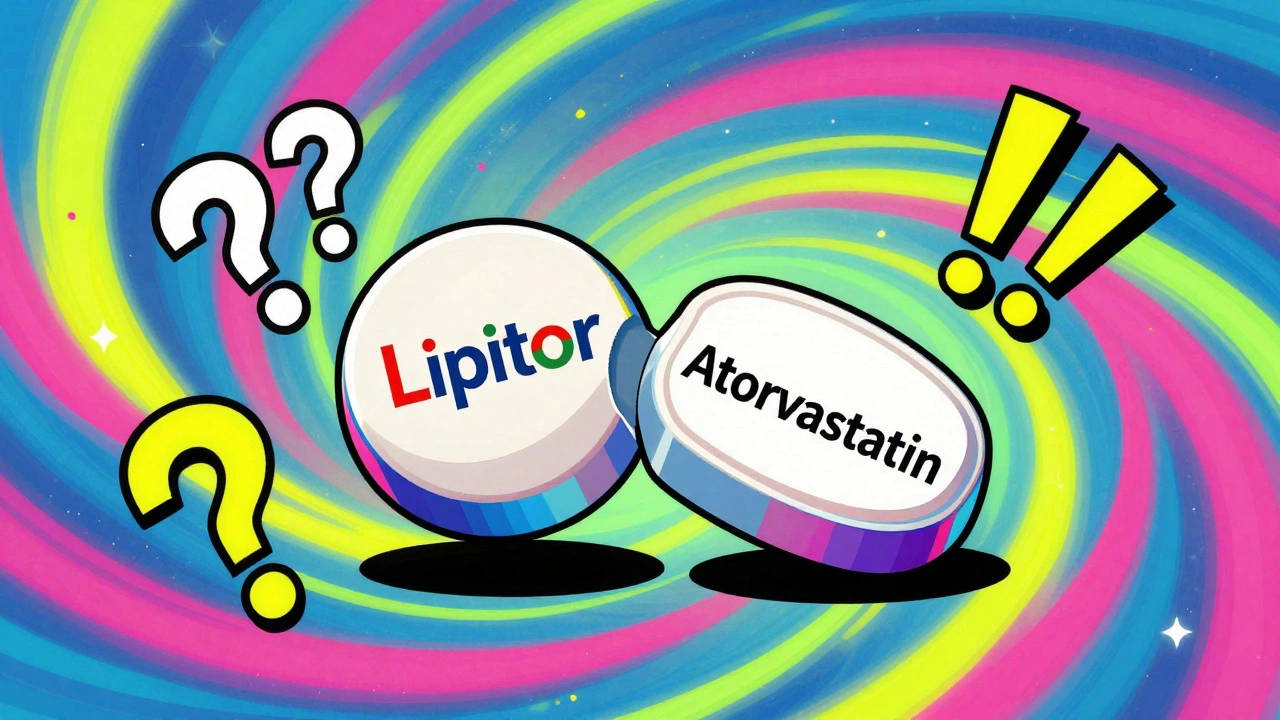
Have you ever picked up a prescription and noticed the pill looks different - maybe a different color or shape - but the name on the bottle is the same as your brand-name drug? You’re not imagining it. That’s an authorized generic. It’s not a new drug. It’s not a cheaper knockoff. It’s the exact same medicine, made by the same company, in the same factory, with the same ingredients. The only difference? The label.
What Exactly Is an Authorized Generic?
An authorized generic is a brand-name drug sold under a generic label. No changes to the formula. No substitutions. No shortcuts. The active ingredient? Identical. The inactive ingredients? The same. The manufacturing process? Same facility, same equipment, same quality controls. The only thing that changes is the packaging and the name on the box.
Think of it like buying a Coca-Cola bottle with a generic label. The liquid inside is still Coca-Cola. You’re just not paying for the logo.
The U.S. Food and Drug Administration (FDA) defines it clearly: an authorized generic is a drug approved under a brand’s New Drug Application (NDA) but sold without the brand name, trademark, or trade dress. It doesn’t need its own Abbreviated New Drug Application (ANDA) like regular generics do. That’s because it’s not a copy - it’s the original.
How Is It Different From a Regular Generic?
This is where things get confusing. Most people think all generics are the same. They’re not.
Regular generics must prove they’re bioequivalent to the brand-name drug. That means they deliver the same amount of active ingredient into your bloodstream at a similar rate. But they can have different fillers, dyes, or coatings. That’s why a generic version of your pill might be white and oval, while the brand is blue and round.
An authorized generic doesn’t need to prove bioequivalence - because it’s the same pill. No testing required. It’s literally the same batch of medicine, just packaged differently.
Here’s the kicker: authorized generics aren’t listed in the FDA’s Orange Book, which is the go-to reference for pharmacists checking if generics are interchangeable. That means your pharmacist might not know it’s an authorized generic unless they check a separate FDA list. You could get a pill you’ve never seen before - and think it’s a different drug.
Why Do Drug Companies Do This?
It’s not about helping patients save money - though they do. It’s about protecting profits.
When a brand-name drug’s patent expires, the first company to file for a generic version gets 180 days of exclusive rights to sell it. That’s called the Hatch-Waxman exclusivity period. It’s meant to reward generic manufacturers for taking the legal and financial risk of challenging patents.
But here’s what brand companies figured out: if they launch their own generic version right before that 180-day clock starts, they can undercut the first generic company. They sell the exact same pill - same quality, same price - but without the brand name. Suddenly, the first generic company isn’t the only one on the market. Their profits shrink. Their incentive to challenge patents? Gone.
Companies like Pfizer (through Greenstone), Procter & Gamble (through Prasco), and others now have dedicated divisions just to make and sell authorized generics. They’re not trying to replace the brand. They’re trying to replace the competition.
What Does This Mean for You as a Patient?
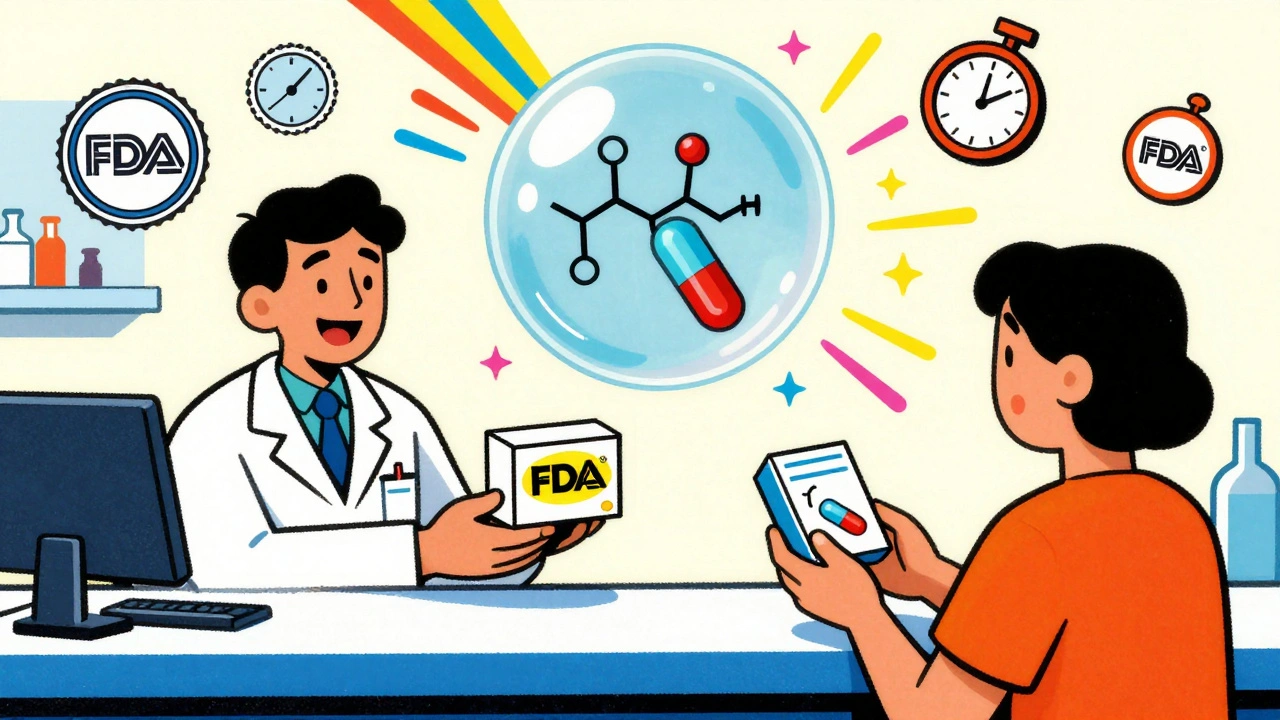
On the surface, it’s a win. You get the same medicine, often at a lower price than the brand. Some insurance plans even prefer authorized generics because they’re cheaper than the brand but just as effective.
But there’s a hidden cost: confusion.
You might pick up your prescription one month and get a blue pill. Next month, it’s white. You call your doctor. You Google it. You worry. Is this safe? Is it the same? Did they mess up your prescription?
Pharmacists get confused too. Since authorized generics don’t show up in the Orange Book, they have to dig deeper to confirm they’re equivalent. Some don’t even know they’re dispensing one.
And here’s the real issue: if your doctor prescribes the brand by name, your pharmacy might still substitute an authorized generic - and you won’t know unless you check the label. You might think you’re getting the brand, but you’re not. You’re getting the same thing, just cheaper.
Is It Safe? Can You Trust It?
Yes. Absolutely.
Authorized generics are held to the same standards as the brand-name drug. The FDA requires the manufacturer to notify them when launching one, but they don’t need to re-test it. Why? Because it’s the same product. The same factory. The same batch code, sometimes.
There’s no evidence that authorized generics are less safe, less effective, or more likely to cause side effects. In fact, many patients report fewer issues with authorized generics than with regular generics - because there’s no variation in inactive ingredients.
People with allergies or sensitivities to certain dyes or fillers often do better with authorized generics. Why? Because they’re getting the exact same formulation they’ve been taking for years - just without the brand name.
How to Spot an Authorized Generic
You won’t always know you’re getting one. But here’s how to find out:
- Check the label. If it says the name of the brand drug (like "Lipitor") but doesn’t have the brand logo or trademark, it might be an authorized generic.
- Look for the manufacturer name. If it’s Pfizer, AbbVie, or another big pharma company - and not a generic-only company like Teva or Mylan - it’s likely an authorized generic.
- Ask your pharmacist. Say: "Is this an authorized generic?" They can check the FDA’s List of Authorized Generic Drugs.
- Compare the pill. If it looks identical to your brand-name pill but has different markings or color, it’s probably an authorized generic.
GoodRx and other price-comparison tools sometimes label authorized generics clearly. If you see "Authorized Generic" next to the price, you’re seeing the real deal.
The Bigger Picture: Is This Fair?
This isn’t just a pharmacy question. It’s a policy question.
The Hatch-Waxman Act was designed to encourage competition and lower drug prices. But authorized generics let brand companies game the system. They get to keep their market share while pretending to support generics.
Studies in Health Affairs have shown that when a brand company launches an authorized generic during the 180-day exclusivity window, the first generic company’s sales drop by up to 70%. That’s not competition - it’s a takeover.
Some lawmakers have tried to ban the practice. Others argue it’s legal and gives patients more choices. The FDA hasn’t moved to stop it. They still list authorized generics as legitimate, safe, and therapeutically equivalent.
Until Congress changes the rules, this will keep happening. More and more brand drugs will have authorized generic versions. More patients will get the same pill, just without the name they recognize.
What Should You Do?
If you’re on a brand-name drug and you see a change in your pill:
- Don’t panic.
- Don’t stop taking it.
- Ask your pharmacist: "Is this an authorized generic?"
- If it is, ask if you want to stick with the brand or switch.
- Check your insurance. Sometimes, they’ll cover the brand at the same price as the generic - so you don’t have to choose.
And if you’re cost-conscious? Go with the authorized generic. It’s the same medicine. No risk. No compromise.
Just know what you’re getting.
Are authorized generics the same as the brand-name drug?
Yes. Authorized generics are identical to their brand-name counterparts in active ingredients, dosage, strength, safety, and effectiveness. The only differences are the label, packaging, and sometimes the color or markings on the pill - all to distinguish it from the branded version.
Why do authorized generics cost less than brand-name drugs?
They cost less because they don’t carry the marketing, advertising, or research costs associated with the brand name. The manufacturer doesn’t need to recoup billions spent on clinical trials - they’re using the original drug’s approved formula and production line.
Can I ask my pharmacist for an authorized generic?
Yes. You can request an authorized generic by name, or simply ask your pharmacist if one is available for your prescription. They can check the FDA’s List of Authorized Generic Drugs to confirm availability.
Are authorized generics listed in the FDA’s Orange Book?
No. Authorized generics are not listed in the Orange Book because they’re marketed under the brand’s New Drug Application (NDA), not a separate Abbreviated New Drug Application (ANDA). Pharmacists must use the FDA’s separate Authorized Generic List to verify them.
Do authorized generics have the same side effects as the brand?
Yes. Since they contain the exact same active and inactive ingredients, authorized generics have the same side effect profile as the brand-name drug. Many patients report fewer issues with authorized generics because they avoid variations in fillers found in some regular generics.
Why do some pharmacies substitute authorized generics without telling me?
In many states, pharmacists can substitute generic drugs - including authorized generics - unless the prescription says "dispense as written" or "no substitution." Many patients don’t realize they’re getting an authorized generic because the label doesn’t say "brand name" - it just says the drug’s chemical name.
Billy Schimmel
December 5, 2025 AT 15:22So let me get this straight - the same pill, same factory, same everything… but now it’s cheaper because they took off the logo? And we’re supposed to be impressed by this? 😅
Geraldine Trainer-Cooper
December 6, 2025 AT 01:53it’s just capitalism with a side of confusion
we’re not saving money because it’s fair
we’re saving because the system rigged itself to look like a win
Ashish Vazirani
December 7, 2025 AT 10:53THIS IS WHY AMERICA IS BECOMING A THIRD-WORLD PHARMACY! They let corporations sell the same medicine under a fake label and call it ‘generic’ - while Indian manufacturers are forced to jump through 17 hoops just to get approval?!
Who gave Pfizer the right to play God with our prescriptions?!
And don’t even get me started on how these ‘authorized generics’ are NOT even listed in the Orange Book - this isn’t transparency, this is fraud!
My uncle in Jaipur pays $2 for Lipitor generics - made in a clean lab, tested by Indian scientists - and here in the US we’re being tricked into thinking this corporate shell game is ‘fair’?!
They’re not lowering prices - they’re killing competition under the guise of ‘choice’!
Next they’ll sell our insulin with a Walmart label and call it ‘American innovation’.
Stop pretending this is healthcare - it’s a corporate heist dressed in white coats.
Mayur Panchamia
December 9, 2025 AT 06:41Let me tell you something - I’ve been on the same meds for 8 years. One day, boom - pill changes color. I almost called 911.
Turns out? Same damn thing. No side effects. No drama.
But now I pay half. So why are we crying? Because the brand had a pretty logo?
Meanwhile, in India, people get real generics - no corporate spin, no fancy labels - just medicine that works. We’re over here debating packaging like it’s haute couture.
Wake up. The pill doesn’t care if it’s in a blue box or a white one. Your body does.
And if you’re still paying full price for the brand? You’re being played.
Katie O'Connell
December 10, 2025 AT 21:12One is compelled to observe, with a certain degree of intellectual consternation, that the authorized generic phenomenon represents not merely a commercial maneuver, but a semiotic rupture in the pharmacopeia of consumer trust. The brand, once a signifier of quality assurance, has been decoupled from its material essence - now reduced to an empty signifier, while the identical pharmaceutical substance is rebranded as a ‘generic’ through the alchemy of label removal. One cannot help but wonder whether this constitutes a postmodern triumph of epistemological confusion over therapeutic clarity. The FDA, in its benevolent neutrality, has effectively sanctioned a linguistic sleight-of-hand wherein identity is determined not by composition, but by typography.
Andrew Frazier
December 11, 2025 AT 11:44So let me get this straight - the same company that charges $500 for a pill now sells the same damn thing for $20 under a different name? And we’re supposed to be grateful?
Typical big pharma BS. They don’t want competition - they want to OWN the generic market too.
And don’t even get me started on how they hide it from pharmacists. That’s not innovation - that’s manipulation.
And yeah, I know it’s ‘safe’ - but who the hell trusts a company that pulls this shit? They’re not here to help you. They’re here to make you think you’re saving money while they still win.
And BTW - why does everyone keep saying ‘ask your pharmacist’? Like they’re some kind of pharmacy wizard? Half of ‘em don’t even know what an authorized generic is.
Fix the system. Not just your pill.
Nava Jothy
December 12, 2025 AT 10:45My heart just broke. 😭
You know what’s worse than paying too much? Knowing the company that made your medicine for 15 years is now pretending it’s a different drug just to crush the little guys.
I cried when I found out my antidepressant was an authorized generic - not because I was scared, but because I realized I’ve been trusting a corporation that sees me as a number.
They don’t care if I sleep better. They care if I keep buying. And now they’ve made it impossible to tell what’s real.
My pills look different. My trust is gone. And no one’s apologizing.
Where’s the humanity in this?
Kenny Pakade
December 13, 2025 AT 13:08Wow. So the brand company makes a generic. Shocking. Who saw that coming?
Next they’ll make a generic of their generic. And then a generic of that.
Meanwhile, real generic companies get sued into oblivion while Pfizer just laughs.
It’s not a ‘system’ - it’s a monopoly with a thesaurus.
And yeah, the pill’s the same. But I don’t want to take medicine from a company that just tried to murder competition.
So no. I’m not ‘grateful’. I’m furious.
brenda olvera
December 13, 2025 AT 20:18I love how this post breaks it all down so clearly. I’ve been on a brand med for years and never knew this was happening. Now I feel smarter. And a little sad. But also… empowered?
My mom in Mexico used to say: ‘If it works, it works - and if it costs less, why not?’
Maybe we’re overcomplicating it. The pill doesn’t care about the label. Your body does.
Just ask. Know your options. And don’t let the noise scare you.
Healthcare should be simple. It’s the system that made it complicated.
Brooke Evers
December 15, 2025 AT 10:47I just want to say - if you’ve ever been scared to switch pills because you thought it might not work the same… you’re not alone. I’ve been there. I’ve stared at a new pill for 20 minutes, Googled it, called my doctor, cried a little. I thought I was losing my mind.
But here’s the truth: authorized generics saved me money - and they didn’t mess with my health. In fact, I had fewer stomach issues than with the regular generic because the fillers were the same as my brand.
It’s not perfect. The system is broken. But your medicine? It’s still safe. Still you.
And if you’re scared? Ask your pharmacist. They’re not magic, but they’re trying. And you? You’re doing better than you think - just by asking questions.
You’ve got this. And you’re not alone in this.
Saketh Sai Rachapudi
December 17, 2025 AT 04:13How can we let this happen? Brand companies are cheating the system - and we’re just sitting here like dumbasses. I’m from India - we make generics that are 10x cheaper and still pass WHO standards. But here? They just slap a new label on and call it a day.
And the FDA? They’re asleep at the wheel. This isn’t innovation - it’s corruption with a pharmacy degree.
Next they’ll sell our insulin with a Target logo and call it ‘affordable’. I swear to god - if this keeps up, I’m moving to Canada.
joanne humphreys
December 17, 2025 AT 16:12I’ve been reading this whole post and just… thinking. It’s weird how something so simple - the same pill, different label - can make us feel so uneasy.
Is it the money? The deception? The loss of control?
I think it’s all of it.
But here’s what I’m choosing to focus on: I can now get the same medicine for less. And if I want to know what I’m getting, I can ask. That’s power.
Maybe the system is flawed. But I’m not powerless.
So I’ll ask my pharmacist. I’ll check the label. I’ll choose. And if I’m still unsure? I’ll stick with the brand - and pay more - because I deserve to feel safe.
That’s my choice. And it’s okay if yours is different.
Nigel ntini
December 17, 2025 AT 23:31This is a beautifully articulated overview of a deeply complex issue. The distinction between authorized generics and conventional generics is not merely pharmacological - it is economic, ethical, and epistemological. The fact that the same manufacturing facility produces both, yet the regulatory framework treats them differently, reveals a profound dissonance in how we conceptualize ‘equivalence’.
Patients are not being misled by the product - but by the narrative. The label is not a neutral container; it is a symbol of trust, history, and identity. When that symbol is stripped away, even if the substance remains unchanged, the psychological contract is altered.
Regulators must acknowledge this. Transparency, not just bioequivalence, is a form of therapeutic care.
Priya Ranjan
December 19, 2025 AT 08:28Of course the FDA doesn’t list these in the Orange Book - because they know this is a loophole. Big Pharma doesn’t want real competition - they want to control it.
And you? You’re just supposed to be grateful you’re not paying $500.
Pathetic.
My sister in Mumbai gets real generics made in a WHO-certified lab - no corporate spin, no fake labels - and she pays $1.50.
Meanwhile, you’re being sold a lie wrapped in a white pill.
Wake up. This isn’t healthcare. It’s a corporate performance. And you’re the audience.
Mansi Bansal
December 21, 2025 AT 05:37One must confront the grotesque theatricality of this arrangement - a pharmaceutical entity, having spent billions to develop a compound, now re-releases it under a pallid, corporate-sounding label, as though the mere removal of a trademark negates its origin. This is not ‘affordability’ - it is epistemological sabotage.
The patient, already burdened by the weight of medical uncertainty, is now asked to reconcile the identical substance with the alienated label - a psychological dissonance engineered to normalize corporate predation.
And yet, the FDA, in its bureaucratic complacency, sanctions this charade as ‘therapeutically equivalent’. Equivalent in chemistry, perhaps - but not in trust. Not in dignity. Not in justice.
What is a drug, if not a covenant between patient and producer? When the producer breaks that covenant by obscuring its own hand, what remains? Not medicine. Not care. Just commerce, dressed in white coats and labeled ‘generic’.
Billy Schimmel
December 21, 2025 AT 08:15Actually… I just checked my last refill. It’s an authorized generic. And honestly? I didn’t even notice until now.
Same pill. Same results. Half the price.
Maybe the real problem isn’t the label.
It’s that we’re taught to trust logos more than science.