Why Generic Drugs Look Different: The Role of Trademark Laws
 Nov, 28 2025
Ever opened a prescription bottle and thought, Wait, this pill doesn’t look right? You’re not imagining it. The color, shape, or size of your generic medication may have changed - and that’s completely normal. It’s not a mistake. It’s the law.
Why Can’t Generic Drugs Look Like the Brand Name?
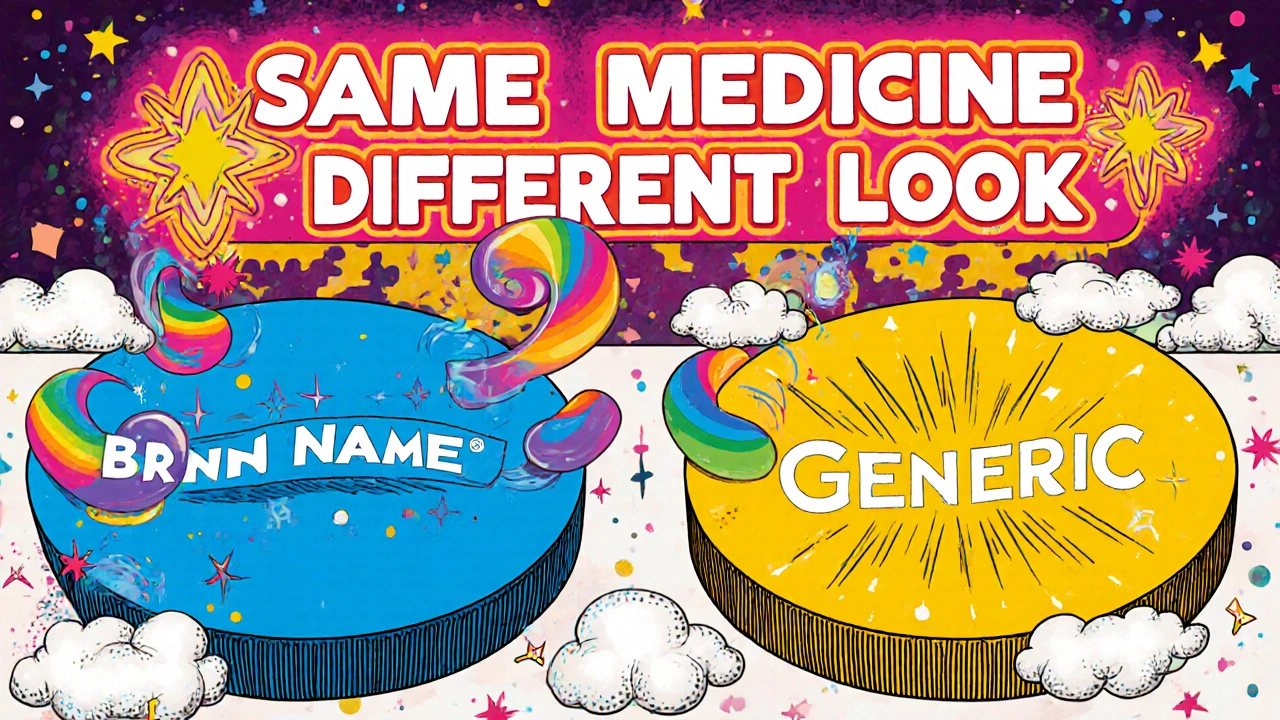
Generic drugs aren’t knockoffs. They’re exact copies in every way that matters: same active ingredient, same strength, same how they work in your body. But here’s the catch - U.S. trademark law says they can’t look identical to the brand-name version. Why? To prevent consumer confusion. Think of it like soda. You can’t make a cola that looks exactly like Coca-Cola, even if it tastes the same. The same logic applies to pills. The original drugmaker spent years designing their pill’s appearance - the blue oval, the red capsule, the scoring line - and trademarked it. That visual identity is legally protected. So when a generic version hits the market, it has to look different. The U.S. Food and Drug Administration (FDA) makes this clear: Generic drugs are medications that contain the same active ingredient as brand-name drugs but must differ in color, shape, size, or flavor to comply with trademark regulations. It’s not about safety. It’s about branding.What Exactly Changes - and What Doesn’t
The differences are only in the parts that don’t affect how the drug works. That means:- Color: Your brand-name pill might be white. The generic could be yellow or blue.
- Shape: A round tablet becomes an oval. A capsule might switch from two-tone to solid.
- Size: Slight variations in diameter or thickness are allowed.
- Flavoring: Chewable tablets or liquids may use different taste additives.
- Fillers and binders: These inactive ingredients - like lactose, starch, or dye - can differ. But they’re chosen for safety, not to change the effect.
- Active ingredient (same chemical compound)
- Dosage strength (same milligrams)
- How fast it’s absorbed (bioequivalence within 80-125% of brand)
- How it works in your body (same mechanism)
- Safety profile and side effects
How the FDA Balances Law and Safety
The FDA doesn’t just say, “Make it look different.” They’ve built a system to reduce confusion while following the law. Since the 1984 Hatch-Waxman Act, which opened the door for generic drugs, the agency has pushed manufacturers to make generics as similar as possible - within trademark rules. For example, if the brand-name pill is a small oval, the FDA recommends the generic be a small oval too. Not a giant circle. Not a star. Just a slightly different shade of the same shape. This helps patients recognize their medication even if the color changes. The FDA also requires generic makers to prove their product is bioequivalent - meaning it performs the same way in the body. That’s not a formality. It’s a full scientific review. The agency tests batches, inspects factories, and monitors side effects long after approval. Brand-name drugs are medications developed by pharmaceutical companies under patent protection, with legally protected visual characteristics including color, shape, and packaging. Once the patent expires, other companies can make copies - but only if they change the look.
Why This System Exists - And Who Benefits
This isn’t arbitrary. Trademark law exists to protect consumers from being tricked. If two pills looked identical, you might think you got the brand when you got the generic - or worse, you might think you got the generic when you got a completely different drug. But here’s the real win: cost. Generic drugs cost 80-85% less than brand-name versions. In the U.S., generics make up 90% of all prescriptions filled - but only about 23% of total drug spending. That’s billions saved every year. Without trademark rules, drug companies might have blocked generics by claiming “look-alike” pills infringed on their branding. The system forces competition while protecting innovation. Brand companies get their 17-20 years of patent protection. After that, generics enter - but they can’t copy the visual identity.Patient Confusion: A Real Problem
The system works great for cost savings and regulation. But for patients? It can be messy. You’ve been taking a white, round pill for your blood pressure for five years. One day, your pharmacy gives you a small, yellow oval. You panic. Did they give you the wrong medicine? Is it weaker? Is it fake? You’re not alone. A 2023 survey by UMass Memorial Health found that nearly 40% of patients reported confusion or anxiety after switching to a generic - especially if the pill looked completely different from what they remembered. That’s why pharmacies now put clear labels on vials: “This is a generic version of [Brand Name]. Active ingredient: [Drug Name]. May look different but works the same.” Some states even require pharmacists to note appearance changes in the patient’s record. And doctors? They’re trained to warn patients before switching: “Your pill might look different, but it’s the same medicine.”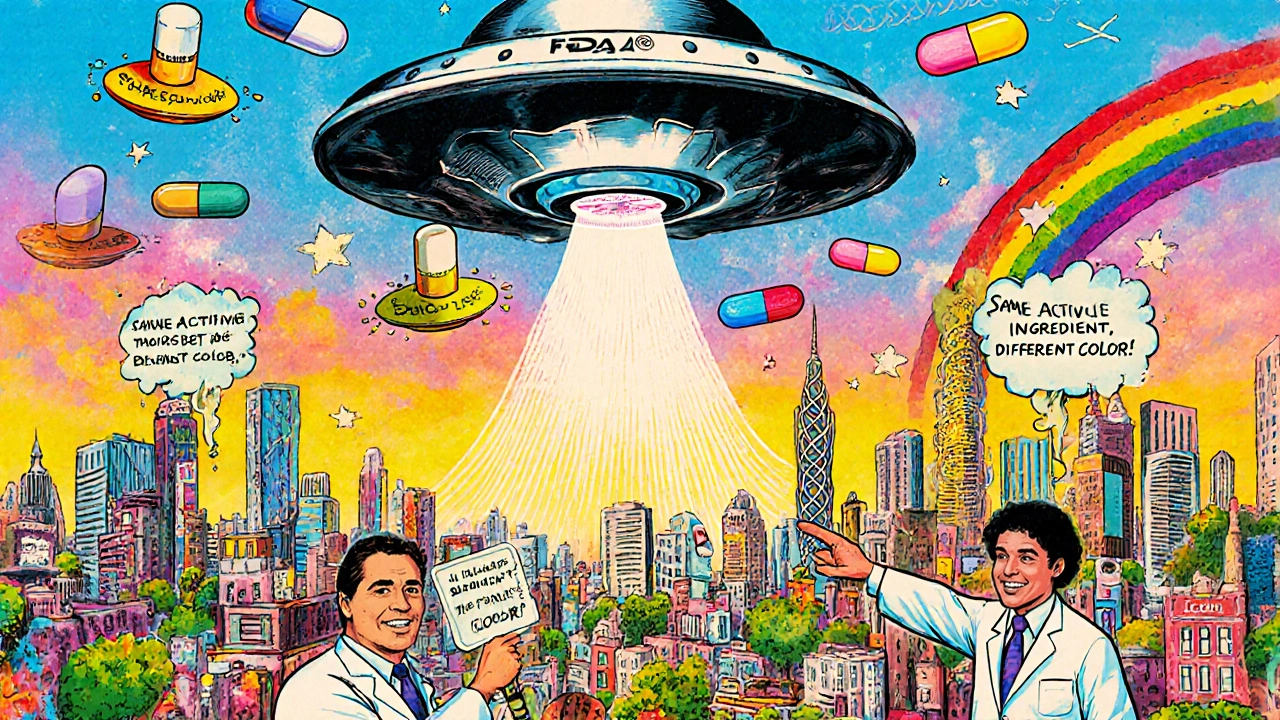
What You Should Do When Your Pill Looks Different
Here’s what to do if your generic looks unfamiliar:- Check the label. The pharmacy label will list the generic name and the brand name it replaces.
- Call your pharmacist. They can confirm it’s the correct drug and explain the change.
- Don’t stop taking it. Unless your doctor says otherwise, keep taking it. The change is legal and safe.
- Ask for consistency. If you’re worried about confusion, ask your pharmacist to stick with the same generic manufacturer each time.
Latika Gupta
November 30, 2025 AT 20:03My grandma switched to a generic lisinopril last month and cried because it was yellow instead of white. She thought she was getting poisoned. I had to show her the FDA page on my phone. We’re all just trying to survive this healthcare circus.
Also, why does every generic blood pressure pill look like a M&M? Someone’s got a candy addiction at the FDA.
Mary Kate Powers
December 1, 2025 AT 20:41As a pharmacist, I see this every day. Patients panic when the pill changes color - even if it’s the exact same generic from the same manufacturer. The real issue? Pharmacies rotate suppliers to save a few cents. One month it’s blue oval, next month it’s green capsule. No change in active ingredient, but the anxiety? Real.
Pro tip: Ask for the same generic brand every time. It’s not always possible, but it helps. And yes, the yellow one works just as well as the white one. I promise.
Sara Shumaker
December 2, 2025 AT 20:23There’s something deeply poetic about how we’ve built a system where a pill’s identity is defined by its color and shape - not its chemistry. We’ve outsourced trust to aesthetics.
We’ve trained generations to equate appearance with authenticity. A white pill = legitimate. A yellow one = sketchy. But the molecule doesn’t care what shade it’s dressed in. The body doesn’t read logos.
It’s not just trademark law. It’s cultural conditioning. We’ve turned medicine into a brand experience - and forgotten that healing doesn’t need a logo.
Maybe one day we’ll stop fearing the change in color and start celebrating the change in cost. That’s real progress.
Scott Collard
December 3, 2025 AT 00:24Of course generics look different. If they didn’t, the brand-name companies would sue them into oblivion. That’s capitalism, folks. Not science. Not medicine. Just lawyers and trademarks.
And don’t get me started on how the FDA lets them use different fillers. Some generics have more lactose than my grandma’s apple pie. If you’re lactose intolerant? Good luck.
Steven Howell
December 3, 2025 AT 02:18As someone who has worked in global pharmaceutical regulation, I can confirm this is not unique to the U.S. The European Medicines Agency enforces similar visual differentiation rules. In Japan, generics must even differ in scoring patterns. The intent is consistent: prevent counterfeit substitution while preserving market competition.
That said, the psychological impact on elderly patients remains under-addressed. Digital pill identifiers - QR codes embedded in blister packs - are emerging in Canada and Germany. Perhaps the U.S. should consider similar innovations to reduce anxiety without compromising trademark integrity.
Robert Bashaw
December 4, 2025 AT 15:47Let’s be real - this whole system is a circus. You’re taking a pill that’s chemically identical to the one your doctor prescribed… but it looks like it was designed by a 5-year-old on a sugar rush.
One week it’s a tiny blue diamond. Next week it’s a neon green football. I swear, if I see one more generic Adderall that looks like a Mardi Gras bead, I’m going to start carrying a pill identification app like it’s a sacred talisman.
And don’t even get me started on the flavor. Why does my generic cough syrup taste like expired bubblegum? Who approved that? A chemist? Or a candy factory intern?
We’re not just saving money here - we’re surviving a visual identity war waged by lawyers and marketing departments. The drug works? Fine. But my soul? It’s bruised.
Brandy Johnson
December 5, 2025 AT 09:06This is why America is falling apart. We let trademark lawyers dictate medical safety. If you can’t tell your pills apart, you’re not getting proper care - you’re getting corporate convenience. This isn’t innovation. It’s negligence dressed up as legal compliance.
And now we’re exporting this nonsense to developing countries. They’re getting generics that look like random candy because American corporations won’t give up their visual monopolies.
Real healthcare reform would abolish trademark restrictions on pharmaceuticals. Not more apps. Not more labels. Just let the pills be what they are: life-saving molecules, not marketing props.