When Do Drug Patents Expire? Understanding the 20-Year Term and Real-World Timelines
 Jan, 21 2026
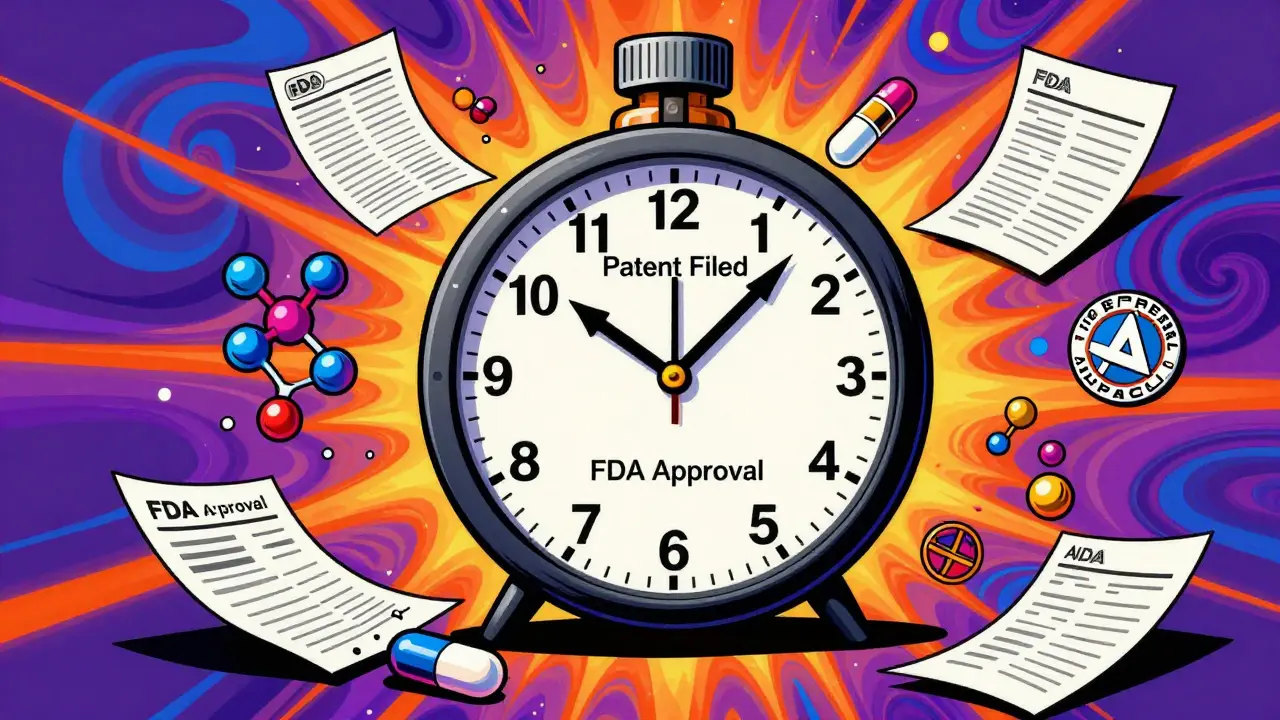
Most people assume a drug patent lasts 20 years - and that’s technically true. But if you’re waiting for a brand-name medication to become cheap, that 20-year clock doesn’t start when the drug hits the shelf. It starts when the company files the patent, often a decade before the drug is even approved. By the time the FDA gives the green light, you’ve already lost 5 to 10 years of protection. That’s why most drugs only have 7 to 12 years of actual market exclusivity before generics show up.
How the 20-Year Clock Really Works
The 20-year patent term comes from U.S. law - specifically, the Uruguay Round Agreements Act of 1994. Before that, patents lasted 17 years from the date they were granted. Now, it’s 20 years from the earliest filing date. Sounds simple, right? But here’s the catch: drug development takes forever. On average, it takes 10 to 12 years to go from lab to pharmacy. Clinical trials alone can take 6 to 8 years. That means a company might file a patent in 2010, but not get FDA approval until 2022. That leaves only 8 years to make back the $2.3 billion it spent on R&D.What Extends the Clock? Patent Term Adjustments and Extensions
The system knows this is unfair, so it gives drugmakers extra time - but only under strict rules. Two main tools exist: Patent Term Adjustment (PTA) and Patent Term Extension (PTE). PTA fixes delays caused by the USPTO. If the patent office takes more than 14 months to issue the first review, or more than three years to grant the patent, the company gets extra days added to the term. But if the applicant causes delays - like taking too long to respond to questions - those days don’t count. On average, PTA adds 2 to 4 years to a patent’s life. PTE is even more important. Thanks to the Hatch-Waxman Act of 1984, companies can get up to 5 extra years of protection to make up for time lost during FDA review. But there’s a hard cap: the total market exclusivity can’t go beyond 14 years from the date the FDA approves the drug. And you have to apply for it within 60 days of approval. Miss that deadline? You lose it forever.It’s Not Just One Patent - It’s a Web of Protection
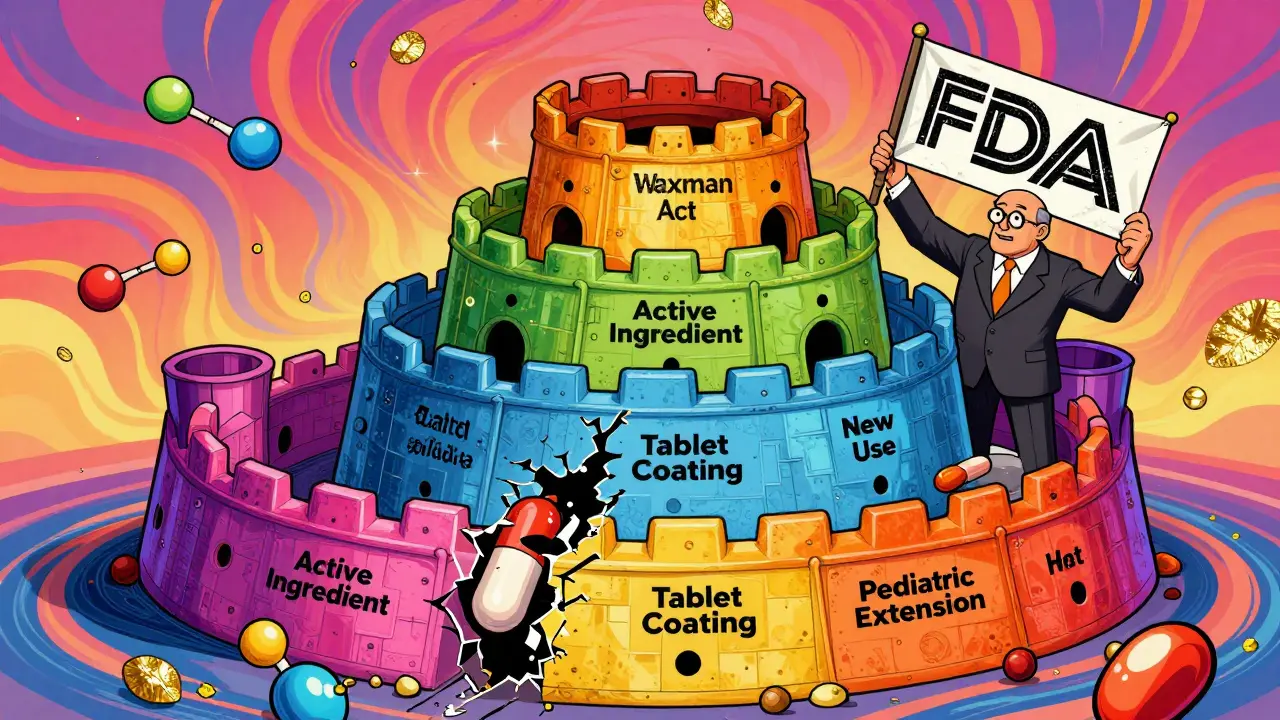
Big pharma doesn’t rely on a single patent. They build a fortress. A drug might have:- A patent on the active ingredient (the molecule itself)
- A patent on the specific tablet coating or dosage form
- A patent on how it’s manufactured
- A patent on how it’s used - like treating a new type of cancer
Regulatory Exclusivity: The Hidden Timer
Even if a patent expires, the FDA might still block generics. That’s because of regulatory exclusivity - separate from patents, and sometimes longer.- New Chemical Entity (NCE) exclusivity: 5 years. No generic can even be submitted to the FDA during this time.
- Orphan Drug exclusivity: 7 years for drugs treating rare diseases (under 200,000 U.S. patients).
- New Clinical Investigation exclusivity: 3 years if the company had to run new studies for a new use or dosage.
- Pediatric exclusivity: 6 months added to any existing patent or exclusivity period if the company does extra studies on children.
The Patent Cliff: When the Money Vanishes
The moment the last patent or exclusivity expires is called the “patent cliff.” This is when revenue drops fast. For example, after Eliquis (apixaban) lost patent protection in December 2022, generics captured 35% of the market within six months. By the end of the first year, prices dropped 62%. The same thing happened with Humira (adalimumab). It had 137 patents across seven families. When the last one fell in 2023, sales dropped over 90% in just 18 months. That’s why pharmaceutical companies lose $62 billion in revenue in 2025 alone - the peak year for patent expirations between 2023 and 2028.How Generics and Biosimilars Enter the Market
Generic drugmakers don’t just wait. They challenge patents. Under the Hatch-Waxman Act, the first generic company to file an “ANDA” (Abbreviated New Drug Application) and challenge a patent gets 180 days of exclusivity. That’s why you’ll often see one generic version hit the market first - and then others follow. But it’s not always smooth. If the brand company sues for infringement within 45 days of the generic’s notice, the FDA has to delay approval for 30 months - unless the court rules faster. On average, these lawsuits take 37 months to resolve. That means even if the patent expires in 2026, the generic might not launch until 2029. Biosimilars - generic versions of biologic drugs like Humira - face even tougher hurdles. They’re harder to copy, require more testing, and can’t be automatically substituted like small-molecule generics. So while small-molecule generics reach 90% market share in 18 months, biosimilars often take 3 to 5 years to hit 50%.What’s Changing Now?
In 2024, Congress proposed the “Restoring the America Invents Act,” which could cut patent term adjustments by 6 to 9 months. The USPTO is also rolling out automated systems to speed up PTA calculations - which might make it harder for companies to game the system. Meanwhile, companies are shifting strategy. Instead of relying on one blockbuster drug, they’re building franchises. Take Tagrisso (osimertinib) from AstraZeneca. The main patent expires in 2026, but combo therapies and new uses keep protection alive until 2033. That’s the new playbook: extend the life of the product, not just the patent.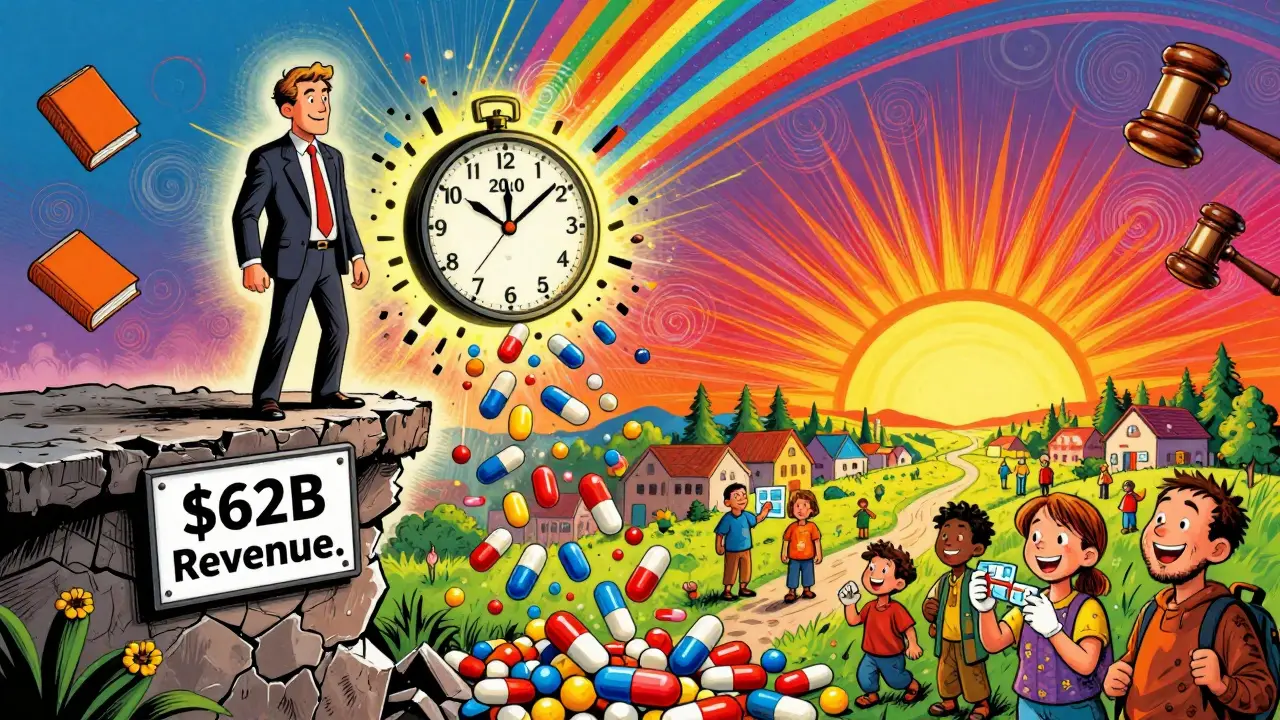
What This Means for Patients and Payers
For patients, patent expirations mean lower prices - eventually. But the transition isn’t always smooth. Insurance plans sometimes switch you to a generic, but if there’s still exclusivity in place, the copay might be higher than before. That’s why some people end up paying more during the “patent cliff” window. For insurers and governments, the drop in drug prices is a win. Generic drugs cost 80-95% less than brand-name versions. But the timing matters. If a drug loses protection all at once - like Humira - it can cause massive budget shifts for Medicare and Medicaid.How Companies Plan for the Endgame
Smart companies start planning for patent expiration during Phase II clinical trials - about 7 to 8 years before approval. They build teams of 15 to 25 legal and regulatory experts just to manage patents. They file in over 100 countries. They track every expiration date in the FDA’s Orange Book, which lists every patent tied to a drug. If they miss a filing deadline or misreport a date, they risk losing protection. They also prepare for litigation. Over 60% of pharmaceutical patents challenged between 2019 and 2023 were taken down through PTAB proceedings - a faster, cheaper way to knock out patents than court. That’s why generic companies now file IPR petitions as a standard tactic.What’s Next?
The debate over patent length isn’t over. The WHO wants to reduce patent terms to 15 years to improve global access. The pharmaceutical industry says that would kill innovation - since the average drug costs $2.3 billion to develop. But the numbers don’t lie: 78% of drugs facing patent expiration already use some kind of lifecycle management - reformulations, new delivery systems, companion diagnostics - to keep revenue flowing. The game isn’t just about patents anymore. It’s about controlling the entire treatment pathway.Bottom Line
Drug patents aren’t 20 years of market control. They’re a complex web of legal, regulatory, and strategic moves that stretch or shrink protection based on timing, paperwork, and lawsuits. The 20-year term is the starting point - not the finish line. What matters is when the last layer falls. That’s when prices drop. That’s when generics take over. And that’s when patients finally get affordable access.How long do drug patents actually last before generics can enter the market?
Most drugs have 7 to 12 years of actual market exclusivity, not 20. The 20-year patent clock starts when the patent is filed - often 10 years before the drug is approved. After FDA approval, additional protections like regulatory exclusivity or patent term extensions may add a few more years, but rarely more than 14 years total from approval.
Can a drug’s patent be extended beyond 20 years?
Yes, but only under specific conditions. The Hatch-Waxman Act allows up to 5 years of patent term extension to compensate for FDA review delays. However, the total market exclusivity - including all extensions - cannot exceed 14 years from the date of FDA approval. Patent Term Adjustment (PTA) can also add time for USPTO delays, but not for delays caused by the applicant.
Why do some drugs stay expensive even after the patent expires?
Even after a patent expires, other forms of protection can block generics. Regulatory exclusivity - like 5 years for new chemical entities or 6 months for pediatric studies - prevents the FDA from approving generics. Companies also use layered patents on formulations, delivery methods, or new uses to delay competition. Sometimes, lawsuits can delay generic entry for up to 30 months.
What’s the difference between a patent and regulatory exclusivity?
A patent is a legal right granted by the USPTO to protect an invention - like a molecule or method. Regulatory exclusivity is a government incentive from the FDA that blocks competitors from using the drug’s data to get approval. You can have one without the other. A drug can lose its patent but still be protected by exclusivity - and vice versa.
Why do generic drugs take longer to appear for biologics than for small-molecule drugs?
Biologics - like Humira or Enbrel - are complex proteins made from living cells. Copying them exactly is nearly impossible, so regulators require more testing to prove a biosimilar is safe and effective. Unlike small-molecule generics, biosimilars can’t be automatically substituted, and they face higher development costs. As a result, they take 3 to 5 years to reach 50% market share, compared to 18 months for small-molecule generics.
What happens if a generic company challenges a patent and wins?
If a generic company successfully challenges a patent through litigation or a PTAB review, the patent is invalidated. The FDA can then approve the generic drug. The first challenger often gets 180 days of exclusivity - meaning no other generic can enter during that time. This creates a rush to file, and many companies use this strategy to enter the market early and capture major market share.
Is there a way to predict when a specific drug’s patent will expire?
Yes. The FDA’s Orange Book lists all patents tied to approved drugs and their expiration dates. Companies like DrugPatentWatch and LexisNexis provide detailed tracking tools that combine patent filings, exclusivity periods, and litigation data to predict exact expiration dates. For the most accurate info, check the Orange Book and cross-reference with patent databases.
Oladeji Omobolaji
January 21, 2026 AT 12:40Man, I had no idea the clock started ticking before the drug even hit the market. That’s wild. So you’re telling me Big Pharma gets to lock in prices for like 12 years max, but they make it sound like it’s 20? Feels like a bait-and-switch.
Janet King
January 22, 2026 AT 06:32The 20-year patent term begins at filing, not at approval. Regulatory exclusivity periods, including new chemical entity exclusivity and pediatric exclusivity, may further delay generic entry. Patent term adjustments for USPTO delays are also common, but capped at 14 years from FDA approval.
dana torgersen
January 23, 2026 AT 02:30Okay so… like… the patent… is… not… really… 20 years?? But… it’s… *technically*… 20?? Like… what even is reality anymore?? I mean, I get it, the FDA takes forever, but… why… do we… let them… do… this??
Kerry Moore
January 23, 2026 AT 18:02This is an exceptionally well-structured overview of the patent and regulatory landscape. The distinction between patent term adjustment and extension is critical for understanding market dynamics. The data on Hatch-Waxman incentives and the 180-day exclusivity window for first filers underscores the strategic complexity behind generic entry.
Laura Rice
January 23, 2026 AT 23:44OMG I just realized why my insulin is still $500 even though it’s been out for 15 years??!! Like… they just keep adding little patents on the pump… the packaging… the flavor??!! I feel so manipulated 😭
Susannah Green
January 25, 2026 AT 15:34Don’t forget the Orange Book! It’s the bible for this stuff. I check it every time my pharmacy switches my meds. If you’re trying to predict when a drug goes generic, cross-reference the patent numbers with the FDA’s list. And watch for those 6-month pediatric extensions - they’re sneaky.
Sue Stone
January 27, 2026 AT 11:38So… if a company files a patent in 2010, gets approval in 2022, and gets 5 years of extension… that’s 17 years total? But only 5 years on the market? That math still hurts.
Vanessa Barber
January 28, 2026 AT 13:59Actually, the 14-year cap from approval is misleading - some drugs get multiple exclusivities stacked. And the 180-day generic window? That’s just a corporate lottery. Most times, the first filer is a shell company that sells the rights immediately.
Sallie Jane Barnes
January 29, 2026 AT 10:41For anyone struggling with high drug costs - know that you’re not alone. The system is rigged, but awareness is power. Use the Orange Book. Talk to your pharmacist. Ask if there’s a biosimilar or a therapeutic alternative. And if you’re a patient advocate - keep pushing. Change happens when people stop being quiet.
charley lopez
January 30, 2026 AT 14:21Layered patenting, coupled with Paragraph IV challenges and PTAB inter partes reviews, represents a strategic convergence of IP law and regulatory economics. The 30-month stay under Hatch-Waxman functions as a de facto market barrier, particularly when litigation is prolonged. Biosimilars face additional bioequivalence burdens under the BPCIA, resulting in delayed market penetration relative to small-molecule generics.