Insurance Coverage of Online Pharmacy Generics: What You Need to Know in 2025
 Dec, 11 2025
When you buy generic drugs from an online pharmacy, your insurance might not cover it - even if the same drug is covered at your local pharmacy. This isn’t a glitch. It’s the system. And if you don’t understand how it works, you could end up paying way more than you need to.
Not All Online Pharmacies Are the Same
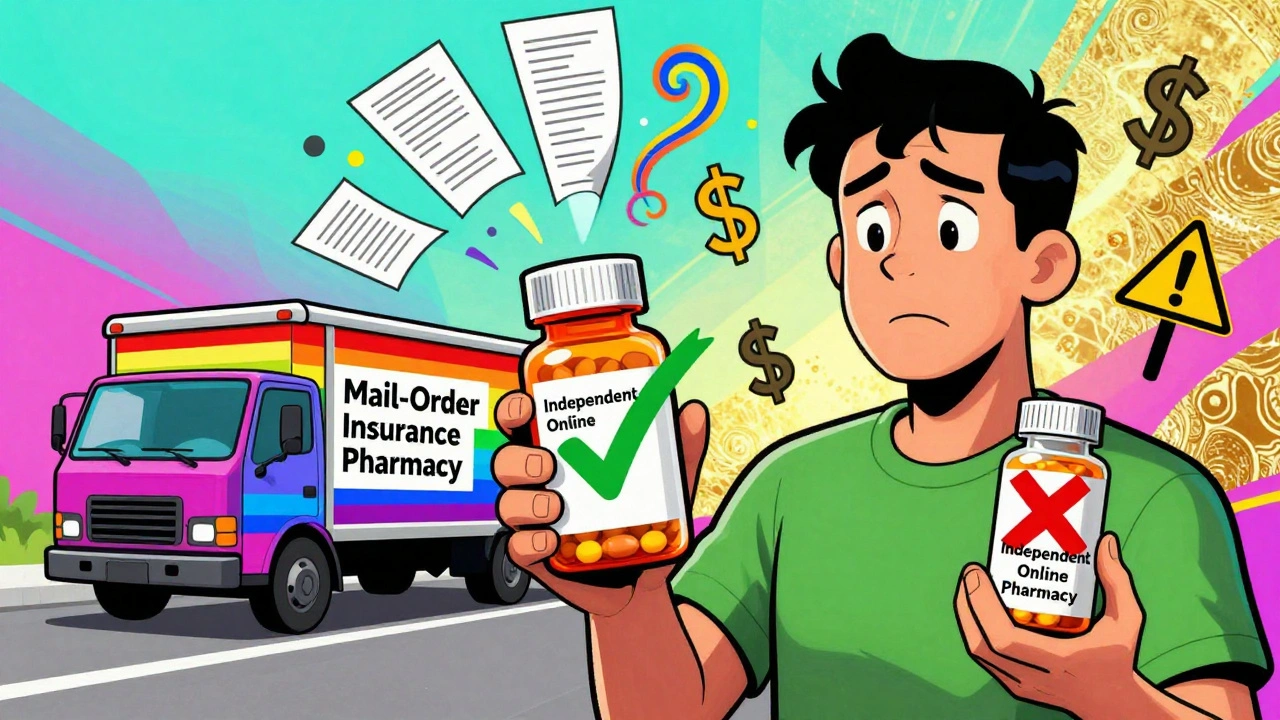
There’s a big difference between a mail-order pharmacy run by your insurance plan and a random website you found on Google. Mail-order pharmacies like Express Scripts, CVS Caremark, or Optum Rx are part of your health plan’s pharmacy benefit manager (PBM) network. They’re built into your insurance. If you use them, your copay kicks in, and your plan pays the rest. But independent online pharmacies? Those are different. They’re like Amazon or Walmart’s online store for prescriptions. They don’t automatically talk to your insurance. You pay upfront, then sometimes submit a claim for reimbursement - if your plan even allows it. Many don’t. And if you’re not careful, you could pay full price for a drug that’s only $5 with insurance.How Insurance Tiers Work (And Why It Matters)
Your insurance doesn’t treat all drugs the same. It puts them in tiers. Generic drugs? Usually Tier 1. That means the lowest cost. For most plans in 2025, a 30-day supply of a generic like lisinopril or metformin costs $5 at a network pharmacy. A 90-day supply through mail-order? Often $10. That’s a 33% savings per dose. But here’s the catch: not every generic is on every plan’s formulary. Your plan might cover the brand-name version of a drug but not the generic - or vice versa. And if the generic isn’t listed, your insurance won’t pay anything. That’s why you need to check before you order.Mail-Order vs. Retail vs. Independent Online
Let’s break down the real costs:- Mail-order (insurance-based): $10 for 90 days of metformin. Takes 5-7 days to arrive. Perfect for chronic meds you refill every month.
- Retail pharmacy (in-network): $5 for 30 days. Same drug. You get it same day. But you’ll pay $15 every 30 days if you don’t refill in bulk.
- Independent online pharmacy: $25 for 90 days - if they even accept your insurance. If not, you pay full price and hope for reimbursement. Many don’t offer it.
Non-Medical Switching: When Insurance Overrides Your Doctor
Your doctor prescribes a brand-name drug because it’s right for you. But your insurer says no. They force you onto a generic - even if your doctor didn’t recommend it. This is called non-medical switching. It’s legal. And it’s common. In 2023, 68% of large employers required generic substitution when available, according to the Kaiser Family Foundation. Insurers do this to save money. But it can backfire. There are real stories: patients with epilepsy, multiple sclerosis, or thyroid disorders switched to generics and had severe side effects. One Reddit user reported ER visits after their insurance switched their Copaxone to a generic without warning. If this happens to you, you can fight back. Ask your doctor to file a prior authorization request. They can explain why the brand is medically necessary. Insurers have to review it - but they don’t always approve.Amazon Pharmacy’s RxPass: A New Model
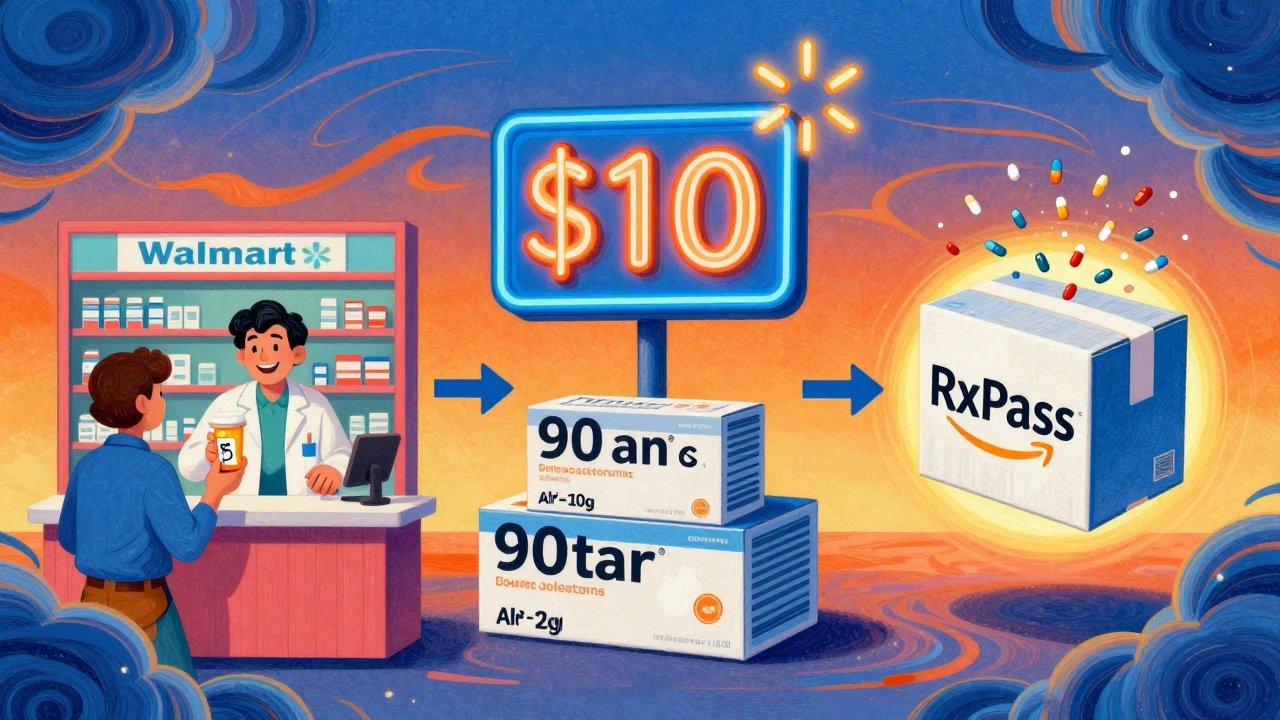
Amazon Pharmacy launched RxPass in 2023. For $5 a month, Prime members get unlimited access to over 100 common generics - no copay, no insurance needed. Drugs like atorvastatin, metformin, levothyroxine, and lisinopril are included. It’s not insurance. It’s a subscription. And it’s growing fast. By Q3 2023, it covered more than 100 medications, up from 60 in late 2022. Reviews on Trustpilot are 4.3 out of 5. But it’s not perfect. If your drug isn’t on the list - say, a less common thyroid med or a specialty generic - you’re out of luck. For people on high-deductible plans or those who don’t use insurance much, RxPass can save hundreds a year. But if your insurance already covers your meds for $5, it’s not worth it.How to Check Coverage Before You Order
Don’t guess. Don’t hope. Check.- Log into your insurance member portal. Look for a tool called “Check Drug Cost & Coverage” or “Formulary Search.”
- Enter the exact name of the generic drug. Make sure it’s spelled right.
- See which tier it’s on. Is it covered? What’s the copay?
- Check if your plan includes mail-order. If so, compare the 90-day price to the 30-day retail price.
- If you’re using an independent online pharmacy, call them. Ask: “Do you accept my insurance? What’s my copay?”
What to Do If You’re Charged Out-of-Network
You ordered from an online pharmacy that doesn’t accept your insurance. You paid $40. Now you’re wondering if you can get reimbursed. It’s possible - but only if your plan allows out-of-network pharmacy claims. Most don’t. If yours does, you’ll need:- A copy of your receipt
- The original prescription
- Your insurance card
- A completed reimbursement form (find it on your insurer’s website)
The Bigger Picture: Who Controls Your Prescriptions?
Behind every insurance plan is a pharmacy benefit manager - CVS Caremark, Express Scripts, or Optum Rx. These companies control which drugs are covered, which pharmacies you can use, and how much you pay. They’re not your doctor. They’re not your pharmacist. They’re a middleman focused on cost. In 2025, the Big Three PBMs manage over 70% of all prescriptions in the U.S. That means your options are limited. And if your plan uses one of them, your choices are shaped by their formularies - not your needs. That’s why knowing your plan’s rules matters more than ever.Final Advice: Don’t Assume. Verify.
Insurance coverage for online pharmacy generics isn’t complicated. It’s just confusing. And if you skip the steps, you’ll pay more.- Always check your plan’s formulary before ordering online.
- Compare mail-order, retail, and cash prices - including Walmart’s $10 program.
- Don’t trust random websites. Call the pharmacy. Ask if they accept your insurance.
- If your doctor prescribes a brand and your insurer forces a generic, ask for a prior authorization.
- If you’re on a high-deductible plan, cash prices might be cheaper than your copay.
Do all online pharmacies accept insurance?
No. Only mail-order pharmacies tied to your insurance plan’s pharmacy benefit manager (PBM) - like Express Scripts or CVS Caremark - automatically accept your insurance. Independent online pharmacies, like those you find on Google, may or may not accept it. Always call them first and ask for your specific insurance plan name and ID number.
Why is my generic drug not covered by insurance?
Your insurance plan has a list of covered drugs called a formulary. If your generic isn’t on that list, it’s not covered - even if it’s the same drug as one that is. Plans sometimes exclude certain generics because they’re not in their preferred supplier network, or they’re pushing you toward a different version. Always check your plan’s formulary search tool before ordering.
Can I use my insurance at Walmart’s $10 generic program?
No - and that’s the point. Walmart’s $10 program is a cash price, not an insurance benefit. If you’re on a high-deductible plan, paying cash at Walmart can be cheaper than using your insurance. You don’t need insurance to use it. Just show up or order online and pay $10 for a 90-day supply of 50+ common generics.
What’s the difference between mail-order and online pharmacy?
Mail-order pharmacies are part of your insurance plan’s network. You get your meds delivered by a PBM like Express Scripts, and your copay is built into your plan. Independent online pharmacies are standalone retailers - like Amazon or a small website - that may or may not work with your insurance. Mail-order is covered. Independent online is not guaranteed.
Is Amazon RxPass worth it if I have insurance?
Only if your insurance doesn’t cover your meds well. If your plan already gives you $5 for a 30-day generic, RxPass isn’t cheaper. But if you’re on a high-deductible plan, pay full price for meds, or your insurance doesn’t cover your specific generic, $5/month for unlimited access to 100+ generics can save you hundreds. Just check if your meds are on their list first.
What should I do if my insurance switched my brand drug to a generic without telling me?
Call your insurer and ask for the reason. Then contact your doctor. They can file a prior authorization request to get the brand drug back - especially if you’ve had side effects or it’s medically necessary. Keep records of any health issues that started after the switch. Many patients have successfully appealed these changes with medical documentation.
Deborah Andrich
December 12, 2025 AT 06:09Just spent 45 minutes on my insurer’s portal trying to find if my metformin’s covered. Turned out the generic they approved was a different salt form. No warning. No notice. I’m not mad, I’m just disappointed in the system.
People think insurance is helping them. It’s just a cost-shifting machine. Your doctor’s not in charge. The algorithm is.
Lauren Scrima
December 13, 2025 AT 08:04So let me get this straight… you’re telling me I can pay $5/month on Amazon and get all my meds for free… but if I use my $0-deductible plan, I pay $5 per 30 days?
Ohhhhh so THAT’S why my bill went up last month. I’m canceling insurance. 🙃
Webster Bull
December 14, 2025 AT 19:09Real talk: insurance is a pyramid scheme where the top 1% get discounts and the rest pay for the illusion of care.
Walmart’s $10 program? That’s the real MVP. No forms. No waiting. Just walk in. The system hates that. That’s why they don’t advertise it.
Stop trusting them. Pay cash. Save your sanity.
Harriet Wollaston
December 16, 2025 AT 02:43I had to switch my thyroid med to a generic last year. Started having panic attacks. My doctor said it was probably the switch. Insurance said ‘it’s bioequivalent’ and hung up.
Went cash at Walmart. Same pill. Same results. $10. No drama.
Y’all need to know this. It’s not about being anti-insurance. It’s about being pro-survival.
Ronan Lansbury
December 16, 2025 AT 16:59Of course the system is rigged. Did you know PBMs get kickbacks from drug manufacturers for pushing certain generics? The ‘cheaper’ option isn’t cheaper-it’s profitable.
Amazon RxPass? A Trojan horse. They’re gathering your health data while you think you’re saving money.
They’re not your allies. They’re your landlords. And you’re paying rent in trust.
Michael Gardner
December 17, 2025 AT 04:44Wait, so Walmart’s $10 program is cheaper than insurance? Then why does everyone still use insurance?
Because they’re too lazy to read the fine print. Or too scared to go off-plan.
Newsflash: you don’t need permission to be smart.
Yatendra S
December 18, 2025 AT 02:36life is a simulation 🌌
we think we're choosing meds
but the algorithm chooses for us
we're just NPCs in the PBM economy 🤖💊
nina nakamura
December 19, 2025 AT 10:43Anyone who uses RxPass is a fool. You’re giving Amazon your medical history for a $5 monthly fee. They’ll sell it to advertisers. Then they’ll raise your premiums because you’re ‘high risk’ for taking meds.
And don’t get me started on Walmart. They don’t care about you. They care about your foot traffic.
You’re not saving money. You’re being exploited.
Richard Ayres
December 19, 2025 AT 20:43This is an excellent breakdown. I appreciate how clearly you’ve laid out the mechanics behind what feels like a chaotic system.
One thing to add: many people don’t realize they can request a formulary update from their employer’s HR department. If enough people ask, they can negotiate better coverage.
Change doesn’t come from complaining. It comes from organized, informed action.
sharon soila
December 20, 2025 AT 00:36Everyone deserves to feel safe when they take their medicine.
It’s not about being cheap. It’s about being cared for.
If your plan won’t cover the right drug, ask for help.
If your doctor won’t fight for you, find a new one.
You are worth more than a spreadsheet.
Never forget that.
Himmat Singh
December 21, 2025 AT 06:28While the economic rationale underpinning pharmacy benefit manager practices is theoretically sound, the ethical implications of non-medical switching cannot be overlooked.
One must consider the principle of beneficence in clinical decision-making, which is systematically undermined by profit-driven formulary constraints.
It is imperative that regulatory oversight be strengthened to preserve patient autonomy and therapeutic integrity.
Tommy Watson
December 21, 2025 AT 19:09So you’re telling me I paid $40 for my blood pressure med because I used some random site… and now I have to mail in paperwork for 8 weeks to get $10 back?
Bro I’m not doing that.
I’m just gonna buy it at Walmart.
And if my insurance finds out?
Let ‘em try to take my $10.