Unexpected Side Effects from Generic Medications: When to Seek Help
 Dec, 6 2025
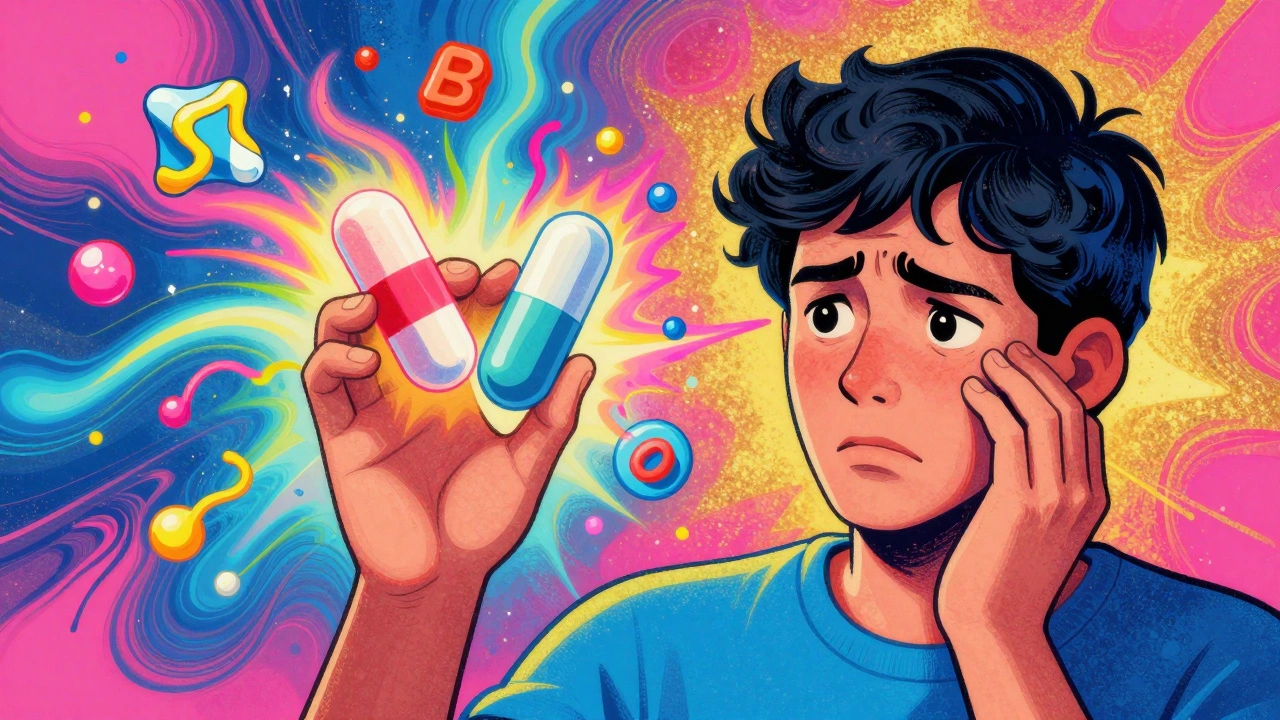
Switching from a brand-name drug to a generic version is supposed to be simple-same active ingredient, same dose, same effect. But for some people, it’s not that straightforward. You might start feeling off a few days after your pharmacist hands you a new bottle. Headaches. Nausea. A rash that wasn’t there before. Or worse-heart palpitations, swelling, or sudden mood swings. These aren’t just in your head. They’re real, documented side effects tied to the switch itself.
Why Do Generics Sometimes Cause New Problems?
Generic drugs are required by the FDA to have the same active ingredient as the brand-name version. That part is true. But what’s not always the same? The inactive ingredients. These are the fillers, dyes, preservatives, and flavorings that hold the pill together or make it easier to swallow. They don’t treat your condition, but they can trigger reactions in sensitive people.
Take lactose, for example. It’s a common filler in pills. If you’re lactose intolerant, even a small amount can cause bloating, cramps, or diarrhea. Gluten is another hidden culprit-used in some formulations, even though it’s not listed clearly on the label. People with celiac disease have reported flare-ups after switching to a new generic version of their medication.
Then there are dyes. Red 40, Yellow 5, and other artificial colorings have been linked to headaches, rashes, and even hyperactivity in children. One study found that kids on generic ADHD medications with certain dyes had more behavioral issues than those on brand-name versions without them.
And it’s not just what’s in the pill-it’s how it’s made. Different manufacturers use different processes. One company might make a tablet that dissolves slowly, while another’s version breaks down too fast. For drugs with a narrow therapeutic index-like warfarin, levothyroxine, or phenytoin-this tiny difference can throw your whole system off. A 2020 study in JAMA Internal Medicine found that 14.7% of patients on generic warfarin had unexpected bleeding after switching manufacturers. That’s more than one in seven.
Which Medications Carry the Highest Risk?
Not all generics are created equal when it comes to side effects. Some drug classes are far more likely to cause trouble after a switch:
- Thyroid meds (like levothyroxine): A 2023 GoodRx analysis showed 23.7% of patients reported new side effects after switching generics. Symptoms include anxiety, heart racing, fatigue, and weight changes-even when the dose hasn’t changed.
- Antiseizure drugs (like lamotrigine, phenytoin): Even small changes in blood levels can trigger seizures or dangerous skin reactions like Stevens-Johnson Syndrome. The FDA has flagged these as high-risk for variation.
- Psychiatric medications (like SSRIs, Adderall): Patients report mood swings, insomnia, or worsening depression after switching. One Reddit user described switching from brand-name Adderall to a generic version and getting severe stomach pain and headaches within 48 hours.
- Blood pressure meds (like amlodipine): Swelling in the ankles, dizziness, or sudden drops in blood pressure have been reported after switching manufacturers. One patient’s review on Drugs.com noted her ankle swelling started the week after her pharmacy switched to a different generic.
- Ophthalmic drops (like travoprost): The preservative in brand-name Travatan Z is different from what’s used in most generics. Patients with sensitive eyes reported burning, redness, and vision changes after switching.
The FDA lists 18 drugs as having a narrow therapeutic index-meaning the difference between a safe dose and a dangerous one is tiny. If you’re on one of these, switching generics isn’t just a cost-saving move. It’s a medical decision.

When Should You Worry? Warning Signs You Can’t Ignore
Not every new symptom means something’s wrong. But some reactions need immediate attention. Here’s what to watch for:
- Severe skin reactions: A painful, spreading rash with blisters or peeling skin-especially around the mouth, eyes, or genitals-could be Stevens-Johnson Syndrome. This is rare but life-threatening.
- Priapism: A painful erection lasting more than four hours. This has been linked to antidepressants like trazodone and bupropion. It can cause permanent damage if not treated quickly.
- Unexplained bleeding: Bruising easily, nosebleeds, blood in urine or stool. This is a red flag if you’re on blood thinners like warfarin.
- Sudden changes in heart rhythm: Fluttering, pounding, or skipping beats-especially if you’re on thyroid or heart meds.
- Neurological changes: Confusion, tremors, seizures, or new vision problems after a switch.
If you experience any of these, don’t wait. Go to the ER or call 911.
For less urgent but still concerning symptoms, call your doctor within 24 hours if:
- A new symptom started within 1-2 weeks of switching medications
- The symptom lasts longer than 3-5 days
- You’re having severe nausea, vomiting, or diarrhea that won’t go away
- Your blood pressure or heart rate changes by more than 15% from your normal baseline
- You develop a rash, hives, or swelling in your face or throat
Don’t stop taking your medicine on your own. That can be dangerous. Instead, write down what happened, when it started, and what generic you were switched to. Bring that info to your provider.
What You Can Do to Protect Yourself
You don’t have to accept side effects as normal. Here’s how to take control:
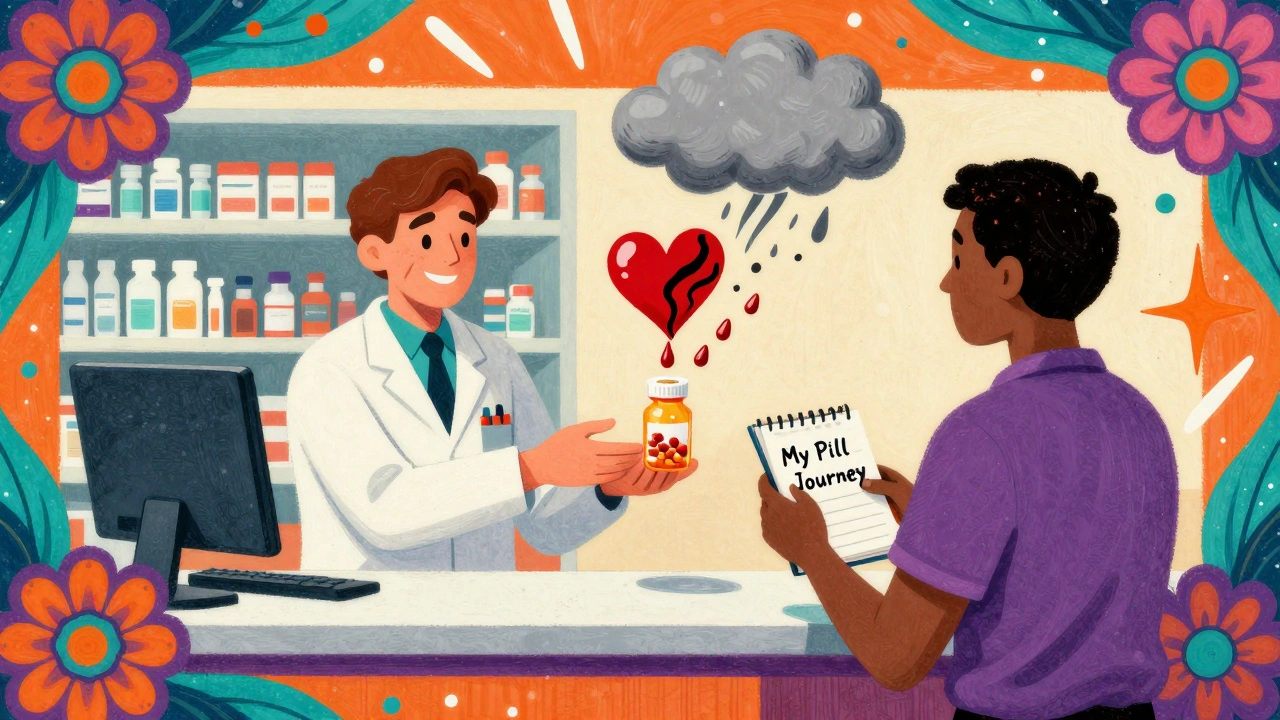
- Ask your pharmacist: When you pick up your prescription, ask which manufacturer made the generic. Write it down. If you get a different one next time, ask why.
- Check the pill: Generic pills often look different from the brand. Take a photo of your pill when you first get it. If the next refill looks different, ask about it.
- Keep a log: Note any new symptoms, when they started, and what medication you were taking. This helps your doctor spot patterns.
- Request a specific brand: If a certain generic works for you, ask your doctor to write “Dispense as written” or “Do not substitute” on the prescription. Pharmacists must follow that.
- Report side effects: Use the FDA’s MedWatch program to report problems. Include the manufacturer name and lot number if you have it. These reports help the FDA spot dangerous trends.
A 2023 Johns Hopkins study found that patients who tracked their generic manufacturer and told their doctor which one worked best reduced side effect-related discontinuations by nearly 38%. That’s not just a tip-it’s a strategy.
The Bigger Picture: Why This Keeps Happening
Generics save the U.S. healthcare system over $1.6 trillion a year. That’s huge. But the system is built on speed and cost-not individualized care. Most generics are made overseas-in India and China-where 73% of active ingredients come from. FDA inspections are inconsistent, and oversight is limited.
Big generic manufacturers now control over 40% of the U.S. market. Fewer companies means fewer options if one version causes problems. And while the FDA says generics are bioequivalent, “bioequivalent” doesn’t mean “identical.” It just means the average blood levels fall within a range. For some people, even a small shift can be enough to trigger symptoms.
There’s movement to fix this. In February 2024, Congress introduced the Generic Drug Safety Act, which would require manufacturers to notify doctors and pharmacists whenever they change inactive ingredients. The FDA is also forming a new advisory committee focused on high-risk drugs like thyroid and epilepsy meds.
Until then, the burden falls on you and your doctor. Don’t assume all generics are the same. Don’t assume side effects are “just in your head.” And don’t stay silent if something feels off.
Final Thought: Your Body Knows
Doctors and pharmacists rely on data and averages. But your body doesn’t care about averages. It reacts to what’s in the pill you take today. If you feel different after a switch, trust that feeling. Document it. Talk to your provider. Ask for the version that worked before. You have the right to a medication that keeps you safe-not just cheap.
Can generic medications cause different side effects than brand-name drugs?
Yes. While generics must contain the same active ingredient, they can differ in inactive ingredients like fillers, dyes, and preservatives. These can trigger allergic reactions, digestive issues, or changes in how the drug is absorbed. For drugs with a narrow therapeutic index-like warfarin, levothyroxine, or phenytoin-even small differences can lead to serious side effects.
What should I do if I think my generic medication is causing side effects?
Don’t stop taking it. Instead, write down your symptoms, when they started, and which generic manufacturer made your pill. Contact your doctor within 24 hours if symptoms are severe or persistent. If you have a life-threatening reaction-like a rash with blisters, trouble breathing, or a prolonged erection-go to the emergency room immediately.
Which generic drugs are most likely to cause problems?
Drugs with a narrow therapeutic index carry the highest risk: levothyroxine (for thyroid), warfarin (blood thinner), phenytoin and lamotrigine (for seizures), and some psychiatric meds like Adderall and SSRIs. Studies show higher rates of side effects after switching generics in these categories. Also watch out for eye drops, inhalers, and topical creams-formulation differences are harder to control in these forms.
How can I find out which manufacturer made my generic drug?
Ask your pharmacist when you pick up your prescription. The manufacturer name is often printed on the bottle or packaging. You can also check the pill’s imprint code online using tools like Drugs.com’s Pill Identifier. Keep a note of the manufacturer and lot number-this helps if side effects occur.
Can I ask my doctor to prescribe only the brand-name drug?
Yes. Your doctor can write “Dispense as written” or “Do not substitute” on the prescription. Pharmacists are legally required to follow this. This is especially important if you’ve had side effects with a generic before. Insurance may require prior authorization, but many will cover the brand if there’s documented medical need.
Are generic drugs less safe than brand-name drugs?
Generally, no. Most generics are safe and effective. But safety isn’t just about the active ingredient-it’s about the whole formulation. Variations in manufacturing, inactive ingredients, and quality control-especially with overseas production-can lead to unexpected reactions in sensitive individuals. The FDA approves generics, but post-market reports show that some patients do experience problems after switching.
David Brooks
December 8, 2025 AT 00:42Bro, I switched to a generic thyroid med last year and thought I was going crazy-sweating at night, heart racing like I’d run a marathon. Turns out the new batch had a different filler. I started tracking the pill’s imprint and found out the manufacturer changed. Now I only take the one with the ‘G 17’ mark. My doctor didn’t even know this was a thing until I showed him. Don’t let them gaslight you. Your body remembers.
Also, if you’re on levothyroxine, DO NOT let them swap it without telling you. It’s not just a pill. It’s your metabolism’s conductor.
Jennifer Anderson
December 8, 2025 AT 21:59omg i had the same thing with my ssri!! switched generics and woke up crying for no reason for 3 days straight. i thought i was having a breakdown but it was the dye. the pharmacist gave me a new bottle and i took a pic of the pill-turned out the new one had red 40. i asked for the old one and they said ‘oh yeah that one’s discontinued.’ like, wtf. now i keep the bottle as proof. if you feel off after a switch, it’s not you. it’s the pill.
Nicholas Heer
December 9, 2025 AT 02:45THIS IS THE FEDERAL GOVERNMENT’S FAULT. THEY LET CHINA AND INDIA MAKE OUR MEDS. YOU THINK THEY CARE IF YOUR KID GETS A RASH FROM YELLOW 5? NO. THEY CARE ABOUT COST. THE FDA IS A TOY OF BIG PHARMA. THEY INSPECT 1% OF OVERSEAS PLANTS. 73% OF ACTIVE INGREDIENTS COME FROM COUNTRIES THAT DON’T EVEN HAVE REAL MEDICAL REGULATIONS. THIS ISN’T A ‘SIDE EFFECT’-IT’S A BIOLOGICAL WARFARE OPERATION. AND THEY WANT YOU TO THINK IT’S ‘ALL IN YOUR HEAD.’
WHEN I SWITCHED TO GENERIC WARFARIN, I STARTED BLEEDING OUT MY NOSE. I TOOK A PICTURE OF THE PILLS. THE LOT NUMBER WAS FROM A FACTORY IN PUNJAB. I FILED A MEDWATCH REPORT. THEY IGNORED IT. NOW I BUY MY MEDS IN MEXICO. AT LEAST THERE THEY DON’T LIE.
Sangram Lavte
December 10, 2025 AT 14:00I work in a pharmacy in Bangalore and we supply generics to the U.S. market. The fillers vary because each batch is made under different conditions. Some are cheaper, some are more stable. The active ingredient is always correct, but the rest? It’s a gamble. Patients rarely ask. But when they do, we tell them. The system isn’t designed for transparency. It’s designed for volume.
Still, most people do fine. Just know: if you feel strange, it’s not weakness. It’s biology. Track it. Speak up.
Oliver Damon
December 11, 2025 AT 19:36There’s a deeper philosophical issue here: medicine treats the body as a statistical average. But biology is individual. Two people with identical lab results can react completely differently to the same drug because of gut flora, epigenetics, or even microbiome differences. The FDA’s ‘bioequivalent’ standard assumes uniformity where none exists.
What we’re really fighting isn’t just bad fillers-it’s the illusion that medicine can be standardized without consequence. We’ve outsourced nuance to efficiency. And now, people are paying the price in rashes, palpitations, and silent suffering.
The solution isn’t to reject generics. It’s to demand traceability. Lot numbers. Manufacturer transparency. And recognition that ‘the same’ doesn’t mean ‘the same for you.’
Kurt Russell
December 12, 2025 AT 20:01LISTEN UP. If you’re on thyroid meds, blood thinners, or seizure drugs-STOP letting your pharmacy swap your pills without asking. That’s not saving money. That’s playing Russian roulette with your nervous system.
I used to be skeptical too. Then my sister had a seizure because her generic lamotrigine dissolved too fast. She was fine on the old one. The pharmacist didn’t even tell her it changed. Now she has a laminated card in her wallet: ‘DO NOT SUBSTITUTE. BRAND ONLY.’
YOU ARE NOT BEING DIFFICULT. YOU ARE BEING SMART. TELL YOUR DOCTOR. TELL YOUR PHARMACIST. TELL EVERYONE. THIS ISN’T A COMPLAINT. IT’S A SURVIVAL STRATEGY.
Stacy here
December 13, 2025 AT 21:38They don’t want you to know this, but the real reason generics are allowed to vary is because the FDA is corrupt. The same people who approve these drugs have stock in the big generic manufacturers. Why do you think they push them so hard? It’s not about savings-it’s about profit. And they’ve brainwashed doctors into thinking it’s all the same.
My cousin was on Adderall. Switched to generic. Got panic attacks, nosebleeds, and started hallucinating tiny spiders. Took him six months to convince his doctor it wasn’t ‘anxiety.’ The pill had a different coating. That’s it.
They call it ‘bioequivalent.’ I call it a lie wrapped in a white tablet.
And don’t even get me started on the dyes. Red 40 is basically poison. It’s banned in Europe. But here? It’s in your ADHD meds. You’re being fed chemicals that are illegal in other countries. And they want you to be grateful.
Ryan Sullivan
December 14, 2025 AT 07:46It’s amusing how people treat pharmaceuticals like artisanal coffee. ‘Oh, this batch has a different filler, so I’m having existential dread.’ The FDA’s bioequivalence standards are rigorously tested. If you’re experiencing side effects, it’s more likely due to noncompliance, drug interactions, or psychological attribution bias. Stop blaming the pill and start examining your own behavior.
Also, ‘dispense as written’ prescriptions are not a right-they’re a privilege granted only when medically necessary. Most patients don’t need them. Stop gaming the system.
Wesley Phillips
December 15, 2025 AT 15:57Bro I had the same thing with my antidepressant. Switched generics and felt like my brain was made of wet cardboard for two weeks. I looked up the pill imprint and found out it was made by Teva. Never again. Now I just ask for the brand. Insurance says no. I say ‘fine, I’ll pay $120 more.’ My mental health is worth more than your quarterly earnings report.
Also, the pill looks different now? That’s not a coincidence. That’s a corporate middle finger.
And yes I know I’m being dramatic. But so is the system.
Kyle Oksten
December 15, 2025 AT 19:02There’s a reason the FDA flagged 18 drugs as high-risk. It’s not hype. It’s data. The problem isn’t that generics are unsafe-it’s that we treat them like commodities. But for some people, the difference between 90% and 110% bioavailability isn’t just a number. It’s a seizure. A bleed. A meltdown.
What we need isn’t outrage. It’s a registry. A public database where patients can log which manufacturer’s version worked for them. That way, pharmacists can match you to the right one-not the cheapest one.
And doctors? They need to stop dismissing symptoms as ‘psychosomatic.’ Your body doesn’t lie. The system does.