Training Pharmacy Technicians: Mastering Generic Drug Competency Standards
 Mar, 16 2026
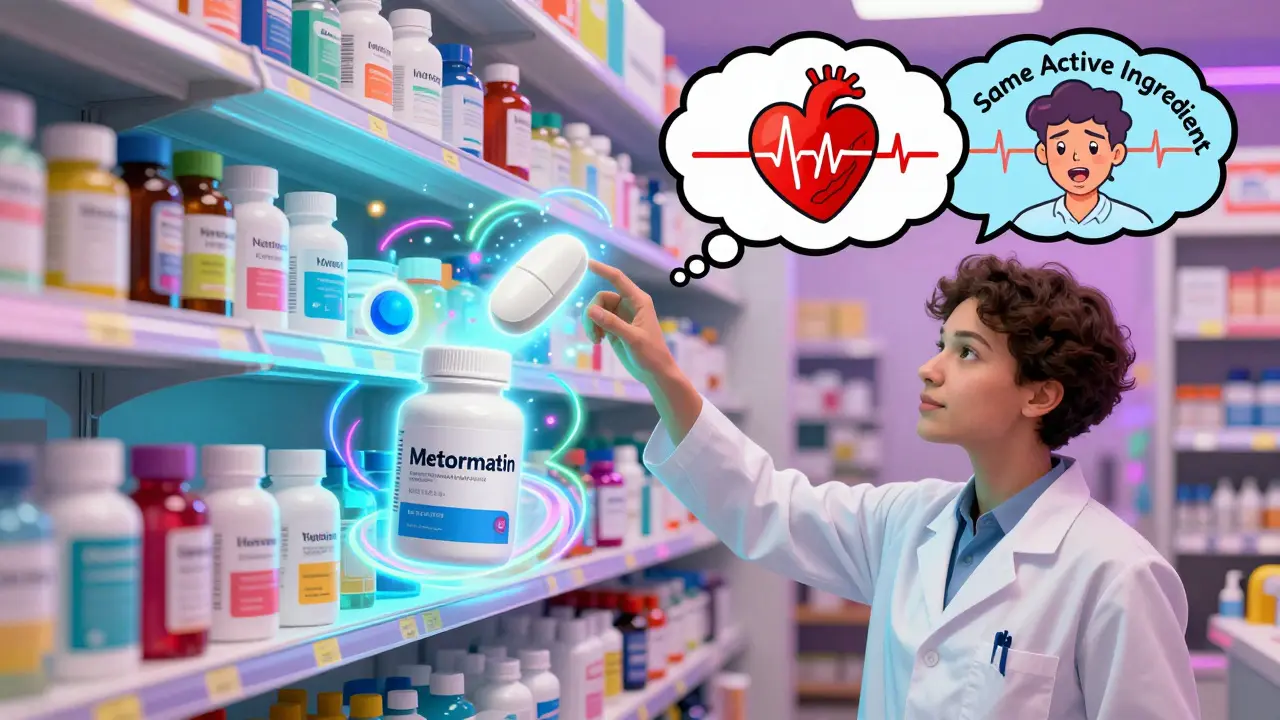
When a pharmacy technician pulls a bottle off the shelf, they don’t just see a label. They see a life. One wrong pill - a mix-up between generic and brand names - can mean the difference between healing and harm. In today’s pharmacies, over 90% of prescriptions are filled with generic drugs. Yet many technicians still struggle to keep up with the names, forms, and uses of these medications. Training isn’t just about memorizing lists. It’s about building a mental system that prevents errors before they happen.
Why Generic Drug Knowledge Isn’t Optional
Generic drugs aren’t cheaper versions of brand-name drugs. They’re identical in active ingredients, strength, dosage form, and how they work in the body. But they look different. A 10 mg tablet of metformin might be white and oval, while another manufacturer’s version is blue and round. If a technician doesn’t recognize both, they risk giving the wrong drug - or worse, the right drug but with the wrong dose or instructions. The stakes are high. The Institute for Safe Medication Practices found that 10-15% of medication errors linked to pharmacy technicians involve confusion between generic and brand names. These aren’t minor mistakes. They lead to hospitalizations, organ damage, and sometimes death. In the U.S., around 7,000 people die each year from preventable medication errors. A 2023 study from the University of Utah showed technicians scoring below 70% on generic drug tests made 3.2 times more errors than those scoring above 90%.What You Need to Know: The Core Competency Standards
The standards aren’t vague. They’re specific, measurable, and enforced. The Pharmacy Technician Certification Board (PTCB) requires all certified technicians to master 200+ medications by both generic and brand names. This isn’t a suggestion - it’s 18% of the 2026 certification exam. The exam tests:- Generic names and their corresponding brand names
- Drug classifications (e.g., ACE inhibitors, statins, SSRIs)
- Therapeutic duplication risks (e.g., taking two drugs that both lower blood pressure)
- Physical appearance: shape, color, imprint
- Routes of administration: oral, topical, injectable
The Top 200: What’s Actually on the Test
You don’t need to memorize every drug on the market. The focus is on what’s used most. The PTCB and RxTechExam both agree: master the top 100-200 drugs. Here’s what’s consistently included:- Metformin (Glucophage) - Type 2 diabetes
- Atorvastatin (Lipitor) - High cholesterol
- Lisinopril (Zestril) - High blood pressure
- Levothyroxine (Synthroid) - Hypothyroidism
- Omeprazole (Prilosec) - Acid reflux
- Amoxicillin (Amoxil) - Antibiotic
- Albuterol (ProAir, Ventolin) - Asthma
- Fluoxetine (Prozac) - Depression
- Hydrochlorothiazide (HydroDIURIL) - Water pill
- Simvastatin (Zocor) - Cholesterol
How Technicians Learn - And Why Some Fail
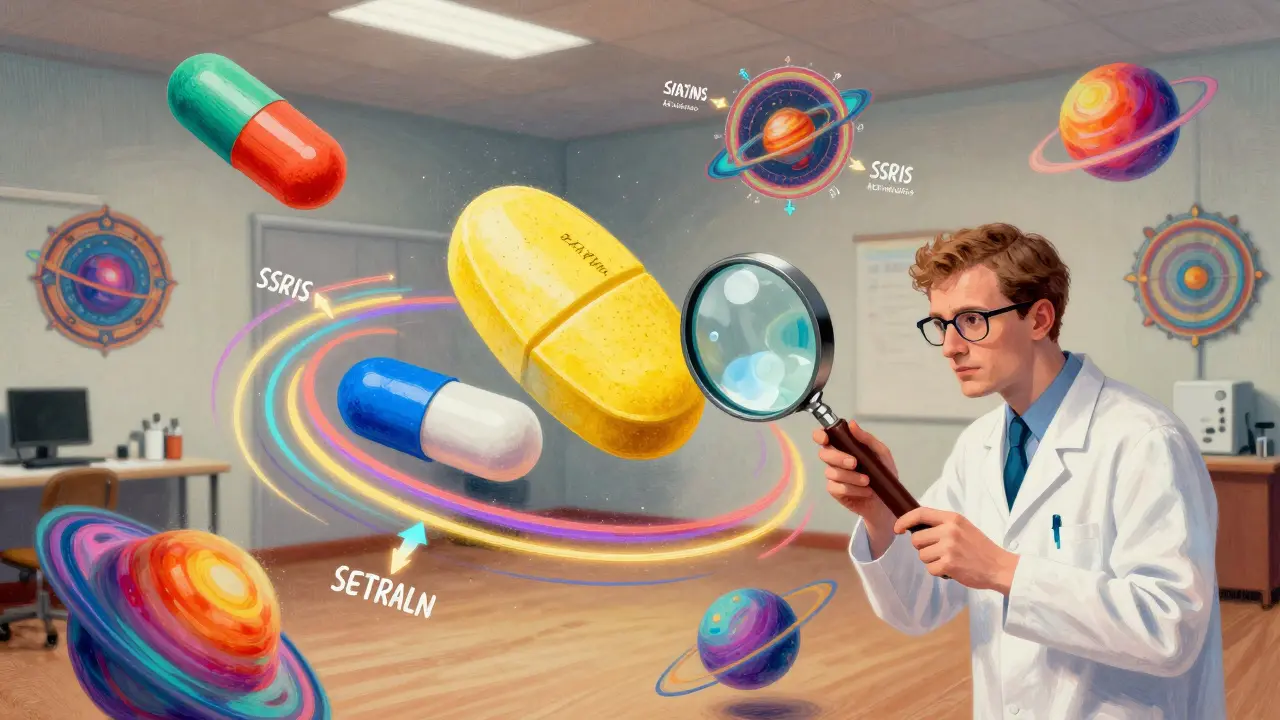
Most training programs start with flashcards. But that’s not enough. A 2024 survey by the Pharmacy Technician Guild found 78% of technicians said drug names were the hardest part of their certification. Why? Because rote memorization doesn’t stick. Successful learners use three proven methods:- Group by therapeutic class - Learn all beta-blockers together: metoprolol, atenolol, propranolol. Understand why they’re used, not just their names.
- Use visual cues - One Reddit user, 'GenericGuru', said they memorized pills by color and shape. A yellow oval with ‘50’ on it? That’s 50 mg of sertraline. A blue capsule with ‘10’? That’s 10 mg of escitalopram. This works especially well for visual learners.
- Practice daily - Spend 15 minutes a day reviewing 5-10 drugs. Use apps like RxTechExam or PTCBTestPrep. Repetition beats cramming.
Where Training Falls Short
There’s a problem no one talks about: drugs change. Every month, 15-20 new generic drugs hit the market. A drug you learned last year might now be made by a different manufacturer - and look completely different. In 2024, a technician in Ohio gave a patient the wrong version of levothyroxine because the tablet shape changed. The patient’s thyroid levels crashed. Many pharmacies still use outdated drug guides. A 2024 NCPA survey found 43% of independent pharmacies rely on annual printed references. That’s dangerous. The FDA updates its Orange Book monthly. The VA updates its drug list quarterly. Most community pharmacies don’t. Another issue: look-alike, sound-alike drugs. Hydroxyzine (for allergies) vs. hydralazine (for blood pressure). Glipizide (diabetes) vs. glyburide (also diabetes). These pairs have caused serious errors. The ISMP lists 37 such high-risk combinations. Training must include how to spot them.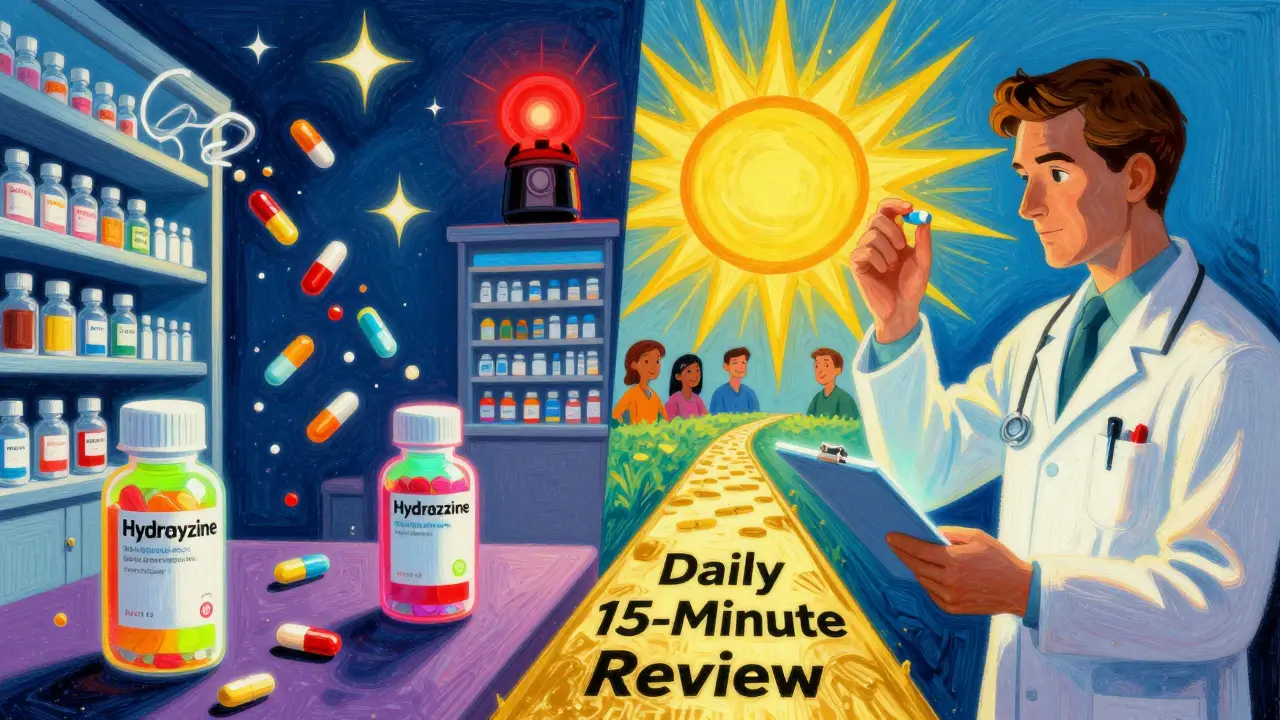
Technology Can Help - But Not Replace Knowledge
Barcode scanners, AI tools, and automated dispensing systems have cut errors in hospitals by up to 89%. But they’re not foolproof. A barcode can be misread. A system can glitch. A technician still has to know what they’re looking at. Walmart’s 2024 AI training program reduced onboarding time by 35% and improved accuracy by 22%. But it didn’t replace learning - it reinforced it. The AI showed technicians the pills, asked them to name them, and gave instant feedback. That’s the future: tech-assisted, not tech-replaced.What’s Changing in 2026 and Beyond
The standards are evolving. Starting in 2026, the PTCB exam will include more questions on biosimilars - newer, complex generics for conditions like rheumatoid arthritis and cancer. These drugs have longer, confusing names like adalimumab-atto and infliximab-dyyb. Technicians will need to understand not just the names, but why they’re different from traditional generics. The VA now requires quarterly competency checks. Technicians must correctly identify 90 out of 100 randomly selected drugs. If they score below 90%, they’re pulled from patient care until they retrain. By 2030, experts predict pharmacogenomics will be part of the standard. That means understanding how a patient’s genes affect how they respond to a generic drug. For now, that’s advanced. But knowing the basics - that some generics work better for certain populations - is already becoming part of training.Final Checklist: Are You Ready?
Ask yourself these questions:- Can you name the generic version of 95% of the top 200 drugs?
- Do you know which drugs are high-alert - and why?
- Can you spot two look-alike drugs at a glance?
- Do you know how your pharmacy’s formulary works - and when substitution is allowed?
- Have you reviewed your drug list in the last 30 days?
Why do pharmacy technicians need to know generic drug names?
Pharmacy technicians must know generic drug names because over 90% of prescriptions in the U.S. are filled with generics. Mistakes between generic and brand names can lead to dangerous medication errors, including wrong dosages, therapeutic duplication, or giving a patient a completely different drug. Accurate identification ensures patient safety and compliance with federal and state regulations.
How many generic drugs should a pharmacy technician know?
The PTCB certification exam requires mastery of at least 200 medications by both generic and brand names. Most training programs focus on the top 100-200 most commonly prescribed drugs. Technicians working in hospital or VA settings may need to know up to 300, especially for controlled substances and high-alert medications.
What’s the difference between brand-name and generic drugs?
Brand-name and generic drugs contain the same active ingredient, strength, dosage form, and route of administration. They work the same way in the body. The difference is in the inactive ingredients, packaging, and cost. Generics are cheaper because they don’t require the same research and marketing costs. But they are not inferior - they are FDA-approved equivalents.
How often do generic drug names change?
The generic drug name itself doesn’t change - it’s standardized by the FDA. But the manufacturer, pill appearance, and packaging can change frequently. A drug like metformin might be made by 10 different companies, each with a different color, shape, or imprint. Technicians must learn to recognize these variations to avoid errors.
What’s the best way to study generic drug names?
The most effective method is grouping drugs by therapeutic class (e.g., all statins, all SSRIs) and using visual cues like pill shape, color, and imprint. Flashcards, apps like RxTechExam, and daily 15-minute reviews work better than cramming. Practicing with real prescriptions and asking pharmacists for feedback also builds real-world fluency.
Prathamesh Ghodke
March 18, 2026 AT 08:10Man, I've seen this go wrong so many times in India-techs pulling hydroxyzine instead of hydralazine because the pills look too similar. We don't even have good digital pill ID tools here. I started making my own flashcards with photos from actual blister packs. Now I can spot a fake metformin by the imprint alone. It's not glamorous, but it saves lives.
Also, shoutout to 'GenericGuru' on Reddit-color coding saved my ass. Yellow oval = sertraline. Blue capsule = escitalopram. I even color-coded my work apron. My pharmacist thought I was crazy. Then he saw me catch a wrong fill before it left the counter. Now he asks me to train new hires.
Stephen Habegger
March 18, 2026 AT 16:56Just got my PTCB renewal. Took the test last week. Crushed it. The key? Stop memorizing. Start connecting. Metformin = diabetes = high blood sugar = patient feels tired, thirsty, pees a lot. Link the drug to the symptom. Suddenly, the name sticks. Also, 15 minutes a day. No excuses. I did mine while brushing my teeth. You can too.
Justin Archuletta
March 19, 2026 AT 07:59Yessss!!! Finally someone says it! Flashcards are DEAD. Grouping by class? YES. Visual cues? ABSOLUTELY. And daily review? DON'T WAIT UNTIL THE NIGHT BEFORE. I failed my first attempt because I thought I could cram 200 drugs in 3 days. I didn't. I cried. I retook it. I passed. Now I train others. It's not about being smart-it's about being consistent. 15 minutes. Every. Single. Day. You got this. 💪
Aileen Nasywa Shabira
March 20, 2026 AT 01:01Oh wow. So we're supposed to believe that 'generic drugs are identical'? LOL. Have you SEEN the studies? The bioequivalence window is 80-125%. That's a 45% swing in absorption. One brand might work. The generic? Maybe not. And don't get me started on the inactive ingredients-dyes, fillers, lactose. People with allergies? They're just collateral damage. This whole system is a profit-driven scam wrapped in FDA paperwork. And now we're training technicians to be blind believers? Brilliant.
Kendrick Heyward
March 21, 2026 AT 02:11THIS IS WHY PEOPLE DIE. I had a cousin who got the wrong generic lisinopril. The pill was a different color. She took it. Her BP crashed. She had a stroke. They said it was 'user error'. No. It was SYSTEMIC FAILURE. The pharmacy didn't update their database. The tech didn't double-check. And now she's in a wheelchair. I hope every tech who skips training gets fired. And then sued. And then forced to work in a call center for the rest of their life. No mercy.
lawanna major
March 22, 2026 AT 13:33The real issue isn't memorization-it's cognitive load. The human brain doesn't store information like a database. It stores meaning, context, and pattern. That's why grouping by therapeutic class works: you're not memorizing atorvastatin, you're memorizing 'statins'-a class that lowers LDL, inhibits HMG-CoA reductase, and carries a risk of myopathy. The name follows the function. The color and shape? Those are mnemonics, not facts. They're cues to trigger the mental model. This isn't rote learning. It's epistemology in practice.
And yes, the FDA's Orange Book updates monthly. But why are we still relying on printed guides in 2024? That's not negligence. That's institutional arrogance. We need real-time digital integration, not annual pamphlets. Knowledge isn't static. Neither should our tools be.
Ryan Voeltner
March 22, 2026 AT 19:08Linda Olsson
March 23, 2026 AT 03:06