Statins and ALS: What the Latest Science Really Shows
 Dec, 28 2025
Statin Safety Checker
Based on current medical evidence from FDA, Mayo Clinic, and major studies, this tool helps assess whether continuing statin therapy is safe for you.
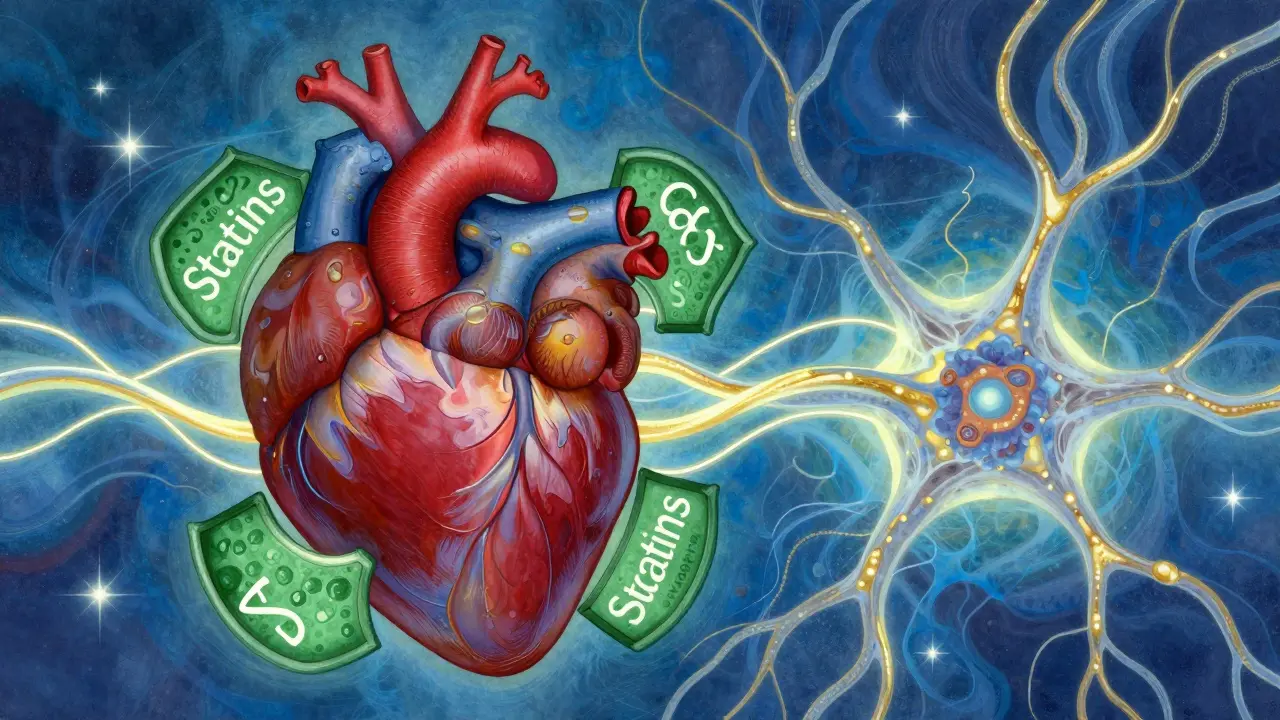
When you’re taking statins to lower your cholesterol, the last thing you want to hear is that they might be linked to ALS - a devastating neurodegenerative disease with no cure. The fear isn’t baseless. Since 2007, reports have floated online and even made their way into some doctor’s offices: Could the same pills that protect your heart also be attacking your nerves?
The truth isn’t simple. It’s messy, contradictory, and full of nuance. But if you’re on statins - or someone you care about is - you need to know what the science actually says, not just the headlines.
Where Did This Fear Come From?
The concern started with a spike in spontaneous reports to the U.S. Food and Drug Administration (FDA). People taking statins began developing muscle weakness, fatigue, and coordination issues - symptoms that, in rare cases, turned out to be early signs of ALS. By 2008, the FDA had reviewed 41 major clinical trials involving thousands of patients. The result? No increased risk of ALS in statin users compared to those on placebo.
That should’ve been the end of it. But it wasn’t. Why? Because ALS is slow to develop, and statins are often taken for decades. Clinical trials rarely last longer than five years. If ALS starts silently years before diagnosis, and someone starts statins during that silent phase, it looks like the drug caused it - when it might’ve just been timing.
This is called reverse causality. It’s like noticing people who got cancer were all drinking coffee - but what if they started drinking more coffee after they felt unwell? The coffee didn’t cause the cancer. The cancer made them reach for coffee.
Conflicting Studies: Why Do Some Say Statins Increase ALS Risk?
In 2024, a genetic study using Mendelian Randomization claimed a strong link between three statins - atorvastatin, simvastatin, and rosuvastatin - and higher ALS risk. The numbers were startling: atorvastatin showed a 16.93 times higher risk. Rosuvastatin? An implausible 693,000 times higher. That’s not just statistically odd - it’s biologically impossible.
Experts immediately questioned the method. Mendelian Randomization uses genetic variants as proxies for drug exposure. But genes can influence multiple traits (pleiotropy). A variant linked to cholesterol metabolism might also affect nerve health - making it look like statins are dangerous when they’re not. This study didn’t measure actual statin use. It guessed it from DNA. That’s a big leap.
Meanwhile, a much larger, real-world study from Norway looked at over 500 ALS patients tracked through national health registries from 1972 to 2003. They compared those who took statins to those who didn’t. After adjusting for age, sex, smoking, cholesterol levels, and even use of riluzole (the only FDA-approved ALS drug), the results were clear: no difference in survival. The hazard ratio? 0.97 - essentially no effect. Statin users lived just as long as non-users. The difference in survival time? Less than a month.
What About Long-Term Use? There’s a Twist
Here’s where it gets really interesting. A 2024 study in Neurology found something surprising: short-term statin use (under 3 years) was tied to a higher ALS risk. But long-term use (over 3 years) was linked to a lower risk - especially in men.
That flips the script. Instead of statins causing ALS, it suggests that people who later develop ALS might start taking statins early because they’re experiencing muscle weakness or high cholesterol - common in the pre-symptomatic phase. Once they’ve been on statins for years, their risk drops. Why? Possibly because statins reduce inflammation, a known driver of neurodegeneration.
Preclinical research backs this up. In mouse models of ALS, lovastatin reduced disease progression by 28%. Atorvastatin cut motor neuron loss by 30%. These drugs appear to calm down overactive immune cells in the brain - astrocytes and microglia - that normally attack nerve cells in ALS.
So the same drug that might look dangerous in the first few months could be protective over time. The timing matters more than the drug itself.
What Do the Experts and Major Health Organizations Say?
The FDA still stands by its 2008 conclusion: “Healthcare professionals should not change their prescribing practices for statins and patients should not change their use of statins.” That hasn’t changed in 17 years.
The Mayo Clinic updated its website in January 2024 with a clear statement: “There’s no good evidence that statins cause or trigger ALS.”
The European Medicines Agency reviewed the evidence in 2023 and reached the same conclusion. No causal link established. Benefits still outweigh unproven risks.
Dr. Marc Weisskopf from Harvard, who led the 2022 long-term study, says: “Long-term use of statins had a protective role against the development and progression of ALS.” Dr. Shafeeq Ladha, lead author of the Norwegian study, added: “Statin use should not routinely be discontinued upon diagnosis.”
Even the American Heart Association, which sets global standards for cholesterol treatment, still lists statins as first-line therapy for high-risk patients - no exceptions made for ALS concerns.
Why Do So Many ALS Patients Stop Taking Statins?
Here’s the real-world problem: symptoms overlap. Early ALS can feel like muscle pain, cramps, or weakness - exactly the side effects people worry about with statins. In the Norwegian study, 21% of ALS patients stopped taking statins in the year before their diagnosis. They thought the statins were making them worse.
But here’s the catch: those who stopped had worse outcomes. Not because statins were harming them - but because stopping statins meant their cholesterol went unchecked, increasing their risk of heart attack or stroke. And in a disease where every day counts, adding cardiovascular stress is a dangerous gamble.
Neurologists report that 35% of ALS patients ask about stopping statins after diagnosis. About 12% actually do. Dr. Merit Cudkowicz from Massachusetts General Hospital puts it bluntly: “Many patients stop statins unnecessarily after an ALS diagnosis, which may put them at risk for preventable cardiovascular events.”

What Should You Do If You’re on Statins?
If you’re taking statins for high cholesterol, heart disease, or diabetes - don’t stop. Not because the science is perfect, but because the risks of stopping are far clearer than the risks of continuing.
The American Academy of Neurology’s 2023 guidelines say statins should be continued in ALS patients with established cardiovascular disease. Only stop if you’re experiencing severe muscle symptoms that can’t be explained by ALS progression - and even then, talk to your doctor first.
Don’t rely on online forums or anecdotal stories. The evidence doesn’t support stopping. It supports continuing - unless you have a specific, documented reason to stop.
What’s Next? The Research Is Still Evolving
The CDC’s National ALS Registry is funding five new studies in 2025, including a 5-year, 10,000-person tracking project on statin users. The FDA expects more data by late 2025. Scientists are now looking at whether statins affect ALS differently in men vs. women, and whether certain genetic profiles make people more or less sensitive to statins.
But here’s what won’t change: statins save lives. They prevent heart attacks, strokes, and death in millions of people every year. The number of ALS cases in the U.S. is about 5,000-6,000 per year. Statins are prescribed to 39 million Americans. If there were a strong, direct link, we’d see it clearly in the data. We don’t.
The real story isn’t about statins causing ALS. It’s about how hard it is to untangle two rare events that happen at the same time. And how fear, when fueled by incomplete data, can lead people to make choices that hurt them more than help.
Do statins cause ALS?
No, there is no conclusive evidence that statins cause ALS. Major health agencies like the FDA, Mayo Clinic, and European Medicines Agency have reviewed the data and found no causal link. Some studies suggest short-term use might appear linked due to reverse causality - where early ALS symptoms lead people to seek medical care and start statins - but long-term use may even reduce risk.
Should I stop taking statins if I have ALS?
No, unless you’re experiencing severe muscle symptoms that your doctor can’t explain. Stopping statins increases your risk of heart attack and stroke, which can be life-threatening - especially when you’re already managing a serious condition like ALS. The Norwegian study found no negative impact on ALS survival from continuing statins. Guidelines from the American Academy of Neurology recommend continuing them for patients with cardiovascular risk.
Why do some studies say statins increase ALS risk?
Some studies use genetic models (Mendelian Randomization) that estimate statin exposure indirectly, which can produce misleading results. Others look at short-term use and confuse correlation with causation - people may start statins during early ALS symptoms, making it look like the drug triggered the disease. Large, real-world studies that track actual statin use over decades find no increased risk.
Can statins help slow ALS progression?
Animal studies suggest yes - statins like lovastatin and atorvastatin reduced motor neuron loss and inflammation in ALS mouse models. Human data is still emerging, but long-term statin use in men has been linked to lower ALS risk in population studies. While not a treatment, statins may have protective effects through anti-inflammatory and lipid-regulating mechanisms. More research is needed.
Are some statins riskier than others for ALS?
No reliable evidence supports this. A 2024 genetic study claimed high risks for atorvastatin, simvastatin, and rosuvastatin, but those numbers are biologically implausible and the method is flawed. Real-world data from Norway and other large studies show no difference in ALS risk between statin types. The drug class as a whole is considered safe in this context.
Final Takeaway: Don’t Let Fear Override Facts
Statins are among the most studied drugs in medical history. Millions of people take them safely every day. ALS is rare. The idea that a widely used heart medication is secretly causing a rare brain disease sounds dramatic - but it doesn’t hold up under scrutiny.
If you’re on statins and worried about ALS, talk to your doctor. Don’t stop based on fear. Stop only if you have clear, documented side effects - and even then, don’t stop without a plan.
Your heart needs you. Your nerves might even thank you for staying on them.
Janette Martens
December 28, 2025 AT 22:06Marie-Pierre Gonzalez
December 29, 2025 AT 07:18Louis Paré
December 30, 2025 AT 10:22Teresa Marzo Lostalé
December 31, 2025 AT 12:09Julius Hader
December 31, 2025 AT 15:20Vu L
January 2, 2026 AT 06:29oluwarotimi w alaka
January 3, 2026 AT 02:46Debra Cagwin
January 4, 2026 AT 19:46Ryan Touhill
January 5, 2026 AT 16:27ANA MARIE VALENZUELA
January 7, 2026 AT 08:47Bradly Draper
January 7, 2026 AT 15:31