Return to Work With Chronic Pain: Accommodations and Plans That Actually Work
 Feb, 7 2026
Going back to work after living with chronic pain isn’t just about showing up-it’s about figuring out how to stay there without making things worse. For millions of people, pain that lasts longer than three months isn’t just a symptom-it’s a daily barrier to doing their job. And yet, too many people either give up their jobs or suffer in silence because they don’t know what support is legally available-or how to ask for it. The good news? You’re not alone, and there are real, proven ways to make work work again.
What Counts as a Legal Accommodation?
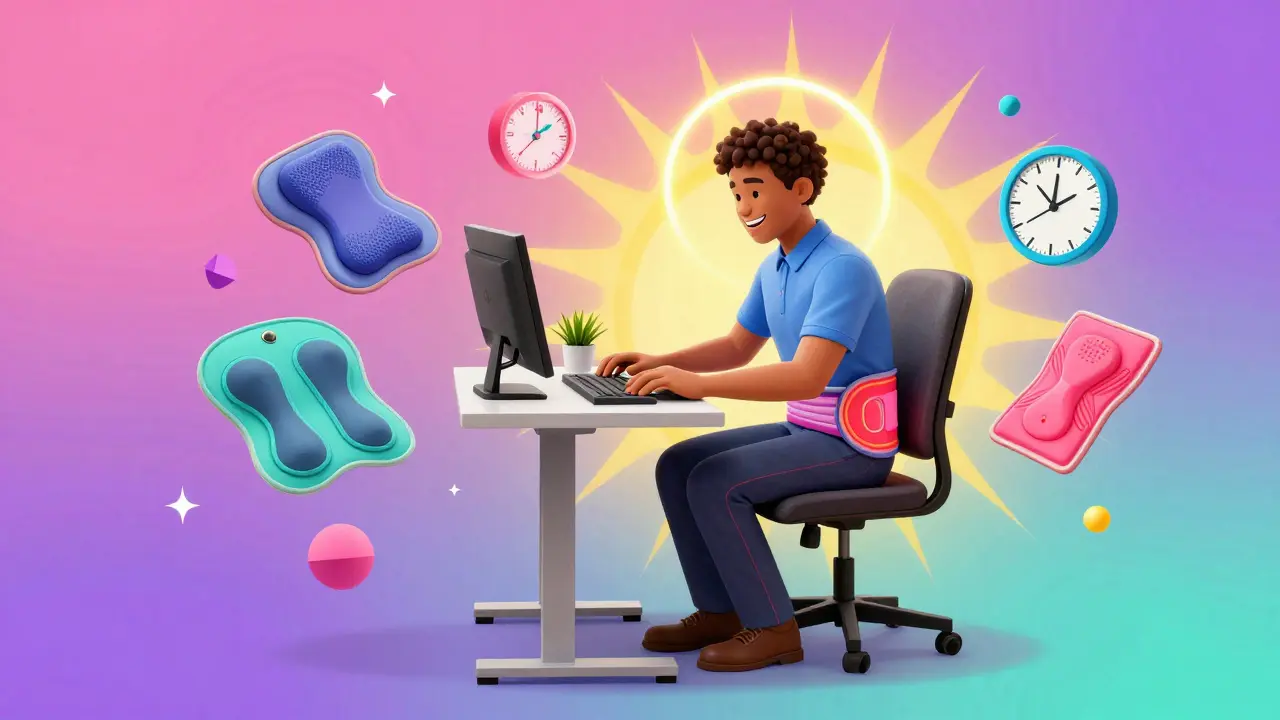
Under the Americans with Disabilities Act (ADA), chronic pain that limits major life activities-like sitting, standing, walking, or concentrating-is recognized as a disability. That means if you’re working for a company with 15 or more employees, you have the right to ask for changes that help you do your job without worsening your pain. It’s not about getting special treatment. It’s about removing unnecessary barriers. The Job Accommodation Network (JAN) found that 56% of accommodations for chronic pain cost nothing to implement. That’s right-no money needed. Things like flexible hours, extra breaks, or working from home don’t cost employers a dime. And when they do spend money, the median one-time cost is just $300. That’s less than a new laptop. Accommodations fall into three main categories:- Physical changes: Adjustable desks, ergonomic chairs, keyboard trays, footrests, heated cushions. These help reduce strain on your body.
- Time-based changes: Starting later to avoid morning stiffness, taking 10-minute breaks every 90 minutes, shifting hours to fit medical appointments, or working remotely part-time.
- Task adjustments: Letting you skip tasks that make your pain worse (like lifting heavy boxes if you have back pain), redistributing minor duties, or switching to a quieter workspace to reduce stress.
How to Ask for What You Need
Asking for help can feel scary. You might worry you’ll be seen as weak, lazy, or replaceable. But here’s the truth: most employers want you to succeed. The problem isn’t their willingness-it’s their lack of knowing how to respond. Start with documentation. Your doctor doesn’t need to say “give her a standing desk.” They need to say: “The patient has chronic lower back pain that limits prolonged sitting to 45 minutes. A sit-stand desk and scheduled breaks every 90 minutes would reduce pain and improve function.” Specifics matter. Vague requests like “I need help with pain” get denied. Clear ones get approved. Put it in writing. Email your manager or HR. Say something like:“I’ve been managing chronic back pain for over a year. My doctor has recommended a sit-stand desk and 10-minute breaks every 90 minutes to prevent flare-ups. I’d like to discuss how we can make this work in my role. I’m happy to provide medical documentation and work with you to find a solution.”This triggers the ADA’s “interactive process.” That’s the legal requirement for employers to talk with you, not just say no. They can’t force you to accept an accommodation you don’t think works. But they also can’t ignore your request.
What If Your Boss Says No?
Sometimes, they say no because they don’t understand. Other times, they say no because they think it’s too expensive. But here’s what most people don’t know: employers can only deny an accommodation if it causes “undue hardship”-meaning it’s too difficult or expensive for their specific business. A small shop with five employees might not be able to afford a $1,000 chair. But a company with 500 staff? That’s a drop in the bucket. The EEOC says undue hardship is judged based on company size, resources, and financial health-not what seems expensive to you. If you’re denied, ask for a written explanation. If they say “it’s too disruptive,” ask: “Can we try it for two weeks and review how it goes?” Most people don’t realize that accommodations can be tested. You don’t have to get it perfect on the first try. And if you’re in California? You’re covered even if your employer has just five employees. State law is stricter than federal law. Other states have similar protections-check your local civil rights office.
What Actually Works? Real Examples
Let’s look at what’s worked for real people:- Anna, office worker with fibromyalgia: She asked for a heated seat cushion ($85) and 15-minute breaks every two hours. She also started working from home two days a week. Her pain levels dropped 40%. She’s been in the same job for three years now.
- Mark, warehouse supervisor with arthritis: He couldn’t stand for long shifts. He requested a stool to sit on while giving instructions. His team adapted. His productivity didn’t drop. He didn’t lose his promotion.
- Lisa, teacher with MS: Heat made her symptoms worse. She asked for a portable cooling fan and to move her classroom to the coolest room in the building. Both were granted. She’s still teaching.
Why Some People Never Get Help
Sixty-two percent of people with chronic pain wait to ask for accommodations. Why? Fear. Fear of being judged. Fear of being passed over for promotions. Fear of being seen as “not committed.” But here’s what the data says: employees who talk openly about their needs are 2.3 times more likely to get support than those who stay quiet. Why? Because coworkers and supervisors respond better when they understand. When people know you’re not slacking-you’re adapting-they help. And when employers get it right? Retention goes up. One study found that employees who got tailored accommodations stayed in their jobs 78% of the time. Those who got generic ones? Only 42%.What to Do If You’re on Leave
The Family and Medical Leave Act (FMLA) gives you up to 12 weeks of unpaid leave. But it doesn’t guarantee you’ll have a job to come back to-unless your employer is covered by ADA or state law. FMLA is about time off. ADA is about what happens when you return. If you’re coming back after leave:- Start with a graduated return: 20-50% hours for the first week or two.
- Ask for a meeting with HR and your manager before your first day back.
- Bring a note from your doctor outlining your limits and what you can handle.
- Suggest one or two accommodations you think will help-don’t wait for them to guess.

Who Can Help?
You don’t have to figure this out alone.- Job Accommodation Network (JAN): Free, confidential advice for employees and employers. They’ve helped resolve 82% of accommodation issues without formal complaints. Visit askjan.org (you can search by condition or job type).
- Occupational therapists: Many hospitals and clinics offer RTW assessments. They evaluate your workspace, your tasks, and your pain limits-and write clear recommendations. One study showed these assessments reduced work limitations by 37%.
- Your union: If you’re unionized, your contract might have stronger protections than the law.
- State civil rights agencies: They can help you understand local laws and even mediate disputes.
What’s Changing?
More employers are starting to see chronic pain not as a problem to manage-but as a challenge to solve with smart design. The Department of Labor’s “Return to Work Initiative,” launched in January 2023, is funding states to create standard protocols for RTW. That means clearer guidelines, better training for managers, and fewer “I don’t know what to do” moments. Long COVID has also forced a shift. Before 2021, many employers didn’t take “invisible” pain seriously. Now, the EEOC explicitly says long COVID-related pain qualifies as a disability. That’s changing attitudes across the board. And wearable tech? It’s starting to play a role. Some companies are using devices that track movement, posture, and fatigue levels-not to spy, but to help design better accommodations. Right now, it’s used in just 7% of cases. But it’s growing.What You Can Do Today
You don’t need to wait for a crisis. Start now:- Write down your top three work barriers: What makes your pain worse while you’re working?
- Find one simple, low-cost fix: A cushion? A stretch break? A change in schedule?
- Talk to your doctor: Ask them to write a short note linking your condition to your job tasks.
- Send one email to HR or your manager: No drama. Just facts. “I’d like to discuss how I can stay productive while managing my chronic pain.”
Can my employer fire me because I have chronic pain?
No. Under the ADA, firing someone because of a disability-including chronic pain-is illegal. Employers must provide reasonable accommodations unless doing so causes undue hardship. If you’re being treated unfairly, document everything and contact the Equal Employment Opportunity Commission (EEOC) or your state’s civil rights agency.
Do I need to tell my employer about my pain before I return to work?
You don’t have to disclose your condition unless you need accommodations. But if you wait until you’re struggling, it becomes harder to get help. If you know you’ll need adjustments, it’s best to bring it up early-ideally before returning from leave. This gives you time to work through the interactive process without pressure.
What if my job doesn’t have a human resources department?
Even small businesses with 15+ employees are required to follow the ADA. If there’s no HR, talk directly to your manager or owner. Put your request in writing. If they refuse, you can file a complaint with the EEOC. You don’t need a lawyer to start the process-just a clear, documented request.
Can I get accommodations if I’m self-employed?
The ADA doesn’t apply to self-employed individuals, but you can still make changes that help. Many of the same tools-ergonomic chairs, flexible hours, remote work-are available to freelancers. Some state programs offer grants for workplace modifications. Also, consider joining a professional association that may provide resources or insurance options for disability accommodations.
How long does it take to get an accommodation approved?
There’s no federal deadline, but employers must respond promptly. Federal agencies typically approve requests within 10 business days. Private employers should respond within two weeks. If you haven’t heard back after 14 days, follow up in writing. If they delay or refuse without explanation, contact JAN or your state’s civil rights office.
Tori Thenazi
February 8, 2026 AT 05:16Monica Warnick
February 8, 2026 AT 23:25Sam Dickison
February 9, 2026 AT 23:02Brett Pouser
February 11, 2026 AT 09:16Karianne Jackson
February 12, 2026 AT 18:23Tom Forwood
February 13, 2026 AT 17:57John McDonald
February 13, 2026 AT 20:14Chelsea Cook
February 14, 2026 AT 01:30Andy Cortez
February 15, 2026 AT 07:56Jessica Klaar
February 17, 2026 AT 05:20PAUL MCQUEEN
February 17, 2026 AT 20:28