QR Codes on Drug Labels: Real-Time Safety Updates
 Nov, 26 2025
QR Code Safety Impact Calculator
Safety Impact Simulator
Calculate how many patients could be exposed to outdated safety information without QR codes.
Real-time Safety Impact
Without QR codes, patients could be exposed to outdated warnings each year.
QR codes would update patients instantly.
Impact Analysis
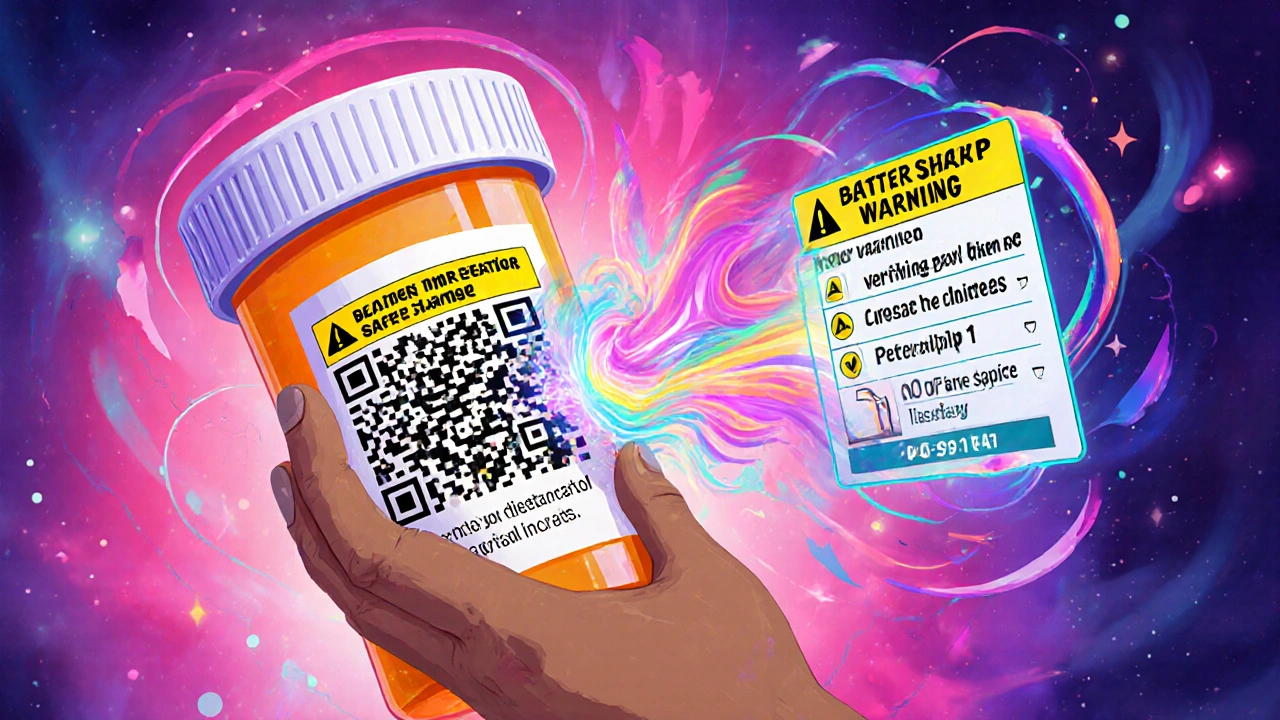
Imagine opening a new prescription bottle and scanning a QR code on the label. In seconds, you see the latest safety warning - a black box alert about a dangerous interaction that wasn’t on the printed leaflet. That’s not science fiction. It’s happening now. Across Europe and parts of the U.S., pharmaceutical companies are replacing static paper inserts with dynamic QR codes that deliver real-time safety updates directly to patients and providers. This shift isn’t just convenient - it’s saving lives.
Why Static Labels Are No Longer Enough
For decades, drug labels were printed once and stayed the same for years. But medicine doesn’t work that way. New risks emerge constantly. In the last decade, over 225 black box warnings - the strongest safety alerts issued by regulators - were added to medications worldwide. By the time those warnings made it onto printed labels, many patients had already taken the drug without knowing the danger. The delay isn’t just slow. It’s dangerous. Traditional labeling takes months to update across global markets. A recall notice in the U.S. might not reach patients in Germany for 90 days or longer. During that time, people keep taking the medicine, unaware of new side effects, contraindications, or dosage changes. QR codes solve this. Once scanned, they pull up the most current version of the drug’s prescribing information - updated instantly by the manufacturer. No reprinting. No shipping delays. No outdated inserts.How QR Codes Work on Drug Labels
These aren’t simple static codes. They’re dynamic, cloud-connected systems that link to secure, regulated databases. When a safety update is approved - say, a new warning about liver damage - the pharmaceutical company pushes that change to their central content system. The QR code on every bottle, box, or blister pack automatically points to the updated version. The system works like this:- A patient scans the code with their phone.
- The link opens a secure page with the latest Product Information (SmPC), Patient Information Leaflet (PIL), or prescribing guidelines.
- The page includes version history, so users can see when the last update occurred.
- Scans are logged anonymously for compliance - regulators can track who accessed what and when.
Real-World Impact: What’s Changing for Patients
In Spain, where QR codes were first approved for drug labels in 2021, patients report better understanding of complex regimens. One hospital in Barcelona found that after switching to QR-linked ePILs, patients correctly recalled their medication instructions 40% more often than before. Pharmacists are using the codes to counsel patients more effectively. Instead of flipping through outdated paper leaflets, they pull up the current safety data on their tablet and walk patients through it. In the UK, 85% of pharmacy staff now prefer digital reporting systems for adverse events - faster, more accurate, and easier to track. Emergency responders benefit too. Freyr Solutions documented cases where paramedics scanned a patient’s medication during a crisis and immediately accessed critical warnings - like contraindications with heart medications or pregnancy risks - that weren’t visible on the physical label.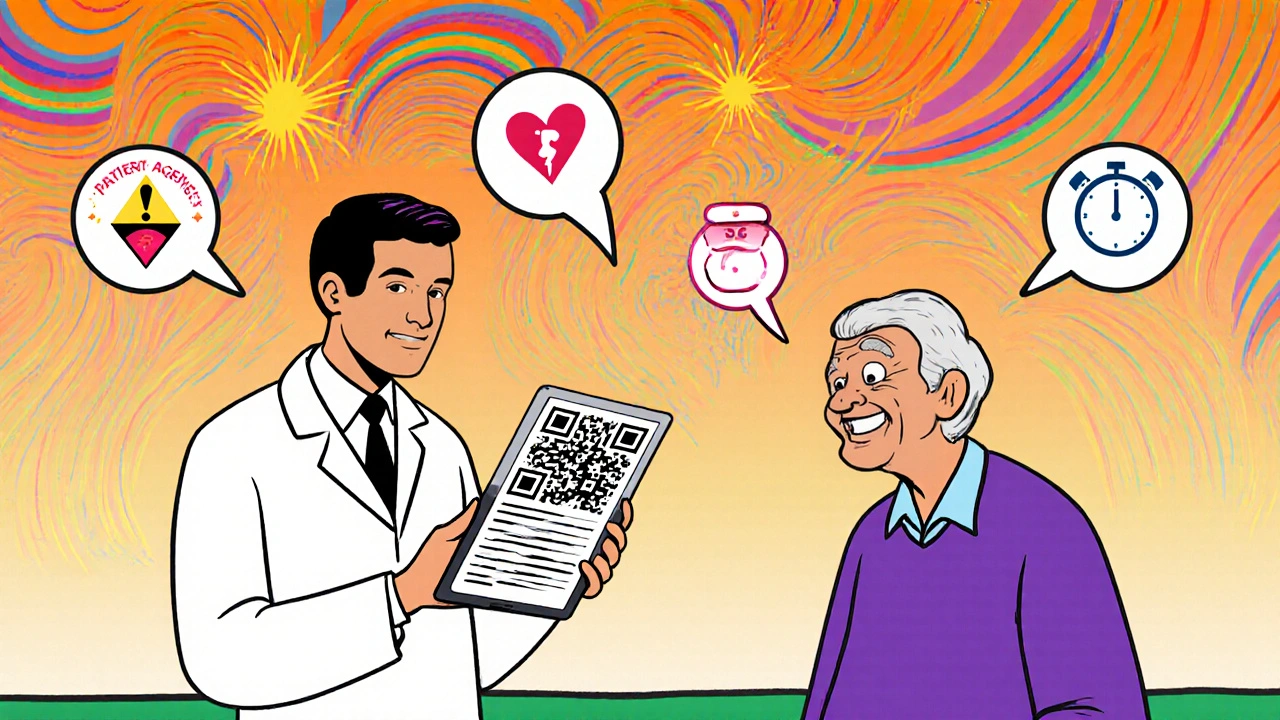
The Flip Side: Accessibility and Equity
This isn’t a perfect solution. Not everyone has a smartphone. Not everyone knows how to scan a QR code. Elderly patients, low-income populations, and those in rural areas with poor internet access are at risk of being left behind. One study found that while 63% of patients and pharmacy staff were familiar with QR codes, nearly 60% of elderly patients in rural clinics couldn’t access the information. That’s not a tech issue - it’s a justice issue. Regulators and companies are responding. The UK’s ABPI Code now requires that QR codes be paired with printed information. DosePacker’s model includes both: a clear printed summary on the label, plus the QR code for deeper details. Pharmacies are training staff to scan codes on behalf of patients who need help. The goal isn’t to replace paper. It’s to enhance it.Regulatory Momentum Is Building
Spain led the way in 2021. The UK followed in 2024 with official updates to its pharmaceutical code. The U.S. military began using QR codes on prescriptions in 2022. The European Federation of Pharmaceutical Industries and Associations (EFPIA) is now reviewing its guidelines - a move that could trigger widespread adoption across all EU member states. The U.S. FDA hasn’t mandated QR codes yet, but interest is growing. The agency has publicly acknowledged the potential for real-time safety updates and is monitoring pilot programs. In 2025, regulators are expected to begin discussing mandatory e-labeling standards - especially for high-risk drugs like anticoagulants, antiepileptics, and chemotherapy agents. The push isn’t just about safety. It’s about efficiency. Updating labels digitally cuts costs, reduces waste, and ensures global consistency. A drug approved in Germany can have the same safety updates as one in Canada - all synced in real time.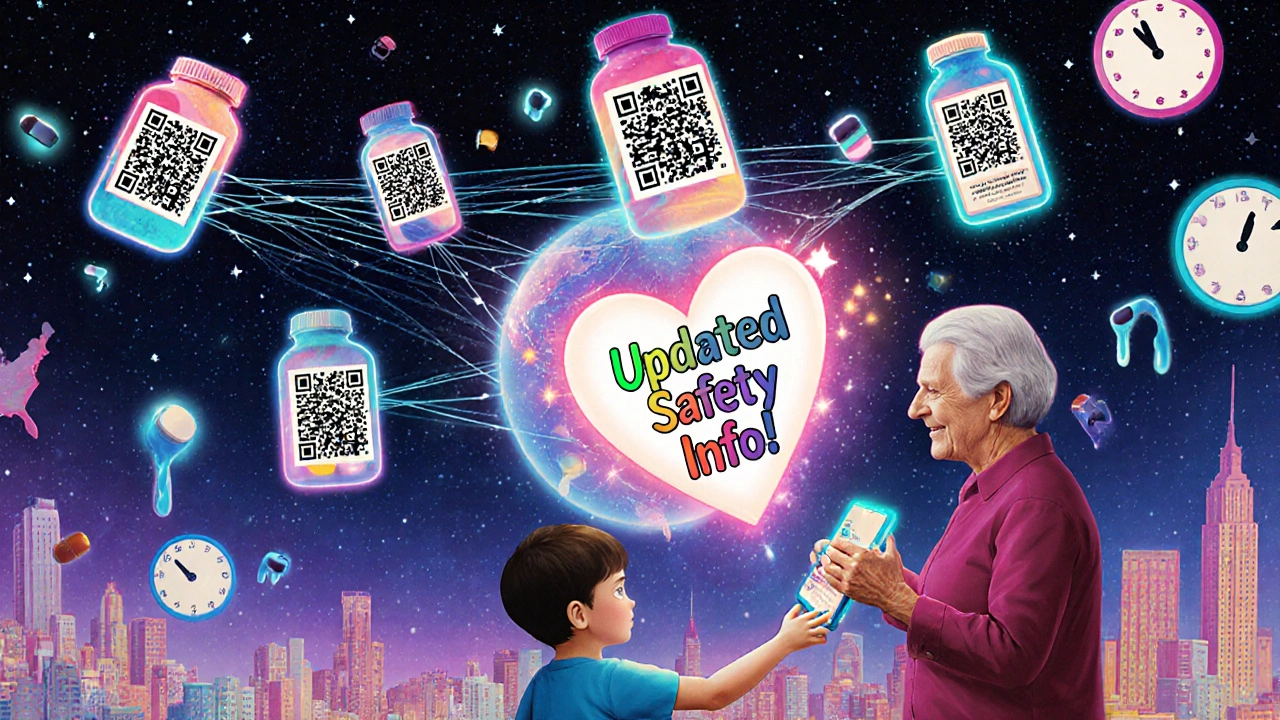
What’s Next: AI, Apps, and Integration
The next wave goes beyond scanning. QR codes are being linked to medication apps like DosePacker’s MyDoses, which track when you take your pills, remind you of refills, and alert you to new warnings before you even open the bottle. Artificial intelligence is starting to play a role too. By analyzing scan patterns and adverse event reports tied to QR codes, companies can detect emerging safety signals faster. If 500 people in different countries scan the same code and report nausea within 48 hours, the system flags it for review - potentially catching a side effect weeks before it shows up in clinical databases. Integration with electronic health records (EHRs) is also underway. In pilot programs, scanning a drug’s QR code can auto-populate the medication into a patient’s digital chart, reducing transcription errors and improving care coordination.Implementation Isn’t Easy - But It’s Doable
Switching from print to digital isn’t just flipping a switch. It takes time. Companies need:- Regulatory approval in each market
- Secure cloud infrastructure for content hosting
- Integration with pharmacovigilance systems
- Staff training for pharmacists and customer service teams
- Testing across diverse user groups
The Bottom Line
QR codes on drug labels aren’t a gimmick. They’re a necessary upgrade to a system that’s been stuck in the 1980s. Medication errors kill hundreds of thousands each year. Outdated labels are part of the problem. Real-time safety updates are part of the solution. This change is happening fast. By 2030, experts predict QR codes will be standard on nearly all prescription drugs in developed countries. The question isn’t whether they’ll become common - it’s whether your healthcare system is ready to use them safely, fairly, and effectively.For patients, it means less guesswork. For providers, it means better decisions. For everyone, it means safer medicine.
Iives Perl
November 27, 2025 AT 06:18Shubham Semwal
November 28, 2025 AT 22:55Jauregui Goudy
November 30, 2025 AT 05:23Tom Shepherd
December 1, 2025 AT 01:56Rhiana Grob
December 2, 2025 AT 11:31Frances Melendez
December 4, 2025 AT 10:05Jonah Thunderbolt
December 6, 2025 AT 04:38Rebecca Price
December 6, 2025 AT 22:32