Push Health: Your Guide to Safe and Convenient Online Prescriptions
 Aug, 4 2025
Ever rushed to the pharmacy only to get stuck in a long line, trying to juggle your kid's soccer practice or your own late meetings? Your phone buzzes, your inbox overflows, and the last thing you want to do is wait for a prescription—especially for something routine, like allergy meds or a birth control refill. This is where online pharmacies like Push Health slide into the scene, making your life a whole lot easier. But with something as personal as your health, convenience alone isn’t enough. You want to know: Is it safe? Does it save you time? Are you actually connecting with real doctors, or is some faceless algorithm approving your meds?
That's the conversation I've heard buzzing among parents at the playground, scrolling through apps one-handed while keeping an eye on little ones. The idea of handling prescriptions from your phone sounds dreamy, but there's a persistent unease around legitimacy, privacy, and what happens if you need a human touch in your care. If you've ever pondered if online pharmacies like Push Health just make sense for busy, real-life people, or if they're another techy hassle waiting to happen, you're far from alone. I've done my own deep dive (possibly while hiding from Cyrus in the pantry) into how Push Health works and whether it's right for regular folks juggling packed days.
How Push Health Works: From Click to Pickup
Let’s get clear about Push Health. This isn’t a website where you click 'add to cart' and get medication shipped in from who-knows-where. Push Health acts as a bridge between patients and real, licensed medical providers. It’s sort of like texting your doctor, but way more organized and, let's be honest, a whole lot quicker since you’re not stuck on hold before you even get to ask a question. The whole idea: streamline simple healthcare tasks so you don’t waste time or risk exposure in a waiting room.
This is how it plays out: You make a free account. You look for the service you need—think birth control refills, a Z-Pak for sinus infection, or even routine lab requests. You fill out a questionnaire that’s as easy as filling out your kid’s summer camp forms. Then, the platform matches you with a licensed provider in your state who reviews your case. If everything checks out, you’ll get a digital prescription sent straight to your local pharmacy. Some services might offer lab testing or ask for extra info—depends on what you need and your health history, just like with an in-person doc.
Payments are processed through the platform—not the old-school way where you get nickel-and-dimed at the front desk. Typical service fees are transparent, often between $25 and $65 per consult, depending on what you’re after. If the provider feels your needs can't be met through telemedicine, they’ll let you know before you get charged, so you’re not out money for something you didn’t get. You cover the consult, then pay for your prescription as usual at your pharmacy, which accepts whatever insurance you normally use.
A big tip: Use Push Health for routine health issues or ongoing meds. It’s not for medical emergencies, complex diagnoses, or anything that demands a hands-on exam. Think migraines, UTIs, high cholesterol, or travel medications—stuff you know and your doctor knows you, too. If there’s any reason a provider suspects a bigger issue (or can’t verify your health status), they’ll suggest you see someone in person.
One real gem? The provider you connect with can message and answer questions directly on the platform, so you can spell check your symptoms before hitting send. Way less awkward than playing phone tag. Push Health also lets you send documents or lab results, saving extra red tape. You’re not stuck to one doctor, but if you click, you can rebook with the same provider for next time.

Safety, Credentials, and Privacy—Are Online Pharmacies Legit?
First thing most people want to know: Who are these doctors on Push Health, and are they licensed? Push Health only partners with board-certified healthcare providers. When you see a listing, you’ll find their name, credentials, and state of licensure. You can even double-check their standing by searching your state medical board. Patients in all 50 states and DC use the platform, but since medicine is regulated by state law in the US, you’ll always get a real provider authorized to practice in your specific area.
Here’s a wild stat: as of 2023, more than 70% of people in the US have tried some form of telemedicine. Most people jumped aboard during the COVID pandemic. What’s different now in 2025 is that online-only platforms like Push Health have refined their screening tools, adopted secure encryption, and now offer partnerships with local pharmacies to guarantee drug legitimacy. That means you’re not getting gray-market meds from random warehouses, but prescriptions sent straight to chains you already know—think CVS, Walgreens, Rite Aid, and neighborhood family-run pharmacies.
Push Health maintains HIPAA compliance. That’s the same legal standard as your brick-and-mortar clinic. All your personal info, health history, and messages stay encrypted—no one is peeking at your acne treatment or migraine medication log. You can use two-factor authentication for your account. No emails or texts are sent without your consent. And unlike some sketchy online drug sites, Push Health doesn’t ever sell your data to marketers. Ever had your email spammed after buying vitamins online? Won’t happen here.
But here’s something that occasionally trips up new users: online telemedicine is not the same as a virtual pharmacy. Push Health connects you with a prescriber—the prescription itself goes through regular pharmacies, so all the normal checks (ID, insurance, drug interaction alerts) still apply. If a pharmacy has any red flags, they’ll call your provider or hold the prescription, so there are multiple levels of safety—just as strict as traditional care. Never trust sites that have no real provider or let you skip the legal prescription process entirely.
Quick security tip: Stick to Push Health’s in-app messaging instead of regular email, and use strong passwords like you do with your bank account. Don’t share your login. These sound obvious, but most privacy “leaks” happen simply because someone texts a photo of their medication to the wrong contact!
Real-World Tips, Pros and Cons, and Is Push Health Right for You?
So should you ditch your primary care office and go all-in on virtual care via Push Health? For most people, it ends up being a supplement, not a straight-up replacement. Let’s break down what it’s actually like for regular humans using online pharmacy options today.
- pushhealth stands out for everyday health needs: if you need an urgent prescription for a sinus infection before a weekend trip, or your regular medication runs out while you’re traveling, you don’t want unnecessary wait times. At the click of a button, you get access to a provider ready to review your needs—often with a same-day turnaround.
- It's a big help for people without regular family doctors, those who move a lot, or anyone who’s just tired of endless phone trees. If you live in a rural area, options are limited, and Push Health expands reach by connecting you with city-based clinicians. You're not stuck waiting two weeks for a basic refill.
- For sensitive topics—think STIs, contraception, hair loss, or mental health—there’s comfort in being able to message a provider discreetly. Cyrus once asked loudly at the pharmacy counter what my pills were for. I will forever cherish being able to message a doctor online instead.
- Price transparency is huge. Before you pay, you see what you’ll owe. No surprise bills or random 'facility fees' you hear about months later. The typical virtual visit runs me about half the cost of an in-person quick care, and insurers increasingly accept telemedicine receipts toward deductibles.
Of course, Push Health isn’t a cure-all. Physical exams, vaccines, X-rays—these you’ll still need to handle old-school. Some insurance policies will only pay for their in-network telehealth apps (like Teladoc), so double-check your plan. Also, if you’re ever in doubt about a diagnosis, nothing replaces a face-to-face visit. And those with ongoing complex illnesses—like rheumatoid arthritis or diabetes—should keep a team they see regularly in person for check-ups and testing.
Push Health constantly adds new features. By summer 2025, you’ll find digital treatment plans, integration with lab testing services, and even appointment reminders via text. Some pharmacies now allow direct payment through the app, which shaves another step off the process. And the platform is starting to offer group visits for families (mom hack: do sibling well checks online if eligible!).
One pro tip: create a profile for each adult in your household, so everyone’s medical info stays clear. It’s easy to toggle between family members if you’re the token 'healthcare admin’ at home. For privacy, Push Health won’t let you manage adult kids or partners under one login—so everyone over 18 gets their own secure account.
Pitfalls to avoid? Don’t expect magic solutions for tricky new health problems, or use Push Health like a replacement for yearly physicals. But for everyday stuff, unexpected needs, or late-night realizations that you’re out of allergy pills, it saves an unbelievable amount of time and, if you ask me, sanity.
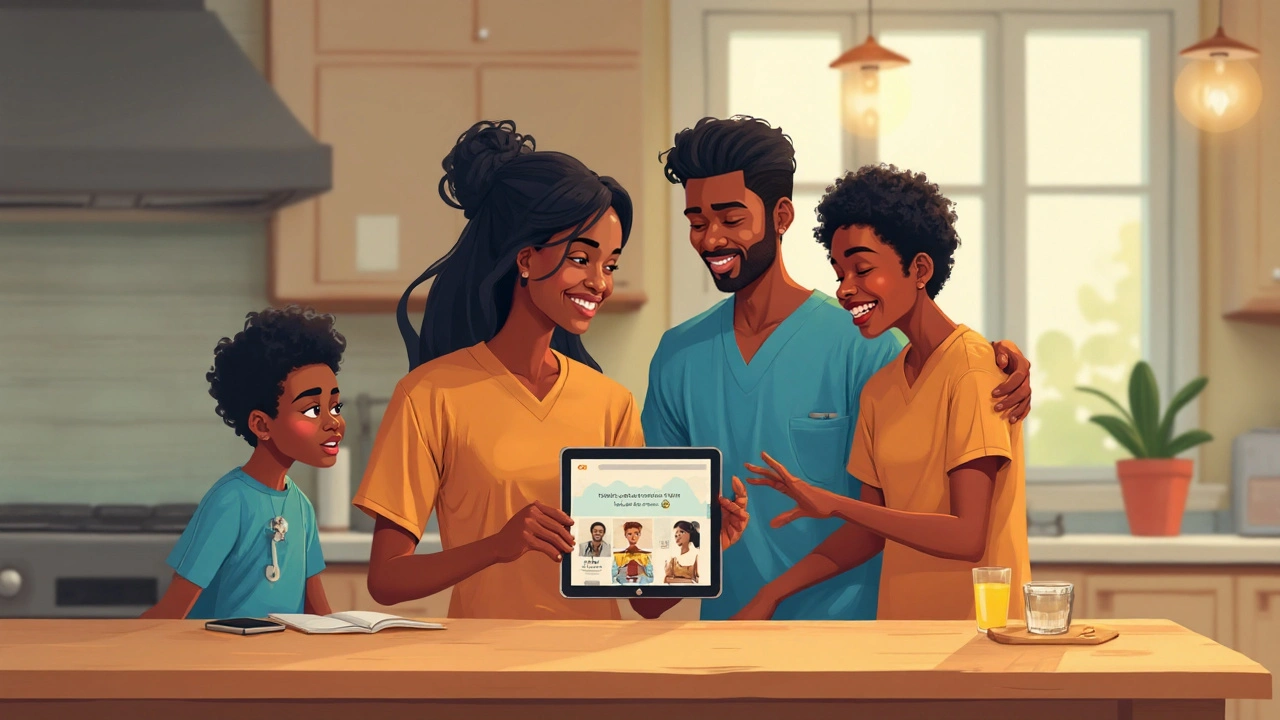
When I think of online pharmacies, I don’t picture a futuristic robot, I picture a mom drinking cold coffee, fitting life and care together. Push Health makes that load lighter—real medical pros, no waiting, less worry. It isn’t just for tech nerds or city dwellers. It’s a practical way to keep your family healthy in a world that moves too fast and expects too much of your time. Next time you’re bracing yourself for another waiting room, maybe do a quick double-check online—you might not have to leave your kitchen at all.
Joanne Beriña
August 4, 2025 AT 22:56This Push Health thing is just another woke corporate scam wrapped in a pink bow. They don't care about your health-they care about your data and your insurance dollars. I got a prescription for azithromycin last month and the 'doctor' never asked about my heart condition. Zero physical exam. Zero accountability. This is how America dies-by outsourcing medicine to apps that don't even know your name.
And don't even get me started on how they partner with CVS and Walgreens. Those are corporate giants that jack up prices and deny coverage. You think you're saving time? You're just feeding the machine.
Real Americans still go to their local doctor. The one who remembers your kid's name and your dog's name too. Not some algorithm that says 'migraine' because you typed 'head hurts'.
Stop normalizing this. It's not convenience-it's cultural surrender.
ABHISHEK NAHARIA
August 6, 2025 AT 21:07One must interrogate the epistemological foundations of telemedicine before accepting its hegemony over embodied healthcare. The Cartesian dualism inherent in digital consultations-mind separated from body, symptom divorced from context-represents a profound ontological rupture in the physician-patient relationship.
Moreover, the commodification of medical authority through platform capitalism reduces the clinician to a data processor, and the patient to a consumer profile. The Indian Ayurvedic tradition, by contrast, emphasizes holistic balance-pulse diagnosis, environmental harmony, seasonal rhythm. Can an app assess prana?
Furthermore, the HIPAA compliance argument is a red herring. Legal compliance ≠ ethical integrity. Data encryption does not restore the sacred silence of the consultation room.
Thus, while convenience is seductive, it is the seduction of the shallow self. We must ask: what are we sacrificing at the altar of efficiency?
Hardik Malhan
August 7, 2025 AT 20:31Push Health operates within the clinical governance framework of state-licensed telehealth protocols under the 2020 Interstate Medical Licensure Compact. Provider credentialing is validated via state medical board APIs and cross-referenced with NPI registry. HIPAA compliance is enforced through AES-256 encrypted EHR pipelines with audit trails.
Prescription integrity is maintained via e-prescribing standards compliant with NCPDP SCRIPT 2021. Pharmacy dispensing triggers automated DEA and PDMP checks. No controlled substances without real-time state database verification.
Platform fee structure is transparent and non-negotiable. No hidden charges. No upsells. No third-party data monetization. All clinical decisions are documented in real time with timestamped provider signatures.
It's not magic. It's infrastructure. And for rural patients without specialists within 100 miles, it's the only viable option. Stop romanticizing the waiting room.
Casey Nicole
August 9, 2025 AT 19:53Oh my god I’m so done with this whole ‘convenient healthcare’ narrative. Like, I get it, you’re tired of waiting. But do you really want your birth control refill approved by some guy in Ohio who’s on his third cup of coffee and a Zoom call with his kid’s piano teacher?
And don’t even get me started on how they make it sound like you’re being ‘empowered’ when you’re just being offloaded onto a system that doesn’t care if you live or die.
Also-why does every article about this have to mention Cyrus? Who is Cyrus? Is he your husband? Your cat? Your therapist? Why is he in the pantry? This whole thing feels like a TikTok trend dressed up as journalism.
I miss the days when doctors looked you in the eye. Not through a screen while you’re in your PJs eating cold pizza.
Kelsey Worth
August 10, 2025 AT 10:25okay so i tried push health last month for a UTI and honestly? it was kinda magic. like i was in bed at 11pm with a burning sensation and 5 mins later a doctor replied asking if i had fever (i didnt) and sent the rx to my local walgreens. i picked it up at midnight. no waiting. no judgment. no awkward small talk with the receptionist who always says ‘oh you again?’
and yes i know its not for everything. but for the little stuff? the stuff that makes you feel like a zombie? it’s a godsend. also i typoed ‘prescription’ as ‘prescrition’ and the doctor still got it. they’re chill like that.
also-cyrus is my dog. he’s the reason i’m always hiding in the pantry. he steals socks. and sometimes my meds. so yeah. push health saved my sanity. and my socks.
shelly roche
August 11, 2025 AT 06:08For anyone who’s ever been stuck in a waiting room for three hours just to get a refill-this is a gift.
I’m a single mom of three. I don’t have time to take a day off work, drive 45 minutes, sit in a room with 12 sick people, and wait another 20 minutes just to get a script for my daughter’s asthma inhaler.
Push Health lets me do it from the car while I’m waiting for my oldest to finish soccer practice. The doctors are kind. They ask real questions. They don’t rush. And they never make me feel like I’m bothering them.
And yes-it’s not for emergencies. But for routine stuff? For the things that pile up and make you feel like you’re failing at life? This is the quiet revolution we didn’t know we needed.
Also-Cyrus is my husband’s name. He’s the one who always forgets to refill the allergy meds. So now I do it online. And he still forgets to thank me.
But hey. At least I’m not crying in the pharmacy aisle anymore.
Nirmal Jaysval
August 11, 2025 AT 15:05bro this app is just for people who dont wanna talk to humans. why u need a doctor on ur phone? u got a headache? go to clinic. u got allergy? take benadryl. u dont need to be coddled by tech.
also why everyone keep talking about cyrus? who is this cyrus? is he ur dog? ur gf? ur therapist? why is he in the pantry? this whole post feels like a drunk tweet with paragraphs.
in india we dont have this stuff. we go to the doctor. we wait. we talk. we pay. we live. no app needed. u think ur saving time? u just got addicted to convenience.
also-u know what’s faster than an app? calling your local pharmacy and asking if they can call in a refill. theyll do it. theyre humans too.
Emily Rose
August 13, 2025 AT 01:05Let me tell you something-I used to hate telemedicine. Thought it was cold. Impersonal. But then I needed a thyroid refill during a snowstorm, and my regular doctor was out of town. I used Push Health. The provider asked me how I was sleeping, if I’d had any weight changes, if my anxiety had spiked. She didn’t just click ‘approve’. She listened.
And here’s the thing-she didn’t replace my primary care doctor. She held the line until I could get in. That’s not a replacement. That’s a safety net.
Also-Cyrus? That’s my 10-year-old. He’s the one who spilled juice on my laptop last week. I was typing this from the pantry. So yeah. I get it.
This isn’t about tech. It’s about dignity. About not having to choose between your health and your life. If you’ve ever felt like your body is just another task on your to-do list? This helps. It really does.