Otosclerosis: What It Is, How It Affects Hearing, and What You Can Do
 Dec, 15 2025
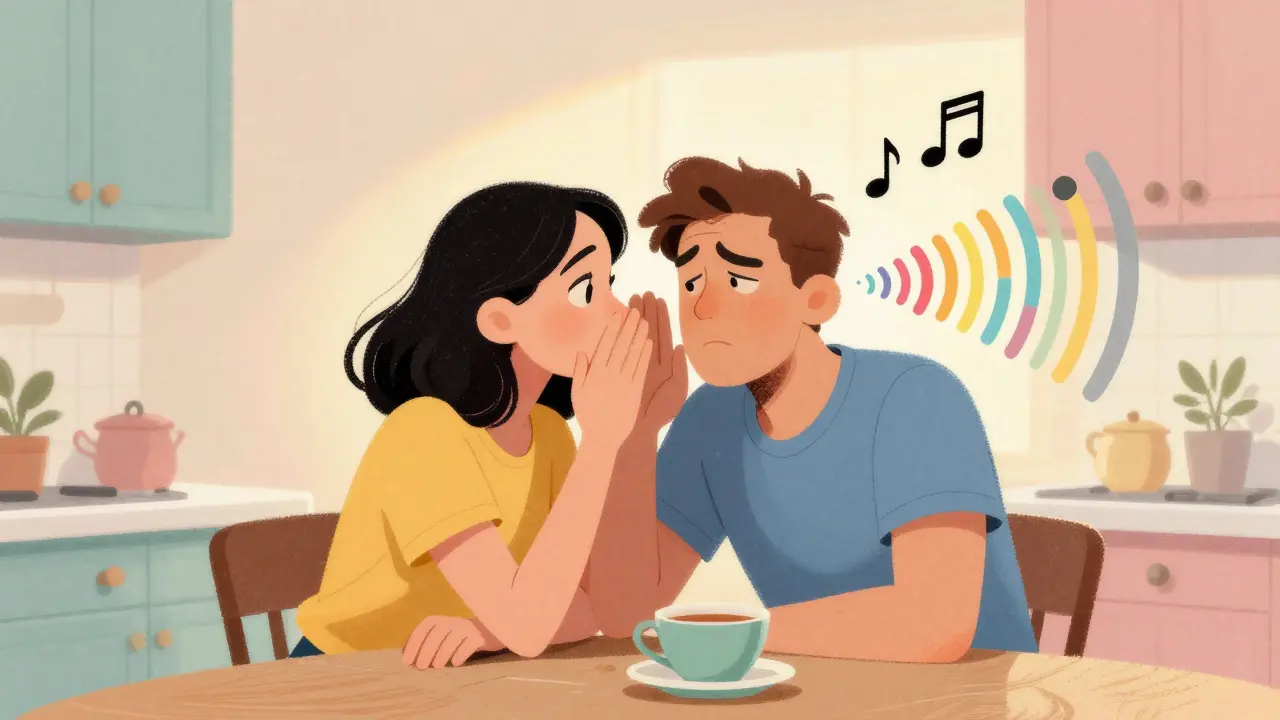
Imagine sitting across from your partner, listening as they speak - but their voice sounds muffled, like they’re talking through a pillow. You keep asking them to repeat themselves, especially when they whisper. You turn up the TV louder than usual. Phone calls become a chore. And you start to wonder: is it just aging, or is something else going on?
If you’re between 30 and 50 and noticing this kind of gradual hearing loss - especially with low-pitched sounds - it could be otosclerosis. It’s not something you hear about often, but it’s one of the most common causes of hearing loss in adults under 50 in the UK. About 1 in 200 people have it. And unlike noise-induced hearing loss or age-related decline, otosclerosis is caused by abnormal bone growth in the middle ear - specifically around the stapes, a tiny bone no bigger than a grain of rice.
What Exactly Is Otosclerosis?
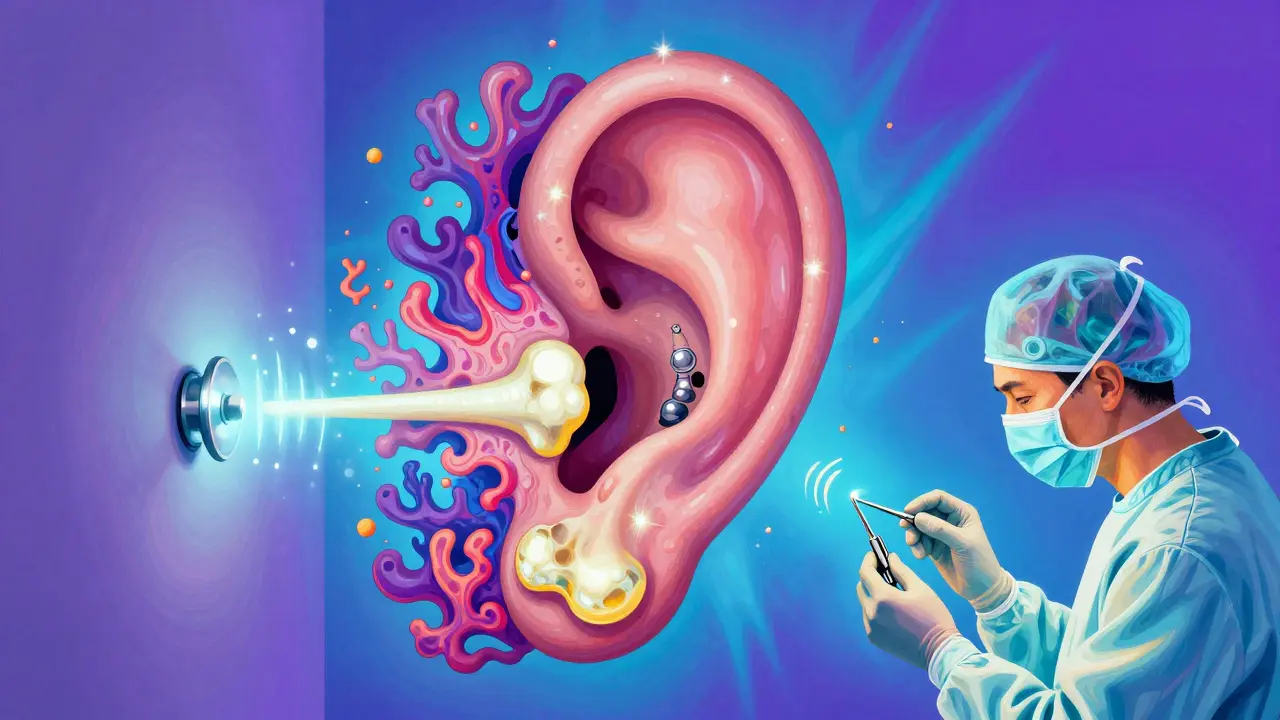
Otosclerosis isn’t a tumor. It’s not an infection. It’s a slow, silent process where bone in the middle ear starts growing where it shouldn’t. Normally, the stapes bone vibrates freely, passing sound from the eardrum to the inner ear. But in otosclerosis, new bone forms around the stapes, fusing it to the oval window - the doorway to the inner ear. Once it’s stuck, it can’t move. Sound can’t get through. That’s called conductive hearing loss.
This isn’t sudden. It creeps in over years. People often notice it first when they can’t hear whispers, low voices, or conversations in noisy rooms. Audiograms show a clear gap between air conduction (sound through the ear canal) and bone conduction (sound through the skull). That gap? Usually 20 to 40 decibels. That’s like going from hearing a quiet conversation at 5 feet to needing it shouted at 2 feet.
It’s not just the stapes. In about 1 in 7 cases, the abnormal bone spreads to the cochlea - the hearing organ in the inner ear. That turns conductive loss into mixed loss, which is harder to treat. And nearly 80% of people with otosclerosis also get tinnitus - ringing or buzzing in the ears. For some, it’s mild. For others, it’s enough to ruin sleep or focus.
Who Gets Otosclerosis - and Why?
This isn’t random. Genetics play a huge role. If one parent has otosclerosis, your risk jumps to about 30%. If both do, it’s closer to 50%. Research has found at least 15 genes linked to it, with the RELN gene on chromosome 7 being the strongest. It’s also more common in women - about 70% of cases. And it often flares up during pregnancy, suggesting hormones may trigger or speed up the bone changes.
Ethnicity matters too. It’s most common in people of European descent, especially those with Caucasian backgrounds. Rates are lower in Asian populations and lowest in African populations. That’s why it’s not just a medical condition - it’s tied to ancestry.
And it’s not rare. In the US, it affects around 3 million people. In the UK, that’s tens of thousands. Yet many people go undiagnosed for years. Why? Because symptoms are easy to mistake. Doctors might think it’s Eustachian tube dysfunction, earwax buildup, or just stress. Studies show the average delay in diagnosis is 18 months. That’s a long time to struggle with hearing.
How Is It Different From Other Hearing Losses?
Not all hearing loss is the same. Otosclerosis stands out in a few key ways:
- Compared to presbycusis (age-related hearing loss): Presbycusis hits high frequencies first - think birdsong, doorbells, or children’s voices. Otosclerosis starts with low pitches - men’s voices, bass notes, whispers.
- Compared to noise-induced hearing loss: That’s usually from loud music or machinery. It affects high frequencies too, and it’s often permanent. Otosclerosis is mechanical - fix the bone, and hearing often comes back.
- Compared to Meniere’s disease: Meniere’s comes with vertigo, fullness in the ear, and fluctuating hearing. Otosclerosis? Steady, slow decline. No spinning.
That’s why accurate diagnosis matters. You need a full hearing test - pure-tone audiometry - to see the air-bone gap. Speech tests help too. If your speech discrimination is still above 70%, that’s a good sign the inner ear is still healthy. That means surgery has a high chance of success.
What Are the Treatment Options?
You have two main paths: hearing aids or surgery. Neither is a cure - but both can restore your hearing.
Hearing aids are the first step for many. About 65% of people start here. They amplify sound, making up for the stapes’ lack of movement. Modern digital aids can be programmed to boost low frequencies specifically - perfect for otosclerosis. They’re non-invasive, reversible, and covered by the NHS in the UK for eligible patients. But they don’t stop the bone from growing. Your hearing may still get worse over time.
Surgery - specifically stapedotomy - is the gold standard when hearing loss reaches 30-40 dB. It’s not brain surgery. It’s done under local or general anesthesia. The surgeon uses a microscope, drills a tiny hole (0.6-0.8mm) in the stapes footplate, and replaces the fixed bone with a tiny prosthetic - often made of titanium or platinum. The new prosthesis connects the eardrum to the inner ear, letting sound pass through again.
Success rates? Around 90-95%. Most patients hear better within days. One teacher in Tampa said she could finally hear students whispering in the back row after surgery. The American Academy of Otolaryngology gives stapedotomy its highest recommendation - Level A evidence. And new implants, like the FDA-approved StapesSound™ prosthesis with a titanium-nitride coating, are reducing complications like scar tissue buildup.
But surgery isn’t risk-free. In about 1% of cases, patients lose more hearing - sometimes permanently. That’s why informed consent is critical. You need to know the odds before you sign.
What About Medications or New Treatments?
There’s no pill that fixes otosclerosis - yet. But research is moving fast. A 2024 study in the Journal of Otology found sodium fluoride slowed hearing loss by 37% over two years. It doesn’t reverse damage, but it might delay progression. Some doctors prescribe it for early cases, especially if surgery isn’t an option.
And the future? Genetic screening. Scientists are working on polygenic risk scores - a way to spot people at high risk before they even have symptoms. Imagine getting tested in your 20s, knowing your risk, and monitoring your hearing yearly. That could change everything.
But here’s the catch: fewer surgeons are doing stapedectomies now. Since 2018, the number of procedures has dropped 15%. Why? Younger otolaryngologists are focusing on cochlear implants and newer tech. That means if you need surgery, you might have to travel to find an experienced surgeon. In the UK, only specialized ENT centers perform these procedures regularly.

What Happens If You Do Nothing?
Left untreated, otosclerosis gets worse - slowly but steadily. On average, hearing declines by 0.5 to 1.0 dB per year. Over five years, that’s 15-20 dB. That’s not just “a little harder to hear.” That’s missing half the conversation. It’s turning down social events. It’s feeling isolated. It’s losing confidence.
And while total deafness is rare, the emotional toll is real. Reddit users with otosclerosis say the hardest part isn’t the hearing loss - it’s the loneliness. One person wrote: “I stopped going to family dinners because I couldn’t follow the chatter. I felt like I was in a different room.”
That’s why early detection matters. If you’re under 50 and noticing low-pitched hearing loss, get tested. Don’t wait for it to get worse.
How to Get Started
Here’s what to do if you suspect otosclerosis:
- See your GP. Mention your symptoms - especially trouble with whispers, low voices, or background noise.
- Ask for a referral to an ENT specialist. They’ll order a pure-tone audiogram and possibly a CT scan to look at the stapes.
- If diagnosed, decide: hearing aids now, or surgery when it gets worse. Many people start with aids and switch to surgery later.
- Join a support group. The Hearing Loss Association of America has over 1,200 otosclerosis members. Talking to others who get it helps.
- Get annual hearing tests. Track your progress. Knowledge is power.
And if you’re considering surgery - ask your surgeon how many stapedotomies they’ve done. Ask about their success rate. Ask about complications. Don’t be afraid to get a second opinion.
Final Thoughts
Otosclerosis is not a death sentence. It’s not a mystery. It’s a well-understood condition with proven treatments. The problem isn’t the science - it’s the awareness. Too many people suffer in silence because they don’t know what’s happening.
If you’re experiencing unexplained hearing loss - especially if it’s worse with low sounds, or if someone in your family has it - don’t ignore it. Get checked. You don’t need to live with muffled voices. You don’t need to feel left out. The technology to fix this exists. The expertise exists. You just need to take the first step.
Your hearing matters. Don’t wait until it’s too late to do something about it.