Osteoporosis Risk: How to Stop Bone Density Loss and Prevent Fractures
 Jun, 1 2026
You don't hear bones breaking until they do. That’s the silent trap of osteoporosis, a condition where your skeleton becomes so fragile that even a minor stumble can lead to a life-altering injury. By the time you feel pain or notice a change in posture, significant damage has already occurred. But here is the good news: you have more control over your bone health than you think. Understanding how bone density shifts throughout your life-and taking specific, actionable steps now-can keep you mobile, independent, and pain-free for decades.
The Silent Thief: How Bone Density Actually Works
Your bones are not static structures like bricks in a wall. They are living tissue that constantly breaks down old cells and builds new ones. This process is called bone remodeling. When you are young, your body builds bone faster than it breaks it down, reaching peak mass around age 30. After that, the balance tips. You start losing slightly more bone than you replace each year.
For most people, this slow decline is manageable. But for others, especially women after menopause, the rate accelerates dramatically. During the first five to seven years post-menopause, women can lose 2% to 3% of their bone mass annually due to dropping estrogen levels. Estrogen acts as a shield for your bones; without it, resorption (breakdown) outpaces formation. This creates microscopic holes in the bone structure, making it porous and brittle. It is not just about being "old." It is about the biological mechanics of how your body manages minerals like calcium and phosphorus.
Who Is at Risk? Beyond Age and Gender
We often think of osteoporosis as a problem for elderly white women, and while statistics support that view-with one in three women over 50 facing a fracture-the reality is broader. Several factors stack up against your bone density:
- Genetics: If your parents had a hip fracture, your risk jumps by 60-80%. You cannot change your DNA, but knowing this history means you should be proactive earlier.
- Body Frame Size: People with smaller, lighter frames have less bone mass to draw from as they age. If you were always petite, your bones may have been too small to begin with.
- Hormonal Levels: Low testosterone in men or early menopause (before 45) in women significantly increases risk. Thyroid issues also play a role; too much thyroid hormone can strip bone mass quickly.
- Lifestyle Choices: Smoking interferes with calcium absorption. Drinking more than two units of alcohol daily weakens bone formation. A sedentary lifestyle tells your body it doesn’t need strong bones, so it stops investing energy in them.
Secondary causes matter too. Long-term use of corticosteroids (like prednisone) for conditions like asthma or arthritis can cause rapid bone loss-up to 15% in the first year alone. Conditions like rheumatoid arthritis or type 1 diabetes also disrupt bone health independently of density measurements.
The Danger Zone: Why One Fracture Changes Everything
Many people believe that if their bone density scan shows "osteopenia" (low bone mass), they are safe from serious injury. This is a dangerous misconception. According to Dr. Ethel Siris, a leading expert in the field, a single fragility fracture doubles your risk of another. In fact, having had a previous fracture is a stronger predictor of future breaks than your actual bone mineral density score.
Why? Because a fracture signals that your bone quality is poor, regardless of what the machine says. The stakes are high. Hip fractures, in particular, carry a mortality rate of 20-24% within the first year. This isn't just about the break itself; it's about the loss of mobility, the risk of pneumonia from bed rest, and the overall physical decline that follows. Preventing that first fall is critical.
Fueling Your Bones: Nutrition That Actually Works
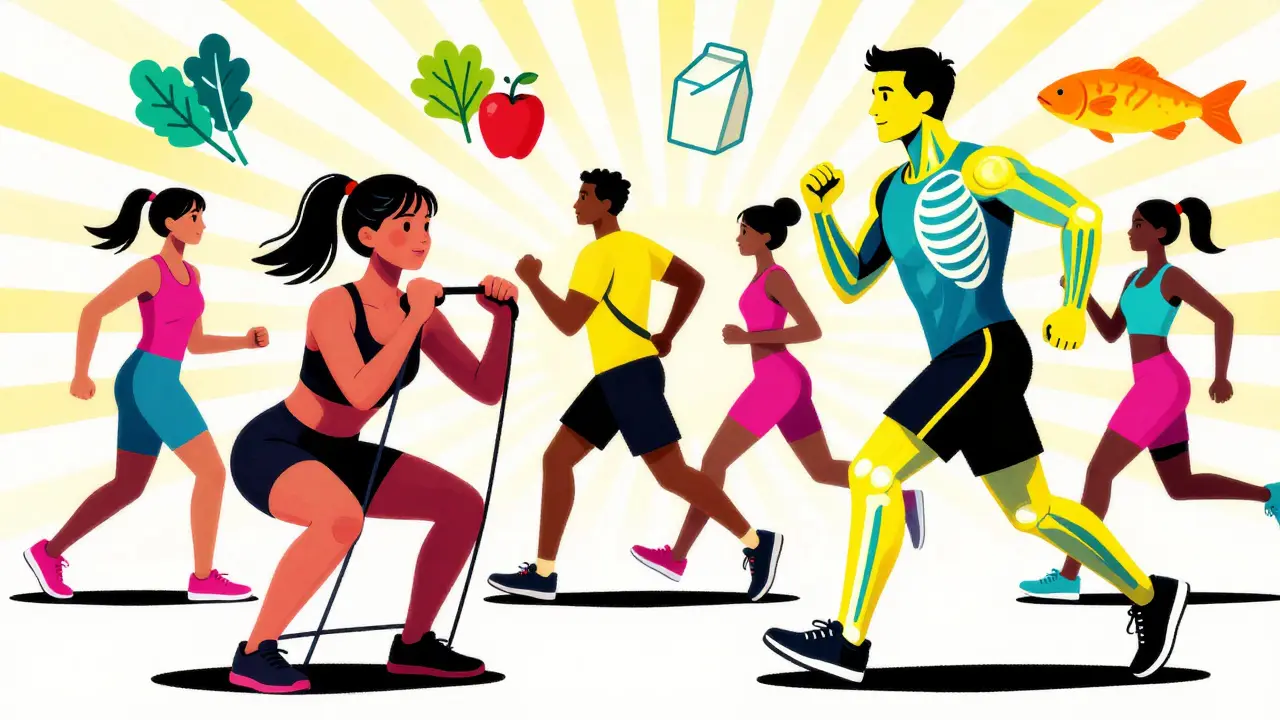
You cannot build a house without materials. For bones, those materials are calcium and vitamin D. But simply popping a pill isn't enough. Here is how to get it right:
- Calcium
- Aim for 1,000mg daily if you are under 50, and 1,200mg if you are over 50. Food sources are best because your body absorbs them better. Think dairy products, leafy greens like kale and bok choy, and fortified plant milks. If you need supplements, split the dose. Your gut can only absorb about 500mg at a time. Taking 1,200mg all at once wastes half of it.
- Vitamin D
- Calcium is useless without vitamin D, which helps your intestines absorb it. Most adults need 800-1,000 IU daily. Sunlight helps, but in places like the UK, winter sun is too weak to generate sufficient vitamin D. Testing your blood levels is smart; if you are deficient (<20ng/mL), you may need higher doses temporarily to reach protective thresholds (>30ng/mL).
- Protein
- Bones are made partly of collagen, a protein matrix. Low protein intake leads to muscle loss, which increases fall risk. Ensure you are eating adequate lean meats, beans, or legumes to support both muscle and bone structure.
Moving to Strengthen: The Exercise Prescription
This is where most people get it wrong. Swimming and cycling are great for heart health, but they do little for bone density because they are non-weight-bearing. To tell your bones to get stronger, you must load them. Gravity and resistance are your friends.
The American College of Sports Medicine recommends a mix of two types of movement:
- Weight-Bearing Aerobic Activity: Brisk walking, jogging, hiking, or dancing. Aim for 30-45 minutes, five days a week. The impact sends signals to your bone cells to deposit more mineral.
- Resistance Training: Lifting weights, using resistance bands, or doing bodyweight exercises like squats and push-ups. Do this twice a week. Strong muscles pull on bones, stimulating growth. More importantly, strong legs help you catch yourself if you slip.
Balance training is equally vital. Tai Chi or simple heel-to-toe walks can reduce your risk of falling by nearly 30%. Falls are the trigger for fractures; preventing the fall prevents the break.
Testing and Treatment: Knowing Your Numbers
If you are a woman over 65 or a man over 70, you should get a DXA scan (Dual-energy X-ray Absorptiometry). It is quick, painless, and uses very low radiation. The result gives you a T-score:
- -1.0 or higher: Normal bone density.
- -1.0 to -2.5: Osteopenia (low bone mass). This is a warning sign. Focus heavily on diet and exercise.
- -2.5 or lower: Osteoporosis. Medical intervention is usually required.
Doctors often use the FRAX tool to calculate your 10-year fracture risk. It looks at your age, gender, weight, smoking status, and family history, plus your DXA score if available. If your risk is high, medications like bisphosphonates (which slow bone breakdown) or newer agents like romosozumab (which boost bone building) might be prescribed. While some patients report side effects like stomach upset, the benefit of avoiding a hip fracture far outweighs these risks for most high-risk individuals.
Creating a Fall-Proof Home
Prevention extends beyond your body into your environment. Most fractures happen at home. Take an honest look at your living space:
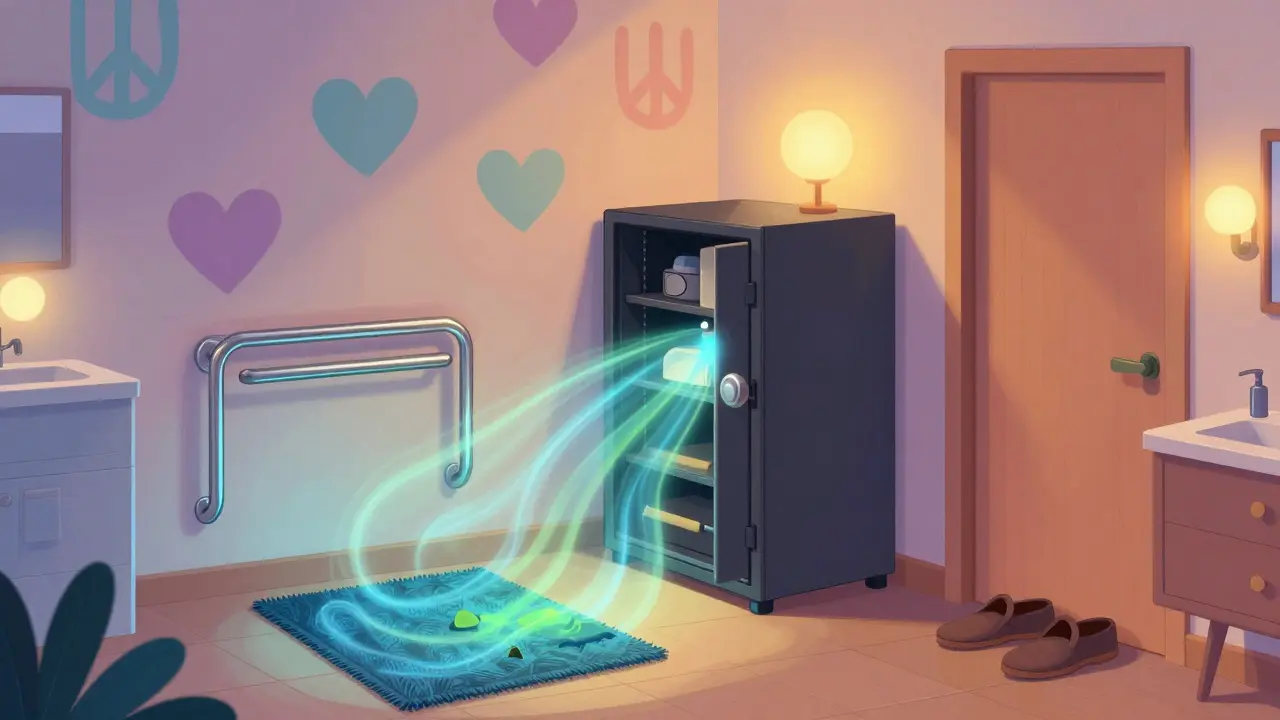
- Remove Trip Hazards: Tape down loose rugs. Clear clutter from walkways. Keep cords off the floor.
- Improve Lighting: Install nightlights in hallways and bathrooms. Poor lighting is a major cause of nighttime falls.
- Add Support: Grab bars in the shower and toilet area are essential. Non-slip mats in the tub provide stability.
- Footwear Matters: Wear shoes with good grip, even indoors. Slippers with smooth soles are slippery traps.
Can I reverse osteoporosis naturally?
You cannot fully reverse severe osteoporosis without medication, but you can stop further loss and improve bone strength through rigorous weight-bearing exercise, adequate calcium/vitamin D intake, and fall prevention. Early-stage osteopenia can sometimes be stabilized or improved with lifestyle changes alone.
Is coffee bad for my bones?
Moderate coffee consumption (up to 3-4 cups a day) does not significantly increase fracture risk for most people. However, excessive caffeine can interfere with calcium absorption. If you drink a lot of coffee, ensure you are getting enough calcium in your diet to compensate.
When should I get my first bone density test?
Women should generally get tested at age 65, or earlier if they have risk factors like early menopause, steroid use, or a family history of fractures. Men should consider testing at 70, or earlier if they have secondary causes for bone loss. Discuss your personal timeline with your doctor.
Do supplements work better than food for calcium?
No. Your body absorbs calcium from food more efficiently than from pills. Supplements should only be used to fill gaps when dietary intake is insufficient. Additionally, taking large doses of calcium supplements all at once can increase the risk of kidney stones and heart issues in some people.
What is the difference between osteopenia and osteoporosis?
Osteopenia means you have lower-than-normal bone density, but not low enough to be classified as osteoporosis. It is a warning stage. Osteoporosis indicates significantly weakened bones with a high risk of fracture. Both require attention, but osteoporosis often necessitates medical treatment alongside lifestyle changes.
Mark Hogan
June 2, 2026 AT 02:01hey guys, just wanted to say that the part about splitting calcium doses is huge. i always took my whole 1200mg at once and felt like crap afterwards. turns out my body wasnt even absorbing half of it lol. also the bit about protein for bones was new to me. everyone talks about milk but nobody mentions beans or lean meats enough. thanks for sharing this info.
Hassan Bukhari
June 2, 2026 AT 09:47It is frankly astonishing how many people still believe swimming is a panacea for all ailments. The article correctly points out that non-weight-bearing exercises do nothing for bone density. If you are not loading the skeleton with gravity and resistance, you are merely maintaining the status quo of decay. Most people here likely have osteopenia and don't even know it because they rely on cardio instead of actual strength training. It is a failure of modern fitness culture to prioritize aesthetics over structural integrity.
Alexandre Desbiens
June 3, 2026 AT 18:23The distinction between osteopenia and osteoporosis is critical yet often misunderstood by the general public. Many individuals dismiss a T-score of -1.5 as 'normal aging,' whereas clinical evidence suggests this is a significant warning sign requiring immediate lifestyle intervention. Furthermore, the role of vitamin D in calcium absorption cannot be overstated; without sufficient D levels, dietary calcium intake becomes largely ineffective. I would recommend regular blood testing for 25-hydroxyvitamin D, especially during winter months in northern latitudes, to ensure optimal absorption rates.
William Storm
June 4, 2026 AT 19:05One must ask... does the fear of falling actually cause the fall? Perhaps the mind creates the fragility before the bone does. The article speaks of 'silent traps' and 'biological mechanics,' yet ignores the existential dread of becoming brittle. We are not merely bags of calcium; we are consciousnesses trapped in decaying vessels. To focus solely on the mineral content is to miss the soul of the issue. Is it not more important to accept our mortality than to fight it with squats?
Wendy Engelmann
June 5, 2026 AT 00:14I appreciate the emphasis on balance training like Tai Chi. It is easy to overlook mental focus when thinking about physical health, but preventing falls is just as important as building bone density. My mother started doing simple heel-to-toe walks daily after her first scare, and it gave her so much confidence. Small changes really do add up over time. It is reassuring to know there are actionable steps we can take rather than just worrying about genetics.
Lisa Thomas
June 6, 2026 AT 11:21oh my god this is terrifying but so necessary to read!! i had no idea coffee could mess with calcium absorption. im basically a walking skeleton at this point with my caffeine habit. gonna start adding more leafy greens to my smoothies immediately. thank you for this life saving post !!!
Nicholas Bowling
June 6, 2026 AT 20:49everyone is so obsessed with living forever its pathetic. bones break. thats life. stop trying to control everything with supplements and exercise routines. nature takes its course. you cant cheat death with kale and squats. its a waste of energy and money. let the chips fall where they may.
Jay Foreman
June 8, 2026 AT 01:43Look, I get that people want to feel empowered, but this article is basically saying 'exercise and eat right' which is obvious. What about the poor people who work construction and lift heavy things every day? Are their bones immune? Or what about those of us who cant afford organic kale and expensive vitamin d tests? Its nice to have tips but sometimes the system is rigged against your bone density regardless of how hard you try. Still, good info for those who can act on it.
Cathy N
June 9, 2026 AT 22:03i think the section on home safety is underrated. most people focus on diet but forget that tripping over a rug is how most fractures happen. i installed grab bars in my bathroom last year and it feels weirdly empowering to have that support. small changes make a big difference.
Adelaide Motata
June 11, 2026 AT 16:06honestly this article is basic stuff if u actually pay attention to ur health. ppl are shocked that smoking is bad for bones? really? and dont even get me started on alcohol. if u drink 2 units a day ur asking for trouble. its not rocket science. stop being lazy and start lifting weights. also calcium pills are useless if u dont take them with food. learn basic biology before complaining about osteoporosis.
Mike Crump
June 13, 2026 AT 08:45This is a fantastic breakdown! I love how it highlights that bones are living tissue. It’s like a garden that needs constant tending. For anyone feeling overwhelmed, start small. Maybe just add a 10-minute walk after dinner or swap one soda for a glass of fortified milk. Every little bit counts towards building that reserve for later years. Let’s support each other in staying strong and mobile!
Daniel Tremblay
June 13, 2026 AT 17:37Oh, bravo. Another article telling us to jump around like maniacs to keep our skeletons from turning to dust. Typical western obsession with defying nature. In my culture, we respect the aging process. But sure, go ahead and do your squats while ignoring the fact that stress alone destroys bone density faster than any lack of calcium. You’re all running on a treadmill to nowhere.
Roderick Gooden
June 15, 2026 AT 02:44While I agree with the fundamental principles outlined in this piece regarding the necessity of weight-bearing exercise and adequate nutritional intake, particularly concerning the synergistic relationship between calcium and vitamin D, it is imperative to note that individual physiological responses can vary significantly based on genetic predispositions and pre-existing metabolic conditions, thus necessitating a highly personalized approach to bone health management rather than a one-size-fits-all strategy which might inadvertently lead to suboptimal outcomes for certain demographics who require more specialized medical interventions.
ANGELA CHINENYE
June 16, 2026 AT 23:29It is important to remember that medication is not always the first line of defense. Lifestyle modifications can be incredibly effective, especially in the early stages of osteopenia. However, if you have already experienced a fragility fracture, please consult with a specialist immediately. Do not hesitate to seek professional medical advice tailored to your specific situation. Your long-term mobility depends on proactive care today.
Dave Villeneue
June 18, 2026 AT 03:14Your bone density is declining. Accept it. Stop whining about minor inconveniences and start treating your body like the machine it is. Load it. Feed it. Maintain it. Failure to do so is a choice. End of story.