Opioid-Induced Constipation: How to Prevent and Treat It Effectively
 Jan, 23 2026
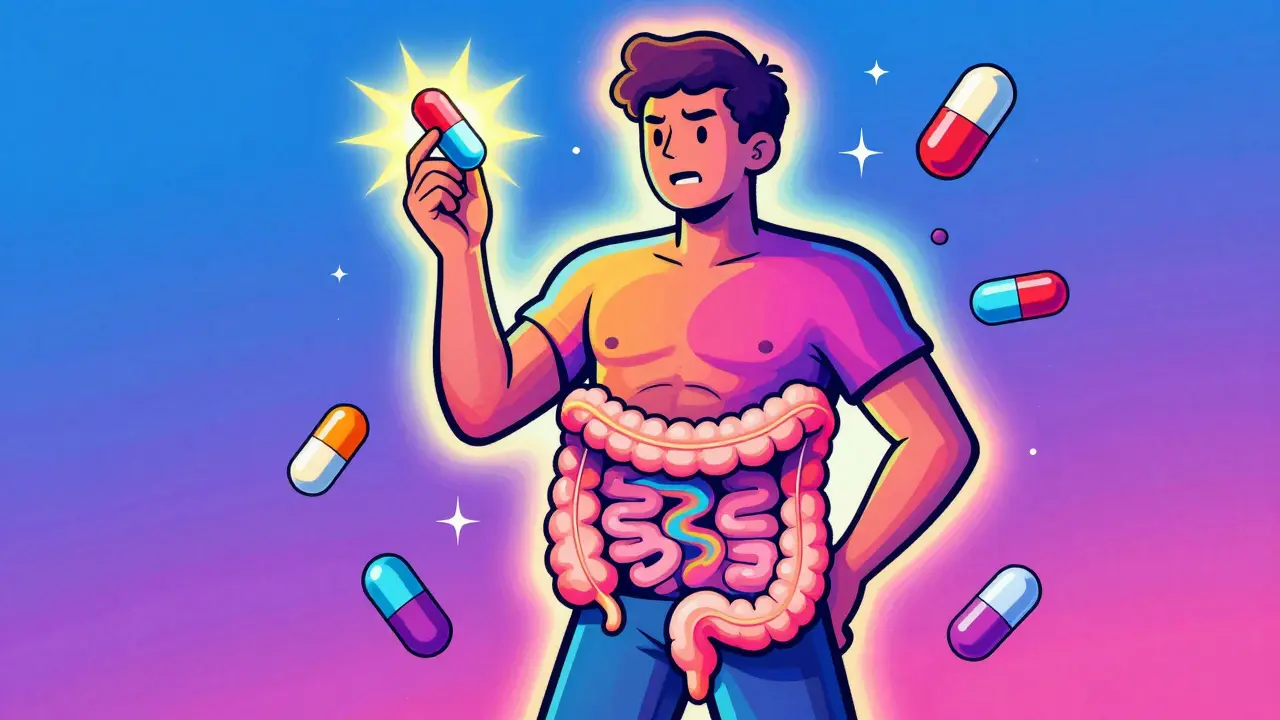
When you start taking opioids for chronic pain, most people focus on how well the medicine controls their discomfort. But there’s another side effect that hits harder and lasts longer than most expect: opioid-induced constipation. It’s not just a minor inconvenience. For 40 to 60% of people on long-term opioids, it becomes a daily struggle-straining, bloating, feeling like you haven’t fully emptied your bowels-even when you’re trying everything. And unlike nausea or drowsiness, which often fade after a few weeks, this doesn’t get better on its own. It sticks around as long as you’re on the medication.
Why Opioids Cause Constipation
Opioids don’t just work in your brain to block pain signals. They also latch onto receptors in your gut, especially the μ-opioid receptors lining your intestines. This shuts down the natural muscle movements that push food and waste along. Your colon slows down, water gets sucked out of stool, and your anal sphincter tightens up-making it harder to go even when you feel the urge.
That’s why regular constipation remedies often fail. A stool softener might help if you’re dehydrated or eating too little fiber, but it won’t fix what opioids are doing to your gut’s nervous system. That’s why OIC feels different-it’s not just "being regular"; it’s a drug-induced disruption of your digestive rhythm.
Prevention Starts on Day One
The biggest mistake? Waiting until you’re backed up before doing anything. Experts agree: if you’re starting opioids, you should start a laxative at the same time. Not tomorrow. Not next week. Right now.
Studies show that proactive treatment cuts severe cases of OIC by 60 to 70%. That’s huge. It means you’re not just managing a problem-you’re avoiding it altogether.
What works best as a first step? Osmotic laxatives like polyethylene glycol (PEG), which pull water into the colon to soften stool. Stimulant laxatives like senna or bisacodyl are also recommended-they gently trigger contractions in the bowel. Don’t rely on just one. Many patients need a combination: PEG for bulk and a stimulant to get things moving.
Don’t forget lifestyle too. Drink plenty of water-aim for at least 2 liters a day. Move regularly, even if it’s just a short walk. Fiber helps, but only if you’re drinking enough water. Too much fiber without enough fluid can make things worse.
When Laxatives Aren’t Enough
Here’s the hard truth: about 68% of patients on opioids say over-the-counter laxatives don’t do enough. That’s why many end up switching to prescription options called PAMORAs-peripherally acting μ-opioid receptor antagonists.
These drugs are designed to block opioids in the gut without touching the pain relief in your brain. That’s the magic. They don’t reduce your pain control, but they undo the gut slowdown.
The main ones you’ll hear about:
- Methylnaltrexone (Relistor®): Given as an injection, it works fast-sometimes within 30 minutes. Used mostly in advanced illness or palliative care, but effective for others too.
- Naldemedine (Movantik®): An oral pill taken daily. Approved for cancer patients and others on long-term opioids. It also helps reduce nausea, which is a bonus.
- Naloxegol (Movantik®): Another daily pill, works similarly to naldemedine.
- Lubiprostone (Amitiza®): Not a PAMORA, but a chloride channel activator. Increases fluid secretion in the gut. FDA-approved for women, but works in men too.
Many patients report life-changing results. One person on PatientsLikeMe said, "Naldemedine let me stay on my pain meds without constant bathroom struggles." Another wrote, "Relistor injections work within 30 minutes when nothing else does."
The Catch: Cost, Access, and Risks
These drugs aren’t cheap. Without insurance, a month’s supply can cost $500 to $900. Even with coverage, 41% of Medicare Part D plans require prior authorization. Commercial insurers often force you to try cheaper laxatives first-even though they don’t work for most people.
And then there’s the risk. All PAMORAs carry a black box warning for gastrointestinal perforation. That means a hole in your intestine. It’s rare, but serious. You shouldn’t use them if you have a known blockage, recent abdominal surgery, or active inflammatory bowel disease.
Side effects like nausea, diarrhea, and abdominal pain are common. About 28% of users report discomfort, which is why some stop taking them after six months.
That’s why patient selection matters. As Dr. Jane Smith at Mayo Clinic says, "PAMORAs are powerful, but not for everyone. You need to weigh the benefit against the risk."
What’s New in 2026
The field is moving fast. In 2023, the FDA approved a once-weekly injection of methylnaltrexone. That’s a game-changer for people tired of daily shots or pills. No more remembering to inject every other day-just one weekly dose.
The American Society of Clinical Oncology (ASCO) updated its 2024 guidelines to specifically recommend naldemedine for cancer patients starting opioids. Why? Because it doesn’t just treat constipation-it helps prevent it and reduces nausea too.
Looking ahead, researchers are testing combination pills that mix low-dose PAMORAs with traditional laxatives. There’s also early work on genetic tests that could predict who responds best to which drug. By 2026, we might be tailoring treatment based on your DNA.
How to Know If You’re Getting Proper Care
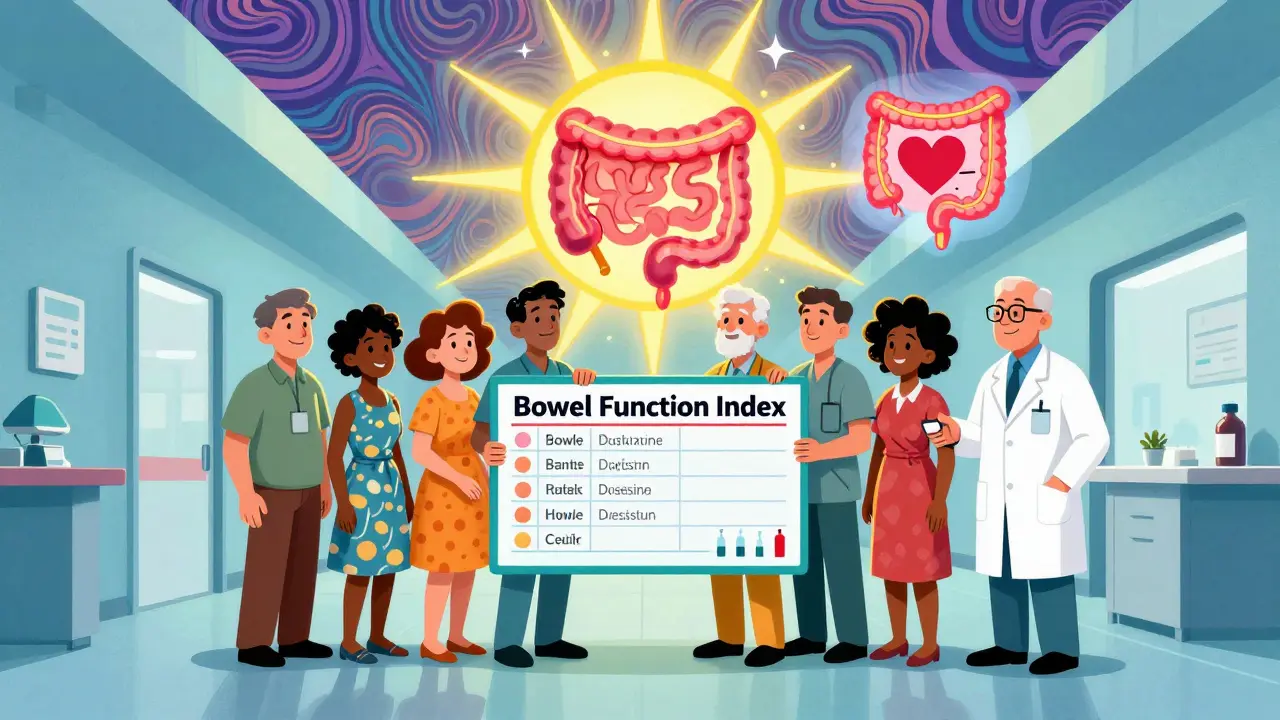
Doctors don’t always ask about bowel habits. You have to bring it up. Use a simple tool called the Bowel Function Index (BFI). If your score is above 30, you have significant constipation and need treatment escalation.
Ask yourself:
- Am I straining more than 25% of the time?
- Do I feel like I haven’t fully emptied my bowels?
- Do I need to use my fingers to help pass stool?
- Have I gone more than three days without a bowel movement?
If you answered yes to any of these, talk to your provider. Don’t wait until you’re in pain or bloated. Keep a log for a week-how often you go, what you take, how you feel. That helps your doctor make better decisions.
Who’s Responsible for Getting This Right?
It’s not just the doctor’s job. Pharmacists play a huge role. In clinics where pharmacists actively screen for OIC at the time of opioid prescription, laxative initiation jumps by 43%. That’s because they catch what busy clinicians miss.
And patients? You need to speak up. Many think, "I don’t want another pill," or "It’ll pass." But OIC won’t pass. It’ll get worse. And untreated, it can lead to nausea, vomiting, abdominal distension, and even fecal impaction-something that requires emergency treatment.
Remember: managing OIC isn’t about giving up pain control. It’s about keeping your life working while you stay on the medication you need.
Bottom Line
Opioid-induced constipation is common, persistent, and treatable-but only if you act early. Start laxatives on day one. Don’t wait. If they don’t work after a few weeks, don’t just endure it. Ask about PAMORAs. Talk to your pharmacist. Track your symptoms. Push for better care.
The tools exist. The guidelines are clear. The cost and access barriers are real-but so is the need. You deserve to manage your pain without losing your quality of life to constipation.
Josh McEvoy
January 23, 2026 AT 16:26Chloe Hadland
January 25, 2026 AT 02:26Amelia Williams
January 25, 2026 AT 16:18Sharon Biggins
January 25, 2026 AT 23:32Karen Conlin
January 26, 2026 AT 23:29Michael Camilleri
January 28, 2026 AT 07:13Darren Links
January 29, 2026 AT 00:27Kevin Waters
January 29, 2026 AT 20:06lorraine england
January 29, 2026 AT 23:38John McGuirk
January 31, 2026 AT 07:19