Nonalcoholic Fatty Liver Disease: How It Progresses and How to Reverse It
 Jan, 7 2026
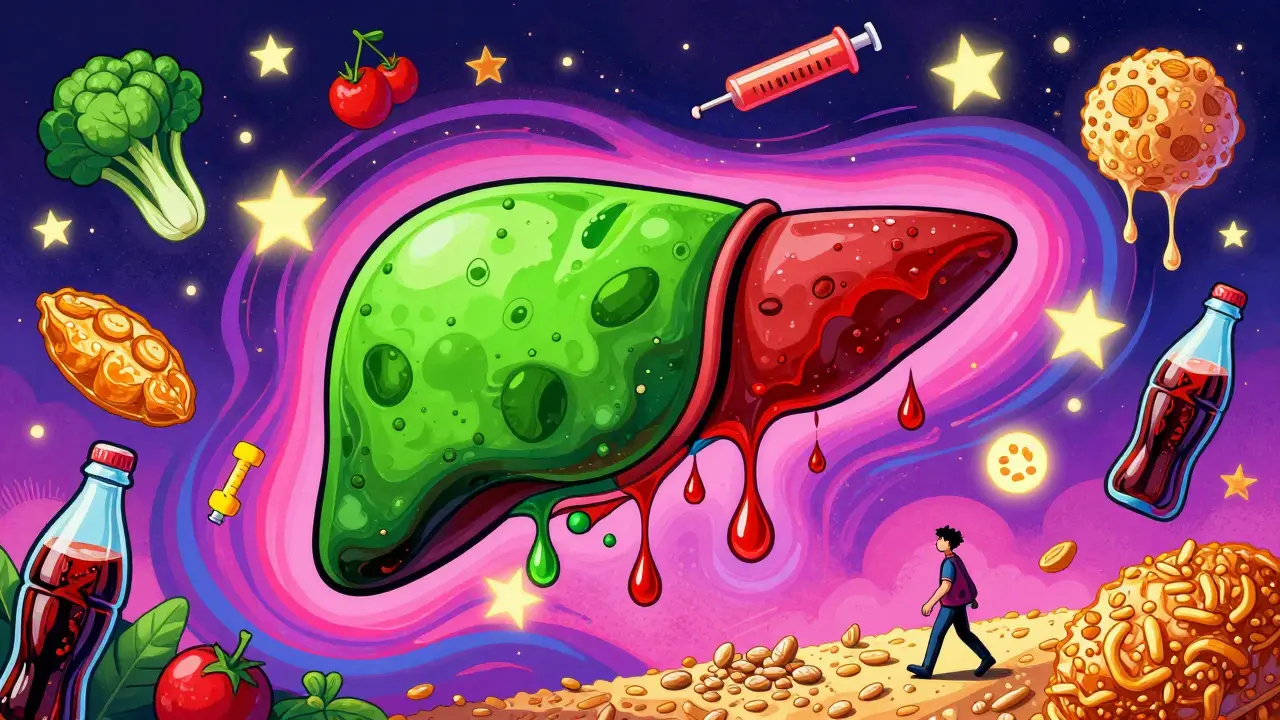
Most people don’t realize their liver is silently struggling until something serious happens. By then, it’s often too late. Nonalcoholic fatty liver disease (NAFLD), now more accurately called Metabolic Associated Fatty Liver Disease (MAFLD), affects about 1 in 4 people worldwide. In the U.S. and Europe, that number jumps to nearly 1 in 3. And here’s the scary part: most of those people have no symptoms. No pain. No warning. Just a liver slowly filling with fat - not from drinking, but from the way we eat, move, and live today.
What Exactly Is MAFLD?
MAFLD isn’t just "a little fat on the liver." It’s defined by more than 5% of liver cells packed with triglycerides - the same kind of fat that builds up in your belly when you eat too many sugary or processed foods. And it’s not caused by alcohol. It’s caused by insulin resistance, metabolic dysfunction, and chronic inflammation. Think of it as your liver drowning in fat because your body can’t manage blood sugar properly.
It starts as simple steatosis - just fat buildup. That’s NAFL. But for some, it doesn’t stop there. Over time, that fat triggers inflammation, cell damage, and scarring. That’s NASH - nonalcoholic steatohepatitis. And from there, it can creep into fibrosis, cirrhosis, and even liver cancer. The American Liver Foundation says NASH could become the top reason for liver transplants by 2030. That’s not a prediction. It’s a trajectory.
How Does It Progress?
The liver doesn’t just get fat randomly. It’s a chain reaction. When you’re insulin resistant - which happens when your cells stop responding to insulin - your fat cells start leaking free fatty acids into your bloodstream. Your liver, confused by the flood, grabs them all. At the same time, your body starts making new fat from sugar, especially fructose. Studies show that in people with MAFLD, up to 26% of liver fat comes from this internal sugar-to-fat factory. In healthy people? Just 5%.
Then comes the second hit: oxidative stress. Fat-laden liver cells start producing toxic molecules that damage mitochondria - the energy powerhouses of your cells. This triggers inflammation. Immune cells rush in, but instead of fixing things, they make them worse. Liver stellate cells wake up and start laying down scar tissue. That’s fibrosis. And once scarring begins, it doesn’t just stop. It grows.
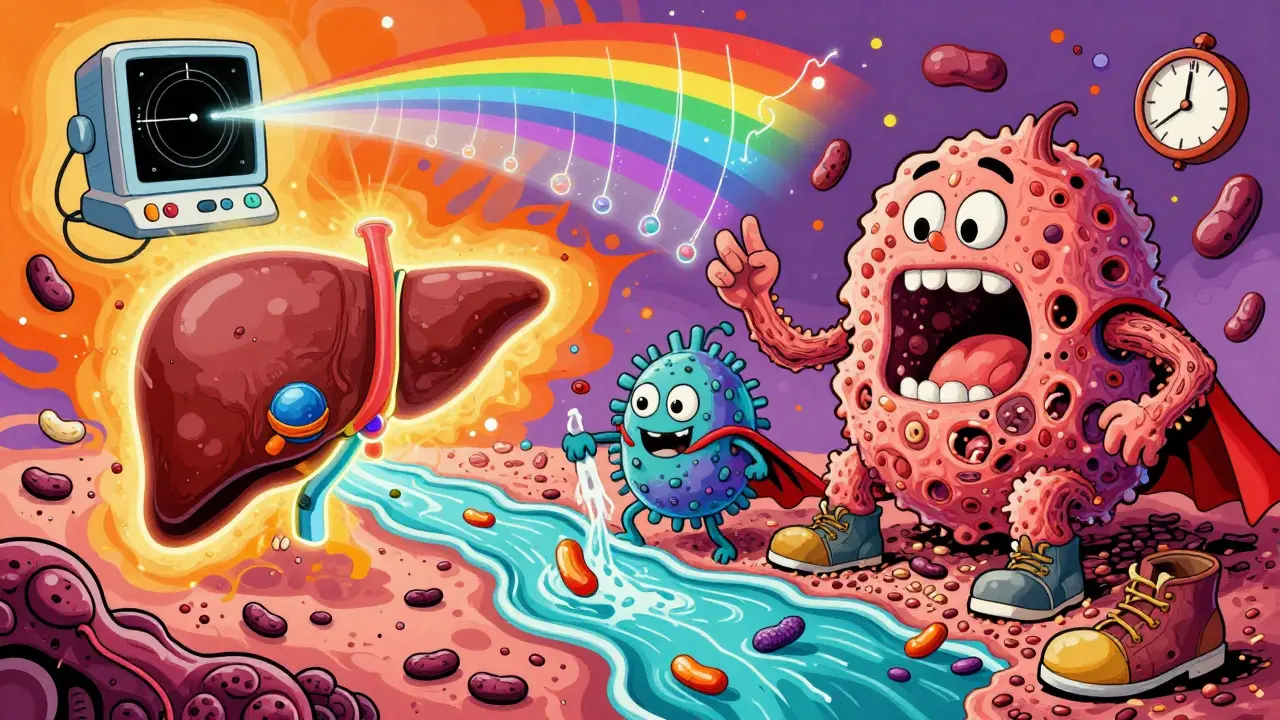
What makes it worse? Your gut. When the gut lining becomes leaky - thanks to processed foods, low fiber, and antibiotics - toxins like LPS (lipopolysaccharide) slip into your bloodstream and head straight to your liver. That’s the gut-liver axis. It’s not theory. It’s measurable. Studies show that people with advanced MAFLD have 40% higher LPS levels in their liver than healthy people.
And here’s the twist: not everyone progresses. Some people stay at simple steatosis for life. Others spiral into cirrhosis in under a decade. Why? Genetics play a role. So does body fat distribution. But the biggest factor? Time and lifestyle. The longer you’re overweight, sedentary, and eating sugar-heavy foods, the higher your risk.
Can You Reverse It?
Yes. And it’s not magic. It’s biology.
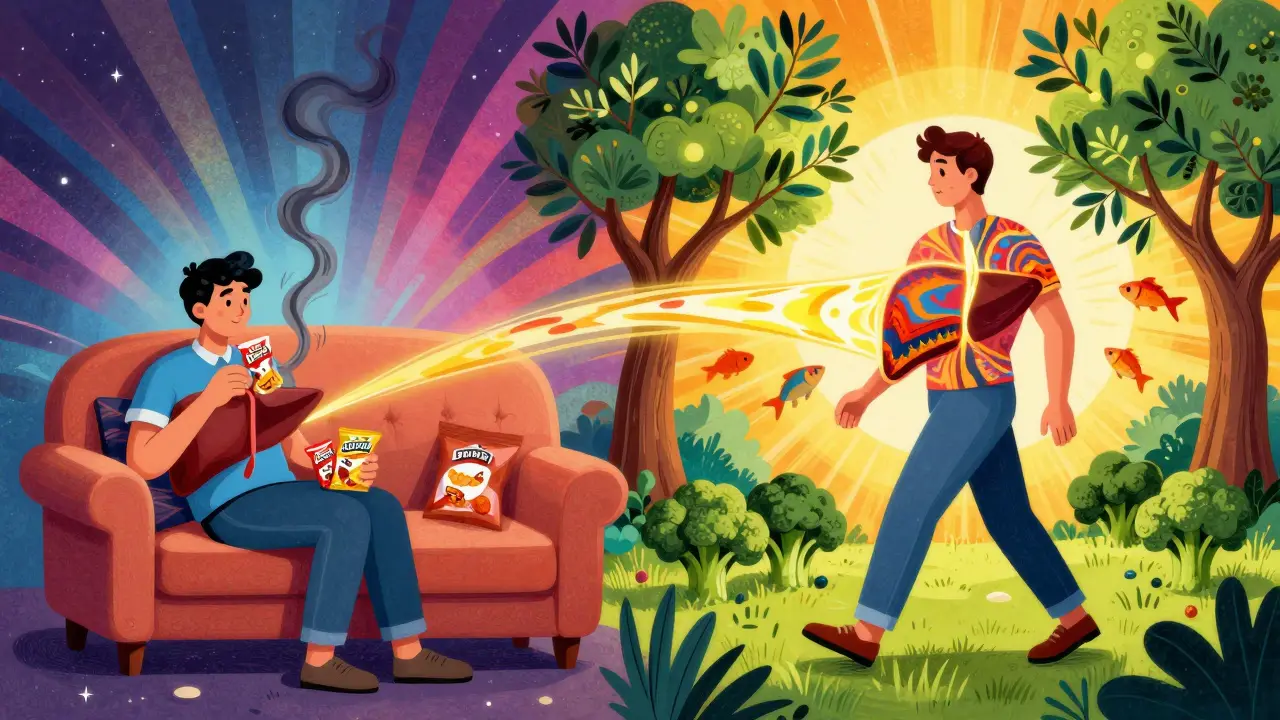
The most powerful tool you have? Weight loss. Not extreme. Not quick. Just consistent. Losing 3-5% of your body weight improves liver fat. Losing 7-10%? That’s when inflammation and scarring start to reverse. The LEAN study showed that 90% of people with NASH who lost 7-10% of their weight saw their liver inflammation disappear. That’s not a miracle. That’s science.
How do you do it? Two things: diet and movement.
Diet: The Mediterranean diet isn’t trendy - it’s proven. It’s rich in olive oil, vegetables, legumes, fish, and nuts. Low in sugar, refined carbs, and processed meats. In one trial, people following this diet for six months cut liver fat by 60-70%. Why? Because it lowers insulin spikes, reduces inflammation, and gives your liver the fiber it needs to flush out toxins. Aim for 25-30 grams of fiber daily. That’s a cup of lentils, a handful of berries, and three servings of veggies.
Exercise: Walking alone isn’t enough. You need both aerobic activity (brisk walking, cycling, swimming) and strength training. Do 150 minutes of cardio a week - that’s 30 minutes, five days. Add two days of resistance training: squats, push-ups, dumbbells. Studies show this combo reduces liver fat 30% more than cardio alone. Why? Muscle burns glucose. More muscle = better insulin sensitivity = less fat in the liver.
And don’t underestimate sleep and stress. Poor sleep raises cortisol, which increases belly fat and liver fat. Chronic stress does the same. If you’re not sleeping 7 hours a night or you’re constantly tense, you’re working against yourself.
What About Medications?
There are no magic pills - yet. But some are showing real promise.
Resmetirom, approved by the FDA in March 2024, targets the thyroid receptor in the liver. In the RESOLVE-IT trial, it cleared NASH in 26% of patients and improved fibrosis. That’s bigger than any previous drug. Lanifibranor, a PPAR agonist, is expected to report Phase 3 results in 2025. It works by calming inflammation and boosting fat burning.
GLP-1 receptor agonists - drugs like semaglutide and liraglutide - were designed for diabetes and weight loss. But they’re now being used off-label for MAFLD. They reduce liver fat by cutting inflammation, blocking fat production, and improving insulin sensitivity. In one study, they lowered liver fat by 40% in six months. But they’re expensive. Insurance often denies coverage unless you have type 2 diabetes or severe obesity.
Pioglitazone helps too - it improves liver histology in over half of patients. But it causes weight gain. That’s a trade-off. Vitamin E (800 IU daily) is sometimes recommended for non-diabetic NASH patients, but long-term use carries risks.
Probiotics? They’re not a cure, but they help. Lactobacillus rhamnosus GG has been shown in studies to reduce liver toxins by 40% by healing the gut lining. Fecal transplants from healthy donors improved liver fat by 25-30% in early trials. It sounds wild, but it’s real.
What Gets in the Way?
Here’s the ugly truth: most doctors don’t screen for MAFLD. A 2022 report found only 35% of primary care offices have access to FibroScan - a simple, painless ultrasound that measures liver stiffness and fat. Most patients are diagnosed by accident - during a routine blood test showing elevated liver enzymes (ALT, AST), or an ultrasound done for another reason.
Patients say they feel ignored. In surveys, 62% reported their doctor didn’t take their liver health seriously until they were already in advanced stages. And even when they do, the advice is vague: "Lose weight. Eat better." No plan. No follow-up. No support.
And the system doesn’t help. Insurance won’t cover GLP-1 drugs for MAFLD alone. FibroScan is often denied as "not medically necessary." Nutritional counseling? Rarely covered. So people are left to figure it out on their own - with conflicting advice from YouTube, social media, and well-meaning but misinformed friends.
Real People, Real Results
On Reddit’s r/fattyLiver, people share their stories. One user, u/LiverWarrior, lost 10% of his body weight over a year. He walked 30 minutes every day, cut out soda and bread, and started cooking with olive oil. His FibroScan went from F3 (moderate fibrosis) to F1 (minimal). He called it "the hardest thing I’ve ever done - but worth every second."
Another woman in her 50s switched to the Mediterranean diet and lost 18 pounds in six months. Her ALT dropped from 120 to 35. Her doctor said, "I didn’t think this was possible without medication."
These aren’t outliers. They’re proof that the body can heal - if you give it the right conditions.
What You Can Do Today
You don’t need a prescription to start reversing MAFLD. Here’s your simple action plan:
- Eliminate sugary drinks. That’s soda, juice, energy drinks, sweetened coffee. Replace with water, tea, or sparkling water with lemon.
- Swap refined carbs for whole foods. Bread, pasta, rice → whole grains, legumes, sweet potatoes.
- Get 150 minutes of walking or cycling a week. Break it into 30-minute chunks.
- Add two days of strength training. Bodyweight is fine. Squats, lunges, push-ups, planks.
- Eat more fiber. Aim for 25-30 grams daily. Beans, broccoli, apples, chia seeds, oats.
- Stop eating late. Finish dinner at least 3 hours before bed. This gives your liver time to rest and repair.
- Track your progress. Get a FibroScan if you can. Or at least ask your doctor for ALT and AST blood tests every 6 months.
It takes time. Six months to see liver fat drop. A year to reverse fibrosis. But it’s not a race. It’s a reset.
The Future Is Here - But You Don’t Need to Wait
Drug companies are racing to develop new treatments. AI tools are now predicting liver fibrosis with 89% accuracy using simple blood tests and scans. In five years, we might have pills that target fat production, inflammation, and gut health all at once.
But you don’t need to wait. The tools you need are already in your kitchen, your shoes, and your daily routine. MAFLD isn’t a life sentence. It’s a signal. A sign that your metabolism is out of balance. And the good news? Metabolism can be fixed.
Your liver doesn’t need a miracle. It just needs you to stop poisoning it - and start feeding it what it actually wants: real food, movement, rest, and time.
Can you reverse fatty liver without losing weight?
It’s extremely difficult. Fat in the liver is directly tied to excess body fat, especially around the abdomen. While some people see small improvements with diet changes alone, studies show that losing at least 3-5% of body weight is needed to reduce liver fat, and 7-10% is required to reverse inflammation and scarring. Weight loss isn’t optional - it’s the foundation of reversal.
Is NAFLD the same as alcoholic liver disease?
No. NAFLD (now called MAFLD) happens in people who drink little to no alcohol - less than 20-30 grams per day. Alcoholic liver disease is caused by long-term heavy drinking. The damage looks similar under a microscope, but the causes are completely different. That’s why the name changed: MAFLD focuses on metabolic dysfunction, not just what you exclude.
Can a vegetarian or vegan diet reverse fatty liver?
Yes - but only if it’s healthy. A vegan diet full of white rice, sugary snacks, and fried tofu won’t help. But a whole-food, plant-based diet rich in vegetables, legumes, nuts, seeds, and whole grains can be very effective. Fiber and plant antioxidants reduce inflammation and improve insulin sensitivity. Many people with MAFLD see great results on well-planned plant-based diets.
Do I need a liver biopsy to know if I have MAFLD?
No. Most people are diagnosed with non-invasive tests: blood work (ALT, AST), ultrasound, or FibroScan. A biopsy is only needed if the diagnosis is unclear or if advanced fibrosis is suspected. FibroScan is now the gold standard - it’s painless, quick, and accurate. Ask your doctor if it’s available.
How long does it take to reverse fatty liver?
Liver fat can drop in as little as 3-6 months with consistent lifestyle changes. Inflammation (NASH) may take 6-12 months to resolve. Fibrosis takes longer - often 12-24 months - but can improve significantly with sustained weight loss and exercise. The key is consistency, not speed.
Can I drink alcohol if I have MAFLD?
Even small amounts can worsen liver damage. While MAFLD is defined by low alcohol intake, the liver is already stressed. Alcohol adds another burden - increasing oxidative stress and inflammation. Most experts recommend complete abstinence until the liver has fully recovered.
Are there supplements that help with MAFLD?
Vitamin E (800 IU daily) is recommended for non-diabetic NASH patients in some guidelines. Omega-3s may help lower triglycerides. Coffee (2-3 cups daily) has been linked to lower liver fat and fibrosis. But supplements are not replacements for diet and exercise. Always talk to your doctor before starting any supplement - especially if you’re on other medications.
Can MAFLD come back after reversal?
Yes - if you return to old habits. The liver remembers. If you regain weight, start eating sugar again, or stop moving, fat will build up again. Reversal isn’t a cure. It’s a lifestyle shift. Long-term success depends on keeping the habits that helped you heal.
Aubrey Mallory
January 7, 2026 AT 20:15I’ve been fighting this for 3 years. Cut out soda, started walking 45 mins daily, switched to olive oil and veggies. My ALT dropped from 112 to 38. No meds. Just consistency. If you’re reading this and think you’re too busy - you’re not. Your liver doesn’t care about your schedule.
christy lianto
January 9, 2026 AT 01:36My doctor told me to ‘eat less sugar’ and sent me on my way. No follow-up. No tools. No FibroScan. It’s like being told to fix your car by ‘driving better.’ You need a mechanic. And most docs aren’t trained to be liver mechanics. We need better screening. Period.
Annette Robinson
January 10, 2026 AT 13:53Hey - I know this feels overwhelming. But you don’t have to do it all at once. Start with one thing. Swap soda for sparkling water. Take a 10-minute walk after dinner. That’s it. Small wins build momentum. And momentum builds healing. You’ve got this.
Manish Kumar
January 10, 2026 AT 19:20Let’s be real - this isn’t about liver fat. It’s about civilization collapsing. We’ve traded ancestral diets for plastic-wrapped sugar bombs. We sit 14 hours a day while algorithms feed us dopamine hits. The liver isn’t broken - our entire system is. We’ve forgotten how to live. And now our organs pay the price. You can’t medicate a culture. You have to resurrect it. Slowly. Painfully. With intention.
Prakash Sharma
January 11, 2026 AT 01:30Why are we letting Big Pharma sell us pills for a problem caused by Big Food? We don’t need another drug. We need to stop eating garbage. Stop blaming genetics. Stop waiting for a miracle. Your liver doesn’t care about your Instagram diet. It cares if you ate fried chicken last night.
Molly Silvernale
January 12, 2026 AT 02:34It’s not a disease… it’s a whisper. A quiet, persistent, biochemical SOS from your body saying: ‘I’m drowning in glucose, and you’re handing me more.’ The liver doesn’t scream - it just… stops. And then - boom - cirrhosis. We treat symptoms. We don’t listen to the silence. And that’s the tragedy.
Joanna Brancewicz
January 12, 2026 AT 18:33Insulin resistance drives lipogenesis → hepatic steatosis → oxidative stress → NASH → fibrosis. Weight loss >7% reverses histology. Mediterranean diet reduces inflammation via polyphenols and MUFA. Exercise enhances GLUT4 translocation. Fiber modulates gut microbiota → LPS reduction. Simple. Evidence-based. Non-negotiable.
Lois Li
January 13, 2026 AT 23:14I started this journey last year. I was scared. I didn’t know where to begin. But I found a Reddit group, and people shared their meals, their setbacks, their wins. I didn’t feel alone anymore. That’s the real medicine - community. Not pills. Not scans. Just someone saying, ‘I’ve been there too.’
Ken Porter
January 15, 2026 AT 13:58They say ‘lose weight’ like it’s easy. Try being 300 lbs and working two jobs. You don’t get to go on a ‘Mediterranean retreat’ when you’re surviving. This advice is for people who already have privilege. The rest of us? We’re just trying not to die.
Luke Crump
January 16, 2026 AT 08:16What if the real problem isn’t fat on the liver… but fat on the system? Capitalism doesn’t want you healthy. It wants you medicated. It wants you buying supplements, drugs, and detox teas. The truth? Your liver doesn’t need a pill. It needs you to stop being a cog. To eat real food. To move. To rest. To say NO to the machine.
Dave Old-Wolf
January 16, 2026 AT 14:04So… can you reverse it if you’re not overweight? I’m lean but have high liver fat. My doctor said it’s ‘lean MAFLD.’ Is that real? What do I do?
Donny Airlangga
January 17, 2026 AT 13:54I lost 12% of my body weight and my FibroScan went from F3 to F0. But honestly? The hardest part wasn’t the diet. It was facing how much I’d ignored my body for years. I thought I was fine because I didn’t feel sick. Turns out, silence isn’t peace. It’s a countdown.
Kristina Felixita
January 18, 2026 AT 02:21OMG I just switched to whole grain bread and my energy is insane!! Also cut out juice and started drinking green tea - my liver enzymes are way down!! I’m so proud of myself!! 🙌
Evan Smith
January 19, 2026 AT 07:17So… you’re telling me the cure for fatty liver is… not eating crap and walking? Groundbreaking. Next you’ll tell me breathing helps with lung health.
swati Thounaojam
January 20, 2026 AT 11:04my mom had this. she died of liver cancer. dont wait. do something. now.