Mail-Order Generics: How They Save Money and Where They Fall Short
 Jan, 1 2026
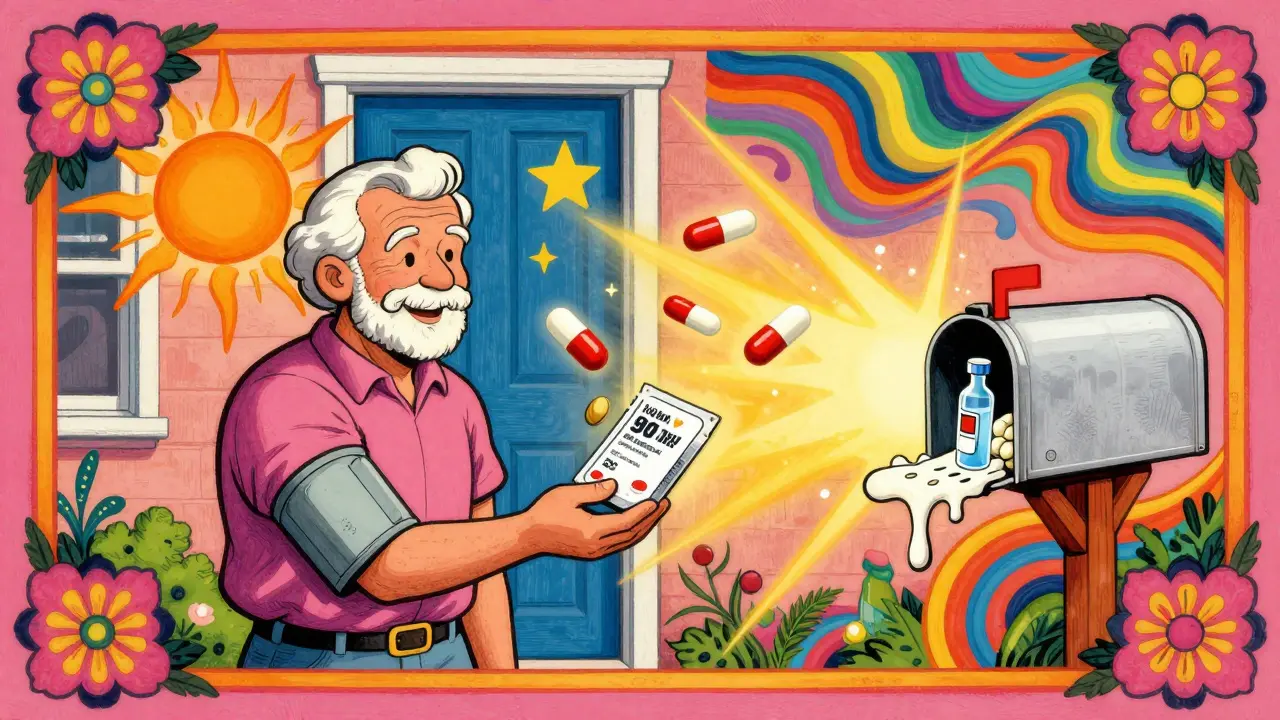
Buying your monthly blood pressure pill or diabetes medicine through the mail isn’t new-but it’s become the default for millions. If you’re on long-term medication, you’ve probably been offered a 90-day supply shipped straight to your door. It sounds simple: less driving, fewer trips to the pharmacy, and sometimes a much lower price. But behind the convenience lies a system full of hidden risks, inconsistent quality, and pricing tricks that can cost you more than you think.
Why Mail-Order Generics Are So Popular
Mail-order pharmacies grew fast because they solved a real problem: people with chronic conditions forget to refill prescriptions. A 2022 IQVIA study found that 58% of diabetes patients and 63% of hypertension patients use mail-order services-far higher than the 29% of people taking other prescriptions. Why? Because these services are designed to keep you on your meds.
Most plans offer automatic refills and 90-day supplies. That means you get your pills delivered every three months instead of every month. For many, the out-of-pocket cost drops dramatically. Some insurance plans charge just $10 for a 90-day supply of a generic statin, while the same drug at a local pharmacy might cost $45. One GoodRx user saved $45 a month switching to mail-order for their blood pressure med. That’s over $500 a year-money that matters when you’re living on a fixed income.
It’s not just about savings. The system pushes adherence. Studies from the National Institutes of Health show people using mail-order are more likely to take their meds regularly. That’s huge for conditions like high blood pressure or heart failure, where skipping doses can lead to hospitalization or stroke. Mail-order isn’t just convenient-it’s a public health tool.
The Hidden Costs: Markups That Don’t Add Up
But here’s the catch: not all mail-order prices are what they seem.
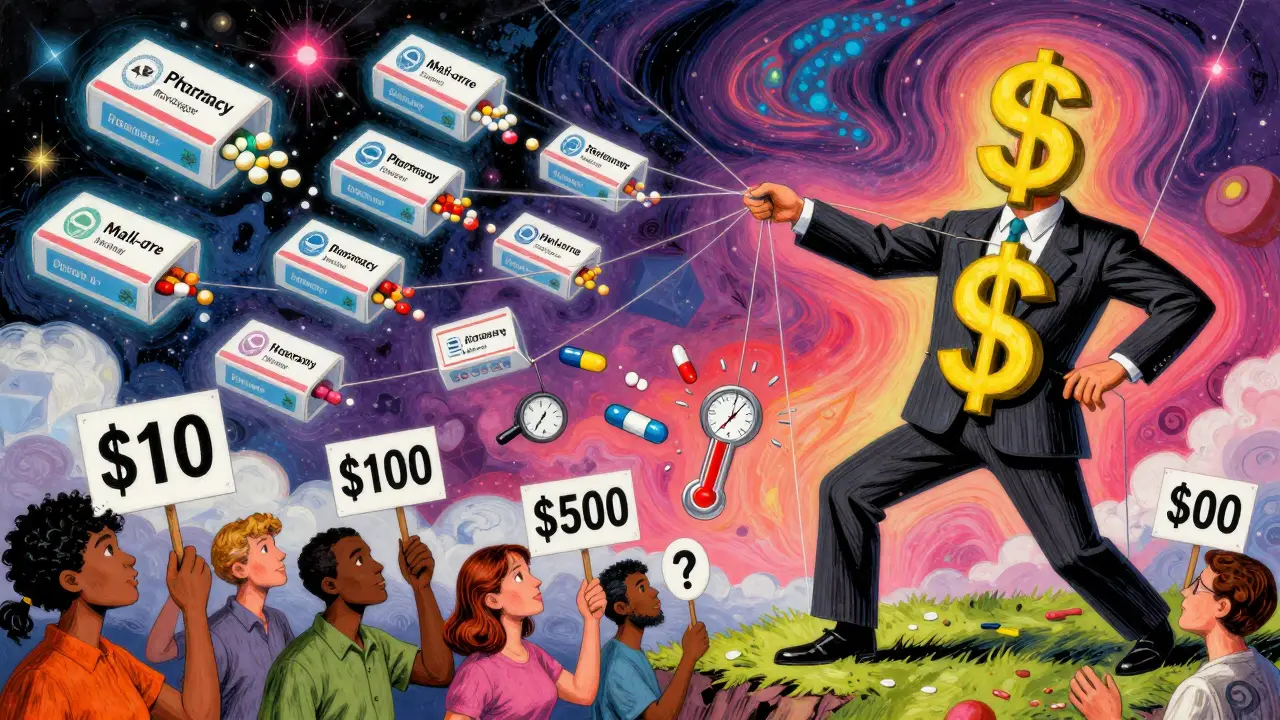
Between 2013 and 2023, mail-order pharmacy sales jumped from $86 billion to over $206 billion. Prescription volume? Only up 11%. That means the cost per prescription skyrocketed. Why? Because many mail-order pharmacies are owned by big pharmacy benefit managers (PBMs)-Express Scripts, CVS Caremark, OptumRx-who control both the drug pricing and the insurance networks.
One antidepressant costs $12 at a retail pharmacy. The same pill, through a mail-order service tied to your insurance, might be billed at $100. That’s an 800% markup. Brand-name drugs? Sometimes marked up 35 times the retail price. The FDA says generics must be identical to brand-name drugs in strength, safety, and effectiveness. But the price? Not so much.
These markups aren’t random. They’re built into how PBMs negotiate with insurers. You think you’re getting a deal? You might be paying more than you realize-especially if you’re uninsured. For example, the weight-loss drug semaglutide can cost up to $500 a month through direct-to-consumer mail-order sites. That’s unaffordable for most people without insurance.
Temperature Risks: Your Medicine Might Be Dead on Arrival
Medicines aren’t books. They’re chemicals. And they’re sensitive.
Insulin, certain antibiotics, and even some antidepressants need to stay between 68°F and 77°F during shipping. Too hot? Too cold? The drug can lose potency-or become dangerous.
A study from the Journal of the American Pharmacists Association found that only one-third of mail-order medications are shipped within safe temperature ranges. The FDA has logged over 1,200 reports of temperature-related failures between 2020 and 2023. That’s just what got reported.
Reddit users have shared stories of insulin arriving melted after sitting in a hot mailbox for hours. One person in Texas said their diabetes medication was useless after a summer delivery. They didn’t realize their blood sugar was spiking because the insulin had degraded. It took a hospital visit to figure it out.
There are no federal rules requiring temperature monitoring during shipping. No barcodes. No alerts. Just a box with a cold pack that might have melted by the time it reached your porch.
Lost, Delayed, or Confusing: The Human Side of Automation
Mail-order pharmacies are efficient. But efficiency doesn’t always mean safe.
Trustpilot reviews show that 17% of complaints are about delivery failures-packages lost, stolen, or damaged. If you’re on a medication like warfarin or seizure drugs, missing even a few days can be life-threatening.
And there’s no pharmacist standing next to you. At your local pharmacy, you can ask, “Does this new pill look different?” or “I feel weird since I switched-should I be worried?” Mail-order pharmacies don’t offer that. A 2023 Consumer Reports survey found that 68% of users worry about missing those face-to-face conversations.
Even the pills themselves can confuse you. Generic versions of the same drug can look different-different color, shape, size, even taste. A 2017 study found that switching between generic brands can cause anxiety, especially in older adults. Some patients stop taking their meds because they think the new pill isn’t the same. It’s the same drug. But your brain doesn’t know that.
When Mail-Order Doesn’t Work
Mail-order is great for chronic meds. Not so much for anything you need right now.
Need antibiotics for a sudden infection? An inhaler for an asthma attack? A painkiller after surgery? Don’t wait a week for delivery. Mail-order pharmacies often don’t stock these fast-turnaround drugs. And if they do, the process can take days to process-too slow when you’re in pain or feverish.
Another problem: complexity. If you take five different medications, you might need to use three different pharmacies to get the best prices. One for your blood pressure pill, another for your thyroid med, a third for your cholesterol drug. That means your prescriptions are scattered. Your pharmacist can’t see all your meds at once. That’s a recipe for dangerous drug interactions.
And if you’re on Medicare Part D, you might be forced into a mail-order plan after your first refill. No choice. No warning. Just a letter saying your next refill will be shipped. You didn’t sign up for this. But now you’re locked in.
What You Can Do to Stay Safe
Mail-order generics aren’t good or bad. They’re a tool. And like any tool, you need to use them right.
Plan ahead. Order your refill at least two weeks before you run out. Don’t wait until day 28. Delays happen. Temperature issues happen. Give yourself buffer time.
Check your meds when they arrive. Look at the pills. Are they the same color and shape as before? If not, call your pharmacy. Ask if it’s the same generic. If you’re on insulin or other temperature-sensitive drugs, open the box right away. Is the cold pack still frozen? Is the pill bottle warm? If yes, don’t take it. Call your provider and get a replacement.
Know your costs. Use GoodRx or SingleCare to compare prices. Sometimes the cash price at a local pharmacy is cheaper than your mail-order copay. Especially if you’re uninsured.
Keep a list. Write down every medication you take-including dosages and pharmacies. Share it with your doctor and your local pharmacist. Even if you use mail-order, keep one pharmacy you trust as your backup.
Speak up. If your insulin arrives melted, report it to the FDA. If your prescription is late and you’re at risk, call your insurer. These companies don’t change unless people demand it.
The Future: More Mail-Order, But Is It Safer?
By 2027, McKinsey predicts nearly half of all chronic medication prescriptions in the U.S. will be filled through mail-order. That’s up from 31% today. Payers love it-it cuts costs. Patients love it-it’s easy.
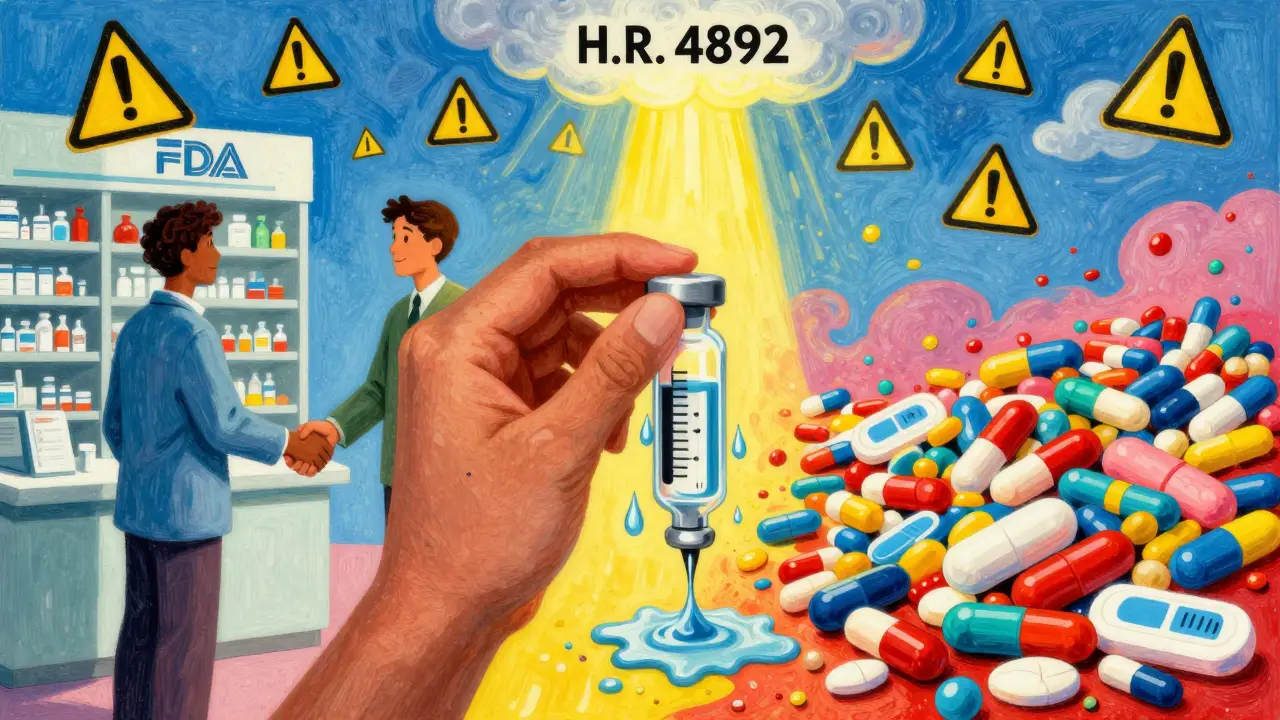
But without regulation, this growth could become dangerous. The proposed Pharmacy Delivery Safety Act (H.R. 4892) wants to require temperature tracking, delivery confirmations, and clear labeling. It’s stuck in committee. Meanwhile, patients keep getting pills that might not work.
Mail-order generics can save lives. But they can also put them at risk-if you don’t know how to use them.
Don’t assume it’s safer. Don’t assume it’s cheaper. Do the work. Ask questions. Protect yourself.
Are generic medications from mail-order pharmacies as effective as brand-name drugs?
Yes. The FDA requires generic drugs to have the same active ingredients, strength, dosage form, and safety profile as brand-name versions. They must work the same way in your body. The only differences are in color, shape, flavor, or inactive ingredients-which don’t affect how the drug works. But some patients feel uneasy switching because the pills look different, which can lead to skipped doses.
Why is my mail-order prescription sometimes more expensive than my local pharmacy?
It’s often due to how your insurance plan and pharmacy benefit manager (PBM) structure pricing. Mail-order pharmacies may bill your insurer at a higher rate than the actual cost of the drug. Meanwhile, your local pharmacy might offer a lower cash price through discount programs like GoodRx. Always compare the final out-of-pocket price-not just the copay-before deciding where to fill your prescription.
What should I do if my insulin arrives warm or melted?
Do not use it. Insulin loses potency when exposed to temperatures above 86°F for more than 24 hours. Contact your mail-order pharmacy immediately to request a replacement. Report the incident to the FDA through their MedWatch system. If you’ve already used the degraded insulin, monitor your blood sugar closely and contact your doctor. You may need a temporary adjustment to your dose.
Can mail-order pharmacies handle all types of medications?
No. Many don’t stock medications needed urgently, like antibiotics, inhalers, or emergency drugs. They also may not carry limited-market generics or specialty drugs. Always check availability before switching. If you need a drug quickly, keep a 30-day supply at your local pharmacy as backup.
How can I avoid dangerous drug interactions when using multiple mail-order pharmacies?
Keep a complete, updated list of every medication you take-including dosages, pharmacies, and prescribers. Share this list with your primary doctor and one trusted local pharmacist. Even if you use mail-order for most meds, have one pharmacy that can review all your prescriptions together. That’s the only way to catch dangerous interactions between drugs from different sources.
Lee M
January 1, 2026 AT 21:00They sell you convenience as salvation, but it’s just a rebranded dependency. The system doesn’t care if you live or die-it cares if you keep paying. Mail-order isn’t healthcare, it’s logistics wrapped in a wellness slogan. We’ve outsourced compassion to a warehouse in Ohio and called it progress.
Austin Mac-Anabraba
January 2, 2026 AT 22:06Let’s be precise: the PBM-driven pricing model is a textbook case of regulatory capture. Between 2013 and 2023, mail-order revenue increased 140%, while prescription volume rose 11%. That’s not efficiency-it’s extraction. The FDA’s assertion of bioequivalence is legally valid but empirically insufficient; bioavailability variance in generics can exceed 10% in extreme cases, and temperature degradation compounds this. No federal oversight of shipping conditions? That’s not negligence-it’s institutionalized malpractice.
Phoebe McKenzie
January 3, 2026 AT 00:39HOW DARE THEY let people get DEGRADED INSULIN in the MAIL?!?!? This isn’t just dangerous-it’s CRIMINAL. Who’s protecting us? The same CEOs who get bonuses for cutting costs?! I’m sick of this. My grandma almost died because her blood pressure med arrived warm and she didn’t know until she collapsed. Someone needs to go to jail for this. I’m calling my senator. Right now. This is AMERICA. We don’t ship death in cardboard boxes!!
gerard najera
January 4, 2026 AT 22:57Convenience isn’t safety. Savings aren’t value. Trust the system, and you risk your life.
Stephen Gikuma
January 6, 2026 AT 05:28Foreign labs are making these generics. The FDA? They’re asleep at the wheel. I’ve seen the reports-China, India, places with zero standards. And now they’re shipping it to our door with no tracking? This is how they break us. First they take our jobs, then our meds. Next thing you know, we’re all on government-controlled pills while the elites get real medicine. This isn’t capitalism-it’s slow-motion socialism with a pharmacy label.
Layla Anna
January 6, 2026 AT 18:35Heather Josey
January 8, 2026 AT 10:37While the systemic issues outlined here are deeply concerning, I believe the most powerful response lies in proactive patient advocacy. The tools to protect oneself-GoodRx, temperature checks, medication logs, and direct communication with providers-are accessible and effective. By consistently exercising these practices, individuals not only safeguard their own health but also contribute to a growing body of real-world data that can pressure regulators and insurers toward meaningful reform. Change begins with informed action.