Liver Cancer Risk After SVR: Why Surveillance Still Matters
 Jul, 3 2026
Getting the "all clear" from your doctor after curing hepatitis C is a massive relief. You’ve beaten the virus. The tests come back negative. Life feels like it’s finally moving forward without the shadow of chronic infection hanging over you. But here is the hard truth that many patients miss: curing the virus does not instantly erase the damage it already did to your liver.
If you had advanced scarring (fibrosis) or cirrhosis before starting treatment, your risk for hepatocellular carcinoma-the most common type of primary liver cancer-remains significantly higher than the general population, even after achieving Sustained Virologic Response (SVR). This isn’t about fear-mongering; it’s about biology. The virus may be gone, but the structural changes in your liver tissue can persist, creating an environment where cancer cells can still develop. Understanding this residual risk is crucial for long-term survival and peace of mind.
What SVR Actually Means for Your Liver
Sustained Virologic Response (SVR) is the medical term for a functional cure of hepatitis C. It means the virus is undetectable in your blood 12 or 24 weeks after finishing antiviral therapy. Thanks to direct-acting antivirals (DAAs), cure rates now exceed 95% across all genotypes. That is incredible progress.
However, SVR is not a magic reset button for your liver’s physical structure. Think of it like putting out a fire in a house. The flames are gone (the virus is cured), but if the walls were charred or the foundation cracked (fibrosis or cirrhosis), the house remains structurally compromised. Research published in the *Journal of Clinical and Translational Hepatology* shows that while SVR reduces the risk of liver cancer by roughly 71% to 79% compared to untreated patients, it does not reduce it to zero.
The key determinant here is your liver’s condition before you started treatment. If you entered therapy with mild fibrosis (F0-F2), your risk drops to near-normal levels, and ongoing intensive surveillance might not be necessary. But if you had advanced fibrosis (F3) or cirrhosis (F4), the story is different. The scar tissue itself promotes inflammation and cellular turnover, which are breeding grounds for cancer. Even without the virus driving the process, these mechanisms can continue silently.
Who Needs Continued Screening?
Not everyone needs the same level of watchfulness. Medical guidelines have evolved to stratify risk more precisely, though there is still some debate between international bodies. Here is how the major organizations break it down:
- Cirrhotic Patients (F4): Both the American Association for the Study of Liver Diseases (AASLD) and the European Association for the Study of the Liver (EASL) agree that patients with cirrhosis must continue semiannual (every six months) liver cancer screening indefinitely. The annual risk of developing HCC in this group remains around 1.5% to 2.3%, which is high enough to warrant constant vigilance.
- Advanced Fibrosis (F3): This is where the guidelines diverge. EASL recommends continuing surveillance for F3 patients due to the difficulty in accurately distinguishing severe fibrosis from early cirrhosis without a biopsy. AASLD suggests that routine surveillance may not be necessary for F3 patients who do not have cirrhosis, as their absolute risk is very low.
- Mild to Moderate Fibrosis (F0-F2): For these patients, the risk of HCC after SVR is extremely low. Most experts agree that standard health maintenance is sufficient, without specialized liver cancer screening protocols.
If you fall into the F3 category, talk to your hepatologist about your specific case. Factors like age, gender, diabetes, and ongoing alcohol use can tip the scales one way or the other.
How Doctors Monitor Residual Risk
Surveillance isn’t just about waiting for symptoms. By the time liver cancer causes pain or jaundice, it is often too late for curative treatment. Early detection through regular screening allows for interventions like ablation or resection when the tumor is small and contained.
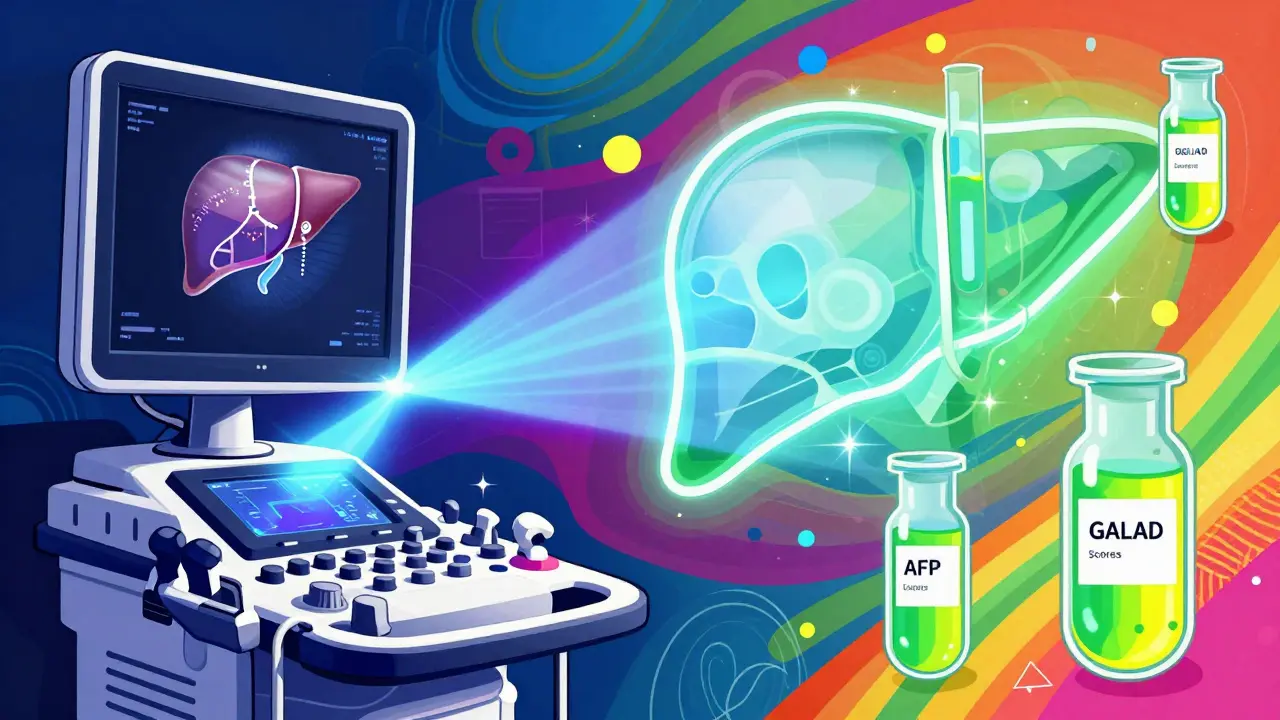
The gold standard for surveillance involves two main tools:
- Ultrasound Imaging: A semiannual abdominal ultrasound looks for nodules or masses in the liver. It is non-invasive, relatively inexpensive, and effective at spotting early-stage tumors.
- Blood Tests: Alpha-fetoprotein (AFP) is a protein produced by the liver. High levels can signal cancer, though it is not perfect. Newer biomarkers, such as the GALAD score (which combines Gender, Age, AFP-L3, AFP, and DCP), are showing promise in improving sensitivity, especially in post-SVR patients.
In addition to cancer screening, doctors also monitor liver stiffness to track fibrosis progression or regression. Tools like transient elastography (FibroScan) measure liver stiffness in kilopascals (kPa). A study highlighted optimal cut-off values for predicting HCC risk: a post-SVR measurement above 11.2 kPa suggests a higher risk profile. Interestingly, many patients see their stiffness scores drop after SVR, indicating healing. If your scores improve significantly over time, your doctor might consider adjusting your surveillance interval.
| Patient Group | AASLD (US) Recommendation | EASL (Europe) Recommendation | Estimated Annual HCC Risk |
|---|---|---|---|
| Cirrhosis (F4) | Semiannual Ultrasound ± AFP | Semiannual Ultrasound ± AFP | 1.5% - 2.3% |
| Advanced Fibrosis (F3) | Individualized / Often Not Routine | Semiannual Ultrasound ± AFP | <1.32% |
| Mild/Moderate Fibrosis (F0-F2) | No Specific Surveillance | No Specific Surveillance | <0.5% |
Why Adherence Is So Low
Here is a frustrating reality: despite clear guidelines, adherence to post-SVR surveillance is alarmingly poor. Studies suggest that only about 25% of eligible patients receive recommended semiannual screenings. Why? Because patients-and sometimes even doctors-get complacent.
When you hear "cured," you stop thinking about the disease. You feel healthy. Your liver enzymes normalize. There is no logical reason to keep going to the doctor for scary scans if you feel fine. This "treatment-induced stabilization" creates a blind spot. Patients assume the threat is over. Meanwhile, the biological clock on residual risk keeps ticking.
Healthcare systems are trying to fix this. The Veterans Health Administration, for example, implemented automated reminder systems for post-SVR patients, resulting in a 32% increase in appropriate surveillance rates. If you are part of a large healthcare network, ask if they have similar alerts in place. If not, take ownership of your calendar. Set reminders yourself. Treat your ultrasound appointments with the same importance as your annual dental checkup.

Reducing Your Risk Beyond Screening
Screening detects cancer; lifestyle changes help prevent it. While you cannot undo past scarring entirely, you can stop adding new insults to your liver. Every cell counts.
- Eliminate Alcohol: Alcohol is toxic to liver cells. If you have cirrhosis or advanced fibrosis, even moderate drinking can accelerate cancer development. Complete abstinence is the safest choice.
- Manage Metabolic Health: Non-alcoholic fatty liver disease (NAFLD) is a growing concern. Obesity, type 2 diabetes, and high cholesterol contribute to liver inflammation. Maintaining a healthy weight and controlling blood sugar can significantly lower HCC risk.
- Vaccinations: Ensure you are vaccinated against Hepatitis A and B. Co-infections can cause acute liver failure or worsen existing liver disease.
- Avoid Unnecessary Medications: Some herbal supplements and over-the-counter drugs (like high-dose acetaminophen) can stress the liver. Always consult your doctor before starting new supplements.
Future Directions in Personalized Care
Medicine is moving toward more personalized approaches. Researchers are developing dynamic risk calculators that incorporate serial liver stiffness measurements. Preliminary data suggests that for some F3 patients whose liver stiffness drops below 9.5 kPa after SVR, surveillance intervals could safely extend to 12 months instead of 6. This would reduce anxiety and healthcare costs without compromising safety.
Blood-based biomarkers are also advancing. The GALAD score, mentioned earlier, is being validated in multicenter studies to replace or supplement ultrasound. Imagine a simple blood test every year instead of invasive imaging. We are getting closer to that reality, with trials expected to yield results in 2026-2027.
Until then, the old rules still apply: know your status, follow your guideline, and don’t let the word "cured" lull you into ignoring your liver’s history.
Does SVR completely eliminate the risk of liver cancer?
No. While SVR reduces the risk of hepatocellular carcinoma (HCC) by approximately 71-79%, it does not eliminate it entirely, especially in patients who had advanced fibrosis or cirrhosis before treatment. The residual risk persists because the structural damage to the liver remains even after the virus is cleared.
How often should I get screened for liver cancer after curing Hep C?
If you have cirrhosis (F4), you need semiannual (every 6 months) ultrasound screening indefinitely. If you have advanced fibrosis (F3), recommendations vary: European guidelines suggest semiannual screening, while US guidelines may individualize care based on specific risk factors. Patients with mild fibrosis typically do not require specialized surveillance.
Can liver fibrosis heal after achieving SVR?
Yes, many patients experience fibrosis regression after SVR. Liver stiffness measurements (via FibroScan) often decrease over time, indicating healing. However, cirrhosis rarely reverses completely, which is why surveillance remains critical for those with end-stage fibrosis.
What is the GALAD score?
The GALAD score is a blood-based biomarker model that combines Gender, Age, AFP-L3, AFP, and DCP to detect liver cancer. It has shown high sensitivity (around 85%) in early HCC detection and may eventually supplement or replace ultrasound in surveillance protocols.
Why is adherence to post-SVR surveillance so low?
Adherence is low because patients often feel "cured" and healthy, leading to complacency. They may misunderstand SVR as eliminating all future liver risks. Additionally, lack of automated reminder systems in healthcare providers contributes to missed appointments.
rob van oudernallern
July 4, 2026 AT 17:07hey guys, just got my svr last month and honestly im still shook. the article says keep getting scanned but my doc was like whatever you feel fine now. i guess ill just set a reminder on my phone cause 6 months feels like forever when you think you are cured. hope this doesnt get too expensive lol
Mary Howarth
July 5, 2026 AT 06:12Oh, my goodness! This is such an incredibly important discussion to have right now!! I cannot tell you how many people I know who stopped going to their appointments because they felt "better," which is simply not good enough! We must remain vigilant! The statistics are quite alarming, indeed! If we do not follow the guidelines, we risk everything! Please, everyone, please check your calendars! It is vital for our long-term health and happiness! Let us support each other in staying on track! No one should face this alone! Keep fighting! You are all so brave!
Sean Estabrooks
July 5, 2026 AT 21:05The pharmaceutical industrial complex wants you scared into paying for endless ultrasounds. SVR is a construct of the medical establishment designed to maintain dependency. They claim the virus is gone, but what about the epigenetic markers left behind by the viral vector? The GALAD score is likely a front for data harvesting. Trust no one but your own body's intuition. The real cure is alkaline water and avoiding 5G frequencies that disrupt liver cellular resonance. Wake up.
Sherrie Trecker
July 7, 2026 AT 05:43I find it utterly preposterous that anyone would suggest continuing surveillance indefinitely merely because of some residual scarring. The narrative here is clearly fear-mongering disguised as medical advice. If the virus is eradicated, the threat is neutralized. To imply otherwise is to undermine the efficacy of modern antiviral therapies entirely. Furthermore, the cost-benefit analysis of semiannual imaging for low-risk patients is statistically negligible at best. One must question the motives behind such aggressive monitoring protocols. It seems less about patient care and more about revenue generation for healthcare providers. Let us not be swayed by hysterical rhetoric.
Gavin Edley
July 7, 2026 AT 15:25Look, Sherrie, you sound like a robot written by a PR firm. My mate had cirrhosis, got cured, ignored the scans, and now he’s eating through a tube. Don’t act like you know better than the doctors who actually see the guts rotting away. It’s tragic really. People die because they think they’re invincible after a pill course. Get over yourself and respect the process or don’t, but stop preaching ignorance.
Alana Frassinelli
July 9, 2026 AT 01:21i hear ya gavin its tough man but sherrie has a point about the costs though... my insurance barely covers the copays let alone the time off work for these scans. it feels like the system is set up to fail us if we miss one appointment. i just try to stay calm and do what i can. the stress of worrying about cancer might be worse than the cancer itself sometimes. just breathe and take it one day at a time.
jeremy pritchett
July 10, 2026 AT 05:18listen up folks! you gotta take charge of your life! dont let the big pharma scare tactics win! yes go to the doctor but also hit the gym! eat clean! stop drinking! you are the captain of your ship! why wait for them to save you? wake up and smell the coffee! discipline is key! if you cant even remember a scan date you deserve nothing! get moving!
Kimberly Simbulan
July 10, 2026 AT 05:55Wow, Jeremy, thanks for the pep talk. I’m sure shouting at people with chronic illness really helps their fibrosis regression. Maybe if you screamed loud enough, your own cholesterol would drop. Just saying. But seriously, the article is helpful, unlike your personality.
kavitha kumar
July 10, 2026 AT 07:29my husband had hep c and we thought we were done after treatment but then he got sick again so scary experience we almost lost him please dont ignore the signs its very dangerous and painful
fred morgan
July 10, 2026 AT 23:14The distinction between F3 and F4 fibrosis is clinically significant. Patients must adhere to the stratified guidelines provided by AASLD and EASL. Non-compliance results in delayed diagnosis and poorer prognostic outcomes. Vigilance is required.
Gilbert Bankual
July 12, 2026 AT 11:36Stay strong. Follow the plan. You got this.