How to Use Travel Apps to Locate Pharmacies and Clinics Abroad: A Practical Guide
 May, 2 2026
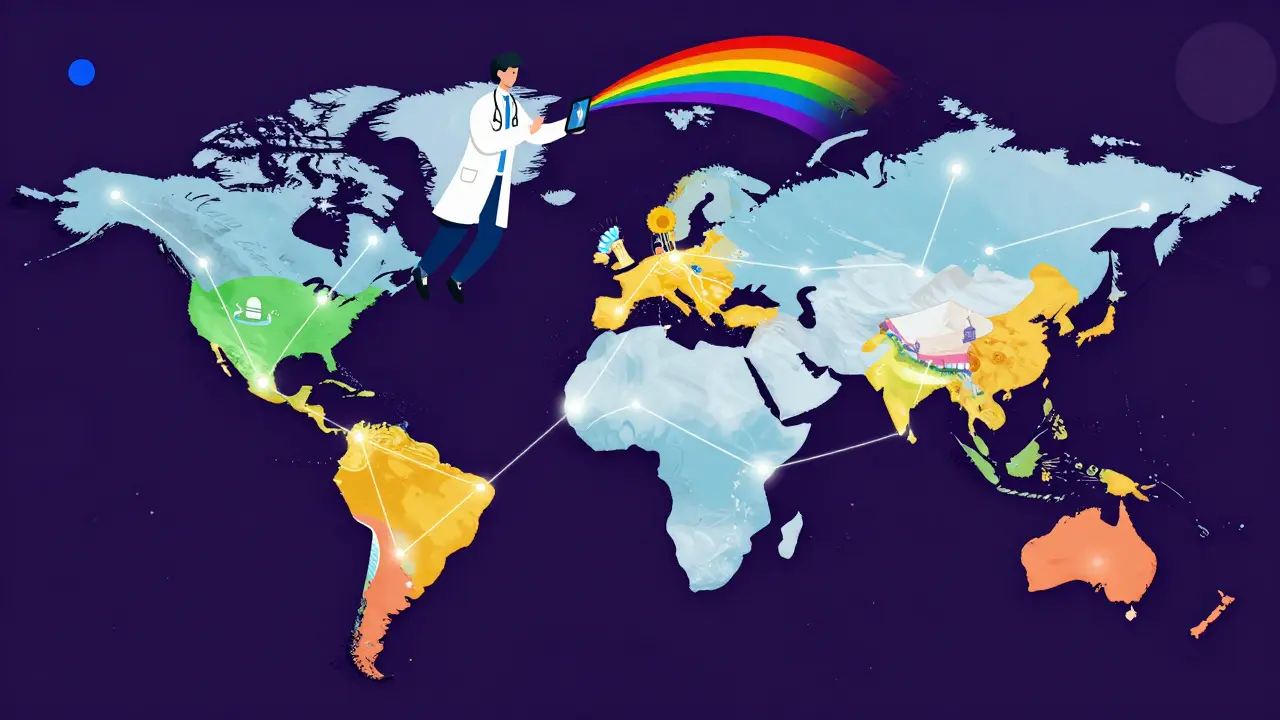
You’re standing in a bustling market in Bangkok or a quiet street in Lisbon. You’ve got a headache, an upset stomach, or maybe you just need your daily prescription refilled. But the local pharmacist looks at your bottle with confusion. The brand name is different. The generic name is unfamiliar. Panic starts to set in. This is exactly why travel apps are specialized mobile tools designed to help international travelers locate pharmacies, clinics, and equivalent medications abroad. They bridge the gap between your home healthcare system and foreign medical infrastructure.
International travel has exploded. We saw 1.4 billion tourist arrivals globally before the pandemic, and that number is climbing back up. With more people traveling, more people face medication access issues. You can’t rely on luck when it comes to health. You need a strategy. These apps aren’t just digital maps; they are lifelines that connect you to care, translate complex drug names, and sometimes even link you directly to a doctor via video call.
Why You Need More Than Just Google Maps
Google Maps will tell you where a pharmacy is located. It won’t tell you if the pharmacist speaks English. It won’t tell you if they carry the specific antibiotic you need for your infection. And it certainly won’t tell you if the medication available there is safe for you to take given your other conditions.
Specialized travel health apps solve these specific problems. They act as intermediaries. They hold databases of therapeutic equivalents. They know which clinics accept your insurance. They offer telemedicine connections. According to data from App Annie, the major dedicated apps in this space serve an estimated 15 million users worldwide. That’s a lot of people who realized that finding a doctor abroad requires more than just pointing at a map.
The core functionality you should look for includes:
- Medication Equivalence Databases: Translating your home drug’s generic name to local brand names.
- Geolocation Services: Finding vetted medical facilities nearby.
- Telemedicine Connections: Linking you to remote doctors for consultations.
- Multilingual Support: Helping you communicate symptoms to local staff.
Top Apps for Locating Care and Medications
Not all apps are created equal. Some focus on emergency rooms. Others specialize in chronic medication management. Here is a breakdown of the leading tools available as of early 2026, based on their features, coverage, and user feedback.
| App Name | Primary Focus | Platform | Key Feature | Cost Model |
|---|---|---|---|---|
| Convert Drugs Premium | Medication Equivalence | iOS Only | Covers 220 countries with detailed drug translations | $7.99 one-time fee |
| Air Doctor | Telemedicine & Location | iOS & Android | Connects to 25,000+ providers in 195 countries | Subscription + Consultation fees ($49-$79) |
| mPassport | Facility Location & Scheduling | iOS & Android | 35,000+ medical facilities globally | Free basic / Premium subscription |
| Epocrates | Professional Drug Reference | iOS & Android | Used by 1.1 million healthcare professionals | Free basic / $159.99/year premium |
| TravelSmart | Insurance-Integrated Care | iOS & Android | Seamless claims processing with Allianz Global Assistance | Requires specific insurance policy |
Convert Drugs Premium is a standout for medication safety. Created by French pharmacist Jean-François Lemoine, it addresses the frustration of tourists unable to find equivalent meds. It covers 220 countries and supports 11 languages. However, it is iOS-only and lacks telemedicine. If you are an Android user, this isn’t an option yet, though an Android version was planned for late 2023.
Air Doctor offers a broader service. It combines location services with direct telemedicine. You can talk to a doctor within minutes. This is invaluable for acute issues like sudden fevers or injuries. The downside is cost. Consultations run $49 to $79. It’s expensive, but often cheaper than an emergency room visit abroad.
mPassport excels in facility location. It helps you schedule appointments with foreign providers. Its coverage is strong in major cities across 60 countries. If you are traveling to rural areas, its utility drops significantly.
Epocrates is built for professionals but useful for informed travelers. It provides deep drug interaction data. It’s free for basic use, making it a great backup reference tool.
TravelSmart is unique because it ties directly into insurance claims. If you have Allianz Global Assistance insurance, this app streamlines payment and authorization. Without that specific insurance, its functionality is limited.
How to Prepare Before You Fly
Downloading these apps the day you land is too late. You need time to set up accounts, verify coverage, and learn the interface. Start 2-3 weeks before your trip.
- Download Multiple Apps: Don’t rely on just one. Use the "two-app strategy" recommended by the International Society of Travel Medicine. Pick one for medication equivalence (like Convert Drugs) and one for facility location/telemedicine (like Air Doctor or mPassport).
- Check Offline Capabilities: Connectivity issues affect 38% of users according to Air Doctor’s surveys. Ensure your chosen apps allow offline access to critical data. TravelSmart and Pepid offer offline medication dictionaries. Convert Drugs currently requires internet for full functionality.
- Verify Insurance Coverage: If you are using an app like TravelSmart, confirm your policy details with your provider. Know what is covered and what isn’t.
- Know Your Generic Names: Brand names change. Generic names stay the same. Learn the generic name of your prescription. For example, Tylenol is acetaminophen. Advil is ibuprofen. This knowledge is critical for using equivalence apps effectively.
- Carry Physical Documentation: Apps fail. Phones die. Carry a printed list of your medications, dosages, and allergies. Include your doctor’s contact information.
Navigating Common Challenges
Even with the best apps, challenges arise. Regional coverage gaps are common, especially in rural areas. In developing countries, healthcare infrastructure may be uneven, affecting app reliability. The WHO noted in 2022 that this affects 47 developing nations significantly.
Connectivity is another hurdle. If you are in a remote area, you might not have signal. This is where offline features matter. Download your medication dictionary before you leave Wi-Fi range.
Language barriers persist. While apps offer translation, they aren’t perfect. Use simple terms. Point to body parts. Show your physical documentation. Telemedicine apps like Air Doctor provide multilingual support, which can reduce emergency response times by 42 minutes compared to traditional methods.
Insurance compatibility is a frequent pain point. Many apps work best with specific insurers. If you don’t have that insurer, you pay out-of-pocket. Check your policy before booking your trip.
Expert Advice and Safety Tips
Dr. Susan Kansagra, former CDC Travel Medicine Branch Chief, highlighted that tools like Convert Drugs Premium can reduce medication errors by 37%. That’s a significant statistic. But she also warns that these apps should complement, not replace, pre-travel consultations.
Dr. David Oshinsky from NYU Langone emphasizes that apps cannot address complex medical conditions requiring specialized preparation. If you have a serious chronic condition, see a travel medicine specialist before you go. They can advise on vaccine requirements, malaria prophylaxis, and other risks that an app might miss.
The European Centre for Disease Prevention and Control ranked Air Doctor #1 for telemedicine integration and mPassport #2 for medication equivalence. These rankings are based on rigorous evaluation criteria. They give you a good starting point for choosing your tools.
User experiences also provide valuable insights. On Reddit, travelers frequently praise mPassport for helping them find equivalent antibiotics in places like Bangkok. Others note that Epocrates failed to recognize European e-prescriptions in France despite claiming EU coverage. Always test your apps with real-world scenarios before you travel.
Future Trends and Innovations
The travel health app market is growing fast. Valued at $287 million in 2022, it’s projected to reach $654 million by 2027. Innovation is driving this growth. Air Doctor integrated an AI symptom checker in 2023, reducing misdiagnosis rates by 22% in internal testing.
The European Union’s Digital Health Certificate initiative, launching in 2024, aims to enable interoperability between national e-prescription systems within the EU. This could reduce the need for medication equivalence apps within Europe, but global travel still requires robust solutions.
Blockchain integration for secure medical record sharing is being piloted by companies like Medinaction. Augmented reality navigation to medical facilities is in development by mPassport. These technologies promise to make accessing care abroad even easier in the coming years.
However, regulatory fragmentation remains a challenge. GDPR compliance impacts data storage in apps operating in Europe. FDA guidelines govern medical advice features in the US. As the market consolidates, expect 3-4 dominant players to emerge by 2026, offering integrated solutions that combine medication equivalence, facility location, and telemedicine.
Can I use these apps without insurance?
Yes, most apps like Convert Drugs Premium, Air Doctor, and mPassport function independently of your insurance. However, apps like TravelSmart require specific insurance policies for full functionality. If you don't have compatible insurance, you will likely pay out-of-pocket for consultations and services.
Do these apps work offline?
Offline functionality varies significantly. TravelSmart and Pepid offer offline access to medication dictionaries. Convert Drugs Premium generally requires internet connectivity. Air Doctor and mPassport may offer limited offline features for viewing previously loaded data. Always check the specific app's technical specifications before relying on it in areas with poor connectivity.
Which app is best for finding equivalent medications?
Convert Drugs Premium is widely regarded as the best for medication equivalence, covering 220 countries with detailed therapeutic information. mPassport also offers strong medication brand name equivalency for over 15,000 drugs. For professional-grade drug interaction data, Epocrates is an excellent choice.
Are telemedicine consultations expensive?
Yes, telemedicine consultations can be costly. Air Doctor charges between $49 and $79 per visit. While this is high, it is often cheaper than emergency room visits abroad. Check if your travel insurance reimburses telemedicine services before using them.
Should I download multiple apps?
Absolutely. The International Society of Travel Medicine recommends using at least two complementary apps. One for medication equivalence and one for facility location or telemedicine. This strategy maximizes your safety and ensures you have backup options if one app fails or lacks coverage in your destination.
Is my personal health data safe on these apps?
Reputable apps comply with regulations like GDPR in Europe and HIPAA in the US. However, always review the privacy policy. Apps handling sensitive medical data should use encryption. Be cautious about sharing unnecessary personal information. Stick to established apps with clear security protocols.
What if the app doesn't cover my destination?
If an app lacks coverage for your destination, rely on physical documentation. Carry a letter from your doctor detailing your medications and conditions. Contact your embassy for lists of approved local doctors. Use general translation apps to communicate basic symptoms. In emergencies, seek the nearest hospital regardless of app recommendations.
Can these apps replace a pre-travel doctor visit?
No. Experts strongly advise against replacing pre-travel consultations with apps. Apps cannot address complex medical conditions, recommend necessary vaccines, or provide personalized prophylaxis advice. Use apps as tools to manage health while abroad, not as substitutes for professional medical preparation.