How to Identify Counterfeit Generics and Avoid Online Scams
 Feb, 7 2026
Every year, millions of people buy medicine online because it’s convenient, cheap, or they can’t get it locally. But what if the pill you just ordered isn’t real? What if it has no active ingredient - or worse, contains deadly fentanyl? Counterfeit generics are not just a problem in developing countries. They’re here, in your mailbox, in your medicine cabinet, and they’re getting harder to spot.
The World Health Organization estimates that 1 in 10 medicines worldwide are fake. In some regions, that number jumps to over half for drugs like malaria treatments. In North America alone, the DEA seized over 134 million counterfeit pills between January 2023 and October 2024. Most of them looked just like the real thing. Same color. Same shape. Same imprint. And many contained lethal doses of synthetic opioids.
What Makes a Generic Counterfeit?
Generics are supposed to be safe, affordable copies of brand-name drugs. They have the same active ingredient, strength, and dosage. But counterfeit generics? They’re frauds. Deliberately made to look real. They might contain too little or too much of the drug. Or none at all. Some have crushed drywall, chalk, or even rat poison mixed in. Others contain dangerous substances like fentanyl, which can kill you even if you’ve never used opioids before.
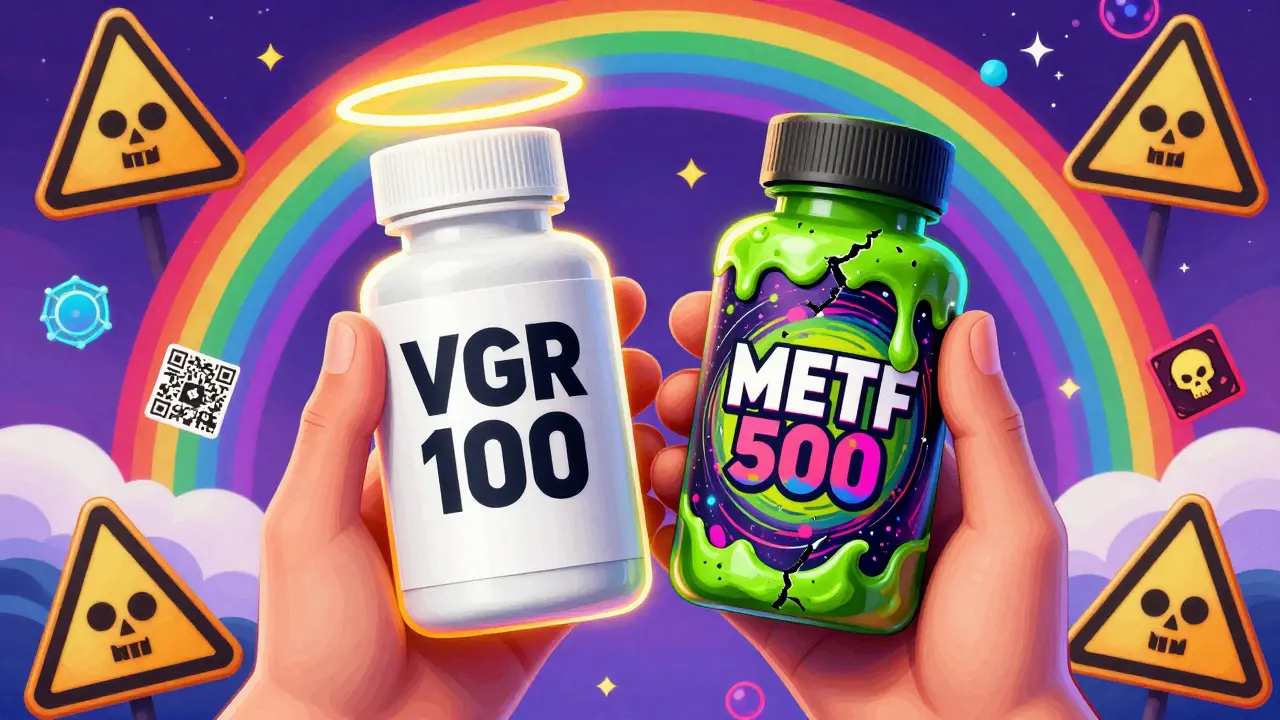
Counterfeiters don’t just copy the pill. They copy the packaging - the bottle, the label, the box, even the barcode. They use professional pill presses to replicate the exact imprint on branded pills. A fake Viagra pill might have the same "VGR 100" stamp as the real one. A fake Metformin tablet could match the size, color, and logo of the genuine product. Without lab tests, you can’t tell the difference.
How to Spot a Fake Medicine (Before You Take It)
While lab testing is the only way to be 100% sure, there are signs you can check yourself - before you swallow anything.
- Compare packaging side-by-side. If you’ve taken this drug before, pull out your last bottle. Look at the font. Is the "O" in "Pfizer" shaped differently? Is the color slightly off? Are there spelling errors? Even one misplaced letter is a red flag.
- Check the pill’s appearance. Real pills have consistent texture and color. If your new pills are chalky, crumbly, or dissolve too fast in water (some fake ones dissolve in under 10 seconds), that’s suspicious. Real pills usually take 20 minutes or more to fully break down.
- Smell and taste. Some counterfeit pills have a strange chemical odor or bitter aftertaste. This isn’t always reliable - some fakes are perfectly coated - but if something smells like plastic or bleach, stop using it.
- Watch for unusual side effects. Did you suddenly feel dizzy, nauseous, or have a burning sensation in your throat? If you’ve taken this drug before and never had this reaction, it could be fake. The FDA reports that 73% of counterfeit drug reports came from people who experienced unexpected side effects.
Where Not to Buy Medicine Online
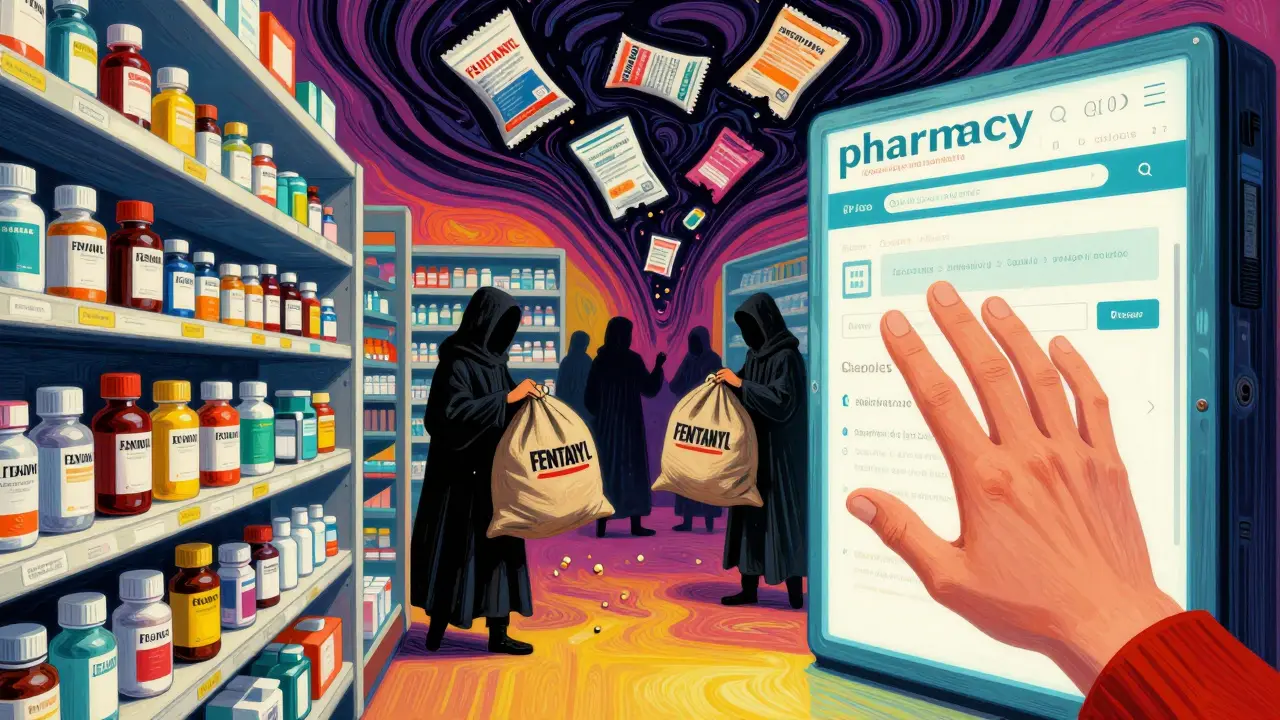
Most online pharmacies are illegal. The National Association of Boards of Pharmacy (NABP) found that 96% of websites selling prescription drugs online operate without proper licensing. And 88% don’t require a prescription.
Scammers use fake websites that look professional. They have testimonials, SSL certificates, and even customer service lines. But here’s how to tell the real ones:
- Look for the .pharmacy domain. Only verified pharmacies can use this. It’s not just a logo - it’s a government-backed certification. If the site ends in .pharmacy, it’s been checked for legal operation, pharmacist availability, and prescription requirements.
- Check for a physical address and phone number. Real pharmacies list their full address, not just a P.O. box. Call them. Ask to speak to a licensed pharmacist. If they can’t connect you, walk away.
- Don’t trust "too good to be true" prices. If you see 100 pills of a $300 brand-name drug for $15, it’s fake. Legitimate pharmacies don’t sell prescription drugs at 90% off. That’s how they lure you in.
- Avoid sites that don’t ask for a prescription. If you can just click "buy now" without uploading a script, it’s illegal. Period.
What to Do If You Suspect a Fake
If you’ve already taken a pill and feel sick - stop. Don’t take any more. Save the packaging and pills. Then:
- Call the drug manufacturer. Companies like Pfizer, Johnson & Johnson, and Novartis have dedicated teams that track counterfeits. They can look up the lot number on your bottle and tell you if it’s real. You don’t need to be a doctor - just have the bottle handy.
- Report it to the FDA. The U.S. Food and Drug Administration has a portal for reporting fake drugs. You can upload photos of the packaging and pills. Their database helps track outbreaks.
- Ask your pharmacist. Bring the pills to your local pharmacy. They can compare them to authentic samples. Many pharmacists now have access to databases of known counterfeits.
How Technology Is Fighting Back
It’s not just consumers fighting this. Pharmaceutical companies are using high-tech tools to protect their products.
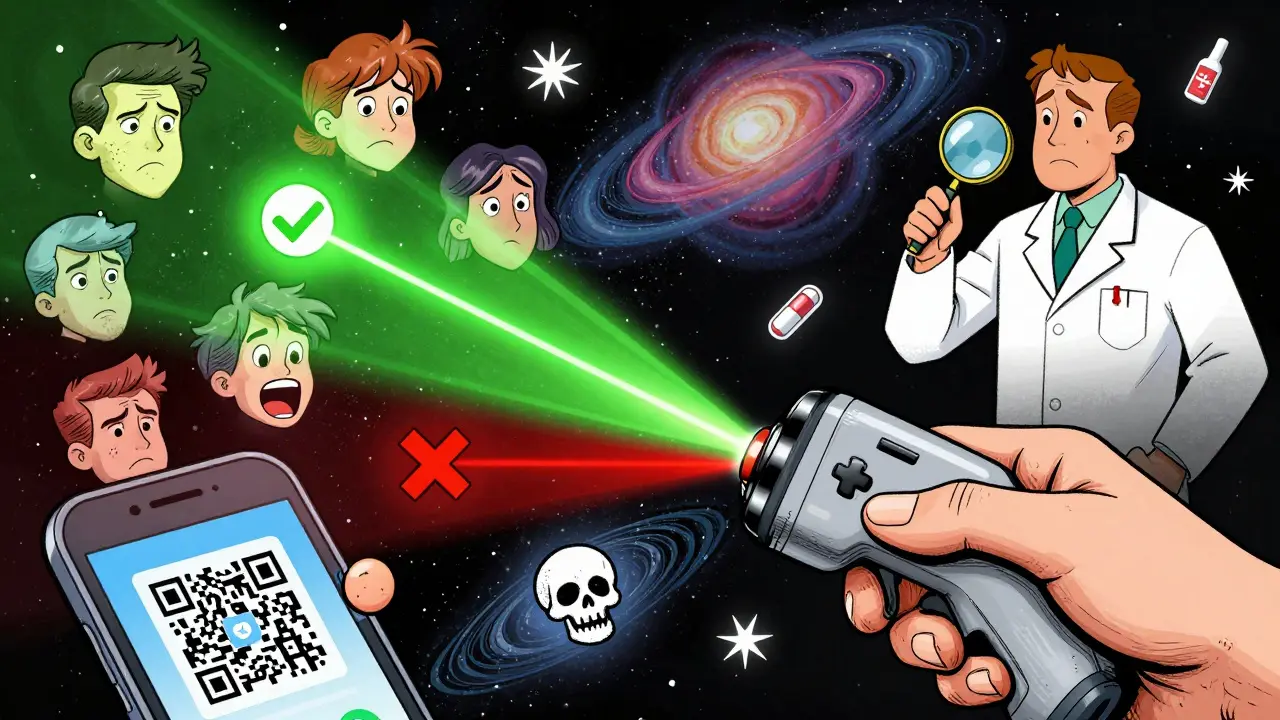
Handheld Raman spectrometers - devices that shine a laser on a pill and analyze its chemical makeup - give instant results. A green checkmark means it’s real. A red X means it’s fake. No lab needed. These are now used by customs agents, police, and even some pharmacies.
QR codes on packaging are becoming common. Scan them with your phone, and the app checks the code against a secure database. The MediGuard app alone scanned over 1.2 million products in 2023 and flagged 92.4% of counterfeits correctly.
Blockchain systems are being tested by Pfizer and others. Each pill gets a unique digital ID that moves with it through the supply chain. If someone tries to inject a fake into the system, it shows up as a mismatch. Early pilots show 99.6% accuracy.
But here’s the catch: counterfeiters adapt faster than regulators. They copy QR codes. They forge blockchain logs. They use AI to generate fake websites that mimic real ones. So while tech helps, it’s not a magic solution.
The Bottom Line: Trust, But Verify
You can’t always tell a fake pill by looking. Even experts say lab tests are the only sure way. But you can dramatically reduce your risk.
Buy only from pharmacies with a .pharmacy domain. Never buy from social media ads or pop-up websites. Always compare new pills to old ones. If something feels off - the color, the taste, the way it makes you feel - stop. Save it. Report it.
Counterfeit drugs don’t just waste your money. They can kill you. And they’re not going away. With online sales growing 22% each year since 2020, vigilance isn’t optional - it’s essential.
Can I tell if a generic drug is fake just by looking at it?
Sometimes, but not always. Counterfeiters have gotten very good at copying packaging, pill shape, color, and imprint. You might notice differences in font, spelling, or pill texture - but if everything looks perfect, it could still be fake. The only way to be certain is through lab testing. Look for signs like pills that dissolve too quickly, unusual odors, or side effects you’ve never had before.
Are all online pharmacies dangerous?
No - but 96% of them are. The only reliable online pharmacies are those with the ".pharmacy" domain. These sites are verified by the National Association of Boards of Pharmacy and must meet strict legal standards: they require prescriptions, have licensed pharmacists on staff, and provide a physical address. Avoid any site that sells without a prescription, doesn’t list a phone number, or offers prices that seem too good to be true.
What should I do if I think I took a fake pill?
Stop taking the medication immediately. Save the bottle, packaging, and any remaining pills. Contact the drug manufacturer - they keep records of counterfeit batches and can verify if your product is fake. Report it to the FDA through their online portal. If you feel unwell, seek medical attention right away. Many counterfeit pills contain dangerous substances like fentanyl, which can cause sudden overdose.
Do counterfeit drugs only affect people in poor countries?
No. While counterfeit medicines are more common in low-income regions, they’re a global problem. In the U.S. and Europe, counterfeit pills - especially fake opioids like oxycodone or Adderall - are flooding the market through online sales. The DEA seized over 134 million counterfeit pills in North America between 2023 and 2024. Fake diabetes, heart, and antidepressant drugs are also being sold to consumers in the UK, Canada, and Australia.
Can I use a smartphone app to check if my medicine is real?
Yes - some apps can help. Apps like MediGuard scan QR codes or barcodes on medicine packaging and compare them to secure databases. In 2023, MediGuard verified 1.2 million products with 92.4% accuracy. But these apps only work if the product has a digital code. Many counterfeiters now copy those codes too. So while apps are useful, they’re not foolproof. Always combine them with other checks like packaging comparison and purchasing from verified sites.
Sarah B
February 8, 2026 AT 07:30Tola Adedipe
February 9, 2026 AT 06:15Eric Knobelspiesse
February 10, 2026 AT 21:21Marcus Jackson
February 11, 2026 AT 02:11Natasha Bhala
February 11, 2026 AT 09:34Jesse Lord
February 11, 2026 AT 20:18Catherine Wybourne
February 13, 2026 AT 19:12Amit Jain
February 15, 2026 AT 06:10Niel Amstrong Stein
February 16, 2026 AT 01:28Joey Gianvincenzi
February 16, 2026 AT 14:42Ritu Singh
February 17, 2026 AT 18:47