How Generic Drugs Saved $3.4 Trillion: The Real Impact on Healthcare Costs
 Aug, 8 2026
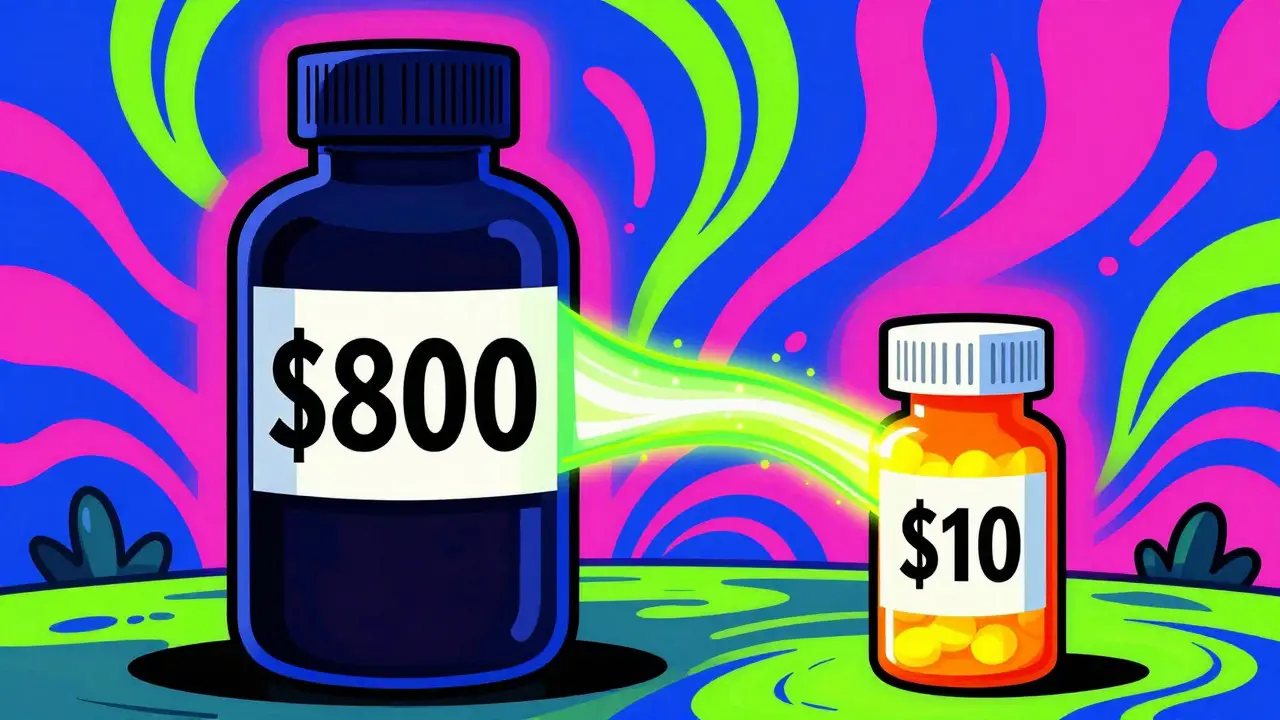
Imagine paying $800 for a medication when an identical version costs just $10. For millions of Americans, this isn't a hypothetical scenario-it’s daily reality. But the impact goes far beyond individual pharmacy receipts. In 2024 alone, generic and biosimilar medications saved the U.S. healthcare system $467 billion. Over the last decade (2015-2024), those savings have piled up to a staggering $3.4 trillion. That is not just a number; it is the difference between solvency and bankruptcy for hospitals, insurers, and families across the country.
We often hear that healthcare costs are out of control. And yes, they are rising. But there is a massive counterweight keeping the entire system from collapsing under the weight of brand-name drug prices. It is the generic market. Without these lower-cost alternatives, the financial burden on taxpayers and patients would be unbearable. Yet, despite their critical role, generics remain misunderstood. Many people still worry about efficacy or don’t realize how much money is actually being saved-and how much more could be saved if the system worked better.
The Math Behind the Miracle: Why Generics Save So Much
To understand why generics are so important, you need to look at the sheer volume versus the cost. In 2024, Americans filled 3.9 billion generic prescriptions compared to only 435 million brand-name prescriptions. That means roughly nine out of every ten prescriptions filled were generics. Yet, here is the kicker: while generics make up 90% of the pills in our medicine cabinets, they account for only 12% of total prescription drug spending.
| Metric | Generics & Biosimilars | Brand-Name Drugs |
|---|---|---|
| Prescriptions Filled | 3.9 billion (90.2%) | 435 million (9.8%) |
| Total Spending | $98 billion (12%) | $700 billion (88%) |
| Average Cost Per Prescription | ~$25 | ~$1,609 |
This disparity is where the magic happens. When a blockbuster brand-name drug loses its patent protection, generic competitors flood the market. Prices drop dramatically-often by 80% to 90%. This competition creates a "dose-response" effect: the more competitors enter the market, the lower the price falls. According to data from the Association for Accessible Medicines (AAM) and IQVIA Institute, this dynamic generated $467 billion in savings in 2024 alone. If we look at the top 10 most commonly prescribed generic medicines, they accounted for $89.5 billion in savings in 2023, treating chronic conditions like hypertension, diabetes, and high cholesterol.
Biosimilars-the biologic equivalent of generics-are also playing an increasingly vital role. While smaller in volume than traditional small-molecule generics, biosimilars target some of the most expensive drugs on the market, such as those used for cancer and autoimmune diseases. In 2024, biosimilars alone generated $20.2 billion in savings, contributing to a cumulative $56.2 billion since the first biosimilar entered the U.S. market in 2015.
The Foundation: How the Hatch-Waxman Act Changed Everything
This system didn’t appear overnight. It was built on legislation passed in 1984 known as the Drug Price Competition and Patent Term Restoration Act, commonly referred to as the Hatch-Waxman Act. Before this law, pharmaceutical companies held patents indefinitely, and there was no streamlined way for generic manufacturers to prove their products were safe and effective without repeating costly clinical trials.
The Hatch-Waxman Act created a balanced framework. It allowed generic manufacturers to rely on the original innovator’s safety and efficacy data, provided they proved their product was bioequivalent. In return, innovators got extended patent terms to compensate for time lost during FDA review. This compromise sparked a revolution. It enabled the rapid entry of generic drugs after patents expired, creating the competitive market we see today.
However, the system is not perfect. Over the decades, loopholes emerged. Brand-name manufacturers began using strategies to delay generic competition, such as filing excessive patents (patent thickets) or offering payments to generic makers to stay out of the market (pay-for-delay). These tactics undermine the very purpose of the Hatch-Waxman Act. A study published in JAMA Health Forum in August 2024 found that lost competition due to patent thickets on just four widely prescribed drugs cost the healthcare system over $3.5 billion in two years. Closing these loopholes is essential to maximizing future savings.
Who Benefits? Patients, Payers, and the Public
The benefits of generic savings ripple through every layer of the healthcare system. Let’s break down who gains what:
- Patients: Out-of-pocket costs plummet. A survey by Managed Healthcare Executive found that 89% of patients who switched to generics reported satisfaction with both efficacy and cost, saving an average of $147 per month per medication. For many, this means the difference between taking their medication and skipping doses due to cost.
- Medicare: As the largest payer for prescription drugs among seniors, Medicare sees enormous relief. In 2024, generics delivered $142 billion in savings to the program. This helps keep premiums stable and reduces the financial strain on federal budgets.
- Medicaid: State Medicaid programs also benefit significantly, with $62.1 billion in savings recorded in 2024. This allows states to allocate funds to other critical health services.
- Hospitals and Clinics: Lower drug acquisition costs improve hospital margins, allowing facilities to invest in staff, technology, and patient care rather than just buying supplies.
Despite these clear benefits, access remains uneven. Some Medicare Part D plans still steer patients toward higher-cost brand names through formulary design, even when generics are available. Additionally, administrative barriers like prior authorizations for generics increased by 47% from 2019 to 2023, according to the American Medical Association. These hurdles can frustrate patients and providers alike, undermining potential savings.
The Hidden Barriers: Why We Aren’t Saving Even More
If generics are so effective, why aren’t we saving even more? The answer lies in systemic inefficiencies and anti-competitive practices. Here are three major roadblocks:
- Patent Thicketing: Brand manufacturers file dozens of secondary patents on minor aspects of a drug (like packaging or dosage form) to create legal confusion and delay generic approval. The Congressional Budget Office estimates that limiting this practice could generate $1.8 billion in additional savings over ten years.
- Pay-for-Delay Settlements: Sometimes, brand companies pay generic rivals to wait before entering the market. Blue Cross Blue Shield estimated these settlements drive up drug costs by nearly $12 billion annually, with $3 billion affecting federal programs.
- Product Hopping: Just before a patent expires, a brand company might reformulate the drug slightly and launch it as a "new" product, forcing patients to switch and resetting the clock for generic competition. Ending this tactic could save $1.1 billion in federal spending over a decade.
Another issue is geographic variation. Savings vary wildly by state. California saw nearly $38 billion in generic savings in 2023, while Alaska saw only $600 million. This reflects differences in population size, healthcare utilization, and state-level policies. States with mandatory generic substitution laws, like California, achieve near-universal generic use (98%), whereas states with looser rules lag behind.

The Future: Can We Reach Trillion in Savings?
The outlook for generic savings is strong, but challenges remain. The FDA approved 1,145 generic drugs in 2024, a 7.3% increase from the previous year. Specialty generics-complex formulations like inhalers and injectables-are becoming a bigger part of the mix, representing 28% of new approvals. This is significant because specialty drugs tend to be more expensive, so generic versions offer substantial savings potential.
Legislative efforts are gaining momentum. The Affordable Prescriptions for Patients Act (S.1041), which passed the Senate HELP Committee in June 2024, aims to crack down on patent abuse. If enacted, it could generate an additional $7.2 billion in annual savings. Meanwhile, the biosimilar market is growing rapidly, with a projected compound annual growth rate of 22.7% through 2029. This expansion will likely offset rising costs for innovative biologics.
However, threats loom. Drug shortages affected 287 generic medications as of December 2024, partly due to consolidation in the manufacturing sector. The top 10 generic manufacturers now control 63% of the market, up from 51% in 2015. This concentration makes the supply chain vulnerable to disruptions. Ensuring robust domestic production and diversifying suppliers will be crucial to maintaining the flow of affordable medicines.
Looking ahead, the IQVIA Institute projects that generics and biosimilars could generate $5.1 trillion in cumulative savings from 2025 to 2034 if current trends continue and policy barriers are resolved. This isn’t just optimistic forecasting; it’s based on the proven track record of generic competition. The key is protecting that competition from erosion.
What You Can Do: Making the Most of Generic Savings
As a patient or caregiver, you have power in this equation. Here are practical steps to ensure you’re benefiting from generic savings:
- Ask for Generics: Always ask your doctor if a generic version is available. Most physicians prefer prescribing them due to lower costs for patients.
- Check Your Formulary: Review your insurance plan’s drug list. If a brand-name drug is on a higher tier, ask your provider about switching to a generic alternative on a lower tier.
- Use Mail-Order Pharmacies: For maintenance medications, mail-order pharmacies often offer discounts on generics, especially for 90-day supplies.
- Report Issues: If you experience side effects or efficacy issues with a generic, report them to your doctor. While rare, formulation differences can occur, and switching manufacturers may help.
- Advocate for Policy Change: Support legislation that promotes generic competition and curbs anti-competitive practices. Contact your representatives to voice support for bills like the Affordable Prescriptions for Patients Act.
Generic drugs are not just cheaper copies; they are the backbone of an affordable healthcare system. They allow us to treat chronic diseases at scale, keep hospitals solvent, and reduce the tax burden on all Americans. By understanding their value and advocating for policies that protect generic competition, we can ensure that the next decade brings even greater savings and better health outcomes for everyone.
Are generic drugs as effective as brand-name drugs?
Yes. The FDA requires generic drugs to be bioequivalent to their brand-name counterparts, meaning they must deliver the same amount of active ingredient into the bloodstream in the same amount of time. While inactive ingredients (like fillers or dyes) may differ, the therapeutic effect is virtually identical. Studies consistently show that generics perform just as well as brand-name drugs in real-world settings.
Why do some doctors still prescribe brand-name drugs?
There are several reasons. Sometimes, a brand-name drug is newer and has no generic equivalent yet. Other times, doctors may be influenced by marketing or habit. In some cases, insurance formularies may restrict access to certain generics, making brand names easier to prescribe. However, most physicians are happy to switch to generics if asked, as it reduces costs for patients without compromising care.
What is a biosimilar, and how is it different from a generic?
Biosimilars are similar to generics but are used for biologic drugs, which are complex molecules made from living organisms (like proteins). Because biologics are harder to replicate exactly, regulators use the term "biosimilar" instead of "generic." Like generics, biosimilars must demonstrate safety and efficacy comparable to the reference biologic. They are typically used for serious conditions like cancer, rheumatoid arthritis, and Crohn's disease, and they offer significant cost savings in these high-price categories.
How much can I expect to save by switching to a generic?
Savings vary depending on the specific drug and your insurance plan, but generics typically cost 80% to 90% less than brand-name equivalents. For example, if a brand-name drug costs $500 per month, the generic version might cost $50 to $100. On average, patients report saving around $147 per month per medication when switching to generics, according to recent surveys.
What is "patent thicketing," and why does it matter?
Patent thicketing is a strategy where brand-name drug manufacturers file multiple secondary patents on minor aspects of a drug (such as its color, shape, or delivery method) to create a web of legal protections. This makes it difficult and risky for generic competitors to enter the market without facing lawsuits. Patent thickets delay generic competition, keeping drug prices artificially high. Legislation aimed at curbing this practice could save billions in healthcare spending.