Herbal Supplements in Pregnancy: What’s Safe and What’s Not
 Mar, 7 2026
More than 1 in 4 pregnant women take herbal supplements - not because they’re reckless, but because they’re told it’s natural, safe, and gentle. But here’s the problem: herbal supplements in pregnancy aren’t regulated like medicine. They don’t go through clinical trials. They don’t come with clear dosing instructions. And for most of them, we simply don’t know what they do to a developing baby.
Take ginger, for example. It’s the one herb that actually has solid evidence backing it. If you’re nauseous in your first trimester, a daily dose of under 1,000 mg of ginger - whether as tea, capsules, or candy - is shown to help. Studies from the Cleveland Clinic and the American Academy of Family Physicians agree: it works, and it’s unlikely to harm your baby. That’s rare. Most other herbs? We’re flying blind.
What herbal supplements are commonly used - and why they’re risky
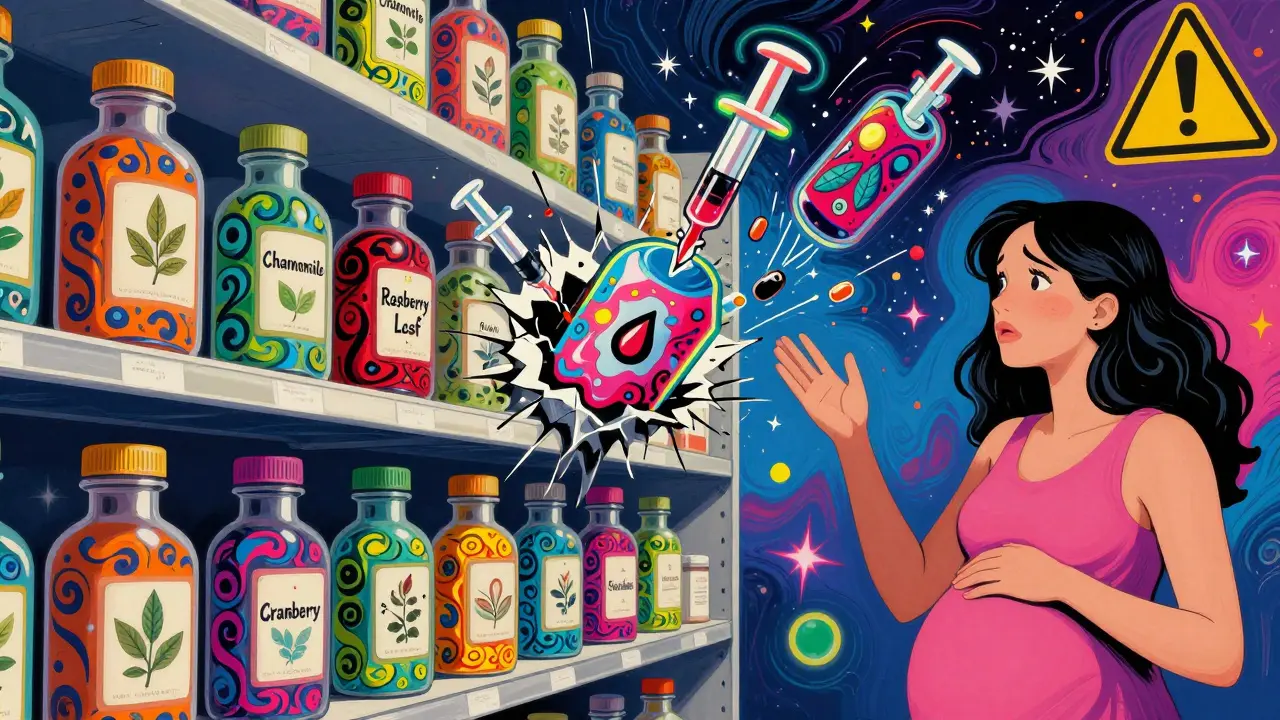
In Catalonia, a 2023 study of over 1,000 pregnant women found that 28% used ginger, 9% took chamomile, and 7% used thyme. But usage patterns don’t tell you safety. They just tell you what people are trying.
Chamomile is often chosen for sleep or anxiety. Sounds harmless, right? But research links it to possible risks: premature closure of the ductus arteriosus (a blood vessel in the baby’s heart), lower birth weight, and even higher chances of preterm birth. No one knows why, and no one has tested enough women to be sure. Still, it’s on the shelf next to the tea bags.
Raspberry leaf is another big one. Many midwives and online forums recommend it to "tone the uterus" and make labor smoother. But the American Academy of Family Physicians warns it might actually increase your chance of needing a C-section if used to try to induce labor. And here’s the kicker: there’s no standard dose. One brand might have 500 mg per capsule. Another might have 1,200 mg. You can’t compare them. You can’t trust them.
Cranberry supplements? They’re marketed to prevent urinary tract infections (UTIs). And yes, they might help a little. But in the same Spanish study, 17% of women who took cranberry supplements reported spotting in the second or third trimester. Spotting. In pregnancy. That’s not normal. And no one knows if it’s the cranberry, the dose, or something else.
And then there’s rosemary. Used in cooking? Fine. Taken as a tea or capsule? The American Pregnancy Association calls it "possibly unsafe." Why? Because it can stimulate the uterus. That’s not a side effect - that’s a red flag.
The regulation gap: "Natural" doesn’t mean safe
The U.S. FDA doesn’t test herbal supplements like it tests pills. There’s no requirement for purity, potency, or safety before they hit the store. A 2023 FDA inspection found that 20% to 60% of herbal products contain ingredients not listed on the label - sometimes harmful ones. Some supplements had heavy metals. Others had undeclared pharmaceuticals. One product marketed for pregnancy nausea was found to contain a banned stimulant.
The European Union has stricter rules - herbal products must be registered and labeled with safety info. But even there, enforcement varies. In the U.S., you’re on your own. The supplement industry isn’t required to prove anything works - or doesn’t harm.
And here’s the worst part: pregnant women are almost never included in drug trials. Why? Because of ethical concerns. But that means we’re left guessing. We know what aspirin does in pregnancy. We know what Zofran does. But we don’t know what 90% of herbal products do.
What the experts say - and why you should listen
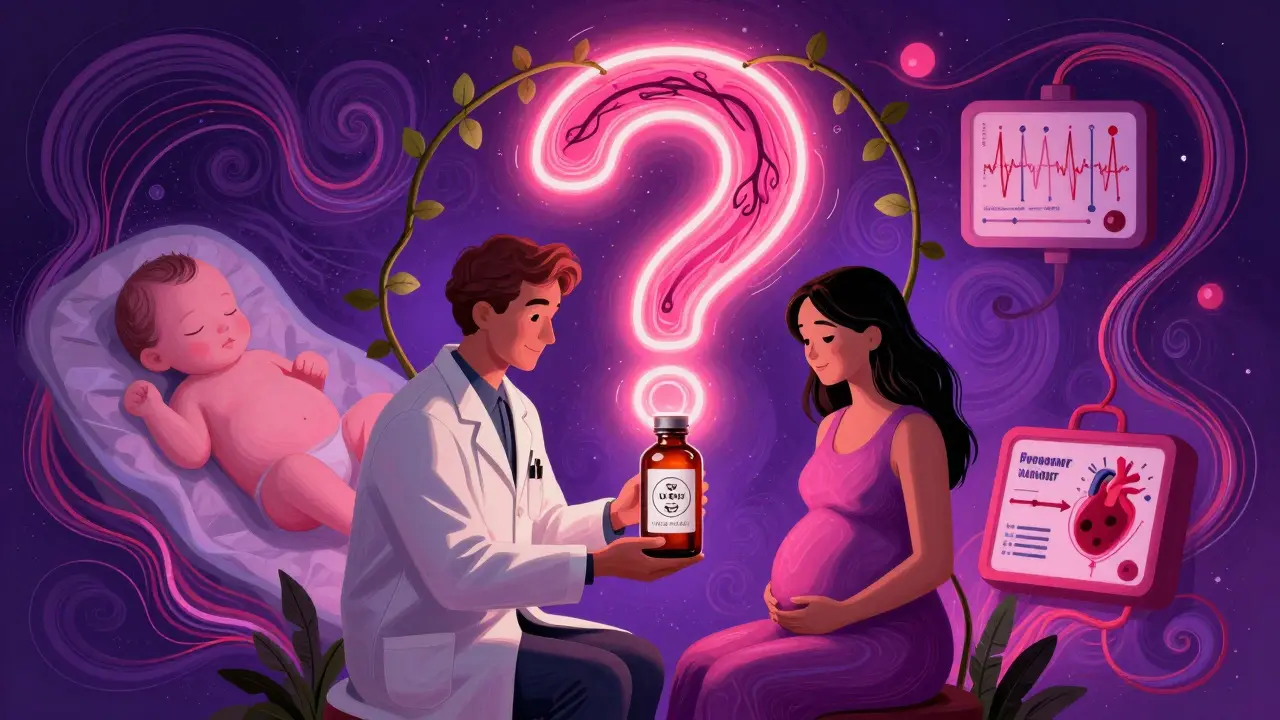
The American College of Obstetricians and Gynecologists (ACOG) says it plainly: "Pregnant women should not take any herbal products without talking to their health-care provider first." Cleveland Clinic’s 2023 review goes further: "People who are pregnant are encouraged to avoid most herbal supplements." Why? Because of interactions. Ginger can thin your blood. If you’re also on a prenatal vitamin with iron or taking a blood pressure med, you could be setting yourself up for unexpected bleeding. Chamomile might interfere with how your body processes medications. Raspberry leaf could trigger contractions before you’re ready.
And then there’s the cultural side. In Spain, Korea, and parts of Latin America, herbal use is tied to tradition. Many women believe herbal remedies are safer than pills. The Spanish study found a strong link between using herbs and believing that natural = better. But natural doesn’t mean clean. Natural doesn’t mean controlled. And natural doesn’t mean risk-free.
What you should do - and what you shouldn’t
Here’s the practical truth:
- If you’re taking anything herbal - tea, capsule, tincture - tell your OB or midwife. Don’t wait. Don’t assume they’ll ask. They might not.
- Don’t start anything new without talking to your provider. Not even chamomile tea. Not even ginger.
- Stop using raspberry leaf if you’re not in your third trimester. If you are, ask your provider if it’s still okay. There’s no universal green light.
- Don’t rely on Reddit, Pinterest, or your mom’s advice. One woman’s "miracle tea" could be another’s warning sign.
- If you’re using ginger for nausea, stick to under 1,000 mg per day. More isn’t better. And avoid concentrated extracts unless your provider says so.
- Check the label. Look for third-party testing seals (USP, NSF, ConsumerLab). They don’t guarantee safety - but they at least check for contamination.
And if you’re already taking something? Don’t panic. But don’t ignore it either. Bring the bottle to your next appointment. Write down what you take, how much, and how often. Your provider needs that info to spot risks.
The bigger picture: Why we’re still in the dark
In 2023, the NIH launched a $12.7 million study to finally find answers. That’s progress. But it’s too little, too late for most pregnant women right now.
We’re missing long-term data. We don’t know if a baby exposed to chamomile in utero has a higher risk of anxiety later. We don’t know if raspberry leaf affects future fertility. We don’t know if repeated exposure to unregulated herbs changes fetal development.
The market is booming - herbal supplements for pregnancy brought in over $4 billion in 2023. But science hasn’t caught up. And until it does, the safest choice is simple: avoid anything not approved by your provider.
Ginger? Maybe. Safe, with evidence.
Everything else? Probably not worth the risk.
Is ginger safe during pregnancy?
Yes, ginger is considered safe for most pregnant women when taken in doses under 1,000 mg per day. Multiple studies, including those from the Cleveland Clinic and the American Academy of Family Physicians, show it effectively reduces nausea and vomiting without increasing risks to the baby. It’s one of the few herbal supplements with strong evidence supporting its use in pregnancy. Still, talk to your provider before starting, especially if you’re on blood thinners or have a history of bleeding.
Can I drink chamomile tea while pregnant?
There’s not enough clear evidence to say chamomile is safe. Some studies link it to higher risks of preterm birth, low birth weight, and possible effects on fetal heart development. While many women drink it for sleep or calm, the American Academy of Family Physicians advises caution. If you choose to drink chamomile tea, limit it to one cup per day and avoid concentrated extracts or supplements. Always check with your provider first.
Is raspberry leaf tea good for labor?
Raspberry leaf is often promoted as a way to prepare the uterus for labor, but research doesn’t support that. The American Academy of Family Physicians found it may increase the chance of needing a C-section when used to induce labor. It can also trigger contractions earlier than expected. While some women take it in the third trimester, there’s no standard safe dose, and the risks may outweigh the unproven benefits. Don’t use it without talking to your provider.
Are herbal supplements regulated like medicine?
No. In the U.S., herbal supplements are regulated as food, not medicine. The FDA doesn’t test them for safety or effectiveness before they’re sold. They don’t need to prove they work, and they don’t need to list all ingredients. Studies show 20% to 60% of herbal products contain unlisted substances - sometimes harmful ones. That’s why you can’t trust labels. Always assume there’s uncertainty.
Why don’t we have more research on herbal supplements in pregnancy?
Pregnant women are rarely included in clinical trials because of ethical concerns about exposing the fetus to unknown risks. This leaves doctors and patients with very little data. Most herbal supplements were never tested on pregnant people. Even common ones like chamomile or cranberry have only small, inconsistent studies. The NIH started a major $12.7 million study in 2023 to fix this, but results won’t be available for years. Until then, the safest approach is caution.
Scott Easterling
March 8, 2026 AT 04:16So let me get this straight-you’re telling me I can’t even drink chamomile tea without signing a waiver and submitting my bloodwork to the FDA? 🤦♂️ I’ve been sipping it since week 6 and my baby’s still kicking like a soccer player. Natural doesn’t mean dangerous-it means uncorrupted by Big Pharma’s profit machine. If they’d just let us use herbs without turning it into a medical audit, maybe we wouldn’t need 12.7 million dollars to figure out what grandma already knew.
Mantooth Lehto
March 8, 2026 AT 23:57I’m so mad right now 😭 I just found out I’ve been taking raspberry leaf since 32 weeks… and now I’m crying because I read it might’ve increased my chance of a C-section?? I didn’t even know!! My midwife never mentioned it!! I feel like I failed my baby already 😢
Melba Miller
March 10, 2026 AT 22:30Let’s be real. The FDA doesn’t regulate supplements because they’re scared of the herbal industry’s lobbying power. You think they don’t know about the heavy metals? Of course they do. But they won’t shut it down because it’s a $4 billion industry-and if they admit these products are dangerous, they’ll have to admit they’ve been failing pregnant women for decades. The real danger isn’t the herbs-it’s the system that lets them slip through.
And don’t get me started on "natural" = safe. Poison ivy is natural. Cyanide is natural. Arsenic? Also natural. The word "natural" is a marketing scam designed to make you feel better while you’re unknowingly poisoning yourself.
My cousin had a stillbirth because she took "pregnancy tea" from a Walmart aisle. No one told her it had pennyroyal. No one. Not her OB, not the label, not the influencer who posted it. We’re not just guessing-we’re being lied to.
And now we’re supposed to trust third-party seals? USP? NSF? Those are just logos slapped on bottles by companies who paid for the stamp. They don’t test for fetal toxicity. They test for whether the bottle contains what’s written on the label. That’s it. That’s not safety. That’s labeling compliance.
I’m not anti-herb. I’m anti-ignorance. If you’re going to put something in your body while carrying a human, you owe it to that child to know what it does. Not guess. Not hope. Not pray. Know.
And if your provider doesn’t take this seriously? Find a new one. This isn’t about fear. It’s about responsibility.
Katy Shamitz
March 11, 2026 AT 12:51Oh honey, I’m so proud of you for even asking this question. 🤗 You’re already doing better than 90% of pregnant women out there who just grab whatever’s on the shelf because "it’s herbal". I’m not judging-I’m cheering. Seriously. The fact that you’re reading this instead of scrolling TikTok for pregnancy tea hacks? That’s huge.
And yes, ginger is the only one that’s kinda safe. Everything else? Nope. No. Never. Not even chamomile. Not even peppermint. Not even that "calming lavender bath bomb" your sister sent you. I know you want to feel better. I know you want relief. But your baby’s brain is developing right now. It doesn’t care that you’re tired. It only cares if you’re safe.
Bring every bottle to your next appointment. Every. Single. One. Write it down. Take a picture. Even if you think it’s "just tea." You’re not being paranoid-you’re being a warrior.
Nicholas Gama
March 13, 2026 AT 01:39Ginger is fine. Everything else is pseudoscience wrapped in a yoga mat. Stop romanticizing herbalism. It’s not holistic-it’s hazardous.
Mary Beth Brook
March 14, 2026 AT 20:45Regulatory arbitrage in the supplement space is a systemic failure. The DSHEA framework of 1994 created a legal loophole that allows unvalidated botanicals to enter the market without premarket safety data. The absence of pharmacovigilance protocols for gestational populations renders risk-benefit analyses statistically invalid. Therefore, empirical caution is not alarmism-it’s evidence-based harm reduction.
Neeti Rustagi
March 16, 2026 AT 09:54Thank you for writing this with such clarity and care. In India, we have centuries of Ayurvedic tradition, and many of us believe in herbal remedies deeply. But this article made me realize: tradition does not equal scientific validation. I have stopped all herbal supplements since reading this, even my daily turmeric milk. I will consult my doctor before using anything again. Knowledge is power, and you have given us both.
Dan Mayer
March 16, 2026 AT 16:42i just found out my gingers up is 1500mg per cap… and i’ve been takin 2 a day… omg i think i just ruined my baby’s life 😭
Janelle Pearl
March 17, 2026 AT 19:06Hey… I just wanted to say thank you. I’ve been taking chamomile for insomnia since week 8. I didn’t know it could be risky. I’m not mad at myself-I’m just glad I read this before I kept going. I’ve already stopped. I’m going to talk to my midwife tomorrow. You don’t have to be perfect. You just have to be willing to learn. And you’re doing that. That’s enough.
Ray Foret Jr.
March 18, 2026 AT 21:08Man, I’m so glad I found this. I’ve been giving my wife raspberry leaf tea since 36 weeks because her mom swore by it. Now I’m gonna grab the bottle and bring it to her next appt. We’re not gonna panic-we’re gonna be smart. Thanks for the real talk! 🙌