Generic Prescribing Incentives: How States Are Cutting Drug Costs by Rewarding Generic Use
 Jan, 13 2026
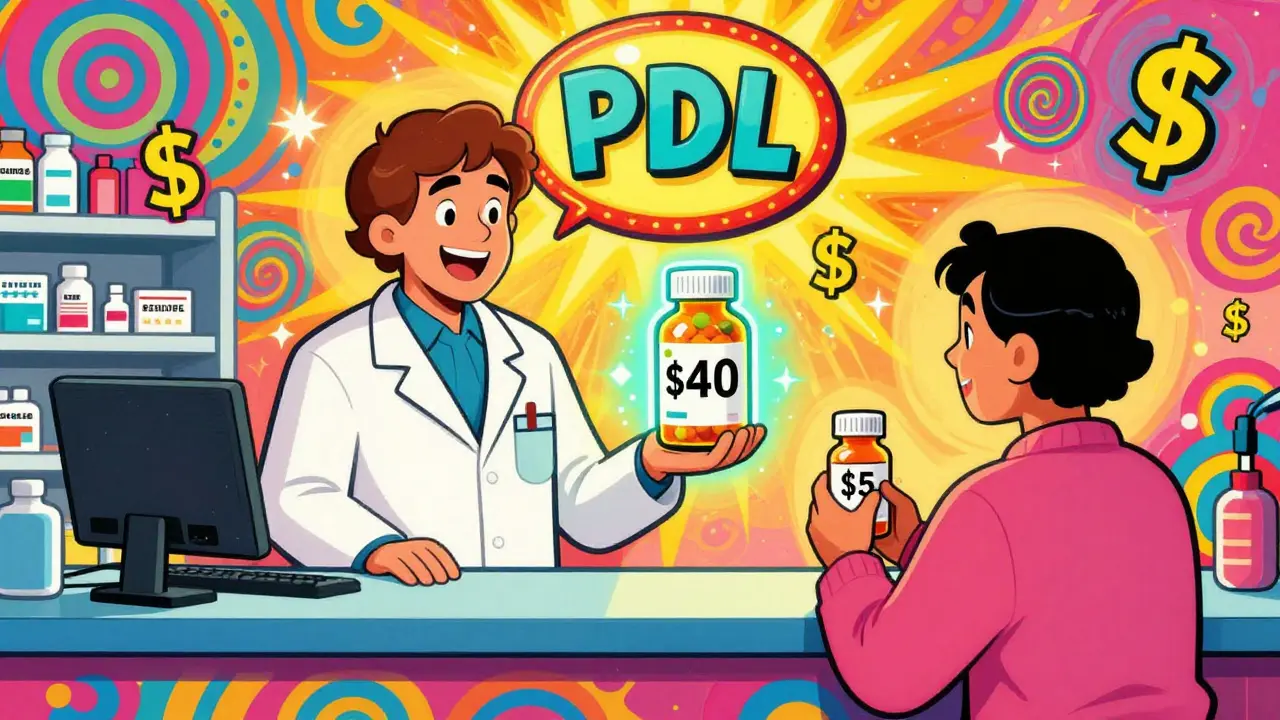
When you fill a prescription, do you ever wonder why your copay for a generic pill is $5 while the brand-name version costs $40? It’s not random. Behind the scenes, state governments have been quietly reshaping how doctors write prescriptions and how pharmacists fill them - all to save billions in healthcare spending. These aren’t just suggestions. They’re rules, financial nudges, and policy tools designed to push patients and providers toward cheaper, equally effective generic drugs.
How States Make Generics the Easier Choice
Most people don’t realize that states control a huge part of how drugs are paid for - especially through Medicaid. In 2019, 46 out of 50 states used Preferred Drug Lists (PDLs) to steer prescriptions toward generics. These lists don’t ban brand-name drugs. Instead, they make them harder to get. If your doctor wants to prescribe a brand-name medication that’s not on the list, they often need to jump through hoops: fill out extra paperwork, get prior authorization, or explain why the cheaper option won’t work. In many cases, the patient pays more out of pocket if they choose the brand. It’s a simple idea: make the good option the cheap option. And it works. States with strong PDLs see higher generic use rates. But it’s not just about doctors. Pharmacists play a big role too.The Power of Presumed Consent
Here’s a surprising fact: in some states, your pharmacist can swap your brand-name drug for a generic - without asking you. That’s called presumed consent. In other states, they have to get your explicit permission first. The difference? It’s huge. A 2018 NIH study found that states with presumed consent laws saw a 3.2 percentage point increase in generic dispensing compared to states requiring patient permission. That might sound small, but multiply that across millions of prescriptions, and you’re talking about billions in savings. Researchers estimated that if all 39 explicit-consent states switched to presumed consent, they could save $51 billion a year. Why does this work? Because most patients don’t know the difference. If a pharmacist hands them a pill that looks similar and costs less, they take it. No fuss. No argument. And pharmacists are more likely to substitute when they don’t have to stop and ask - especially since they often earn a slightly higher fee for dispensing generics.Copays Are the Real Lever
You might think doctors decide what gets prescribed. But often, it’s the patient’s wallet that makes the final call. That’s why states have been increasing the gap between brand and generic copays. In the late 1990s, the profit difference for pharmacies between dispensing a brand-name drug and a generic was just 8 cents. But copay differentials? They kept growing. Today, it’s common to see $5 for a generic and $30-$50 for the brand. That’s not an accident. States and insurers deliberately widen that gap to make the generic the obvious pick. The Department of Health and Human Services found that patient-facing incentives - like higher copays - work better than trying to pressure pharmacists or doctors with bonuses or penalties. Why? Because people respond to their own costs. If you’re paying $45 extra for a brand, you’re going to ask your doctor if there’s a cheaper option.Medicaid and the Rebate Machine
The real engine behind all this? The Medicaid Drug Rebate Program. Since 1990, drug makers have been required to pay the government a minimum 13% rebate on every generic drug sold to Medicaid. States can - and do - negotiate even bigger rebates on top of that. In 2019, 46 states had supplemental rebate deals with manufacturers for preferred drugs on their lists. This creates a chain reaction: lower prices → bigger rebates → more money back for state programs → lower overall spending. But it’s not perfect. Generic manufacturers sometimes get hit with unexpected inflation rebates - even when they don’t raise prices. The Avalere Health study identified five scenarios where this happens: drug shortages, rising ingredient costs, seasonal demand spikes, shrinking customer bases, and saturated markets. When that happens, companies pull their generics out of Medicaid. Suddenly, the cheap option disappears.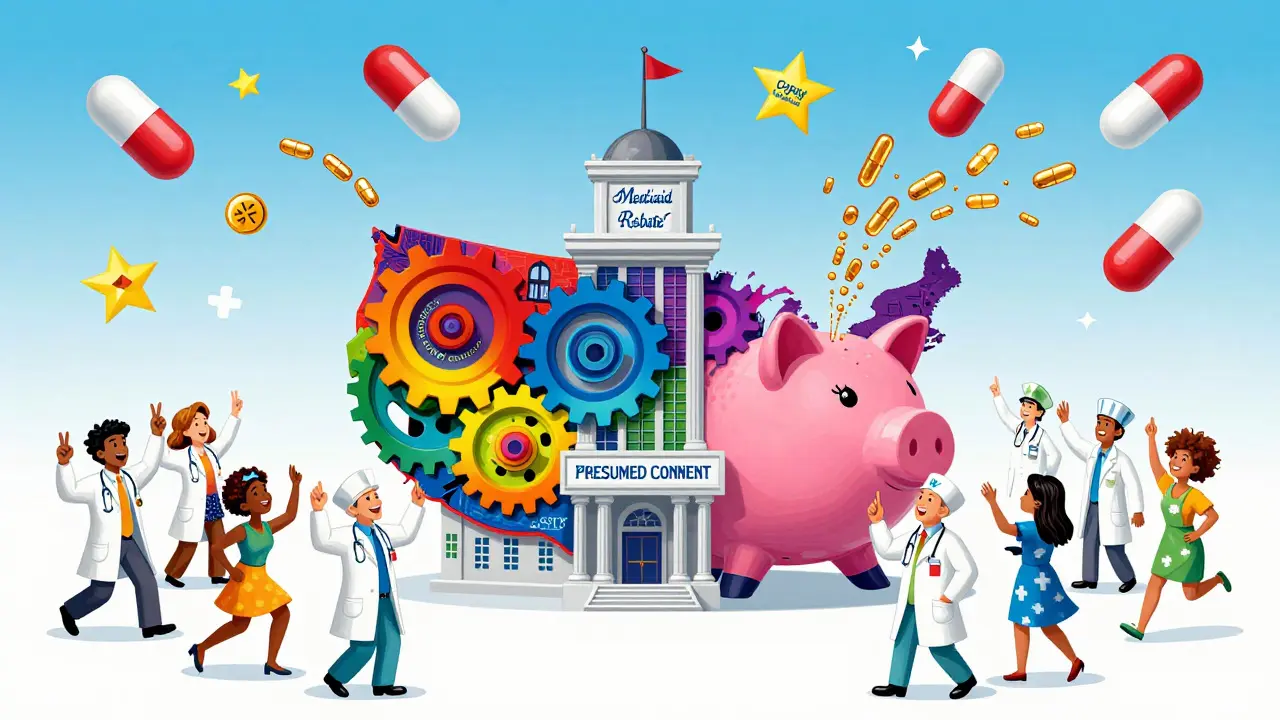
What About the 340B Program?
Another layer: the 340B Drug Pricing Program. Created in 1992, it lets hospitals and clinics that serve low-income patients buy drugs at steep discounts - often 20% to 50% off. These savings help safety-net providers stretch their budgets. But here’s the twist: Medicaid reimbursement rules changed in 2016. States can no longer reimburse pharmacies more than the 340B ceiling price. That means if a pharmacy buys a drug at $10 through 340B, Medicaid can’t pay them $15 for it - even if the generic normally costs $12. This creates confusion. Pharmacies get caught in the middle. Some stop carrying certain generics because the math doesn’t work. And patients? They might not even know why a drug they used to get is suddenly unavailable.Why Some Policies Fail
Not every state policy works as planned. For example, some states tried mandatory substitution - laws that force pharmacists to swap generics no matter what. But research shows these don’t move the needle. Why? Because pharmacists were already substituting anyway. They make more money on generics, and patients rarely complain. So mandating it doesn’t change behavior - it just adds paperwork. The real winners? Policies that change what patients feel in their pocket. Copay differentials. Presumed consent. Preferred drug lists. These work because they align incentives - for patients, pharmacists, and providers - toward the same goal: lower cost, same outcome.The Federal Trend: The $2 Drug List
While states have been leading the charge, the federal government is catching up. In 2023, CMS announced it’s testing a $2 Drug List model for Medicare Part D. The idea? Make 100 common, low-cost generics available for just $2 a month - no deductible, no copay beyond that. It’s simple. Transparent. Patient-friendly. It’s still voluntary and only applies to Medicare, but states are watching closely. If it works, expect to see similar models rolled out in Medicaid and commercial insurance. The goal? Cut through the complexity. Make the cheapest option the easiest option - no forms, no calls, no confusion.
The Big Picture: Savings, But at What Cost?
The results are clear: states that use these tools save money. Generics now make up 90% of all prescriptions filled in the U.S. But only 20% of total drug spending. That’s the power of generics. But there’s a warning. When manufacturers can’t make money on Medicaid, they stop making the drugs. That’s not theoretical. We’ve seen it happen. One state lost access to a generic blood pressure medication after the rebate structure made it unprofitable. Patients were forced onto more expensive alternatives - the exact opposite of what the policy was meant to do. The challenge isn’t just about pushing generics. It’s about keeping them available. Smart states now monitor manufacturer behavior. They track which generics are being pulled. They adjust rebate formulas. They work with pharmacies to avoid gaps in care. This isn’t just policy. It’s market management. And it’s getting more sophisticated every year.What You Can Do
If you’re on Medicaid, Medicare Part D, or have insurance with a formulary:- Always ask your pharmacist: “Is there a generic version?”
- Check your copay sheet. If the brand costs 5x more, it’s probably not worth it.
- If your doctor prescribes a brand, ask why. Is it truly necessary? Or just habit?
- Know your state’s substitution rules. In most places, you can say no to a generic - but you’ll pay more.
Are generic drugs really as good as brand-name drugs?
Yes. The FDA requires generic drugs to have the same active ingredients, strength, dosage form, and route of administration as the brand-name version. They must also be bioequivalent - meaning they work the same way in the body. The only differences are in inactive ingredients (like fillers or dyes) and packaging. For 95% of prescriptions, generics are just as safe and effective.
Why do some states require patient consent before substituting generics?
Some states believe patients should have control over what they take, even if it costs more. But research shows this approach reduces generic use. Patients often don’t understand the difference and may refuse substitution out of fear or confusion. States with presumed consent - where substitution is automatic unless the patient objects - see higher generic adoption rates and lower overall spending.
Can a pharmacist refuse to substitute a brand-name drug for a generic?
Yes - but only under specific conditions. If the prescription says “Dispense as Written” or “Do Not Substitute,” the pharmacist must follow that. They can also refuse if they believe the generic isn’t appropriate for the patient’s condition - for example, if the patient has had a bad reaction to a specific generic formulation in the past. Otherwise, in presumed consent states, substitution is the default.
Why are some generic drugs hard to find or out of stock?
Manufacturers sometimes stop making certain generics because they’re not profitable - especially under Medicaid rebate rules. If the price they get from the state doesn’t cover their costs, they’ll pull the drug. This happens more often with older, low-cost generics where competition has driven prices down to the point where even small cost increases make them unviable. Drug shortages and supply chain issues also play a role.
Do employer-sponsored insurance plans use similar incentives?
Yes. Most large employers use Pharmacy Benefit Managers (PBMs) that include preferred drug lists, higher copays for brands, and automatic generic substitution. Some even offer cash rewards or lower premiums for choosing generics. The structure is very similar to Medicaid - just managed through private insurers instead of state agencies.
Angel Tiestos lopez
January 13, 2026 AT 12:19Alan Lin
January 15, 2026 AT 10:36Pankaj Singh
January 16, 2026 AT 17:08Robin Williams
January 17, 2026 AT 08:55Scottie Baker
January 17, 2026 AT 22:01Anny Kaettano
January 18, 2026 AT 18:42Kimberly Mitchell
January 20, 2026 AT 07:33Angel Molano
January 20, 2026 AT 17:30Vinaypriy Wane
January 22, 2026 AT 08:18jefferson fernandes
January 22, 2026 AT 10:30Acacia Hendrix
January 23, 2026 AT 09:33mike swinchoski
January 24, 2026 AT 14:11Milla Masliy
January 25, 2026 AT 02:00Alan Lin
January 26, 2026 AT 20:23