FDA Medication Safety Apps: Best Mobile Tools for Tracking Side Effects and Drug Interactions
 Dec, 20 2025
Drug Interaction Checker
Medication Interaction Check
Enter medications you're currently taking to see potential interactions. This tool uses FDA-referenced data to identify possible interactions between drugs, supplements, and foods.
Every year, over 1.3 million people in the U.S. end up in the emergency room because of medication errors. Many of these mistakes happen because people forget when to take their pills, don’t know how drugs interact, or miss warning signs of dangerous side effects. Mobile apps built with FDA-referenced data are changing that. These aren’t just handy reminders-they’re tools that help you avoid serious harm, especially when you’re juggling multiple prescriptions.
What Makes an App a Medication Safety Tool?
Not every app that lists drug info is created equal. Some are just digital drug guides. Others are built to actively protect you. The FDA doesn’t regulate every app, but it does require review for those that make medical claims-like predicting interactions, suggesting doses, or diagnosing reactions based on symptoms. Apps like Drugs.com and a free, widely used platform that provides FDA-approved drug labels, overdose guidance, and interaction alerts fall into the information category. They’re trusted because they pull data straight from official FDA sources. Meanwhile, apps like Medisafe and a medication management app with AI-powered reminders and caregiver reporting features go further. They track your schedule, send alerts, and even let family members monitor your adherence. These tools reduce missed doses by up to 40% according to user data from over 7 million people.Top 3 Medication Safety Apps in 2025
- Drugs.com: With over 25 million monthly U.S. visitors, it’s the most visited drug reference site. Its interaction checker tracks more than 50 medications and foods at once. It also includes FDA safety alerts, pregnancy warnings, and even how alcohol affects each drug. No subscription needed for core features.
- Medisafe: Ranked #1 for medication adherence, it’s used by 7 million active users, with 40% aged 65 or older. It sends customizable reminders, syncs with caregivers, and identifies your toughest days for adherence (Fridays and Saturdays, according to their data). Premium features cost $9.99/month and include unlimited reports and body metric tracking.
- Pill Identifier & Med Scanner: Updated in July 2025, this app lets you scan a pill’s imprint, color, or barcode to instantly identify it. It’s especially useful if you’re unsure what a new pill is or if your prescription changed without notice. Version 2.3 reduced data entry time by 60% for users.
UpToDate is another major player, but it’s designed for doctors-not patients. It costs nearly $700 a year and is used in 78% of U.S. teaching hospitals. For most people, it’s overkill. Stick with Drugs.com or Medisafe unless you’re a clinician.
How These Apps Actually Prevent Harm
Think of these apps as your personal medication watchdog. They don’t just tell you what a drug does-they help you catch problems before they happen. For example, if you’re taking blood pressure medicine and start a new antibiotic, many apps will flag a dangerous interaction that could spike your potassium levels. Some even alert you if your dose is higher than recommended for your age or kidney function. AI systems in these apps are getting smarter. In clinical trials, they’ve predicted adverse reactions with 85-92% accuracy by analyzing patterns across millions of cases. One user, Jessica, said after a seizure left her on eight medications, Medisafe was the only thing that kept her from mixing them up. “I’m not relying on anybody anymore,” she said.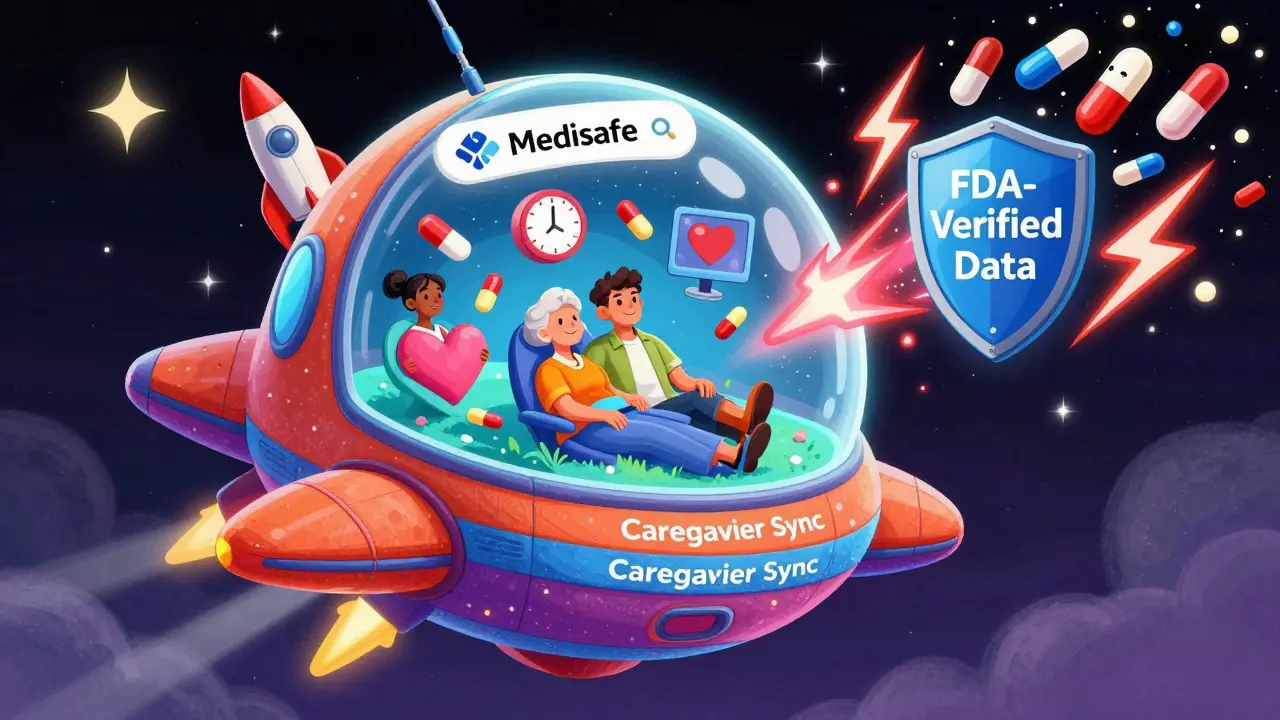
What You Can and Can’t Expect
These tools are powerful, but they’re not magic. Here’s what they can do:- Send timely reminders for pills, patches, or injections
- Identify unknown pills via photos or barcodes
- Check for interactions between drugs, supplements, and foods
- Display FDA-approved side effect lists in plain language
- Let caregivers monitor your adherence remotely
Here’s what they can’t do:
- Replace your doctor’s advice
- Diagnose conditions or recommend treatments (unless FDA-approved as a medical device)
- Work without internet-though Drugs.com lets you view previously loaded info offline
- Always be up to date-some free apps lag on new warnings
That’s why it’s still critical to talk to your pharmacist when you get a new prescription. Use the app to confirm what they tell you-not replace it.
Who Benefits the Most?
Seniors are the biggest users. In 2025, 79% of people over 65 used at least one medication safety app, according to Medisafe’s report. That’s because older adults are more likely to take five or more medications daily. A single mix-up can lead to falls, confusion, or hospitalization. People with chronic conditions like diabetes, epilepsy, or heart disease also rely heavily on these tools. One study showed that patients using these apps had 30-50% fewer medication errors. Even younger users benefit. A Reddit thread from March 2025 praised Drugs.com’s symptom checker for common issues like rashes or dizziness. Users said it helped them decide whether to call their doctor or wait it out.What’s Changing in 2025?
The FDA is rolling out new rules called Prescription Drug Use-Related Software (PDURS) and a new regulatory framework for apps that provide prescription drug information, requiring stricter validation starting in 2025. This means apps that give dosing advice or flag interactions will need to prove their accuracy before they can stay on the market. Already, Medisafe and Drugs.com have updated their systems to comply. Expect more apps to add disclaimers like “For informational use only” if they don’t meet the new standards. You’ll also see better integration with electronic health records. Hospitals are already using these apps behind the scenes. By 2027, analysts predict 40% of medication safety apps will need some form of FDA review.
How to Get Started
Setting up a medication safety app takes less than 15 minutes:- Download one of the top apps: Drugs.com (free), Medisafe (free with premium option), or Pill Identifier (free).
- Enter your medications: Name, dose, frequency, and reason. Use the barcode scanner if available.
- Set reminders: Choose times that match your routine. Don’t forget to enable notifications.
- Invite a caregiver (optional): If you’re worried about forgetting, let a family member get alerts.
- Check for updates: Every few months, review your list. Add new meds, remove old ones.
Seniors may need help from a family member or pharmacist for the first setup. mySeniorCareHub’s February 2025 update added a simplified interface just for this group.
Common Problems and Fixes
- Notifications don’t go off: Check phone settings. Some phones kill background apps to save battery. Add the app to your “never sleep” or “allow background activity” list.
- Drug info is outdated: Free apps update slower. Cross-check with Drugs.com or your pharmacist if something seems off.
- Too many alerts: Turn off non-essential notifications. You only need reminders for meds you’re actually taking.
- Can’t scan the pill: Make sure lighting is good. Try taking a photo instead of using the camera in real time.
If you’re overwhelmed, start with one app and one medication. Build the habit before adding more.
Final Thoughts
Medication safety apps aren’t just convenient-they’re lifesaving. With medication errors costing the U.S. system $42 billion a year, these tools aren’t luxury items. They’re essential for anyone taking more than one drug regularly. The best part? Most of them cost nothing. You don’t need a subscription to get accurate, FDA-backed information. Just download an app, enter your meds, and let it do the heavy lifting.Don’t wait until you’re in the ER to start using one. Your future self will thank you.
Are FDA medication safety apps free to use?
Yes, the core features of top apps like Drugs.com and Medisafe are completely free. You can track medications, check side effects, and get interaction alerts without paying. Premium upgrades-like unlimited caregiver access or advanced analytics-cost $2.99 to $9.99 per month, but they’re optional.
Can these apps replace my pharmacist?
No. Apps are tools to help you understand your meds, not replace professional advice. Pharmacists can spot issues apps miss-like how your liver function affects a drug’s metabolism. Always consult your pharmacist when starting, stopping, or changing a medication.
Do these apps work without internet?
Most need internet to update drug info or check interactions. But Drugs.com lets you view previously loaded pages offline. Medisafe stores your medication list locally, so reminders still work without a signal. For full functionality, you’ll need a connection.
Are these apps safe for seniors?
Yes, and many are designed specifically for them. Medisafe has 40% of its users over 65. mySeniorCareHub’s 2025 update added larger text, simpler menus, and caregiver alerts to make it easier for older adults and their families. Voice-guided setup is also becoming more common.
How do I know if an app is trustworthy?
Look for apps that cite FDA, NIH, or peer-reviewed sources. Avoid apps that promise cures or make bold medical claims. Stick to well-known platforms like Drugs.com, Medisafe, or Epocrates. Check reviews-apps with 4.5+ stars and 100,000+ ratings are usually reliable.
Can these apps report side effects to the FDA?
Some can. Medisafe and Drugs.com now include direct links to the FDA’s MedWatch system so you can report side effects from within the app. This helps the FDA track safety trends faster. You can also report manually at fda.gov/medwatch.
Will my data be sold if I use these apps?
Reputable apps like Drugs.com and Medisafe don’t sell your personal medication data. They may use anonymized, aggregated data to improve their algorithms. Always check the privacy policy. If an app asks for unnecessary permissions (like location or contacts), be cautious.
Stacey Smith
December 21, 2025 AT 08:59Adrian Thompson
December 22, 2025 AT 01:25Michael Ochieng
December 23, 2025 AT 15:59Jackie Be
December 25, 2025 AT 05:43Cameron Hoover
December 25, 2025 AT 08:36Theo Newbold
December 25, 2025 AT 14:34Grace Rehman
December 26, 2025 AT 21:52John Hay
December 27, 2025 AT 02:38Jason Silva
December 27, 2025 AT 21:07Southern NH Pagan Pride
December 28, 2025 AT 05:00Jerry Peterson
December 30, 2025 AT 03:06Teya Derksen Friesen
December 31, 2025 AT 20:05Swapneel Mehta
January 1, 2026 AT 23:01Ben Warren
January 3, 2026 AT 02:28Orlando Marquez Jr
January 4, 2026 AT 12:32