Environmental Impact of Flushing Medications and Safe Disposal Alternatives
 Jan, 15 2026
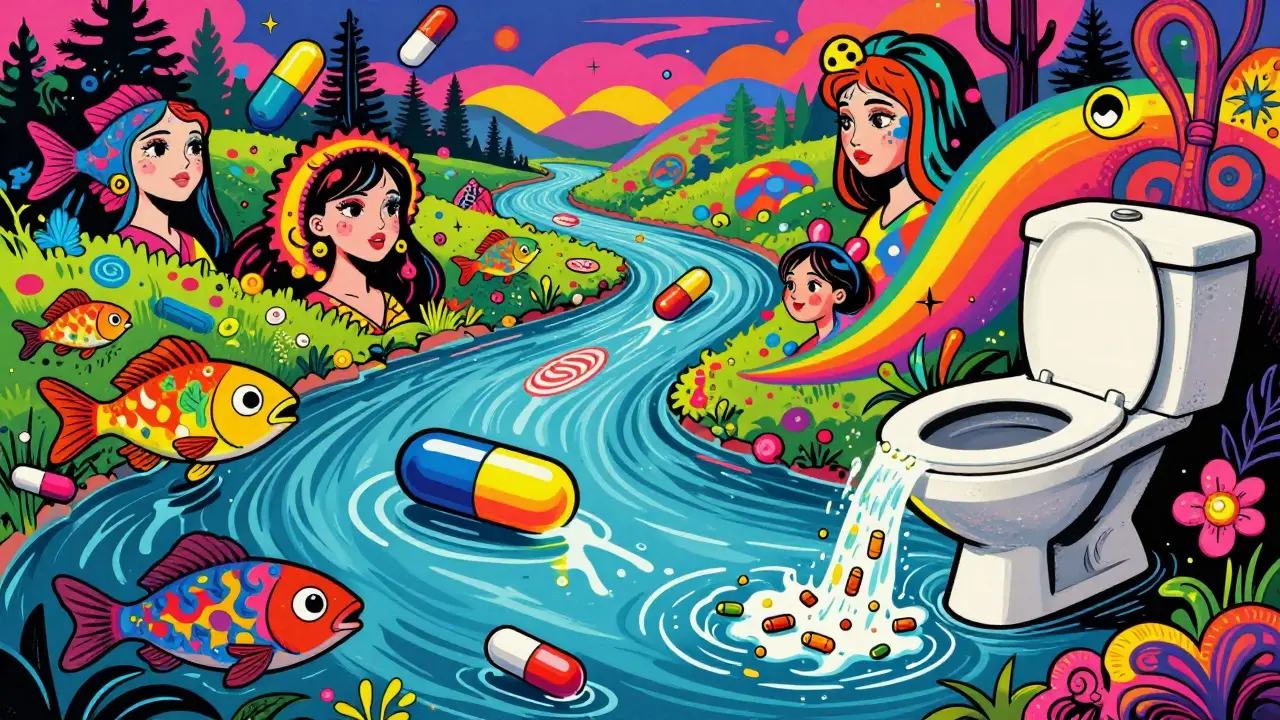
Flushing old pills down the toilet might feel like the easiest way to get rid of them-especially if you’re worried someone might find them. But here’s the truth: every time you flush a medication, you’re sending chemicals into rivers, lakes, and drinking water supplies. It’s not science fiction. Fish in the UK and across the US are showing signs of hormonal disruption. Some male fish have developed female traits. Others are producing eggs. And it’s not just fish-these compounds are showing up in groundwater, soil, and even bottled water. The problem isn’t just about what’s in the water. It’s about what we’re doing to the environment without even realizing it.
How Medications End Up in Our Water
Most people think the water system cleans everything. It doesn’t. Wastewater treatment plants were built to remove solids, bacteria, and dirt-not tiny drug molecules. When you swallow a pill, your body only absorbs 20% to 30% of the active ingredient. The rest gets flushed out through urine or feces. That’s one pathway. The other? You toss unused pills in the toilet. Or you throw them in the trash, where they can leach into soil and groundwater from landfills.
Studies from the U.S. Geological Survey found pharmaceuticals in 80% of rivers and streams tested across 30 states. Common drugs like ibuprofen, acetaminophen, and antibiotics showed up in nanogram amounts. That might sound tiny, but these chemicals don’t break down easily. Some persist for years. Others turn into even more toxic byproducts after treatment. In landfill leachate, concentrations have hit over 100,000 nanograms per liter for acetaminophen alone. That’s not a typo. That’s 100,000 times higher than what’s typically found in rivers.
Why It Matters: The Real Damage
It’s not just about “chemicals in water.” It’s about how those chemicals affect life. Estrogen from birth control pills has caused male fish to produce eggs. Antidepressants have changed fish behavior-making them less cautious around predators. Antibiotics in waterways are helping bacteria evolve resistance. That’s not just an environmental issue. It’s a public health crisis in the making. If antibiotics stop working in nature, they’ll stop working in hospitals.
And it’s not just aquatic life. These compounds can move up the food chain. Plants absorb them from contaminated soil. Small fish eat the plants. Bigger fish eat the small fish. Humans eat the big fish. That’s called biomagnification. The concentration of drugs gets stronger at each level. We don’t yet know the full human health impact-but we’re already seeing changes in wildlife. And that’s a warning sign.
The FDA’s “Flush List” - What You Need to Know
You might have heard the FDA says some medications should be flushed. That’s true-but only for a very small list. As of October 2022, there are only 15 medications on that list. Most are powerful opioids like fentanyl patches, oxycodone, and morphine. These drugs are so dangerous if misused-especially by children or pets-that the risk of accidental overdose outweighs the environmental risk of flushing.
But here’s the catch: 99% of medications are NOT on that list. That includes your painkillers, blood pressure meds, antibiotics, and antidepressants. Flushing those? It’s unnecessary and harmful. The FDA never meant for you to flush everything. But confusion is widespread. Many people don’t know the difference. That’s why so many still flush everything.
What You Should Do Instead: Safe Disposal Options
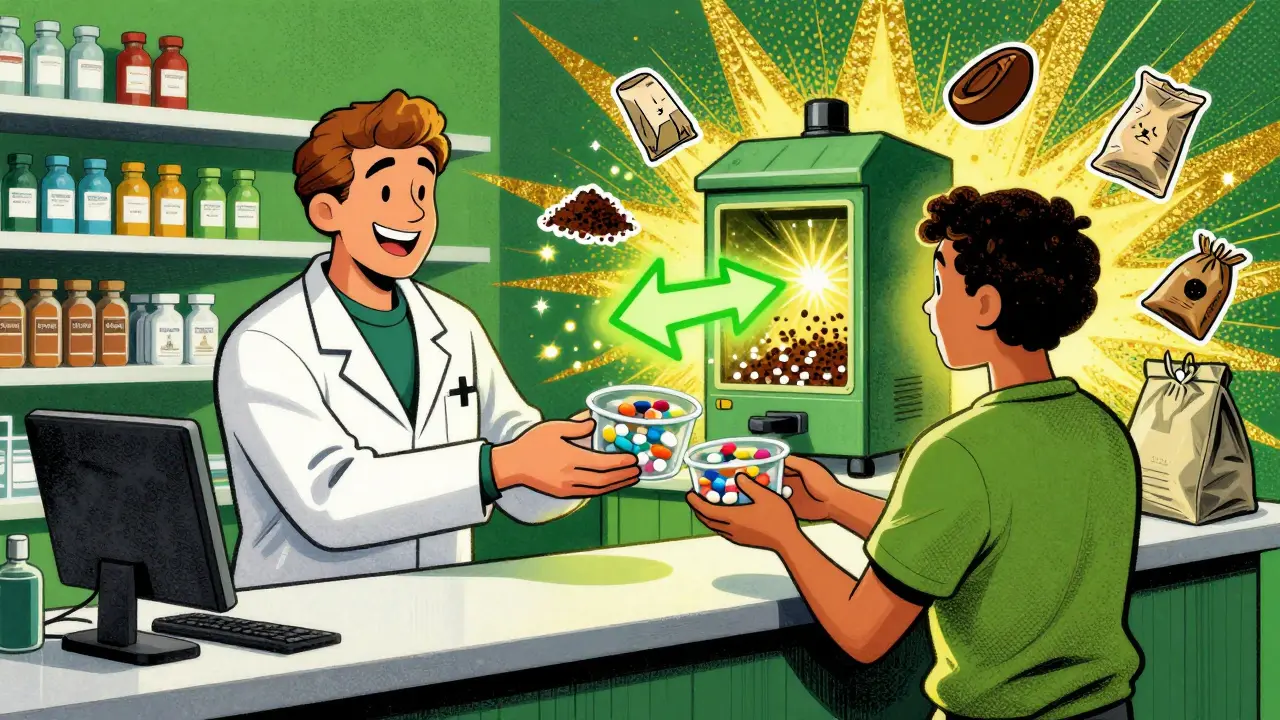
The best way to dispose of unused medications? Take them back. Many pharmacies, hospitals, and police stations offer free drop-off bins. In the UK, you can return them to any pharmacy-no questions asked. In the U.S., the DEA runs National Prescription Drug Take Back Days twice a year, and over 2,100 permanent collection sites exist nationwide. But awareness is low. Only 30% of Americans know where to find them.
If there’s no take-back program nearby, the EPA recommends a simple home method:
- Take the pills out of their original bottles.
- Mix them with something unappealing-used coffee grounds, cat litter, or dirt.
- Put the mixture in a sealed plastic bag or container.
- Throw it in the trash.
This makes the drugs unattractive to kids, pets, or people who might dig through the trash. It doesn’t solve the landfill problem, but it prevents immediate water contamination and misuse.
Why Take-Back Programs Are the Gold Standard
Take-back programs are the only disposal method that keeps pharmaceuticals out of both water and landfills. Collected drugs are incinerated at high temperatures, which destroys the chemicals completely. No leaching. No runoff. No risk.
But they’re not perfect. In the U.S., only 15% of counties have permanent collection sites. Rural areas often have to drive over 20 miles. In the UK, access is better-but still inconsistent. Some pharmacies don’t have bins, or they’re full. People get frustrated and give up.
That’s why countries like Germany and those in the EU are turning to Extended Producer Responsibility (EPR). Under EPR, drug manufacturers pay for take-back programs. It’s not just fair-it’s effective. In 16 EU countries, over 70% of households now return unused meds. The U.S. has no such system yet. But pressure is building.
What’s Changing? New Rules and Real Progress
Change is happening-but slowly. In California, a new law (SB 212) took effect in January 2024. Now, every pharmacy must give you disposal instructions when you pick up a prescription. No more guessing. No more confusion.
The European Union now requires all new drugs to go through environmental risk assessments before approval. If a drug is likely to pollute water, it gets flagged. Some might be redesigned. Others might be pulled.
And technology is catching up. Advanced wastewater treatments-like ozone filtration and activated carbon-can remove up to 95% of pharmaceuticals. But they cost between $500,000 and $2 million per plant. Only big cities can afford them. Smaller towns? They’re still using 1970s-era systems.
What You Can Do Today
You don’t need to wait for government action. Here’s what you can do right now:
- Check your medicine cabinet. Toss expired, unused, or unwanted pills. Don’t hoard them.
- Find a take-back location. Search your local pharmacy, hospital, or police station. In the UK, just walk into any pharmacy and ask.
- Don’t flush. Unless it’s on the FDA’s 15-item list, don’t flush.
- Use the trash method. Mix with coffee grounds or cat litter if no drop-off is available.
- Talk to your doctor. Ask if you really need that 90-day supply. Smaller prescriptions mean less waste.
It’s not about being perfect. It’s about being better than before. One person flushing one pill might not seem like much. But millions of people doing it? That’s how pollution starts.
What’s Next? The Bigger Picture
Pharmaceutical pollution isn’t going away. We need medicine. We need to treat illness. But we also need to stop treating the environment like a trash can.
The future lies in prevention: better prescribing, smaller prescriptions, patient education, and manufacturer responsibility. Until then, your choices matter. Returning a bottle of old antibiotics to a pharmacy might feel small. But it’s one less chemical in the water. One less fish with eggs. One less step toward a world where clean water is truly clean.
Is it ever okay to flush medications?
Yes-but only for a very short list of high-risk drugs, like fentanyl patches or certain opioids, where accidental overdose poses a greater danger than environmental harm. The FDA’s flush list has only 15 items. For everything else-including painkillers, antibiotics, and antidepressants-flushing is harmful and unnecessary.
What happens to medications in landfills?
Medications in landfills can leach into soil and groundwater over time. While this is slower than direct flushing, it still leads to contamination. Studies have found high concentrations of drugs like acetaminophen and ciprofloxacin in landfill leachate. It’s not ideal, but it’s less immediately damaging to waterways than flushing.
Can I just throw pills in the trash without mixing them?
You can, but it’s not safe. Unused pills in the trash can be found by children, pets, or people looking for drugs. The EPA recommends mixing them with coffee grounds, cat litter, or dirt to make them unappealing and unusable. Always seal them in a container before tossing.
Do take-back programs really make a difference?
Yes. Take-back programs collect medications and incinerate them at high temperatures, destroying the chemicals completely. This prevents them from entering water or soil. In countries like Germany and Sweden, where take-back programs are widespread, over 70% of households return unused drugs. That’s the gold standard.
Why don’t all pharmacies have take-back bins?
In the U.S., take-back programs are voluntary and underfunded. While the 2010 Secure Drug Disposal Act allowed pharmacies to offer collection, there’s no federal mandate or funding to support them. Many pharmacies lack space, staff, or budget. In the UK, participation is higher because it’s part of standard pharmacy service-but access still varies by region.
Are there any at-home solutions that destroy medications?
Yes, products like Drug Buster use chemical degraders to break down pills safely at home. But they’re expensive-around $30 per unit-and require strict instructions. Most people don’t use them because they’re hard to find and costly. For most, the trash method with coffee grounds is more practical and effective.
How do I know if my medication is expired?
Check the expiration date printed on the bottle or box. Most medications remain safe for 1-2 years after that date, but their effectiveness drops. If you’re unsure, ask your pharmacist. Don’t assume expired = dangerous. But do assume expired = unnecessary to keep.
Can I donate unused medications?
In the UK and some U.S. states, donation programs exist for unopened, unexpired medications. But most pharmacies and hospitals can’t accept them due to safety and legal rules. Always check with your local pharmacy or health department before trying to donate.
Stephen Tulloch
January 15, 2026 AT 15:18Joie Cregin
January 16, 2026 AT 00:10Melodie Lesesne
January 17, 2026 AT 03:15Corey Sawchuk
January 17, 2026 AT 09:33Nick Cole
January 19, 2026 AT 04:11Ryan Hutchison
January 19, 2026 AT 07:57Samyak Shertok
January 19, 2026 AT 11:57Rob Deneke
January 20, 2026 AT 15:09evelyn wellding
January 21, 2026 AT 19:21Chelsea Harton
January 23, 2026 AT 12:08Christina Bilotti
January 24, 2026 AT 07:37brooke wright
January 26, 2026 AT 06:33Henry Ip
January 26, 2026 AT 15:04