Drug Take-Back Programs in Your Community: How They Work
 Jan, 17 2026
Every year, millions of unused or expired pills sit in medicine cabinets across America-old painkillers, leftover antibiotics, forgotten antidepressants. Many people don’t know what to do with them, so they keep them, flush them, or toss them in the trash. But here’s the truth: drug take-back programs are the safest, most responsible way to get rid of unwanted medications. And they’re closer than you think.
How Drug Take-Back Programs Actually Work
Drug take-back programs are designed to collect expired, unused, or unwanted medications and destroy them safely-no flushing, no dumping, no risk to the environment or your family. These programs operate in three main ways: permanent drop boxes, mail-back envelopes, and biannual collection events.
Permanent drop boxes are the most reliable option. You’ll find them in pharmacies, hospitals, and police stations. These are locked, secure containers where you can drop off your meds any day of the year. No appointment needed. No questions asked. Just walk in, hand over your pills, and leave.
What can you put in them? Prescription pills, over-the-counter meds, patches (like fentanyl or nicotine), ointments, vitamins, and even pet medications. But here’s what you can’t: aerosols (like inhalers), hydrogen peroxide, thermometers, alcohol, or illegal drugs. The rules are strict because these items need special handling.
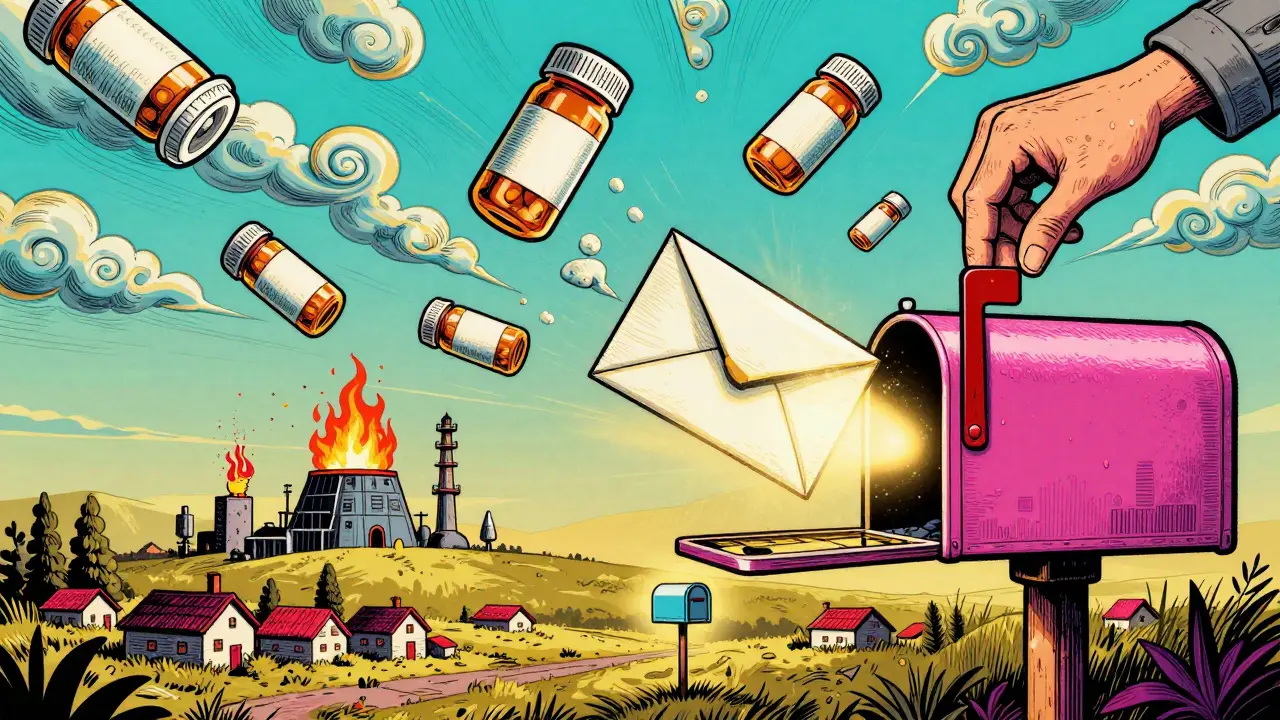
Mail-back programs work like a return label. You get a pre-paid envelope from your pharmacy or local health department, put your meds inside (still in their original bottles or sealed in a bag), and drop it in the mailbox. The envelope goes straight to a licensed facility where everything is incinerated under federal control. No chance of leaking into water supplies or ending up in landfills.
Then there’s the DEA’s National Prescription Drug Take Back Day-held twice a year, in April and October. On those days, hundreds of temporary collection sites pop up in parking lots, community centers, and police stations. In April 2025 alone, over 4,500 sites collected more than 620,000 pounds of medications. That’s the weight of 310 full-size cars. But while these events get attention, they’re not the best long-term solution.
Why Permanent Drop Boxes Beat One-Day Events
Temporary events are great for raising awareness, but they don’t solve the problem. People forget. People are busy. People don’t want to wait for a specific day.
Studies show communities with permanent drop boxes have 25% higher participation rates than those relying only on one-day events. Why? Because convenience wins. If you can drop off your meds while picking up your next prescription, you’re far more likely to do it.
There’s another hidden barrier: law enforcement presence. In places where only police stations host drop-offs, participation drops by 32%. Why? Some people-especially those with past legal issues or distrust of authority-won’t walk into a police station to hand over medicine. That’s why pharmacy-based drop boxes are more effective. In communities with pharmacy drop boxes, participation jumps 41%.
Walgreens alone has over 1,600 permanent drop boxes across 49 states. CVS, Rite Aid, and other major chains are following suit. These aren’t just boxes-they’re public health infrastructure. And they’re growing. Between 2015 and 2022, permanent collection sites increased by 210%.
What You Need to Do Before You Drop Off
It’s simple, but people mess it up. Here’s the right way to prepare your meds:
- Keep medications in their original bottles if possible.
- If the bottle is empty or damaged, transfer pills to a sealed plastic bag or container.
- Remove or scratch out your name, address, and prescription number. Don’t just tear off the label-some information can still be read.
- Don’t mix different drugs together. Keep them separate so staff can sort them properly.
- Leave syringes, needles, and sharps out. Those go in dedicated sharps containers.
That’s it. No need to crush pills, dissolve them, or mix them with coffee grounds-that’s for when you have no other option. And even then, it’s not ideal.
What If There’s No Drop Box Near You?
One in three Americans lives more than five miles from a permanent collection site. That’s a problem-especially in rural areas, where only 42% of the urban density of drop boxes exists. Mail-back programs help, but only 63% of rural communities have access to them.
So what do you do?
If you’re stuck, the FDA gives you a last-resort method:
- Take pills out of their containers.
- Crush tablets or open capsules.
- Mix them with something unappetizing-used coffee grounds, kitty litter, or dirt.
- Put the mixture in a sealed plastic bag.
- Throw it in the trash.
Do NOT flush unless the FDA specifically lists your drug as one of the few that should be flushed. There are only about 15 of them-mostly powerful opioids like fentanyl patches. For everything else, flushing harms rivers, lakes, and drinking water.
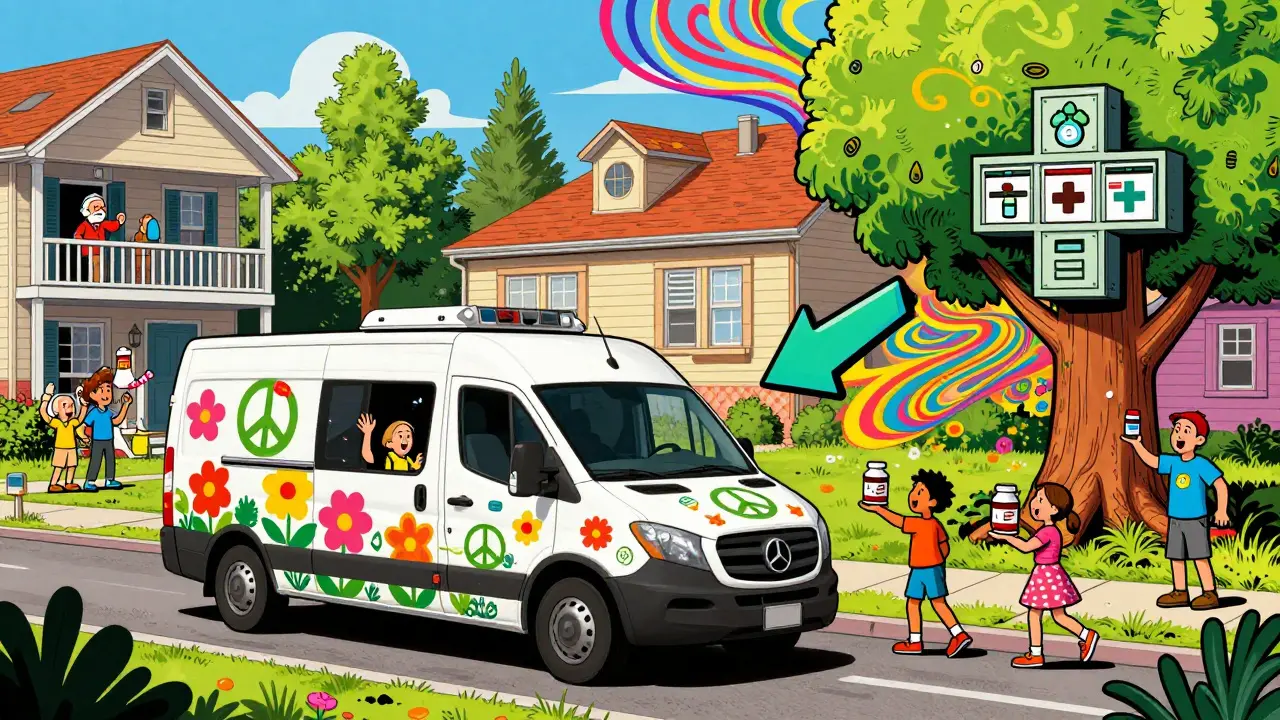
Some places, like Broward County, Florida, are solving this with mobile units. They drive into neighborhoods, schools, and senior centers with collection bins. In those areas, participation jumped 73% compared to fixed drop boxes.
Who Runs These Programs-and Why?
The DEA created the legal framework with the Secure and Responsible Drug Disposal Act of 2010. But they don’t run the boxes. Pharmacies, hospitals, police departments, and even the military do. The Department of Veterans Affairs runs its own program for veterans. The Military Health System has drop boxes on bases nationwide.
Why do they do it? Because it saves lives.
Over 100,000 Americans die each year from drug overdoses. Teenagers are more likely to abuse prescription drugs they find at home than street drugs. In communities with take-back programs, prescription drug misuse among teens drops by 19% within three years.
The EPA says flushing meds pollutes waterways. The FDA says take-back is the only safe way. Dr. Rahul Gupta, Director of the Office of National Drug Control Policy, calls it a key tool in fighting the opioid crisis. It’s not just about cleanliness-it’s about prevention.
The Big Gaps Still Left
Despite progress, the system isn’t perfect. Only 28% of Americans know year-round drop boxes even exist. Many pharmacists say they’re confused about what they’re allowed to accept under DEA rules. Sixty-eight percent report uncertainty about regulations.
Funding is another hurdle. Each permanent drop box costs between $1,200 and $2,500 to install. Annual upkeep runs about $18,500 per site. In 2022, 57% of local programs said funding was their biggest problem.
But change is coming. In 2023, Congress proposed H.R. 4278-a bill that would require Medicare Part D plans to cover the cost of mail-back envelopes. That could make disposal free for 48 million seniors. If passed, it could be the biggest boost to accessibility since the program began.
Long-term, experts say the best solution is to integrate drug disposal into everyday healthcare. Imagine getting a take-back envelope with your prescription refill. Or having a drop box in every clinic. That’s the goal-and it’s not far off.
How to Find a Drop Box Near You
It’s easy. Go to DEA.gov/takebackday and use their search tool. Type in your zip code. It shows every permanent location-pharmacies, hospitals, police stations-within 25 miles.
You can also call your local pharmacy. Most now have signs in the window. If they don’t, ask them to join the program. Demand drives change.
And remember: if you have a loved one with unused meds, help them clean out their cabinet. Don’t wait for Take Back Day. Do it now. Because the next time someone rummages through a medicine cabinet, you don’t want them finding something dangerous.
Aysha Siera
January 17, 2026 AT 15:43Eric Gebeke
January 19, 2026 AT 04:08Joni O
January 19, 2026 AT 15:44Nishant Sonuley
January 21, 2026 AT 09:25Emma #########
January 22, 2026 AT 21:50Andrew McLarren
January 24, 2026 AT 20:42Andrew Short
January 26, 2026 AT 15:11Robert Cassidy
January 27, 2026 AT 16:31Dayanara Villafuerte
January 27, 2026 AT 22:58Andrew Qu
January 28, 2026 AT 01:54Danny Gray
January 28, 2026 AT 21:29Tyler Myers
January 30, 2026 AT 14:17Zoe Brooks
February 1, 2026 AT 00:41