Drug Interactions Discovered Post-Market: What It Means for Patient Safety
 Aug, 29 2026
You take a pill because it was tested, approved, and deemed safe. But what if the danger only shows up after millions of people start taking it? This isn't a hypothetical scenario; it's a statistical reality in modern medicine. Post-market drug interactions are adverse reactions between medications, foods, or health conditions that escape detection during pre-approval clinical trials but emerge once a drug hits the real world. These hidden risks account for nearly 20% of new medications receiving black box warnings after approval, according to recent data from the National Library of Medicine.
The gap between controlled trials and chaotic human biology is where these interactions hide. While pre-market studies identify about 50-60% of common side effects, post-marketing surveillance catches 70-80% of serious adverse events. Why? Because clinical trials are small, short, and selective. Real-world use is massive, long-term, and messy. Understanding this disconnect is crucial for patients, doctors, and anyone who cares about medical safety.
Why Clinical Trials Miss the Mark
Clinical trials are designed to prove efficacy under ideal conditions, not to catch every possible interaction. The typical Phase III trial involves just 1,000 to 5,000 participants. Compare that to the millions who will eventually take the drug, and you see the problem immediately. Rare interactions simply don't have enough sample size to appear statistically significant in a trial.
There’s also the issue of population diversity. Trials often exclude children, the elderly, pregnant women, and people with multiple chronic conditions. Yet, these are exactly the groups most likely to experience complex drug interactions. A 2021 FDA analysis highlighted that narrow demographic representation prevents the detection of many risks that only manifest in specific subgroups. For instance, an interaction might be harmless in a healthy 30-year-old but dangerous for a 70-year-old on five other medications.
Duration is another critical factor. Most trials last 6 to 12 months. But some interactions develop slowly over years of chronic use. The valvular heart disease risk associated with benfluorex (sold as Mediator) wasn't detected until after 5 million patients had used the drug over 30 years. By then, it was too late for many. This delay in recognition is the primary disadvantage of post-market detection, but it’s also the only way to catch these slow-burn risks.
The Three Types of Hidden Risks
When we talk about post-market interactions, we’re usually discussing three specific categories defined by industry standards like GoodRx:
- Drug-drug interactions: One medication alters how another works. This is the most common type, often involving enzyme pathways in the liver.
- Drug-condition interactions: A patient’s existing health condition affects how a drug works, or the drug worsens the condition. For example, beta-blockers can mask symptoms of low blood sugar in diabetics.
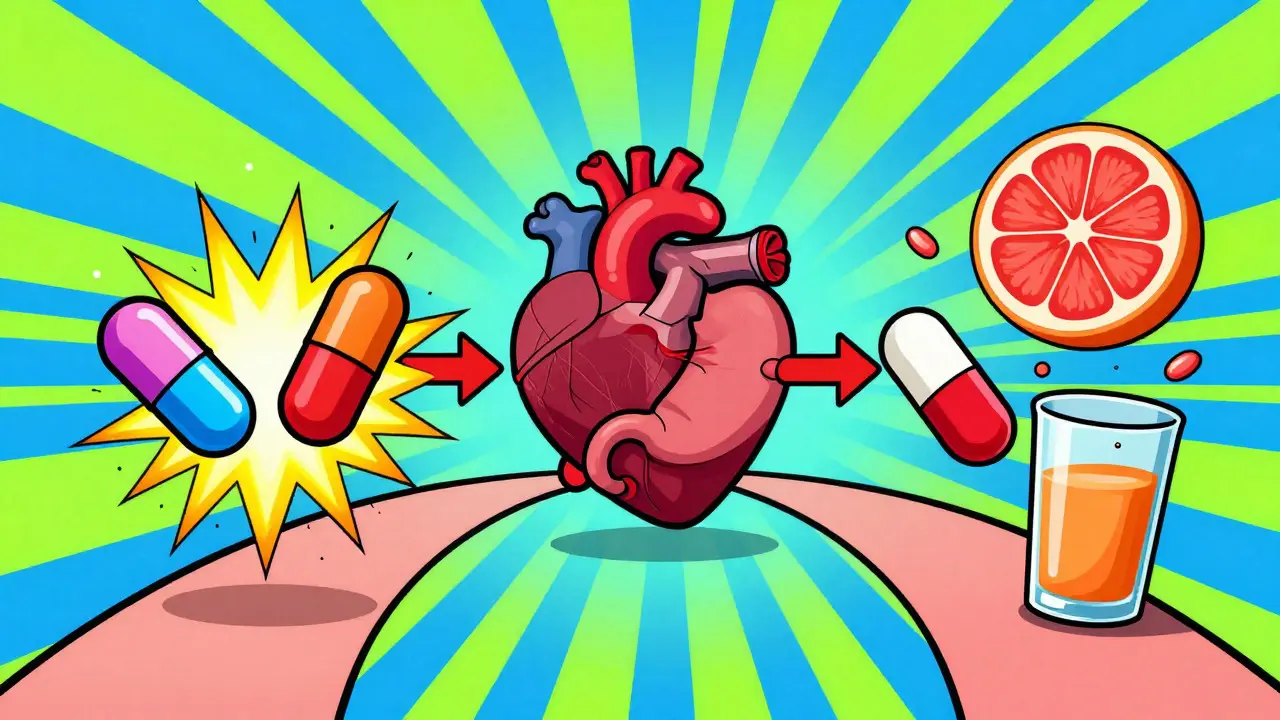
- Drug-food interactions: Food or beverages change how a drug is metabolized. Grapefruit juice is the classic culprit here, blocking enzymes that break down certain statins.
A prime example of a drug-drug interaction involves fluconazole (Diflucan) and simvastatin (Zocor). Fluconazole inhibits CYP3A4 enzymes in the liver, which are responsible for breaking down simvastatin. When taken together, simvastatin blood levels can spike by 3 to 10 times, significantly raising the risk of rhabdomyolysis-a severe muscle breakdown that can damage kidneys. This mechanism is well-understood now, but it wasn't always obvious in early labeling.
| Feature | Pre-Market Clinical Trials | Post-Market Surveillance |
|---|---|---|
| Sample Size | 1,000-5,000 participants | Millions of users |
| Duration | 6-12 months typically | Lifetime of the product |
| Population | Selective, healthy volunteers | Diverse, comorbid patients |
| Detection Rate (Serious ADRs) | ~50-60% | ~70-80% |
| Cost of Errors | Delayed launch | Recalls, lawsuits, patient harm |
How We Catch Them: The Surveillance Machinery
Once a drug is approved, the real work begins. In the United States, the FDA Adverse Event Reporting System (FAERS) serves as the central database for voluntary reports from healthcare providers and consumers. Launched in its current form in 2012, FAERS replaced the older AERS system and has become a vital tool for spotting safety signals.
But voluntary reporting has a huge flaw: underreporting. Experts estimate that 90-95% of actual adverse events go unreported. To counter this, the FDA launched the Sentinel Initiative in 2008. Unlike passive reporting, Sentinel actively monitors electronic health records from 18 data partners covering more than 300 million patients. This active surveillance allows regulators to test hypotheses quickly rather than waiting for someone to file a complaint.
Europe uses a similar system called EudraVigilance, managed by the European Medicines Agency (EMA). Since its 2017 upgrade, it has utilized AI pattern recognition to analyze 2.1 million annual reports. These systems are complementary. While FAERS relies heavily on spontaneous reports, Sentinel provides structured, longitudinal data that can confirm or refute potential signals found in the noise of voluntary reports.
Real-World Consequences and Economic Impact
These aren't just bureaucratic exercises; they save lives and money. A 2006 Institute of Medicine report estimated that adverse drug events cost the U.S. healthcare system $3.5 billion annually. Interaction-related events make up about 30% of that total, roughly $1.05 billion per year. When a drug interaction leads to hospitalization, the costs skyrocket. Retrospective chart reviews suggest that 15-20% of hospital admissions involve adverse drug events related to interactions.
Consider the case of terfenadine (Seldane), an antihistamine withdrawn from the market after it was discovered that concomitant use with ketoconazole caused fatal arrhythmias. Or look at pergolide, a Parkinson’s drug linked to cardiac valvulopathy, which was withdrawn in 2007 after approximately 1 million patient-years of use revealed the risk. Each withdrawal represents a failure of initial testing but a success of post-market vigilance.
For patients, the stakes are personal. Reddit discussions in pharmacy communities frequently highlight near-misses. One user reported ending up in the ER with kidney damage from rhabdomyolysis after combining simvastatin with an antifungal without warning. Another verified purchaser noted that an interaction checker prevented them from taking ciprofloxacin with blood pressure meds, avoiding dangerous QT prolongation. These anecdotes underscore why accessible information matters.
The Future: AI and Genomics in Pharmacovigilance
We are entering a new era of drug safety monitoring. In January 2023, the FDA approved the first AI-powered pharmacovigilance platform from Oracle Health Sciences. This technology processes 10,000 adverse event reports daily with 92.7% accuracy, drastically reducing the time needed to detect signals. Previously, signal detection could take 18 months; now, pilot studies show it can happen in 45 days.
Genomics is also playing a larger role. The NIH’s Pharmacogenomics Research Network-2 (PGRN-2) analyzes genetic factors in over 15,000 drug interaction cases. Some people metabolize drugs faster or slower due to genetic variations. As these tests become cheaper, we may move toward personalized prescribing, where your DNA helps predict which interactions you’re prone to before you even swallow the first pill.
Regulatory requirements are tightening, too. The FDA’s 2022 Drug Safety Enhancement Plan mandates real-world evidence generation for 100% of novel oncology drugs within 24 months of approval. Companies can no longer rely solely on pre-market data. They must prove safety in diverse populations continuously. This shift places a heavier burden on pharmaceutical companies but promises safer medications for everyone.
What This Means for You
If you take multiple medications, assume there are unknown variables. Your doctor and pharmacist are your first line of defense, but they can’t know everything instantly. Here’s how to navigate the landscape:
- Ask specifically about food interactions. Don’t just ask about other drugs. Ask if grapefruit, alcohol, or high-fiber meals affect your medication.
- Use digital tools wisely. Apps like GoodRx or WebMD offer interaction checkers, but treat their warnings as prompts to talk to your pharmacist, not absolute verdicts.
- Report side effects. If something feels off, report it to the FDA via MedWatch. Even if it seems minor, your report contributes to the data pool that helps future patients.
- Review your med list regularly. Bring all bottles, including supplements and vitamins, to every appointment. St. John’s Wort, for example, interacts with apixaban (Eliquis), increasing bleeding risk, yet it’s often overlooked because it’s considered "natural."
The life of a drug truly starts post-marketing. Dr. Peter Waldron, a clinical pharmacologist, emphasized this point in NIH lectures, noting that 33% of new drugs experience major safety events after approval. This statistic shouldn’t scare you away from medication; it should empower you to stay informed. Safety isn’t a one-time stamp of approval-it’s an ongoing process.
Why do drug interactions appear after approval?
Clinical trials are limited by small sample sizes (1,000-5,000 people), short durations (6-12 months), and selective demographics. Post-market surveillance monitors millions of diverse patients over years, revealing rare or long-term interactions that trials miss.
What is the difference between FAERS and Sentinel?
FAERS is a passive database relying on voluntary reports from doctors and patients. Sentinel is an active surveillance system that directly queries electronic health records from 300+ million patients, allowing for proactive hypothesis testing and confirmation of safety signals.
How common are serious post-market safety issues?
According to FDA data, nearly one-third of new drugs approved over a 10-year period had at least one major regulatory safety event, such as a withdrawal, new boxed warning, or safety communication.
Can I prevent drug interactions myself?
You can reduce risk by maintaining a complete list of all substances you consume (prescriptions, OTC drugs, supplements, foods) and sharing it with every healthcare provider. However, some interactions are rare and unpredictable, so staying alert to new symptoms is key.
Are herbal supplements safe from interactions?
No. Herbal supplements contain active compounds that interact with prescription drugs. St. John’s Wort, for example, induces liver enzymes that can lower the effectiveness of birth control pills and anticoagulants like warfarin.
Vivek Chaturvedi
August 31, 2026 AT 06:16pharma companies are greedy bastards who test on healthy people then sell to sick ones and act surprised when things go wrong
its a moral failure not just a scientific gap
Lolo Del
August 31, 2026 AT 23:02Hey Vivek, I get the frustration but calling them all greedy ignores the complexity of biology. We literally cannot test every genetic variation in phase 3 trials. It's not malice it's math. You have to balance speed of access with safety depth. Sometimes the tradeoff is worth it for life saving drugs.
Sarah Kinch
September 2, 2026 AT 02:41ugh another long winded post about stuff we already know. i took my meds fine last week so im good. dont overthink it.
fred eden
September 2, 2026 AT 20:59I felt this in my soul 🥺 especially the part about elderly folks being excluded from trials. My grandpa had such a rough time because his doctor didn't realize the interaction until he was hospitalized 😭 It really breaks my heart to think that more diverse testing could have saved him that pain. We need to do better by our elders 💔🙏
Stephen Horn
September 2, 2026 AT 21:58The narrative presented here is deceptively simple. One must consider the geopolitical implications of FDA approval timelines which are often driven by corporate lobbying rather than pure science. The 'gap' mentioned is not an accident but a feature of a system designed to maximize shareholder value before patient safety. Notice how the AI solutions proposed are also owned by massive tech conglomerates? This is not progress; it is consolidation of power under the guise of innovation. We are merely shifting the burden of surveillance from public health institutions to private data brokers who will monetize our adverse events.
Venkatesan V.K.
September 3, 2026 AT 05:26lazy analysis.
the article fails to address the financial incentives for reporting bias. doctors are busy and underpaid so they don't report unless sued. this isn't new news it's old news repackaged with pretty tables.
Pearl Richardson
September 4, 2026 AT 23:29The underreporting statistic of 90-95% is suspiciously convenient for the industry 🤨 If they actually wanted to catch these interactions they would mandate automatic EHR integration for ALL prescriptions not just voluntary reports. Something is being hidden in plain sight regarding the true number of deaths related to these 'rare' events. We are being experimented on and told to be grateful for the 'surveillance machinery' 🕵️♀️💀
larry williams
September 5, 2026 AT 23:12I appreciate the detailed breakdown provided in this discussion as it highlights a critical area where modern medicine faces significant challenges yet remains resilient in its pursuit of better outcomes for patients globally. While the statistics regarding adverse drug events can indeed seem daunting and perhaps overwhelming for the average individual trying to navigate their healthcare journey it is important to remember that the systems in place such as FAERS and Sentinel are continuously evolving to become more robust and responsive to emerging patterns in real world data usage. We should view these discoveries not as failures of the medical establishment but as opportunities for collective learning and improvement where each reported side effect contributes valuable data points that help refine prescribing guidelines for future generations ensuring that safety protocols become increasingly precise and personalized over time through rigorous ongoing monitoring and adaptive regulatory frameworks.
Gurjit Singh
September 7, 2026 AT 09:08It is unethical to release drugs without long term human data on diverse populations. We treat humans like guinea pigs and call it progress. Shameful.
hareesh kumar
September 9, 2026 AT 02:35Wait wait wait hold on a second here because if you look closely at the timeline of benfluorex or mediator which was sold for thirty years and used by five million people does anyone else find it absolutely insane that it took three decades to figure out it causes valve damage?? Like seriously?? Did no one notice patients dying?? Or were they too busy counting profits to count pulse rates?? And now they want us to trust AI?? An algorithm written by people who profit from selling the pills?? This whole thing feels like a giant cover up disguised as science where they let the market run wild until lawsuits force them to pull the plug and then they pat themselves on the back for 'vigilance' while ignoring the fact that thousands died in the meantime!! Its drama its tragedy and its completely avoidable negligence masked by bureaucratic jargon!!!
Eryn Manchego
September 10, 2026 AT 11:59love the vibe of this deep dive into pharmacovigilance tbh. its kinda scary but also empowering to know we have tools like sentinel now. knowledge is power fam. stay safe out there with your grapefruit juice though lol
Crystal Torres
September 11, 2026 AT 08:53The transition to active surveillance via electronic health records represents a paradigm shift in how we understand population health dynamics. By moving away from passive reporting mechanisms we enable proactive identification of safety signals which allows for earlier intervention strategies. This approach not only enhances patient safety but also provides researchers with rich longitudinal datasets that can inform personalized medicine initiatives. It is imperative that healthcare providers remain vigilant and utilize these digital tools effectively to ensure optimal therapeutic outcomes for diverse patient demographics.
Patrick van der Velde
September 12, 2026 AT 13:31While the sentiment is appreciated, the reliance on anecdotal evidence from Reddit users to validate systemic issues is intellectually lazy. Furthermore, suggesting that 'digital tools' are sufficient for the layperson demonstrates a profound misunderstanding of medical literacy. Most individuals lack the cognitive framework to interpret interaction warnings correctly leading to either unnecessary anxiety or dangerous complacency. True safety requires professional oversight not app notifications.
Tobi Oyewole
September 13, 2026 AT 11:44I respectfully disagree with the notion that this is purely a failure of ethics or conspiracy. It is a complex philosophical dilemma involving the limits of human knowledge versus the urgency of human suffering. We must respect the boundary between what we know and what we hope to learn. The system is imperfect yes but it is functioning within its constraints. To dismiss it entirely is to ignore the millions who benefit from timely access to medication. Let us seek balance rather than blame.