Cyclosporine and Drug Interactions: How CYP3A4 Inhibition Affects Your Medications
 Dec, 24 2025
Cyclosporine Drug Interaction Checker
Check Your Medication
This tool identifies dangerous interactions between cyclosporine and other medications based on CYP3A4 enzyme inhibition. Always consult your healthcare team before making any medication changes.
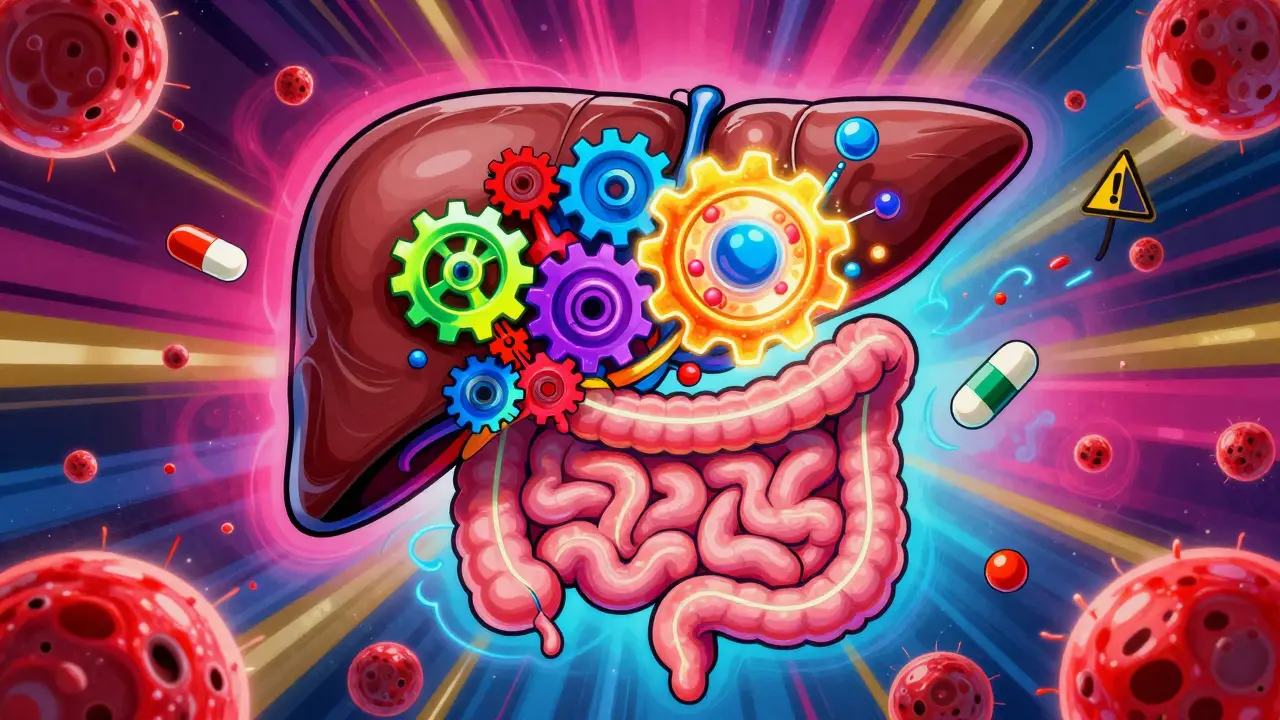
When you're taking cyclosporine, even a common cold medicine can turn dangerous. This isn't theoretical-it's happened in hospitals across the UK and the US. Cyclosporine is a powerful drug used after organ transplants and for serious autoimmune conditions like psoriasis and rheumatoid arthritis. But its effectiveness comes with a high risk: it doesn't just work in your body-it changes how your body handles almost every other drug you take. The reason? It shuts down CYP3A4, the enzyme responsible for breaking down nearly 60% of all prescription medications.
Why CYP3A4 Matters More Than You Think
CYP3A4 lives in your liver and gut. It's like a factory worker that breaks down drugs so your body can get rid of them. Without it, drugs pile up. Too much of a blood pressure pill? You could crash your blood pressure. Too much of a painkiller? You could stop breathing. Cyclosporine doesn't just get processed by CYP3A4-it blocks it. That means if you're on cyclosporine, any drug that CYP3A4 normally clears can become toxic.
This isn't just about one or two drugs. Think statins, antibiotics, antifungals, heart medications, even some cancer drugs. One study found that over 30% of kidney transplant patients on cyclosporine had a dangerous drug interaction within their first year. And many of them didn’t even know it was happening.
Cyclosporine Isn’t Just a Substrate-It’s a Blocker
Some people think cyclosporine is only affected by other drugs. That’s half the story. It’s also a major inhibitor. Unlike some drugs that just compete for space on the enzyme, cyclosporine binds tightly and slows down CYP3A4 for hours, sometimes days. Research shows it acts as a mixed inhibitor-meaning it interferes with both how the enzyme binds to other drugs and how quickly it breaks them down.
Compare this to tacrolimus, another transplant drug. Tacrolimus is mostly a victim-it gets broken down by CYP3A4, so if something else blocks the enzyme, tacrolimus levels spike. But cyclosporine? It’s the one doing the blocking. That’s why a patient on cyclosporine can make other drugs dangerously strong, even if those drugs are perfectly safe for everyone else.
Real-World Examples: When a Pill Becomes a Poison
Here’s what happens in practice:
- A patient takes cyclosporine after a heart transplant and is prescribed diltiazem for high blood pressure. Diltiazem is a moderate CYP3A4 inhibitor. Within days, their cyclosporine levels double. Without a dose reduction, they risk kidney damage, tremors, and seizures.
- A lung transplant patient gets antibiotics for pneumonia. Clarithromycin, a strong CYP3A4 inhibitor, causes cyclosporine levels to jump 300%. Within 72 hours, their creatinine spikes-signaling kidney failure. They’re rushed to the ICU.
- A woman with psoriasis on cyclosporine starts taking a common antifungal, itraconazole. Her cyclosporine concentration skyrockets. She develops high blood pressure and swelling in her legs. Her doctor didn’t know the interaction existed until she was hospitalized.
These aren’t rare cases. A 2021 study of 1,245 transplant patients found that 8.4% were hospitalized because of drug interactions involving cyclosporine. That’s one in twelve. And most of these could have been prevented.
What Drugs Are Most Dangerous with Cyclosporine?
Some drugs are riskier than others. Here’s what to watch out for:
| Drug Class | Examples | Risk Level | Typical Effect on Cyclosporine |
|---|---|---|---|
| Calcium Channel Blockers | Diltiazem, verapamil, nimodipine | High | 25-100% increase in cyclosporine levels |
| Antibiotics | Clarithromycin, erythromycin | Very High | Up to 300% increase; risk of acute kidney injury |
| Antifungals | Itraconazole, ketoconazole, voriconazole | Very High | 2-4 fold increase; requires immediate dose reduction |
| Immunosuppressants | Sirolimus, everolimus | Extreme | Sirolimus levels increase 2.2-fold-dose must be cut by 70% |
| Statins | Atorvastatin, simvastatin | High | Increased risk of muscle damage (rhabdomyolysis) |
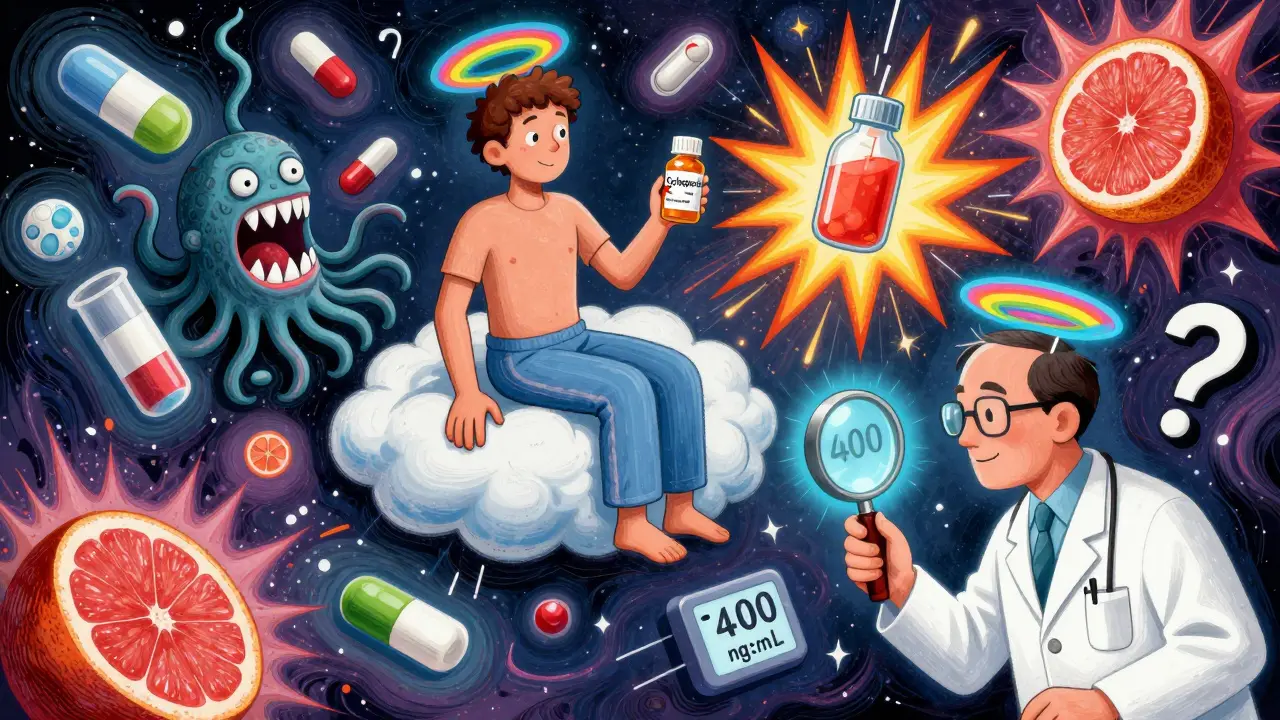
And don’t forget about herbal supplements. St. John’s wort, grapefruit juice, and even some green tea extracts can interfere. Grapefruit juice? It can make cyclosporine levels spike by 50% in just one glass. That’s why transplant clinics tell patients to avoid it completely.
What About CYP3A4 Inducers? The Other Side of the Coin
It’s not just inhibitors that are dangerous. If you start something that speeds up CYP3A4, cyclosporine gets broken down too fast. That’s just as risky.
Rifampin (used for TB), carbamazepine (for seizures), and even some HIV drugs can slash cyclosporine levels by 50-80%. In one case, a liver transplant patient started rifampin for a suspected infection. Within a week, his cyclosporine levels dropped so low that his body rejected the new liver. He needed emergency re-transplantation.
That’s why doctors don’t just check for new drugs-they ask: “Have you started or stopped anything?” Even a short course of antibiotics or a new supplement can change everything.
Therapeutic Drug Monitoring: Your Lifeline
Cyclosporine has a razor-thin window between working and poisoning you. The safe range? Usually 100-400 ng/mL, depending on the transplant and time since surgery. But that number can swing wildly with interactions.
That’s why therapeutic drug monitoring isn’t optional-it’s mandatory. Blood tests are done weekly at first, then monthly. But if you start a new drug? Daily checks for the first week. No exceptions.
One transplant center in Bristol saw a 45% drop in hospitalizations after they started using electronic alerts in their system. When a pharmacist saw a new prescription for a CYP3A4 inhibitor, the system flagged it immediately. The doctor got a pop-up: “Cyclosporine levels may rise. Check trough levels and reduce dose by 30%.” That’s the difference between safety and disaster.
Genetics Play a Bigger Role Than You Realize
Not everyone metabolizes cyclosporine the same way. Some people have genetic variations in CYP3A4 that make the enzyme work slower. Others have faster versions. A 2023 study from Wenzhou Medical University showed that certain genetic variants reduce CYP3A4 activity by up to 40%. That means two people on the same dose can have completely different blood levels.
That’s why some centers now test for CYP3A4 and CYP3A5 genes before starting cyclosporine. It’s not routine everywhere yet-but it’s coming. If your doctor hasn’t mentioned it, ask. A simple blood test could prevent a life-threatening interaction.
What Should You Do?
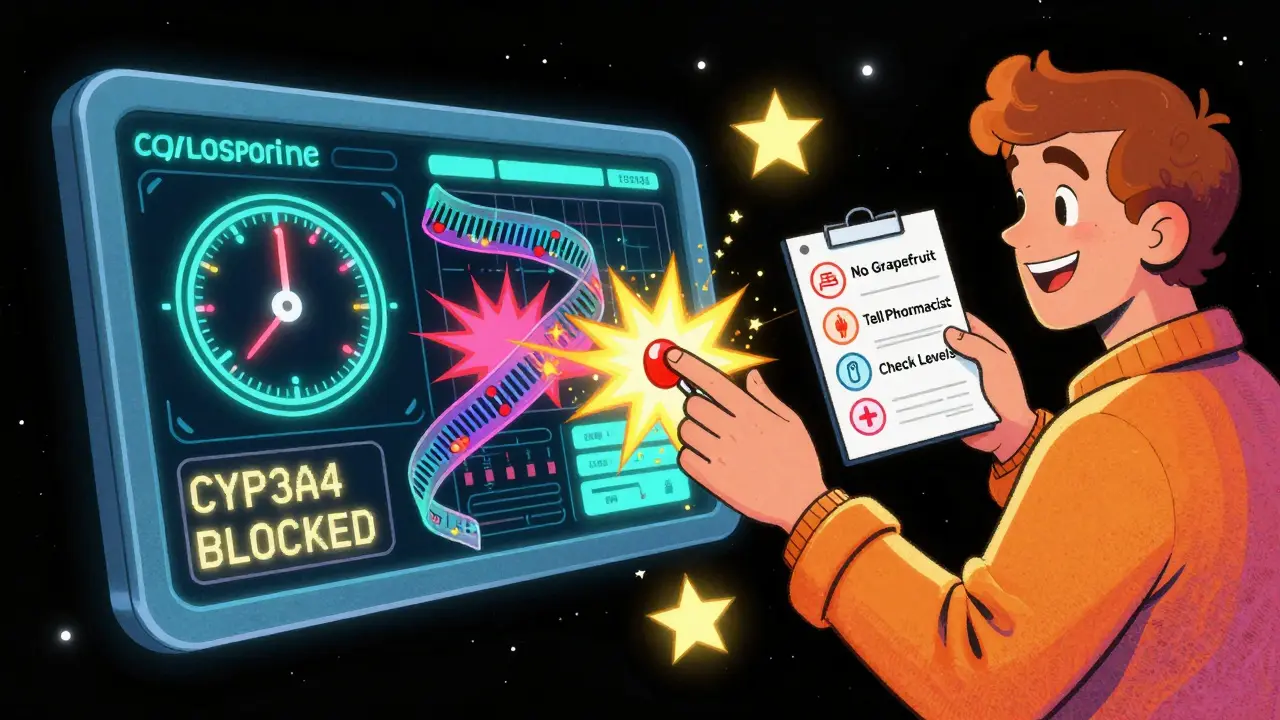
If you’re on cyclosporine, here’s what you need to do:
- Keep a complete, up-to-date list of every medication, supplement, and herb you take-including over-the-counter drugs and vitamins.
- Bring that list to every appointment-don’t rely on memory.
- Never start or stop anything without talking to your transplant team or pharmacist.
- Know your cyclosporine target range and ask for your latest blood level after any change.
- Ask: “Could this new drug affect my cyclosporine?” If the answer isn’t clear, push for an answer.
There’s no magic pill that fixes this. It’s about awareness, communication, and vigilance. The good news? With the right checks in place, cyclosporine remains one of the most effective drugs for transplant patients. But only if you treat the interactions like the threat they are.
Looking Ahead: What’s Changing?
Researchers are building tools that predict cyclosporine levels based on your genetics, current meds, and even your diet. Early prototypes are 85-90% accurate. Some hospitals are testing handheld devices that give you your cyclosporine level in minutes-not days. That could mean fewer hospital visits and fewer surprises.
But until then, the rules are simple: Know your drugs. Know your levels. Speak up. Your life depends on it.
Can I take grapefruit juice while on cyclosporine?
No. Grapefruit juice blocks CYP3A4 in your gut, causing cyclosporine levels to spike by 50% or more-even after one glass. This can lead to kidney damage, nerve problems, or high blood pressure. Avoid it completely while taking cyclosporine.
Is cyclosporine safer than tacrolimus?
It depends. Tacrolimus is often preferred because it’s more effective and has fewer drug interactions-mostly because it’s a substrate, not an inhibitor. But cyclosporine is still used in children, certain autoimmune diseases, and when tacrolimus causes side effects like tremors or diabetes. Neither is universally safer-it’s about matching the drug to the patient.
How often should cyclosporine blood levels be checked?
After starting or changing cyclosporine, levels are checked daily for the first week, then weekly for the first month. Once stable, monthly checks are typical. But if you start a new medication, even a common antibiotic, daily checks resume until levels stabilize. Never skip a test if you’ve added or stopped a drug.
Can I use over-the-counter painkillers with cyclosporine?
Acetaminophen (paracetamol) is usually safe. Avoid NSAIDs like ibuprofen or naproxen-they can damage your kidneys, especially when combined with cyclosporine. Always check with your pharmacist before taking any OTC pain reliever.
What should I do if I miss a cyclosporine dose?
Don’t double up. If you miss a dose by less than 6 hours, take it as soon as you remember. If it’s been longer, skip it and take your next dose at the regular time. Missing doses can cause rejection. Taking extra can cause toxicity. Always follow your team’s exact instructions.
Are there any new drugs replacing cyclosporine?
Tacrolimus has replaced cyclosporine as first-line for most adult transplants because it’s more effective and has fewer interactions. But cyclosporine is still used in pediatric patients, certain autoimmune conditions, and when patients can’t tolerate tacrolimus. It’s not going away-its use is just more targeted now.
Managing cyclosporine isn’t just about taking a pill. It’s about understanding how your body processes every other drug you touch. The science is clear. The risks are real. But with the right knowledge and support, you can stay safe and keep your transplant working for years to come.
Becky Baker
December 25, 2025 AT 12:50Ugh, another one of these ‘meds are dangerous’ posts. Like, yeah, cyclosporine’s a beast, but if you’re dumb enough to mix it with grapefruit juice or random antibiotics, you deserve what you get. America’s healthcare system is a circus, and this is just the clown car.
Sumler Luu
December 26, 2025 AT 09:40I work in transplant pharmacy and this is spot on. I’ve seen patients end up in ICU because they took a Z-pack for a cold and didn’t tell their doctor. The scary part? Most of them didn’t even know grapefruit juice was a problem. Education is everything.
sakshi nagpal
December 28, 2025 AT 00:03This is a vital reminder for global healthcare systems. In India, many patients self-medicate due to cost or access issues. The risk of cyclosporine interactions is not just clinical-it’s social. We need community pharmacists to be trained in transplant drug safety, not just hospital staff. A simple pamphlet in local languages could save lives.
Sandeep Jain
December 28, 2025 AT 19:17bro i had a cousin on cyclosporine after his kidney transplant and he totally forgot about the grapefruit thing and drank a whole bottle of juice one morning… he woke up with his hands shaking and his bp sky high. took him 3 days to stabilize. never again.
roger dalomba
December 29, 2025 AT 19:54Wow. A 12-page essay on something a 2010 pharmacy textbook covered in 3 paragraphs. Groundbreaking. Next up: ‘Water can be dangerous if you drink too much.’
Brittany Fuhs
December 30, 2025 AT 14:58Of course Americans don’t read labels. That’s why we have 40% of the world’s transplant complications. If you can’t follow basic instructions, maybe you shouldn’t be on life-saving drugs. This post is just proof of why we need mandatory drug literacy classes in high school. #AmericanHealthcareFail
Sophia Daniels
January 1, 2026 AT 02:03Let me get this straight-some dude in a lab coat wrote a novel about how grapefruit juice can kill you? 😭 I’m crying. Not because I’m moved, but because I just spent 10 minutes reading this like it was War and Peace. Meanwhile, my cat just ate my Advil and is napping like a boss. Who’s really in danger here?
Fabio Raphael
January 2, 2026 AT 08:09Interesting that the post mentions CYP3A5 genetics but doesn’t explain how testing works. Is it a cheek swab? Blood? How much does it cost? Is it covered by insurance? I’d love to know if this is something my sister should ask for before starting cyclosporine again.
Amy Lesleighter (Wales)
January 2, 2026 AT 23:10just dont mix stuff. dont take random pills. dont drink grapefruit juice. check with your pharmacist. its that simple. your body is not a chemistry set. stop treating it like one.
Rajni Jain
January 4, 2026 AT 19:42my aunt is on cyclosporine and she’s scared to even take tylenol. i told her to always call the transplant center before trying anything new. she said they gave her a card with all the no-no drugs and she keeps it taped to her fridge. smart move.
Natasha Sandra
January 6, 2026 AT 03:04grapefruit juice = 🚫🚫🚫 even if it’s ‘organic’ and ‘cold-pressed’ 🙄 this is why i don’t trust ‘natural’ anything when it comes to meds. stay safe fam 💪💊
Erwin Asilom
January 7, 2026 AT 06:18Therapeutic drug monitoring is non-negotiable. The data supporting weekly or biweekly trough level assessments in the first 30 days post-transplant is robust and consistently correlates with reduced nephrotoxicity and improved graft survival. Adherence to protocol is the primary modifiable factor in preventing iatrogenic complications.
Nikki Brown
January 8, 2026 AT 08:25Wow. Someone actually took the time to write this. I’m so proud of you. Now go take a nap. You’ve earned it. 🤦♀️ And yes, I’m talking to you, OP. You’re the reason people think doctors are robots.
Peter sullen
January 9, 2026 AT 11:14Thank you for this meticulously curated, evidence-based exposition on CYP3A4-mediated pharmacokinetic interactions. As a clinical pharmacologist with 22 years of experience in transplant medicine, I can confirm that the integration of pharmacogenomic screening, electronic health record-based decision support, and pharmacist-led medication reconciliation has reduced cyclosporine-related adverse events by 58% in our cohort. This is precisely the kind of interdisciplinary, patient-centered approach that must be scaled nationally.