Counterfeit Medications: Warning Signs and How to Protect Yourself
 Jan, 16 2026
Every year, over 1 million people die from counterfeit medications worldwide. These aren’t just bad drugs-they’re dangerous fakes designed to look exactly like the real thing. You might think it can’t happen to you, but counterfeit pills are flooding the market, especially online. They’re hiding in plain sight, packaged like your usual prescription, sold at suspiciously low prices, and shipped from websites that look legitimate. The truth? You don’t need to be buying from shady underground sites to be at risk. Even trusted-looking online pharmacies can be fronts for criminal networks. Knowing what to look for could save your life-or someone you love.
What Exactly Is a Counterfeit Medication?
A counterfeit medication isn’t just a cheap copy. It’s a deliberate fraud. These products are made to look identical to real prescriptions, but they might contain the wrong active ingredient, too little or too much of the right one, or even toxic substances like fentanyl, rat poison, or paint thinner. The World Health Organization distinguishes between substandard drugs (poorly made due to negligence) and falsified ones (intentionally fake). Counterfeit drugs fall into the latter category-they’re manufactured with criminal intent.They’re not just for street drugs anymore. Fake versions of popular medications like Ozempic®, Mounjaro®, Xanax®, and OxyContin® are now common. In 2024, the FDA issued alerts about counterfeit injectable weight-loss drugs circulating in North America and Europe. These aren’t lab experiments-they’re mass-produced in unregulated factories, often overseas, and shipped directly to consumers through social media ads or fake pharmacy websites.
7 Clear Warning Signs of Fake Pills or Medications
You don’t need a lab to spot red flags. Here are the most common signs that what you’re holding might be counterfeit:- Packaging looks off-Spelling errors, blurry logos, mismatched fonts, or labels that look printed on cheap paper are major red flags. Legitimate drug packaging uses high-quality materials and precise printing.
- Pills look different-If your usual white oval pill suddenly looks smaller, rounder, or has a different color or marking, don’t take it. Even slight changes in shape, texture, or imprint can mean it’s fake.
- No lot number or expiration date-Every legitimate medication package includes a batch or lot number and an expiration date. If it’s missing, walk away.
- Unusual taste, smell, or texture-Pills that taste bitter, metallic, or chalky, or that crumble easily, are warning signs. Real pharmaceuticals have consistent manufacturing standards.
- Too good to be true pricing-If a 30-day supply of Ozempic® is being sold for $20 instead of $1,000, it’s not a deal. It’s a trap. Counterfeiters lure buyers with massive discounts.
- Buying from an online pharmacy without a prescription-Any website that sells prescription drugs without requiring a valid prescription is illegal and dangerous. The FDA warns these sites are often fronts for counterfeit operations.
- New or unusual side effects-If you’ve taken your medication before and suddenly feel dizzy, nauseous, or experience chest pain, stop taking it immediately. It could be a fake.
Even small details matter. Check the sealing tape on the box-counterfeiters often reuse old containers or use cheap tape that doesn’t match the original. Look at the label’s thickness and texture. Real labels are often slightly raised from the packaging, with ink that doesn’t smudge. Fake ones feel flimsy and look like they were printed on a home printer.
Where Are These Fake Drugs Coming From?
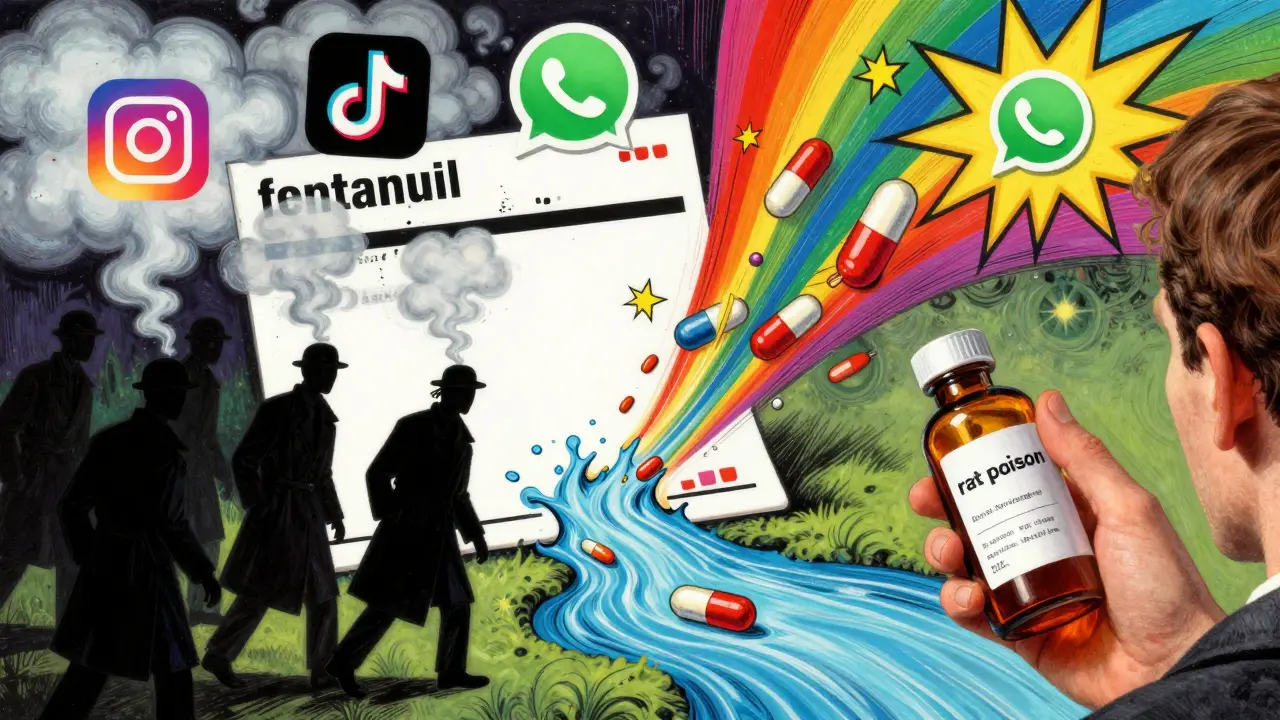
Counterfeit medications aren’t just showing up on dark web marketplaces. They’re being sold on Instagram, Facebook, and TikTok. Criminal networks use encrypted apps like WhatsApp and Telegram to connect with buyers. They post photos of real pills, claim they’re “pharmaceutical-grade,” and ship them in plain envelopes to avoid detection.Many fake drugs originate from labs in China, India, and Eastern Europe, where manufacturing standards are lax or nonexistent. Once produced, they’re shipped globally through complex supply chains. Some are mixed in with legitimate shipments. Others are sent directly to consumers via international mail, bypassing customs inspections.
In 2023, the National Association of Boards of Pharmacy (NABP) identified over 10,000 websites selling illegal GLP-1 agonists like Mounjaro® and Zepbound®. These sites mimic real pharmacy logos, use fake customer reviews, and even have live chat support. But none are licensed. And none are safe.
How to Buy Medications Safely
The best way to avoid counterfeit drugs is to control where you get them.- Only use licensed pharmacies-In the U.S., make sure your pharmacy is licensed by your state’s board of pharmacy. In the UK, check the General Pharmaceutical Council (GPhC) register. You can search online to verify their license.
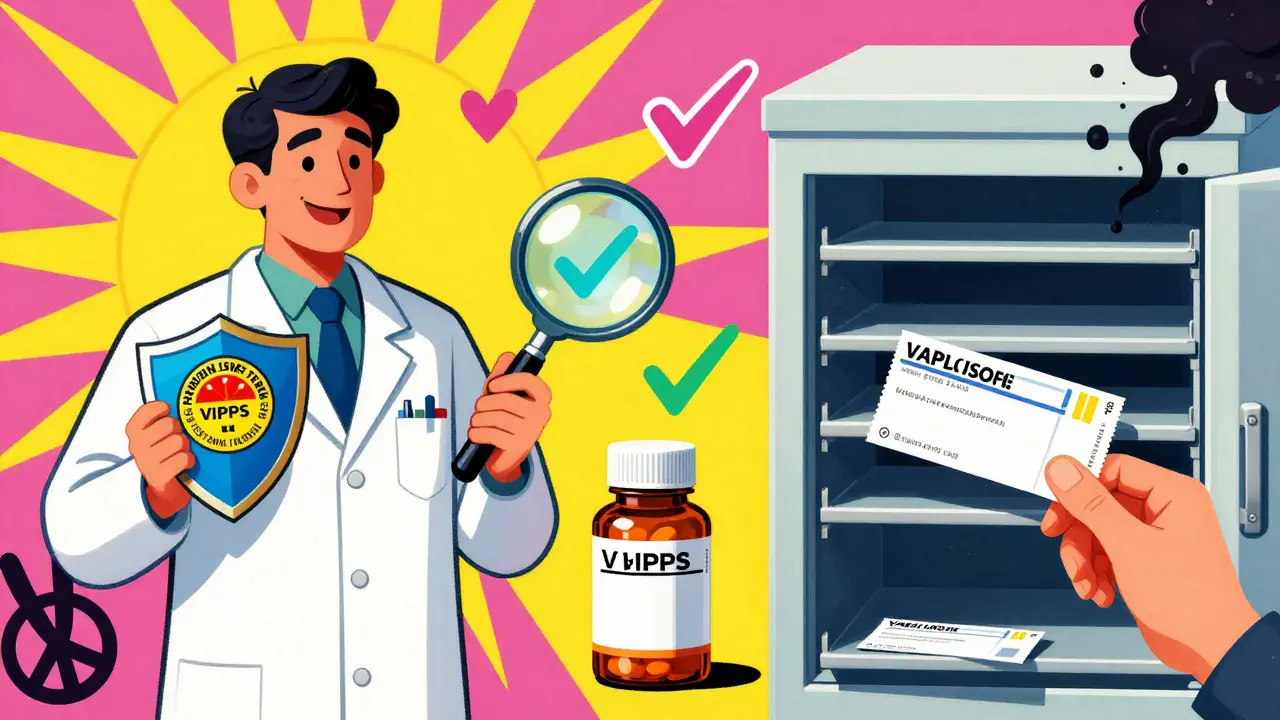
- Use VIPPS-certified online pharmacies-The Verified Internet Pharmacy Practice Sites (VIPPS) program, run by NABP, approves only legitimate online pharmacies. Look for the VIPPS seal on the website.
- Never buy without a prescription-If a site offers pills without asking for your doctor’s prescription, it’s illegal. Period.
- Ask your pharmacist-If your medication looks different, ask your pharmacist to confirm it’s the same as before. They have access to manufacturer data and can spot fakes.
- Don’t share or accept pills from others-Pills from friends, family, or strangers are never safe. Even if they say it’s the same as yours, the dosage or ingredients could be different.
Pharmaceutical companies like Pfizer and Eli Lilly track counterfeit reports. If you suspect a fake, call the manufacturer’s hotline. They can check the lot number and tell you if it’s real. Some companies even have apps that let you scan the packaging to verify authenticity.
What to Do If You Think You Have a Counterfeit Drug
If you suspect your medication is fake:- Stop taking it immediately.
- Save the packaging and pills. Don’t throw them away. You’ll need them for reporting.
- Contact your pharmacist. They can help confirm the issue and report it to authorities.
- Report it to the FDA (U.S.) or MHRA (UK). In the U.S., use the FDA’s MedWatch program. In the UK, report to the Medicines and Healthcare products Regulatory Agency (MHRA) via their Yellow Card system.
- Call the drug manufacturer. Companies like Eli Lilly and Pfizer have dedicated hotlines for counterfeit reports. They use this data to track distribution networks.
Don’t wait. Even if you feel fine, fake drugs can cause delayed harm. Some contain toxins that build up in your body over time. Others might have no active ingredient at all, meaning your condition is worsening without you knowing.
Why This Isn’t Just a Problem in the U.S.
Counterfeit medications are a global crisis. In Europe, falsified diabetes and weight-loss drugs have been found in pharmacies and online. In Africa and Southeast Asia, up to 30% of medicines in some regions are fake. But even in the UK and Canada, the problem is growing. The WHO issued a medical product alert in June 2024 about counterfeit injectable tirzepatide (Mounjaro® and Zepbound®) circulating across North America, South America, and Europe.It doesn’t matter where you live. If you’re taking prescription medication, you’re at risk. The supply chain is global. A fake pill made in China can end up in your medicine cabinet in Bristol, London, or Manchester.
What’s Being Done to Stop It?
Governments and pharmaceutical companies are fighting back. The U.S. Drug Supply Chain Security Act (DSCSA), fully implemented by November 2023, requires every prescription drug to have a unique digital identifier-like a barcode-that can be tracked from manufacturer to pharmacy. This makes it harder for fakes to enter the legal supply chain.Pharmaceutical companies are also using advanced packaging: holograms, color-shifting inks, and tamper-evident seals. Some are even embedding microchips into blister packs. But these tools only work if you know to check for them.
Still, the biggest defense isn’t technology-it’s awareness. If more people learn to spot the signs and report suspicious products, the market for fakes shrinks.
Can I tell if a pill is fake just by looking at it?
Sometimes-but not always. Many counterfeit pills are made to look identical to the real thing. While you can spot obvious signs like spelling errors, odd colors, or missing lot numbers, the most dangerous fakes are nearly impossible to tell apart without lab testing. If something feels off-even if you can’t put your finger on why-don’t take it. Trust your gut and check with your pharmacist.
Are online pharmacies ever safe?
Yes-but only if they’re verified. Look for the VIPPS seal (U.S.) or the GPhC registration (UK). Avoid any site that doesn’t require a prescription, offers “no consultation” service, or ships from outside your country. If the price seems too good to be true, it is.
What should I do if I bought fake medication online?
Stop using it immediately. Save the packaging and pills. Report it to your country’s health regulator (FDA in the U.S., MHRA in the UK). Contact the manufacturer’s hotline-they track these reports to help shut down operations. If you’ve taken the fake drug, see your doctor. Even if you feel fine, some toxins cause delayed damage.
Can counterfeit drugs be lethal?
Absolutely. Fake pills often contain deadly substances like fentanyl, which can kill in tiny amounts. In 2023, the DEA reported that over 70% of fake pills tested in the U.S. contained lethal doses of fentanyl. Even if you’re not using opioids, fake versions of blood pressure or diabetes meds can cause heart attacks, strokes, or organ failure due to incorrect dosing.
Why do people buy counterfeit drugs?
Cost is the biggest reason. Medications like Ozempic® and Mounjaro® can cost over $1,000 per month. People desperate for relief or lacking insurance turn to cheap online sellers. Others buy without a prescription to avoid seeing a doctor. But the risk far outweighs the savings. A fake pill might cost $10-but the price of a hospital stay or worse, a funeral, is much higher.
Final Thoughts: Don’t Guess-Verify
Counterfeit medications are not a distant threat. They’re in your neighborhood, your inbox, and maybe even your medicine cabinet. You can’t rely on brand names or packaging alone. The only sure way to protect yourself is to know where your drugs come from, what they’re supposed to look like, and who to call when something seems wrong.Don’t wait until it’s too late. Talk to your pharmacist. Check your pills. Report anything suspicious. Your life-and the lives of others-depends on it.
Samyak Shertok
January 17, 2026 AT 16:57Oh wow, another ‘wake up sheeple’ article about fake pills. Let me guess-next you’ll tell us the moon landing was real and gravity isn’t a government hoax. I’ve bought meds online for years. Never died. Never even got dizzy. Meanwhile, my cousin in Delhi gets real insulin for $2 from a guy on a scooter. Who’s the real villain here? The system that makes life-saving drugs cost more than a used car, or the guy selling a pill that might (maybe) have 10% less active ingredient? Spare me the fear porn.
Stephen Tulloch
January 19, 2026 AT 03:01LMAO 😂 this is why Americans think they’re special. You think fake meds are a ‘global crisis’? Bro, in Canada we just use the damn NHS and don’t need to Google ‘how to spot fentanyl in your Xanax’ like it’s a CSI episode. Also, if you’re buying Ozempic off Instagram, you’re not ‘at risk’-you’re just dumb. Get a prescription. Stop being a meme. 🤡
kanchan tiwari
January 19, 2026 AT 07:05THEY’RE PUTTING MICROCHIPS IN THE PILLS. I KNOW THIS BECAUSE MY NEIGHBOR’S COUSIN’S THERAPIST WORKED AT A LAB IN CHINA THAT WAS SHUT DOWN BY THE CIA. THEY’RE USING THE FAKES TO TRACK OUR HEARTBEATS AND CONTROL OUR THOUGHTS THROUGH 5G. THAT’S WHY YOUR PILLS LOOK DIFFERENT-THEY’RE BEING REPROGRAMMED WHILE YOU SLEEP. DON’T TRUST THE PHARMACIST. THEY’RE IN ON IT. 🕵️♀️💀
Bobbi-Marie Nova
January 19, 2026 AT 20:18Okay but like… I’ve been taking my blood pressure med for 5 years and the color changed last month. I freaked out, called my pharmacist, and she laughed and said, ‘Oh yeah, they switched manufacturers.’ I almost had a panic attack over a slightly yellower pill 😅. Point is-don’t assume the worst. But also, don’t be lazy. Ask questions. Your body deserves better than a gamble.
Allen Davidson
January 21, 2026 AT 04:16Just want to say thank you for writing this. I used to buy my diabetes meds off a ‘pharmacy’ on Facebook because I didn’t have insurance. I didn’t know any better. Last year I got sick, ended up in the ER, and they found out my pills had no metformin. I’m alive because my sister insisted I go to the real pharmacy. Please-share this. Someone you know is in the same boat. You don’t have to be rich to be safe.
john Mccoskey
January 22, 2026 AT 22:29Let’s deconstruct the underlying epistemological fallacy here. The entire premise of this article assumes that pharmaceutical legitimacy is a binary construct-either it’s real or it’s fake. But what if ‘real’ is itself a socially constructed myth perpetuated by patent monopolies and regulatory capture? The WHO’s definition of ‘falsified’ assumes a moral authority that pharmaceutical corporations have spent billions to enforce. The fact that you can’t tell the difference between a counterfeit and a real pill isn’t a failure of consumer awareness-it’s a symptom of a broken system that commodifies health. Your ‘lot number’ is a placebo. The real danger isn’t the pill-it’s the belief that the system can protect you. You’re being manipulated by the very institutions that profit from your fear.
Travis Craw
January 24, 2026 AT 20:32just wanna say i got my xanax from a site that didnt ask for a presc and i’m fine lol. but i do check the lot number now. kinda weird how the box feels different but idk. maybe im just paranoid. also the taste is kinda off but i guess thats just me? 🤷♂️
Christina Bilotti
January 26, 2026 AT 04:13Wow. This article is basically a 2,000-word ad for the FDA and Big Pharma. Did you get paid by Pfizer? Let’s be real-the reason people buy fake meds is because the system is designed to make them desperate. You want people to ‘verify’ their meds? Fine. But first, make them affordable. Stop acting like consumers are the problem. We’re the victims of a $500 billion industry that treats pills like luxury handbags.
brooke wright
January 26, 2026 AT 16:28Wait so if I buy a pill from CVS and it looks different, I should call the manufacturer? Like… what if I don’t know who made it? And what if I’m on Medicaid and can’t afford to go to the pharmacy again? And what if I’m 70 and can’t read the tiny print? You’re telling me the solution is for everyone to become a pharmaceutical detective? That’s not safety. That’s just… cruel. I’m not saying ignore the risks. I’m saying the system should protect people-not make them feel guilty for needing help.