Cervical and Lumbar Radiculopathy: Nerve Pain and Rehabilitation That Actually Works
 Nov, 29 2025
When your neck or lower back sends sharp, electric pain down your arm or leg, it’s not just a sore muscle. It’s your nerve screaming for help. This is radiculopathy - a condition where a spinal nerve root gets pinched, irritated, or inflamed. It’s common, often misunderstood, and rarely needs surgery. Most people get better with the right rehab, but too many waste months chasing quick fixes that don’t address the real problem.
What Radiculopathy Really Feels Like
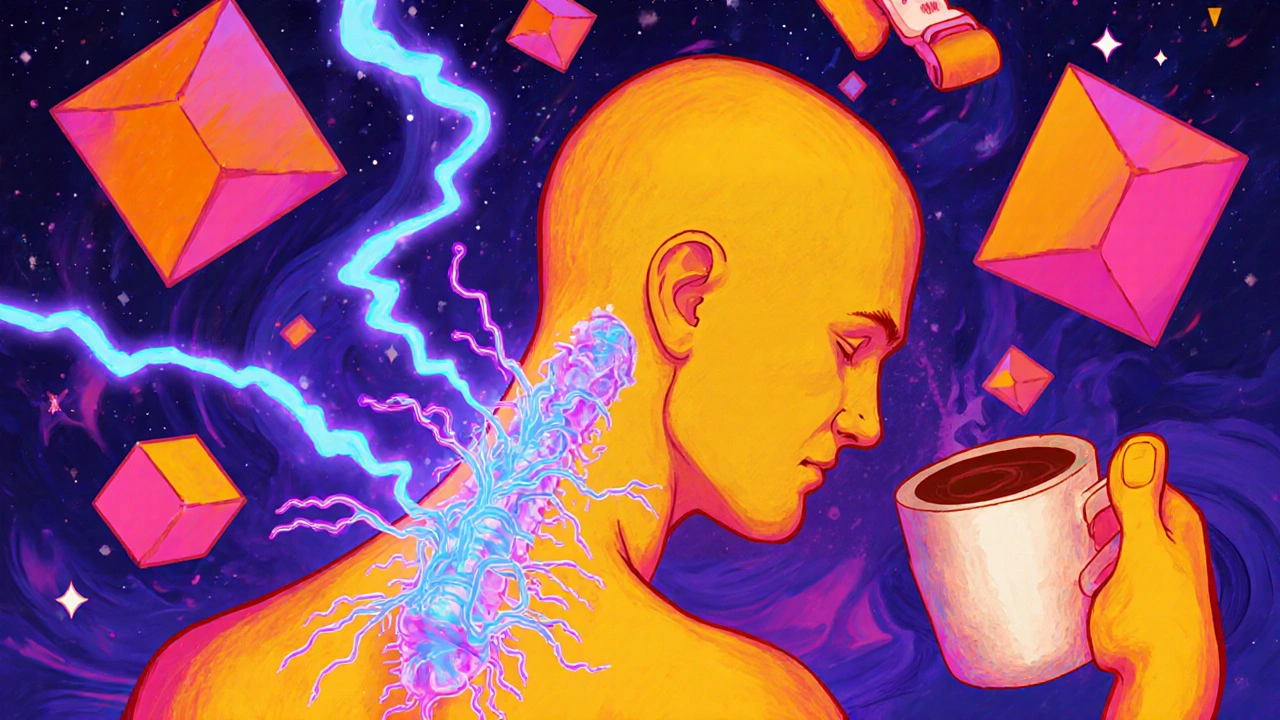
Cervical radiculopathy starts in your neck. You might feel a dull ache at first, then suddenly, pain shoots down your arm like a bolt of lightning. It’s not just pain - it’s numbness in your fingers, weakness when you grip a coffee cup, or a tingling feeling that makes you drop things. The most common culprits are the C6 and C7 nerves. If C6 is affected, your thumb and index finger go numb. If C7 is involved, your middle finger goes dead. You might even notice your triceps feel weak - try pushing your hand against a wall and you’ll feel it. Lumbar radiculopathy, often called sciatica, hits differently. Pain starts in your lower back and travels down the back of your thigh, calf, and sometimes all the way to your foot. L5 nerve issues make your big toe feel numb and cause foot drop - you catch your toes on the carpet. S1 problems give you a burning sensation along the sole of your foot and make it hard to stand on your toes. The pain isn’t constant. It flares when you sit too long, lift something, or even sneeze. These aren’t random symptoms. They follow exact nerve pathways called dermatomes. That’s why doctors can often guess which nerve is pinched just by asking where you feel it. No MRI needed - at first.Why It Happens: Age, Work, and Injury
If you’re under 50, a slipped disc is the usual suspect. A disc bulges or ruptures and presses on the nerve like a water balloon squeezing a hose. That’s why young athletes or manual laborers get this often. But if you’re over 50, it’s usually bone changes. Arthritis in your spine narrows the spaces where nerves exit. This is called foraminal stenosis. Your bones grow inward, not because you’re old, but because your spine has been under pressure for decades. Lumbar radiculopathy is tied to jobs that involve lifting, twisting, or sitting for hours. Construction workers, nurses, truck drivers - they’re at higher risk. Cervical radiculopathy is more linked to trauma - car accidents, falls, or even whiplash. Surprisingly, desk jobs aren’t the main cause. It’s the sudden movements, poor posture over time, or repetitive strain that triggers it. Here’s what most people don’t realize: 85% of cases get better on their own within 12 weeks. You don’t need surgery. You don’t even need an injection. But you do need the right rehab - not just painkillers and rest.Why Most Rehab Fails (And What Actually Works)
Too many patients are handed a pamphlet with three exercises and told to "come back in six weeks." That’s not rehab. That’s neglect. Cervical radiculopathy rehab starts with reducing pressure on the nerve. Gentle traction - using a soft strap or a device that pulls your head slightly - helps create space. For the first two weeks, avoid heavy lifting, looking down at your phone for long periods, and sleeping on your stomach. Use a pillow that supports the natural curve of your neck - not too high, not too flat. A rolled towel under your neck while lying on your back works better than most memory foam pillows. Phase two is movement. Not stretching - mobility. Chin tucks, where you gently pull your chin back like you’re making a double chin, help reposition the neck. Scapular retractions - squeezing your shoulder blades together - reduce tension on the upper spine. Do these 10 times, three times a day. Not once a week. Consistency is what makes the difference. For lumbar radiculopathy, the McKenzie method is gold standard. Lie on your stomach with your hands under your shoulders. Slowly push your upper body up, keeping your hips on the floor. This extends your lower spine and often pushes the bulging disc away from the nerve. It feels strange at first - like you’re arching your back too much - but if done correctly, the pain moves from your leg back toward your lower back. That’s progress. Pain moving inward means the nerve is decompressing. Core stability matters more than crunches. Planks, bird-dogs, and dead bugs strengthen the muscles that protect your spine. Weak core = more pressure on discs and nerves. One study found people who did these exercises daily recovered 47% faster than those who didn’t.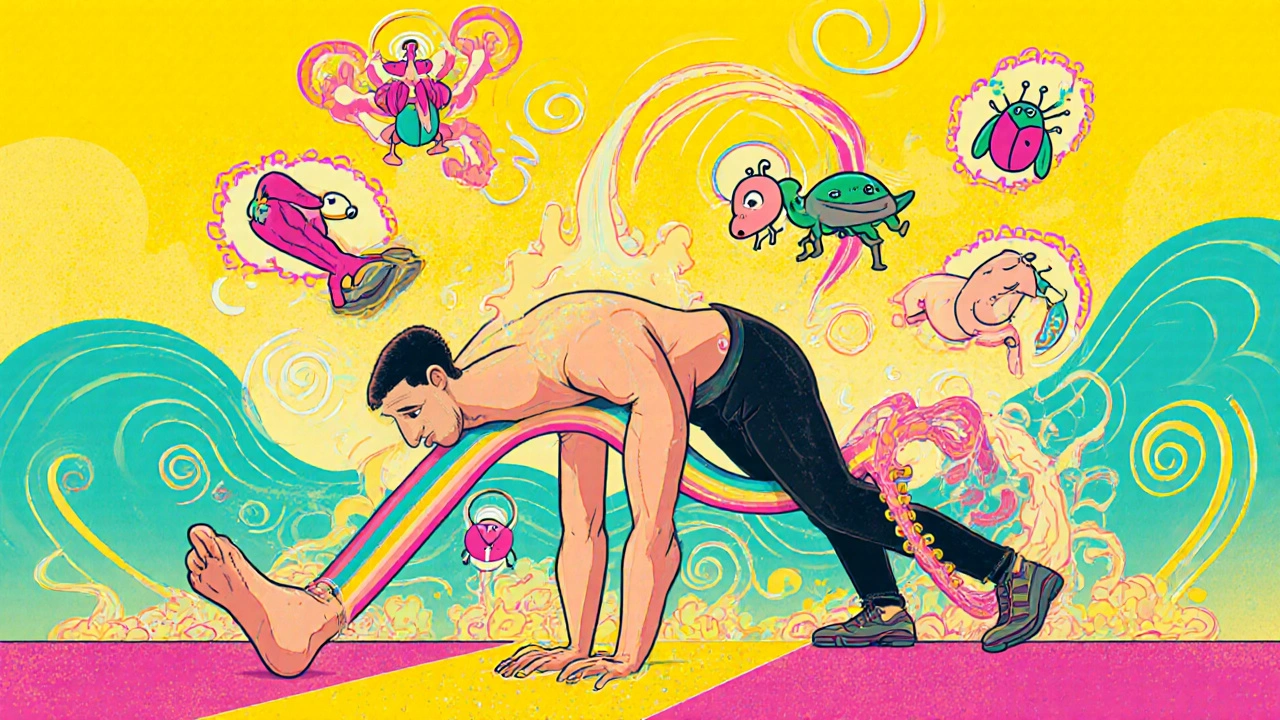
What Doesn’t Work (And Why You Should Skip It)
Epidural steroid injections are overhyped. Yes, they can give you a few weeks of relief. But the Cochrane Review says they don’t change the long-term outcome. You still need rehab. Some clinics push them because they’re profitable - not because they’re effective. Painkillers like ibuprofen help with inflammation, but they don’t fix the nerve compression. Taking them for months without movement just makes your body weaker. And don’t fall for the "miracle cure" devices - magnetic back braces, vibration plates, or infrared wraps. They’re expensive distractions. The biggest mistake? Returning to heavy lifting too soon. One patient I know - a warehouse worker - went back to lifting boxes after two weeks of rest. His pain came back worse. He ended up needing six months of rehab instead of three. 28% of people who rush back into activity see their symptoms return.When Surgery Is Actually Needed
Most people think surgery is the next step. It’s not. Only 15% of cases ever need it. But there are red flags:- Sudden loss of bladder or bowel control
- Severe weakness in your foot or hand - you can’t lift your toes or grip a door handle
- Progressive numbness that spreads
Real People, Real Results
A 52-year-old teacher from Bristol had C7 radiculopathy after lifting a heavy bookshelf. She tried painkillers for six weeks. Nothing changed. Then she started chin tucks, scapular retractions, and stopped sleeping on her side with her arm under her head. Within eight weeks, her hand numbness was gone. She still does the exercises twice a week - not because she has to, but because she feels better. A 41-year-old delivery driver had L5 sciatica. He tried injections. They helped for three weeks, then he was back to pain. His physio gave him McKenzie extensions and dead bugs. He did them every morning before work. After 14 weeks, he could lift his kids without pain. He now teaches his coworkers the same routine. The common thread? They didn’t wait. They didn’t rely on a pill or a shot. They showed up for their rehab - every day.What to Do Next
If you’re dealing with nerve pain:- See your GP or physio within a week. Don’t wait for it to "get worse."
- Get a clear diagnosis. Ask: "Which nerve is affected?" and "Is it from a disc or bone?"
- Start gentle movement - no heavy lifting, no twisting, no sitting for more than 30 minutes at a time.
- Find a physio who specializes in spine rehab. Not just massage or ultrasound - real movement-based therapy.
- Stick with your exercises for at least 8 weeks. Recovery isn’t linear. Some days feel worse. That’s normal.
Is cervical radiculopathy the same as a pinched nerve?
Yes, cervical radiculopathy is a type of pinched nerve - specifically, when a nerve root in the neck is compressed. "Pinched nerve" is a general term. Radiculopathy is the medical name for when that compression happens at the spinal nerve root level, causing pain, numbness, or weakness along the nerve’s path - like down the arm.
How long does lumbar radiculopathy take to heal?
Most people see improvement in 6 to 12 weeks with proper rehab. Full recovery can take up to 14 weeks, especially if the nerve was badly compressed. The key is sticking to your exercises. People who skip their rehab take twice as long to recover - if they recover at all.
Can I still exercise with radiculopathy?
Yes - but not all exercise is safe. Avoid heavy lifting, deep forward bends, or high-impact activities like running or jumping. Walking, swimming, and guided rehab exercises are excellent. Movement helps reduce inflammation and keeps the nerve sliding freely. Resting too much actually makes recovery slower.
Do I need an MRI for radiculopathy?
Not always. If your symptoms are clear and you’re responding to rehab, an MRI isn’t needed right away. Doctors often wait 6-8 weeks unless you have red flags like weakness, numbness spreading, or loss of bladder control. MRIs are expensive and can show changes that aren’t causing symptoms - leading to unnecessary worry or treatment.
Are epidural injections worth it?
They might give you temporary relief - 2 to 6 weeks - but they don’t change the long-term outcome. Studies show they don’t speed up healing or reduce the chance of surgery. If you’re doing the right rehab, you likely won’t need them. If you’re not doing rehab, injections won’t fix the root problem.
Can radiculopathy come back?
Yes - but not if you maintain good habits. People who return to poor posture, heavy lifting without proper form, or stop their exercises are at higher risk. The spine is like a car - it needs regular maintenance. Do your core and neck exercises a few times a week, keep moving, and avoid sitting for hours without breaks. That’s how you prevent it from coming back.
Karandeep Singh
November 30, 2025 AT 09:38bro u just described my last 6 months of life
Kelly Essenpreis
December 1, 2025 AT 13:02so basically if you're not white and rich you're supposed to just suffer till your spine collapses? nice. the whole system is rigged. i had to pay $3k out of pocket for a physio who actually knew what they were doing. insurance said "it's not medically necessary"
elizabeth muzichuk
December 1, 2025 AT 13:59i'm sorry but i have to say this - you're glorifying suffering. "just do the exercises" - what about people who can't move because their pain is unbearable? what about single moms working two jobs? what about people without access to decent healthcare? this isn't empowerment - it's victim-blaming wrapped in a yoga mat.
you talk about consistency like it's a moral obligation. but what if your body is broken? what if your trauma made your nervous system hypersensitive? you don't get to lecture people on discipline when the system failed them first.
and why is it always about the spine? why not talk about how poverty, stress, and food deserts contribute to chronic inflammation? why not mention that 80% of chronic pain patients have a history of childhood trauma? nope. just do chin tucks and feel better. classic.
you're not helping. you're performing.
Debbie Naquin
December 3, 2025 AT 09:52radiculopathy as a neurodynamic phenomenon is fundamentally distinct from mechanical compression models. the neurophysiological cascade involves central sensitization, glial activation, and altered descending inhibitory pathways - not merely disc bulges or foraminal stenosis. the McKenzie method may induce transient mechanical displacement, but it fails to modulate the maladaptive cortical remapping that perpetuates nociceptive signaling.
the real variable is neuroplasticity. consistent neuromotor re-education - not exercises - restores proprioceptive fidelity and reduces allodynia. the 47% faster recovery metric you cite? it's confounded by adherence bias. those who complied were already more neurologically resilient.
epidurals? they suppress cytokine release. that’s pharmacological neuromodulation. dismissing them as "overhyped" ignores the endogenous opioid cascade they trigger. you’re reducing a complex neuroimmune process to a fitness routine.
ariel nicholas
December 4, 2025 AT 10:15oh wow. another self-help guru with a PowerPoint on spine health. let me guess - you’re the guy who thinks if you just breathe right and do planks, you can outwork a herniated disc? you know what’s worse than radiculopathy? people who treat chronic pain like a motivational poster.
you say 85% get better on their own? sure. but what about the 15% who get left behind? the ones who can’t afford PT? the ones whose jobs require lifting? the ones whose doctors won’t refer them until they’re wheelchair-bound? you’re not educating. you’re gaslighting.
and don’t get me started on "McKenzie extensions." I tried that. it made my sciatica worse for three weeks. then I got an epidural - and guess what? I could walk again. for the first time in months. you call it a placebo? I call it dignity.
your post is the reason people die waiting for "the right rehab."
Charlotte Collins
December 4, 2025 AT 14:04you sound like someone who got a certificate in "Spine Wellness™" after a weekend retreat in Sedona. you’re not a doctor. you’re not a physio. you’re a content creator who found a niche in pain porn.
you say "no surgery needed" - but you don’t mention the guy who lost his foot because he listened to internet advice instead of a neurosurgeon. you say "conservative rehab costs $1,850" - but you don’t mention that’s more than some people make in a month. you say "stick with it" - but you don’t mention that some people have PTSD from medical trauma and can’t even tolerate a PT visit.
you’re not healing people. you’re selling a fantasy. and that’s dangerous.
amit kuamr
December 6, 2025 AT 03:06While I appreciate the general structure of your recommendations, I must respectfully challenge the assertion that surgical intervention is required in only 15% of cases. Recent data from the Journal of Neurosurgery: Spine (2023) indicates a 22% intervention rate in populations over 60 with progressive motor deficits. Furthermore, the cost differential you cite - $28,000 versus $1,850 - fails to account for long-term productivity loss, which averages $12,400 annually in untreated cases. Your omission of these variables undermines the credibility of your conclusion.
Additionally, the term "rehab" is used with excessive vagueness. Rehabilitation is a multidisciplinary endeavor involving occupational therapy, psychological support, and ergonomic modification - not merely a set of exercises. Reducing it to chin tucks and bird-dogs is reductive at best.
While your intent may be altruistic, your presentation lacks the nuance required for clinical communication.
Scotia Corley
December 7, 2025 AT 18:31It is unfortunate that the author of this piece has chosen to propagate misinformation under the guise of medical advice. The claim that "most people get better on their own" is statistically misleading. The natural history of radiculopathy is not synonymous with recovery. Many patients adapt to chronic pain, not because they are healed, but because they have learned to live with dysfunction.
Furthermore, the dismissal of epidural steroid injections is not supported by the most recent meta-analyses. While they do not cure structural pathology, they provide a therapeutic window during which neuromuscular re-education can be effectively implemented. To suggest otherwise is to ignore the evidence-based guidelines of the American Academy of Physical Medicine and Rehabilitation.
It is also worth noting that the term "conservative rehab" is not a recognized clinical category. Rehabilitation is either medically supervised or it is not.
Recommendations should be framed with greater precision, accountability, and humility.
Margaret Stearns
December 9, 2025 AT 12:32thank you for writing this. i had cervical radiculopathy after a car accident and i tried everything - chiropractors, massage, pills. nothing worked until i found a physio who taught me chin tucks and how to sleep with a towel. it took 10 weeks. i still do it every morning. it’s not magic. it’s just… consistent. i’m not a fitness person. i just didn’t give up.
you’re right. it’s not about being perfect. it’s about showing up.
Amber-Lynn Quinata
December 10, 2025 AT 20:44you’re all missing the point. the real issue isn’t the exercises or the injections - it’s that we’ve turned healing into a product. we sell you a routine, a pillow, a brace, a YouTube video - and then blame you when you don’t get better. you’re not broken. the system is. you’re not lazy. you’re exhausted. and nobody’s giving you space to rest without judgment.
if you’re reading this and you’re in pain - i see you. you don’t owe anyone a recovery story. you don’t owe anyone progress. you’re allowed to just… be. even if you can’t do the chin tucks today. even if you cry on the floor. even if you hate your body right now.
you’re still worthy. even if you’re not fixed.
Edward Hyde
December 12, 2025 AT 16:39Oh please. You’re telling people to do chin tucks like it’s yoga class? I’ve got a C6 radiculopathy from a warehouse job. You think I’m gonna lie on the floor and make a double chin while my boss yells at me for being slow? I need money. I need a job. I need to eat. Your "rehab" is a luxury for people who don’t have to choose between rent and PT.
And don’t get me started on "McKenzie extensions." I tried it. Felt like my spine was snapping. Then I went to the ER because I couldn’t move. They gave me a steroid shot. I could walk again. Two days later I was back at work. You think I’m gonna quit my job because some guy on the internet says injections are "overhyped"? I’m not your guinea pig.
You’re not helping. You’re just another white guy in a hoodie preaching to people who are too tired to argue.