Bisphosphonates and Calcium: Why Timing Your Supplements Matters
 Apr, 17 2026
Bisphosphonate & Calcium Timing Planner
Analyzing Schedule...
Please enter your scheduled times above.
The "Safe Window" Guide
Imagine taking a medication every week to protect your bones from fractures, only to find out that your morning calcium supplement is essentially "canceling out" the drug. For many people treating osteoporosis, this is exactly what happens. The interaction between bisphosphonates is a class of synthetic compounds that inhibit osteoclast activity to treat bone loss and calcium is not a matter of one being "bad" and the other "good"-it is a matter of chemistry and timing. If you take them too close together, the medicine simply cannot get into your bloodstream.
The Chemistry of the "Blockage"
To understand why this happens, we have to look at how these drugs are built. Bisphosphonates are designed to love calcium. They have a high affinity for calcium hydroxyapatite, which is the mineral that makes your bones hard. While this is great once the drug reaches your skeleton, it creates a problem in your gut.
When you swallow a calcium pill or drink a glass of milk, the calcium (a divalent cation) binds to the bisphosphonate molecules immediately. This creates an insoluble complex-basically a chemical clump-that is too large and stubborn for your intestinal wall to absorb. Research shows that taking these together can reduce the absorption of the drug by 90% to 100%. In simple terms, if you take your calcium supplement at the same time as your medication, you are essentially flushing the medicine down the toilet.
The Strict Rules of Oral Administration
Because oral bisphosphonates have notoriously poor bioavailability (often less than 1%), the window for successful absorption is tiny. You can't just "pop it with a snack." To get the drug to actually work, you need to follow a very specific protocol:
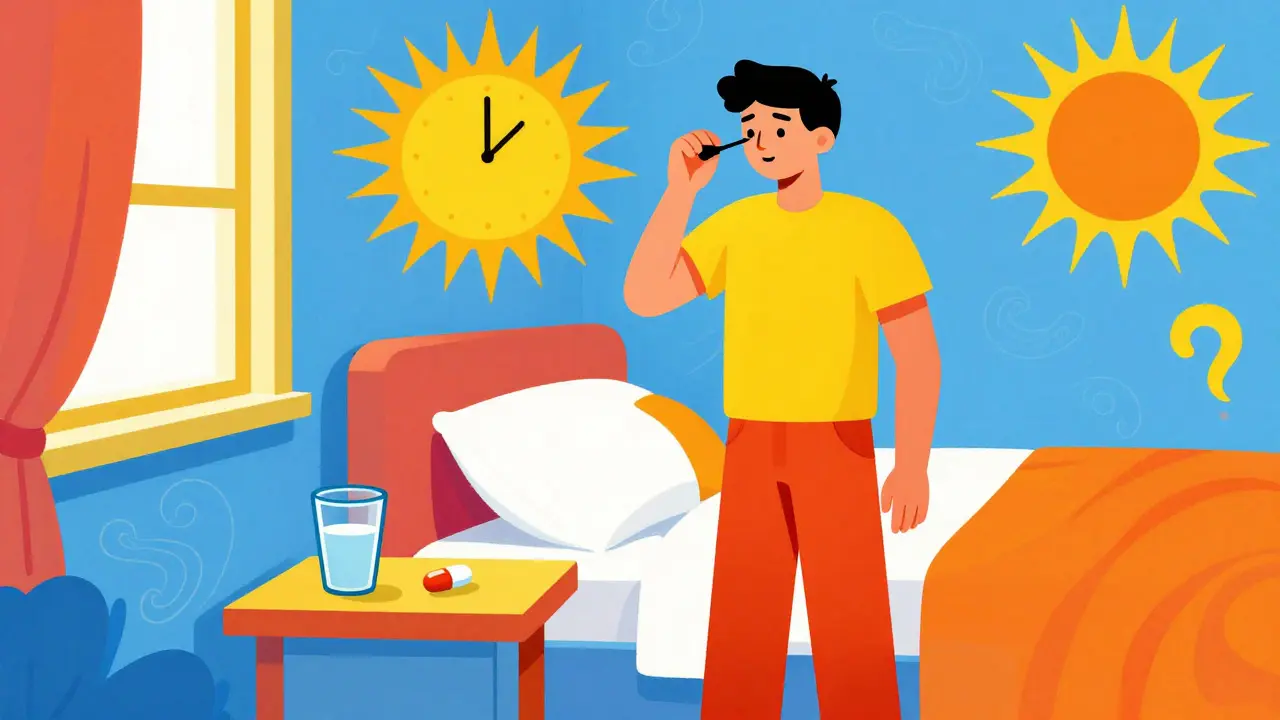
- The Overnight Fast: Take the medication immediately after waking up, having fasted for at least 8 hours.
- Plain Water Only: Use 6-8 ounces of plain water. No juice, no coffee, and definitely no milk.
- Stay Upright: Remain sitting or standing for 30 to 60 minutes. This prevents the pill from irritating your esophagus and ensures it moves into the digestive tract.
- The Wait Window: Do not eat, drink anything other than water, or take other medications (especially calcium) for at least 30 to 60 minutes after the dose.
Comparing Common Bisphosphonates
Not all medications in this class are identical. Some are taken daily, some weekly, and some are given via IV. While the absorption struggle is common to all oral versions, their binding strength and how they are delivered vary.
| Medication | Common Brand | Route | Binding Affinity | Absorption Challenge |
|---|---|---|---|---|
| Alendronate | Fosamax | Oral | High | Very High (Strict Fasting) |
| Risedronate | Actonel | Oral | Moderate | High (Slightly more food-tolerant) |
| Zoledronic Acid | Reclast | IV | Very High | None (Bypasses Gut) |
| Ibandronate | Boniva | Oral | Moderate | High (Strict Fasting) |
Calcium Citrate vs. Calcium Carbonate
You might be wondering if the type of calcium you take makes a difference. Calcium Citrate is generally easier for the body to absorb than Calcium Carbonate, especially for people with lower stomach acid. However, when it comes to interfering with your bone medication, both are equally problematic.
Whether it is a chewable tablet, a gummy, or a powder, any form of supplemental calcium will block the absorption of an oral bisphosphonate. The key is not the form of the calcium, but the timing of the dose.
Practical Strategies for Better Adherence
Let's be honest: waking up at 5:00 AM to take a pill and waiting an hour to eat is a hassle. Many patients struggle with this, and it's why some people simply stop taking their meds. To make this sustainable, try these real-world strategies:
- The "Early Bird" Method: Set your alarm for 30 minutes before you usually wake up. Take your dose, then go back to light reading or a shower. By the time you are ready for breakfast, your 30-60 minute window has already passed.
- The Fixed-Point System: Pick a consistent time for your calcium supplement (e.g., dinner). Once that is a habit, it is much easier to schedule your weekly bisphosphonate dose far away from that specific time.
- Digital Alerts: Use a smartphone reminder that doesn't just tell you to take the pill, but specifically warns "No Calcium for 60 Minutes."
If the oral routine is simply impossible for you, talk to your doctor about intravenous (IV) options. Medications like zoledronic acid are infused once a year, completely removing the daily struggle with calcium timing and ensuring 100% of the drug enters your system.
The Role of Vitamin D
While calcium is the "blocker," Vitamin D is the "enabler." Your body cannot effectively use calcium to build bone without enough Vitamin D. More importantly, starting a bisphosphonate when your Vitamin D levels are too low can lead to hypocalcemia-a condition where calcium levels in your blood drop too low, potentially causing muscle spasms or heart rhythm issues.
Doctors usually check your serum 25-hydroxyvitamin D levels before starting therapy. If you are deficient, they will likely have you supplement Vitamin D first to create a safe baseline before introducing the bone-strengthening medication.
Can I take my calcium supplement 2 hours after my bisphosphonate?
Yes. The general rule is a minimum gap of 30 to 60 minutes. Waiting 2 hours is even safer and ensures the medication has been absorbed into your system before the calcium arrives to potentially block it.
What happens if I accidentally took them at the same time?
If it happens once, don't panic. However, you likely didn't absorb much of the medication from that specific dose. Do not take a second dose of the medication immediately to "make up" for it without consulting your doctor, as this could increase the risk of side effects. Just resume your normal schedule the following week.
Do antacids interfere with these medications?
Yes. Many antacids contain calcium, magnesium, or aluminum. These are all divalent cations that act just like calcium supplements and will block the absorption of oral bisphosphonates.
Is it okay to take the medication with orange juice?
No. You should only use plain water. Other beverages can change the pH of your stomach or contain minerals that interfere with how the drug is absorbed.
Why are some versions of this drug given as an injection?
IV versions bypass the digestive system entirely. This eliminates the need for fasting and ensures the patient doesn't accidentally block the drug with food or supplements, which is a common problem with the oral tablets.
Arthur Luke
April 19, 2026 AT 05:45The part about the divalent cations binding to the medication is a great explanation of the underlying mechanism. It really clarifies why it's not just about food in general, but specifically minerals that can create those insoluble complexes.
Olushola Adedoyin
April 21, 2026 AT 04:37Total scam! They want you waking up at 5 AM just to push more pills into your system. Why is the IV version a 'solution' unless they just want to track you better with those needles? It's a giant loop of madness to keep us dependent on the pharmacy!
Quinton Bangerter
April 22, 2026 AT 07:45Imagine actually believing that a 'digital alert' is a viable medical strategy. The sheer mediocrity of these 'practical tips' is staggering. Most people with a modicum of discipline don't need a smartphone to tell them not to eat calcium for an hour; they just follow the instructions provided by the pharmacy.
Akshata Kembhavi
April 23, 2026 AT 19:35This is actually super helpful. I've seen so many people in my community just mixing their meds with tea or milk without thinking about it, and now it makes sense why they don't see results.
Shalika Jain
April 25, 2026 AT 06:47Please, as if we didn't know that bioavailability is a joke with oral bisphosphonates. The whole 'early bird' method is just a fancy way of saying your life is now ruined by a pill schedule. Truly tragic.
Aman Tomar
April 25, 2026 AT 20:50Omg this is so stresfull!! I can't believe how much detail goes into just taking one pil. It's absolutly wild that one glass of milk can ruin the whole thing. I feel so bad for anyone struggling with this!
anne camba
April 26, 2026 AT 18:56The duality of the supplement... it is both the cure and the barrier... such a strange paradox of the human biological experience... where the very mineral we crave to strengthen our frame becomes the wall that prevents the medicine from entering... it's almost poetic in a cruel sort of way... really makes you think about how we try to control nature with chemistry... yet nature always finds a way to obstruct... it is just so fascinating... and yet so tedious... truly a struggle of the modern age... a dance between the pill and the plate... a rhythm of fasting and feasting... all for the sake of a few millimeters of bone density... it's just a lot to process... really... just a lot...
Bob Collins
April 28, 2026 AT 12:32Just stick to the IV route if you can. Way less stress.
Grace Grace
April 29, 2026 AT 02:45I actualy tried the early bird thing and it's a lifesaver!! I used to forget the timing all the time but now I just do it before the house wakes up. It's honestly the only way to manage this mess of a schedul!
Truman Media
April 30, 2026 AT 19:10It is wonderful to see such clear guidance! We can all overcome these small hurdles with a positive mind :) 🌟
Tokunbo Elegbe
May 2, 2026 AT 00:56The importance of staying upright... is often overlooked... and can lead to severe esophageal irritation... please be careful with this step!!!
caesar simpkins
May 2, 2026 AT 12:22Man, the struggle with these medication protocols is real. It's like a full-time job just to keep your bones from crumbling. We gotta support each other through this grind.
Mike Beattie
May 3, 2026 AT 12:22Typical pharmacokinetics. The low bioavailability of oral nitrogen-containing bisphosphonates is a known systemic failure. If you aren't optimizing your serum 25-hydroxyvitamin D levels, you're basically playing Russian roulette with your calcium homeostasis. Total amateur hour.
Lucy Kuo
May 4, 2026 AT 12:47It is absolutely imperative that we advocate for better patient education regarding these interactions! The potential for hypocalcemia is a grave concern that requires our utmost attention and care for all patients!
Lynn Smith
May 5, 2026 AT 06:16I guess we just have to do what we're told and hope for the best, right?