Bioequivalence Explained: FDA Requirements to Prove Generic Drug Equivalence
 Jan, 4 2026
When you pick up a generic pill at the pharmacy, you expect it to work just like the brand-name version. But how does the FDA make sure it actually does? The answer lies in bioequivalence-a scientific standard that bridges the gap between brand-name drugs and their cheaper copies. It’s not about matching ingredients exactly. It’s about proving that your body absorbs and uses the generic drug the same way it does the original.
What Bioequivalence Really Means
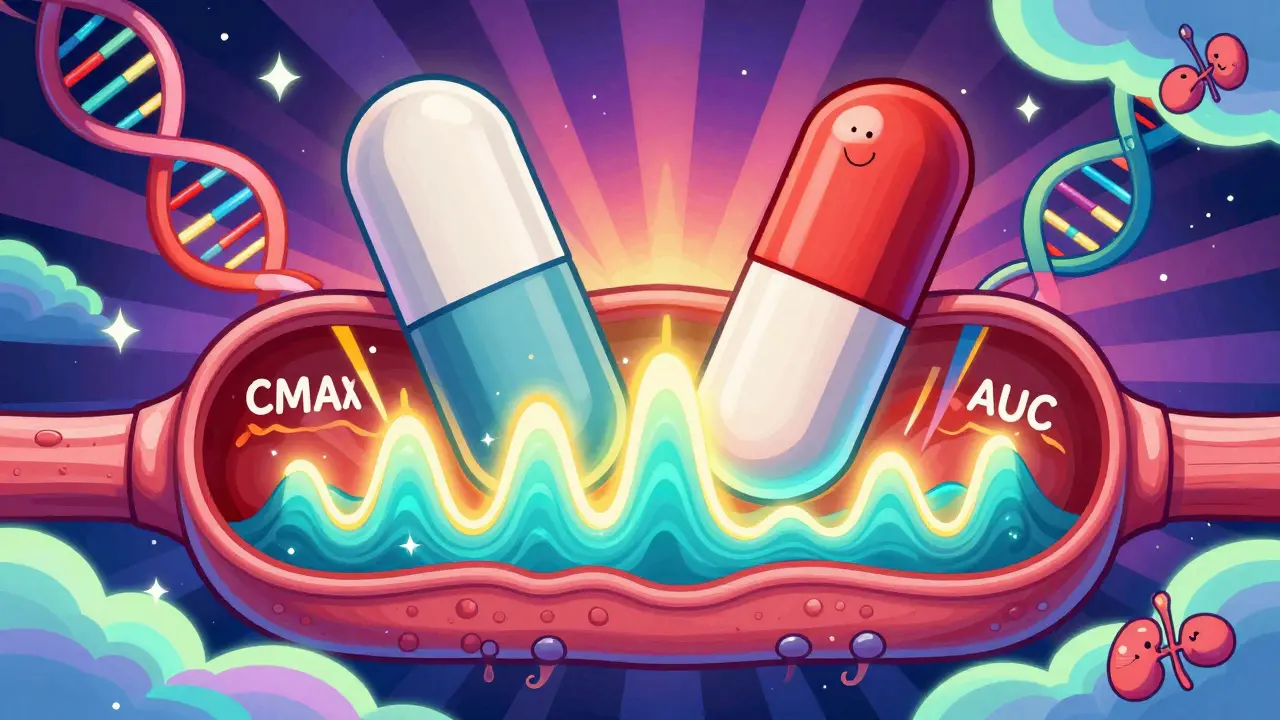
Bioequivalence isn’t about whether two pills look the same or have the same color. It’s about what happens inside your body after you take them. The FDA defines it as the absence of a significant difference in how fast and how much of the active drug reaches your bloodstream and gets to where it needs to work. This is measured using two key numbers: Cmax (the highest concentration of the drug in your blood) and AUC (the total amount of drug your body is exposed to over time).
For a generic drug to be approved, its Cmax and AUC must be statistically similar to the brand-name version. The FDA doesn’t demand perfect matches. It allows a range: the 90% confidence interval for the ratio of generic to brand drug must fall between 80% and 125%. That means if the brand drug’s AUC is 100 units, the generic’s must show a result between 80 and 125 units to pass.
Here’s the catch: this isn’t about how much active ingredient is in the pill. Many people think a generic can contain anywhere from 80% to 125% of the drug. That’s wrong. The active ingredient amount is tightly controlled-both versions must contain the same amount, within strict limits. The 80-125% range applies only to how your body processes the drug after you swallow it.
How Bioequivalence Studies Work
These studies don’t involve patients with the disease. They use healthy volunteers-usually between 24 and 36 people. Each person takes both the brand-name drug and the generic version, in random order, with a washout period in between. Blood samples are taken frequently over 24 to 72 hours to track how the drug moves through the body.
The data is analyzed using statistical methods. The FDA requires the 90% confidence interval (not the 95% or 99%) for the ratio of generic to brand drug to be entirely within 80-125%. If even one point of that interval falls outside, the study fails.
For example: if the brand drug’s average AUC is 100, and the generic’s is 93, that looks good. But if the 90% confidence interval runs from 75 to 110, it fails-because 75 is below 80. Even if the average looks close, the spread matters. The FDA wants consistency, not just an average that’s near enough.
Some drugs are harder to test. Topical creams, inhalers, and injectables don’t always enter the bloodstream the same way. For those, the FDA may allow in vitro tests-like measuring how quickly the drug dissolves in a lab dish-instead of blood tests. But for most oral pills, in vivo (in the body) testing is required.
Why the 80-125% Range Makes Sense
Why not require 100% exactness? Because biological variation is normal. People absorb drugs differently based on age, diet, liver function, or even what they ate that morning. The 80-125% range was chosen because research shows that differences smaller than 20% rarely affect how well a drug works or how safe it is.
Dr. Utpal Munshi, a leading expert in bioequivalence, explains that this range is based on decades of clinical data. For most drugs, a 15% difference in blood levels doesn’t change outcomes. That’s why the FDA considers it clinically insignificant.
There are exceptions. Drugs with a narrow therapeutic index-like warfarin, lithium, or certain anti-seizure medications-require extra caution. Even small changes in blood levels can cause toxicity or treatment failure. But even here, the FDA still uses the 80-125% standard, unless a drug-specific guidance says otherwise. That’s because the same study design and statistical rigor apply. The difference isn’t in the rule-it’s in how strictly the data is reviewed.
Pharmaceutical Equivalence vs. Bioequivalence
Before a generic drug can even start bioequivalence testing, it must be pharmaceutically equivalent. That means:
- Same active ingredient, in the same amount
- Same dosage form (tablet, capsule, liquid)
- Same route of administration (oral, topical, etc.)
- Same strength and labeling
- Meets the same quality standards as the brand
Pharmaceutical equivalence is the baseline. Bioequivalence is the proof that it works the same way in your body. You can have two pills that are pharmaceutically equivalent but not bioequivalent-if one dissolves too slowly or is absorbed poorly due to different fillers or coatings.
That’s why generic manufacturers can’t just copy the brand’s formula. They often have to reformulate multiple times before they pass. A change in one inactive ingredient-a dye, a binder, or a coating-can alter how the drug releases. That’s why the FDA requires full disclosure of all formulation details during the application process.
The ANDA Process and Transparency
To get approval, a generic company files an Abbreviated New Drug Application (ANDA). Unlike brand-name drugs, they don’t need to run expensive clinical trials. Instead, they rely on the brand’s safety data, as long as they prove bioequivalence.
The FDA reviews about 1,000 ANDAs every year. About 65% get approved on the first try. The rest get deficiency letters-often because the bioequivalence study didn’t meet the 80-125% rule. Common reasons include poor study design, inconsistent drug release, or inadequate sample size.
In 2021, the FDA changed its rules. Now, companies must submit all bioequivalence studies they ran-not just the successful ones. This increases transparency and helps the agency spot patterns. If a company ran five studies and only one passed, the FDA can ask why the others failed. It prevents cherry-picking results.
Why This Matters for Patients
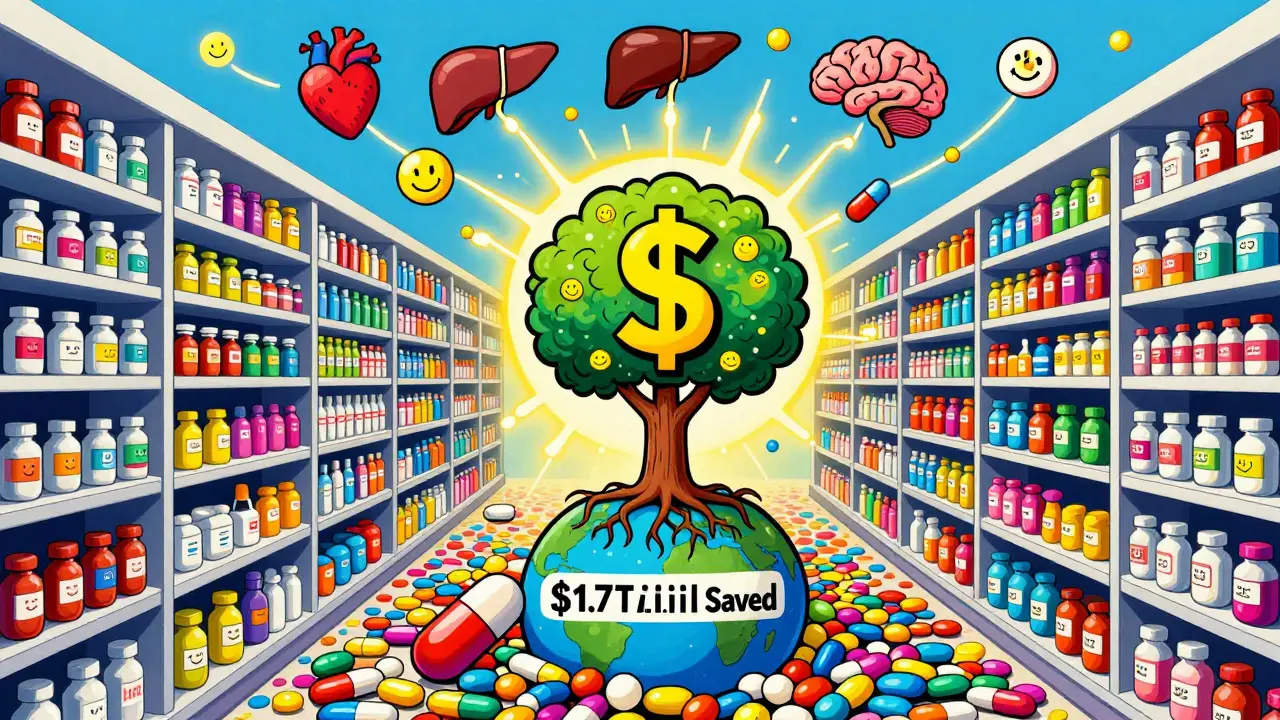
Generic drugs make up 90% of all prescriptions in the U.S. but cost only 20% of what brand-name drugs do. Over the past decade, they’ve saved the healthcare system over $1.7 trillion.
That’s not just a number. It’s a mother choosing between her child’s asthma inhaler and groceries. It’s a senior on fixed income keeping their blood pressure under control. It’s a cancer patient getting maintenance therapy without bankruptcy.
The FDA’s bioequivalence standards are what make that possible. They ensure that when you switch from brand to generic, your treatment doesn’t break. There’s no hidden risk. No compromise in safety or effectiveness.
Some patients still worry. They’ve heard stories-“My generic didn’t work like the brand.” But those cases are rare. When they happen, it’s usually because of underlying health changes, not the drug itself. The FDA tracks adverse events closely. If a pattern emerges, they investigate. So far, the data confirms: generic drugs are just as safe and effective.
What’s Next for Bioequivalence
The FDA is working on new ways to assess complex generics-like patches, inhalers, and injectables-where traditional blood tests don’t capture how the drug behaves. They’re exploring modeling and simulation tools that could predict bioequivalence without human trials for some products.
They’re also updating product-specific guidance. There are now over 2,000 guidances for different drugs, telling manufacturers exactly what tests to run and what data to submit. This reduces guesswork and speeds up approvals.
As more complex generics enter the market, the standards will evolve. But the core principle won’t change: if a drug enters your body the same way as the brand, it should work the same way.
That’s the quiet promise behind every generic pill you take. It’s not magic. It’s science. And it’s working.
What does bioequivalence mean for generic drugs?
Bioequivalence means that a generic drug delivers the same amount of active ingredient into your bloodstream at the same rate as the brand-name version. This ensures it works the same way in your body, even if the pill looks different or costs less.
Is it true that generic drugs can contain 80% to 125% of the active ingredient?
No, that’s a common misunderstanding. The 80-125% range applies to how your body absorbs the drug (measured by Cmax and AUC), not the amount of active ingredient in the pill. Both brand and generic drugs must contain the exact same amount of active ingredient, within strict limits.
Why do some people say their generic drug doesn’t work as well?
Rarely, it’s due to differences in how the drug is formulated-like coatings or fillers that affect absorption. But most often, changes in how a person feels are due to other factors: stress, diet, other medications, or natural fluctuations in their condition. The FDA monitors reports closely, and large-scale data shows generic drugs perform just as well as brand-name ones.
Are bioequivalence studies only done on healthy people?
Yes, for most oral drugs. Healthy volunteers are used because they don’t have diseases that could interfere with how the drug is absorbed. This gives a clearer picture of the drug’s behavior. For drugs that act locally-like inhalers or creams-other tests may be used instead.
How long does it take for the FDA to approve a generic drug?
The standard review time for an ANDA is 10 to 12 months. About 65% of applications get approved on the first try. Delays usually happen when bioequivalence data is incomplete or doesn’t meet the 80-125% confidence interval requirement.
Can a generic drug be approved without a bioequivalence study?
Only for very specific cases, like some topical or inhaled products, where in vitro testing (lab-based dissolution tests) is accepted as a substitute. For nearly all oral pills, an in vivo bioequivalence study with human volunteers is required.
Doreen Pachificus
January 5, 2026 AT 07:42Interesting breakdown. I never realized the 80-125% range was about absorption, not dosage. Makes sense though - bodies aren’t lab machines.
Michael Rudge
January 6, 2026 AT 14:05Oh wow, so the FDA just lets Big Pharma get away with letting generics vary by 25% in absorption? That’s not ‘equivalence,’ that’s a gamble with people’s lives. You think your grandma’s blood pressure med is safe? Lol. Try telling that to the 3% who end up in the ER because ‘statistically insignificant’ doesn’t mean ‘clinically harmless.’
Cassie Tynan
January 8, 2026 AT 07:49Michael, you’re such a drama queen. The FDA’s been doing this for 40 years. If generics were dangerous, we’d be seeing mass poisonings. Instead, we’re saving billions and people are alive because they can afford their meds. You want perfection? Go live in a cave and chew willow bark. Meanwhile, I’ll take my $4 blood pressure pill and not feel guilty about it. 😏
Ethan Purser
January 9, 2026 AT 21:57It’s not about the numbers, it’s about the metaphysics of absorption. The pill doesn’t just enter your bloodstream - it enters your *being*. The 80-125% range is a modern alchemy, a ritual of trust between the body and the machine. We’ve reduced human physiology to confidence intervals, and yet… we still call it science. Isn’t that beautiful? Or tragic? I don’t know anymore. 🌌
Stephen Craig
January 11, 2026 AT 08:21Same active ingredient. Same dose. Same formulation. If it passes bioequivalence, it works. No mysticism needed.
Roshan Aryal
January 11, 2026 AT 13:12USA thinks it owns the world’s medical standards? Please. In India, we test generics on real patients - not lab rats. Your 24-person study? Pathetic. We know generics fail in real life. Your FDA is a corporate puppet show. And don’t get me started on how your ‘1.7 trillion saved’ is just a PR spin while people still die because their insulin costs $300. Wake up.
Rory Corrigan
January 11, 2026 AT 14:35So… if my generic blood thinner works 90% as well as the brand… is that good? 😅
Connor Hale
January 11, 2026 AT 18:18The real win here isn’t the 80-125% rule - it’s the transparency shift. Forcing companies to submit all studies, even the failed ones, is huge. That’s how you stop cherry-picking. That’s how you build real trust. The science is solid. The system’s improving. That’s worth celebrating.
Vicki Yuan
January 12, 2026 AT 23:24Thank you for this clear, evidence-based explanation. It’s refreshing to see science communicated without sensationalism or condescension. The fact that generics save trillions while maintaining safety isn’t just policy - it’s moral.