Quality Assurance Units: Why Independent Oversight Is Non-Negotiable in Production
 Feb, 7 2026
When a batch of medicine is released, millions of people trust it’s safe. But that trust doesn’t come from luck. It comes from a quiet, powerful force inside every regulated manufacturing facility: the Quality Assurance Unit. And if this unit isn’t truly independent, everything else falls apart.
What Exactly Is a Quality Assurance Unit?
A Quality Assurance Unit (QU) isn’t just another department. It’s the final gatekeeper. In pharmaceuticals, nuclear facilities, and other high-stakes industries, the QU has one job: to say yes or no to a product - no matter the pressure. It doesn’t make the product. It doesn’t run the machines. It doesn’t answer to the production manager. It answers to the CEO or the Board. That’s not a detail - it’s the law.
The FDA made this crystal clear in 2006: under a quality system, the QU must remain separate from manufacturing. Why? Because if the people who want to meet production targets are also the ones deciding if a batch is safe, the system breaks. One wrong call - one batch released with a contamination, one data record altered to cover a deviation - can cost lives.
Why Independence Isn’t Optional
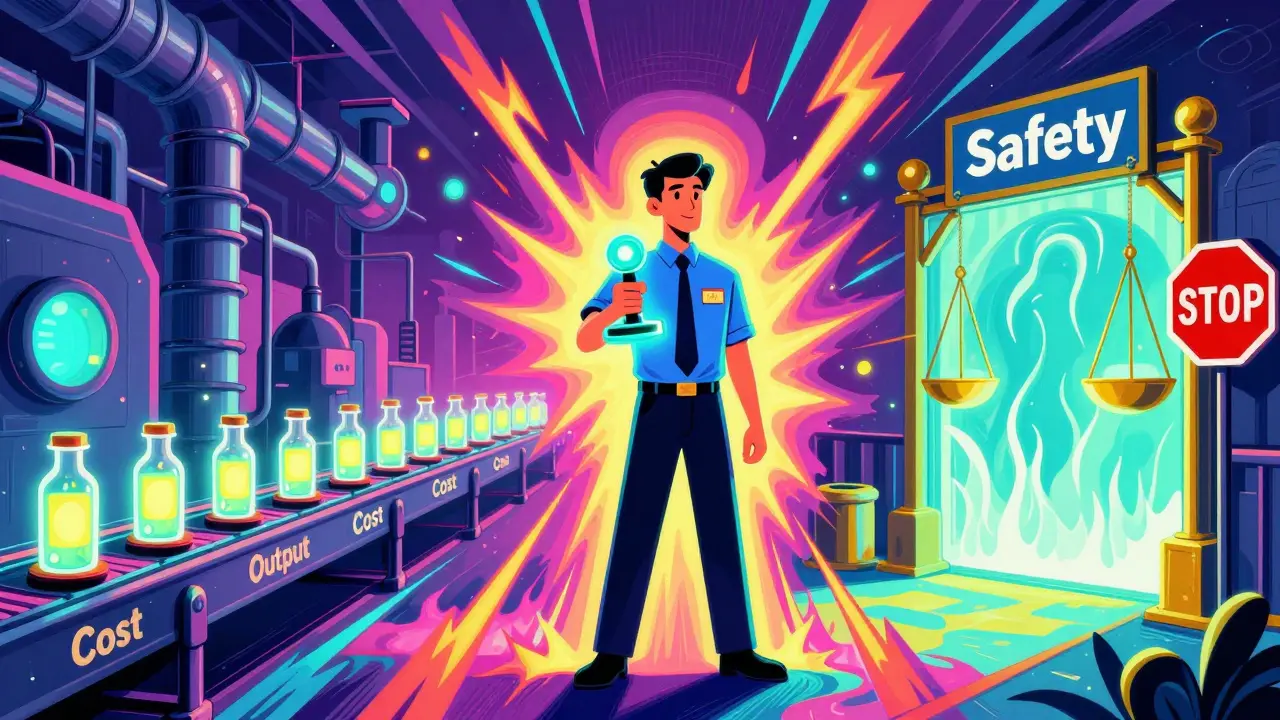
Think about it: production teams are measured by output. Speed. Volume. Cost per unit. Quality units? They’re measured by safety. Compliance. Accuracy. These goals don’t just compete - they conflict. And when they do, the side with less power usually loses.
That’s why regulators don’t allow half-measures. The EU’s 2024 revision of EudraLex says it plainly: quality units shall not be organizationally subordinate to production departments under any circumstances. The FDA agrees. In 2024, 68% of all warning letters issued to pharmaceutical companies cited failures in QU independence. That’s not a coincidence. It’s a pattern.
Real-world examples are brutal. One company tried merging QA and production roles during a restructuring. Three months later, two critical deviations slipped through - both released without proper investigation. The batch went out. Patients got sick. The FDA shut them down. That’s not rare. It’s predictable.
How Independence Actually Works
It’s not enough to just have a separate office. Independence means:
- Reporting lines: The QU reports directly to the CEO, CFO, or Board - never through plant managers.
- Authority to reject: They can stop a batch from shipping, even if it means losing $500,000 in revenue.
- Access to data: They can review every record, every test, every log - no gatekeepers.
- Protection from retaliation: If someone in the QU raises a red flag, they can’t be fired, demoted, or ignored.
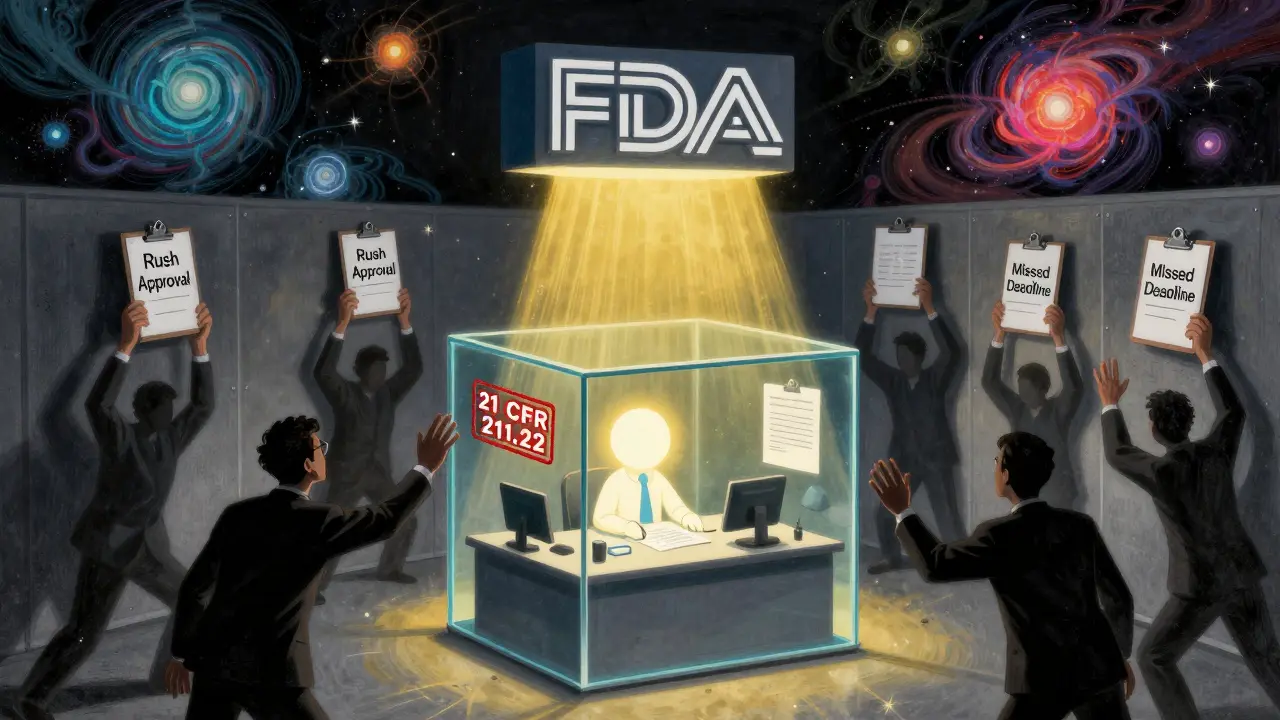
Regulations like 21 CFR 211.22 give the QU legal power to approve or reject components, packaging, in-process materials, and finished products. That’s not a suggestion. It’s a legal mandate. And if the QU doesn’t have real authority - if their word can be overruled - then you’re not compliant. You’re just pretending.
What Happens When Independence Fails
Look at the numbers. Facilities with weak QU independence have:
- 63% of all data integrity warning letters
- 37% more critical compliance failures during inspections
- 28% slower resolution of quality deviations
And the biggest red flag? Small companies. Facilities with fewer than 50 employees are 2.3 times more likely to get flagged for QU independence issues. Why? Because they can’t afford a full team. They try to combine roles. They think “one person can handle both.” They’re wrong.
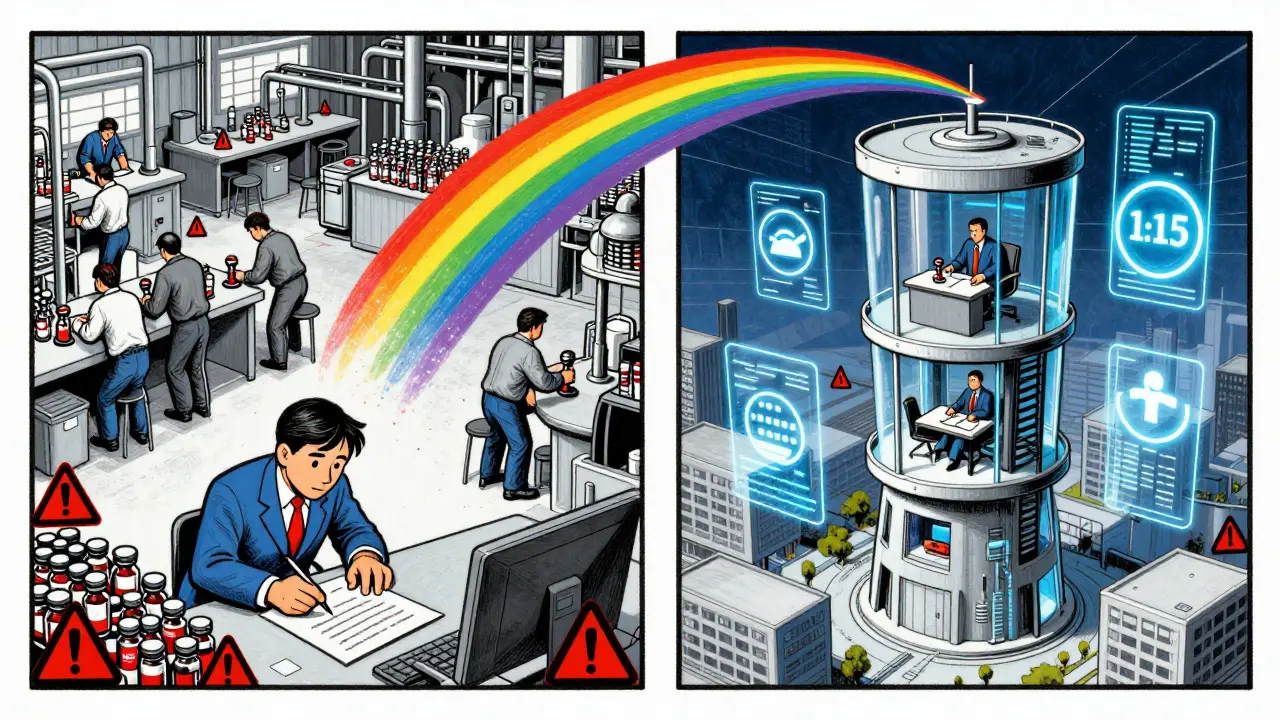
Even worse? Rubber-stamping. When the QU is understaffed, they start approving batches just to keep up. No real review. No real checks. Just signatures. The FDA found that facilities with a QU-to-production staff ratio below 1:15 had 3.2 times more repeat deviations. That’s not efficiency. That’s negligence.
How Different Industries Handle It
Pharmaceuticals demand total separation. The FDA doesn’t allow exceptions unless a second, fully independent person reviews the QU’s work - and even then, it’s rare.
Nuclear energy? They go further. The IAEA requires four layers of oversight: peer checks, senior manager reviews, independent oversight, and external audits. The QU doesn’t just report - they’re shielded from any influence. They can’t be assigned tasks in the areas they’re auditing. Period.
And then there’s ISO 9001. Many manufacturers think that’s enough. It’s not. ISO lets the QU be advisory. In regulated industries, that’s a death sentence. If your QU can’t say no, you’re not compliant.
The Human Side: Pressure, Culture, and Training
Behind every compliance failure is a person under pressure. A 2025 survey of 312 quality professionals found 57% felt pressure to rush batch reviews during production crunches. One in three said their QU didn’t have real authority to halt production - even though regulations say they do.
But it’s not all bad. Eli Lilly introduced “quality ambassadors” - production staff trained by the QU, but not part of it. The result? A 40% improvement in quality culture. People started speaking up. Managers started listening. The QU didn’t lose independence. They built bridges.
Training matters. 100% of QU staff need GMP knowledge. 78% need statistical process control. 65% need conflict resolution skills. And on average, they’ve spent 8.2 years in the industry. This isn’t an entry-level job. It’s a leadership role.
What the Future Looks Like
AI is changing manufacturing. Real-time sensors. Automated decisions. Predictive analytics. But here’s the catch: if an algorithm approves a batch, who’s really in charge? The FDA’s 2025 draft guidance warns that digital systems can blur the lines of independence. The solution? Not more automation. More separation. Algorithmic decision layers must be isolated from production logic. The QU must still have final authority - even if the machine says “go.”
And small companies? They’re turning to third-party oversight services. A growing market, up 14.2% annually. It’s not ideal - but it’s better than risking a shutdown.
How to Get It Right
If you’re setting up a QU, here’s what works:
- Give them direct access to the CEO - no middlemen.
- Document their authority in writing. Every single power. Every single procedure.
- Keep their budget separate. If production controls the QU’s funding, they’re not independent.
- Hire for experience, not cost. A junior person can’t handle regulatory pressure.
- Train everyone - not just the QU. Quality is everyone’s job. But only the QU has the final say.
And if you’re already running a facility? Audit your QU. Ask: Can they say no? Do they? Have they ever? If the answer is no - you’re already in violation.
Can a Quality Assurance Unit report to the Head of Production?
No. Regulatory agencies like the FDA and EMA explicitly forbid this. If the QU reports to production leadership, its independence is compromised. This creates a conflict of interest where production targets can override safety decisions. The QU must report directly to the CEO, CFO, or Board of Directors to maintain legal compliance and ensure objective quality decisions.
What authority does a Quality Assurance Unit have?
The QU has legal authority to approve or reject all components, in-process materials, packaging, labeling, and finished products. They can halt production, recall batches, and refuse to release any item that doesn’t meet specifications. This authority is codified in regulations like 21 CFR 211.22. Without this power, the QU is just an advisory group - and not compliant.
Why do small manufacturing facilities struggle with QU independence?
Small facilities often combine roles due to limited staff and budgets. A single person may handle both production and quality tasks, which violates regulatory requirements. The FDA found that 42% of warning letters to small companies (under 50 employees) cite QU independence failures. This is why many small manufacturers now use third-party oversight services to maintain compliance without hiring full-time staff.
How does independent oversight reduce compliance failures?
Independent oversight removes pressure from production metrics. When the QU isn’t accountable to production targets, they can focus solely on safety and compliance. Studies show organizations with true QU independence have 37% fewer critical inspection failures and 28% faster resolution of deviations. This isn’t theoretical - it’s backed by FDA and IAEA data.
Is ISO 9001 enough for quality oversight in regulated industries?
No. ISO 9001 treats quality as advisory. In regulated industries like pharmaceuticals and nuclear energy, the QU must have binding authority to reject products. ISO compliance doesn’t satisfy FDA or EMA requirements. Relying solely on ISO 9001 in these sectors leaves you vulnerable to regulatory action, shutdowns, and product recalls.
Simon Critchley
February 9, 2026 AT 10:55Let me just say this - if your QA unit reports to production, you’re not running a facility, you’re running a death trap with a compliance badge. 🤡 The FDA doesn’t play games. That 68% of warning letters? That’s not a statistic - that’s a funeral count. I’ve seen it firsthand. One guy in a lab coat signing off on a batch with visible particulates because ‘the line was behind.’ Three weeks later, three kids in Ohio got septic. You think that’s a coincidence? Nah. It’s called systemic cowardice. 💥
Tom Forwood
February 11, 2026 AT 04:48bro i work in pharma and this is 100% true. my boss tried to merge QA into production last year ‘for efficiency’ and we got a 48-hour shutdown. cost us $2M. but honestly? worth it. now QA reports straight to the CFO. no middlemen. no ‘let’s talk about it tomorrow.’ if they say no, it’s no. period. 🤝
John McDonald
February 13, 2026 AT 03:08Just wanted to add - I’ve been in this game for 18 years. The best facilities I’ve seen? The ones where QA and production are like two different branches of the same tree, but QA has its own root system. No sharing soil. No watering from the same bucket. You can’t have culture without structure. And structure without independence? That’s just theater.
Elan Ricarte
February 13, 2026 AT 20:08Oh wow. Another sanctimonious post from the regulatory cult. 🙄 Let’s be real - most of these ‘independent’ QA units are just glorified paper pushers with Excel sheets and zero real authority. I’ve worked in places where QA had ‘final say’ but still caved every time production said ‘we need this out by 5.’ It’s all theater. The FDA doesn’t care about your org chart - they care about outcomes. And outcomes? They’re usually fine. Stop pretending bureaucracy = safety.
Camille Hall
February 15, 2026 AT 16:44My team just got audited last month. QA didn’t report to production - they reported to the VP of Compliance. And guess what? We passed with zero findings. Not because we’re perfect - but because when someone says ‘no,’ it sticks. No yelling. No pressure. Just facts. And honestly? That’s what makes people sleep at night. Not spreadsheets. Not KPIs. Just integrity.
Ritteka Goyal
February 17, 2026 AT 02:29India has been doing this right for decades! We don’t need American regulations to tell us how to run quality. In our plants, QA and production work as one team - but QA leads. We don’t have ‘independence’ like you do - we have unity. And guess what? Our export compliance rate is higher than yours. 😎 You think separation makes you better? No. Culture does. And we have the best culture. Always have. Always will.
Monica Warnick
February 19, 2026 AT 01:17I’m not even gonna lie - I cried when they finally gave QA direct access to the board. After 7 years of being ignored. Of getting yelled at for ‘delaying shipments.’ Of being told ‘we’ll fix it next time.’ But next time never came. Until now. And today? I got a letter from the CEO saying ‘your job is to say no.’ I printed it. Framed it. And hung it above my desk. I’m not just QA anymore. I’m the last line.
Ashlyn Ellison
February 19, 2026 AT 08:11My QA guy stopped a $300k batch last week. No drama. Just a note: ‘contamination risk in vial seal.’ We scrapped it. Production was pissed. I was proud. That’s all you need to know.
Chelsea Deflyss
February 20, 2026 AT 02:01Wow. This is just another corporate gospel. You know what’s worse than a weak QA unit? A QA unit that thinks they’re saints. I’ve seen QA people sit on deviations for 6 months because they ‘needed more data.’ Meanwhile, patients are getting the wrong dosage. Independence doesn’t mean paralysis. It means courage. And most QA teams? They’re scared. And scared people don’t save lives. Bold people do.
Alex Ogle
February 20, 2026 AT 20:38Let me tell you about the time QA shut down a whole plant because a label was 0.2mm off. Production screamed. The CFO threatened to fire them. The CEO? He showed up in person. Sat down. Said: ‘You’re right. We’re not shipping.’ And then he gave them a bonus. That’s leadership. Not ‘reporting to the board.’ That’s culture. That’s what makes QA matter. Not org charts. Not regulations. People who do the right thing even when it costs.
Lyle Whyatt
February 22, 2026 AT 05:08Down under, we call it ‘the quiet revolution.’ QA doesn’t shout. They don’t need to. They just show up. Every day. With the data. With the audit trails. With the calm. And when production tries to push? They say: ‘I’ve got the evidence. And I’ve got the CEO’s email.’ No drama. Just facts. And that’s why Australia’s drug recall rate is the lowest in the OECD. Not because we’re perfect. But because we don’t let anyone cut corners. Ever.
Joshua Smith
February 24, 2026 AT 00:47Just curious - has anyone here actually seen a QA unit with full independence *and* high morale? I’m not talking about compliance. I mean, do people actually *want* to work there? Or is it just a graveyard for the overworked and underappreciated? I’ve seen QA teams so burnt out they stopped checking logs. Just stamped ‘approved’ and went home. Is that independence? Or just exhaustion in a lab coat?